On This Page
Description
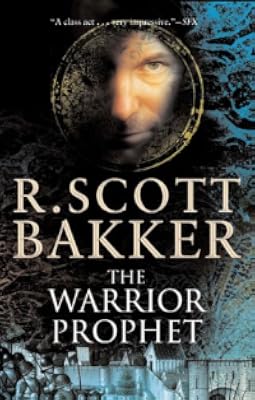
The first battle against the heathen has been won, but while the Great Names plot and squabble over the spoils, Kellhus patiently extends his influence, drawing more followers to his banner. The sorcerer Achamian and his lover, Esmenet, submit entirely, only to have their faith tested in unimaginable ways. The warrior Cnaiur falls ever deeper into madness. The skin-spies of the Consult watch with growing trepidation. And as the vast host of the Holy War endures its sternest test in the show more searing wastes of the desert, a name - a title - begins to be whispered amongst the faithful. But who is the Warrior-Prophet: a dangerous heretic, who turns brother against brother? Or the only man who can avert the Second Apocalypse? The Holy War stands on a knife edge. If all is not to be lost the great powers will have to choose between their most desperate desires and their most ingrained prejudice. Between hatred and hope. Between the Warrior-Prophet and the end of the world. show lessTags
Recommendations

Member Reviews
Bakker continues his epic fantasy filled with astonishingly reflective characters, many of whom can somehow spend half a page on introspection between every other line of dialogue without it ever feeling anything but gripping and exciting to read. The titular ice-cold logician monk continues to both chill and impress me, the tortured wandering sorcerer breaks my heart over and over, the brilliant barbarian chieftain's internal war of pride and self-loathing reaches new heights, and the political machinations are both believable and complex while (somehow) never really taking up all that much space in the narrative. Meanwhile, the Holy War that is the framework of it all marches on, horrifically brutal and genuine in its depiction. I've show more no idea how the final volume could possibly deliver on the promise of this, which somehow takes every great element in the first novel and builds them to new staggering levels, but I'm really looking forward to finding out. show less
There weren’t enough superlatives to describe the brilliance of R. Scott Bakker’s first volume in “The Prince of Nothing” trilogy, “The Darkness That Comes Before”. After such an astounding debut, I wondered if the second volume could match the intellectual depth and overall intensity of the first book. Well, “The Warrior-Prophet” more than lives up to the lofty standards set by the previous book, providing one of my favorite fantasy reading experiences ever.
Reading Bakker’s work is like being deliciously overwhelmed, caught in a stunning sea of nuances and detail that boggles the mind. It is akin to gazing at a great painting and finding yourself lost in the minute details for hours on end. It is the rare work where I show more find after finishing a paragraph, I pause to reflect on what I have read, digesting the various ideas and philosophical insights in the book. In that regard, “The Warrior-Prophet” requires active thinking when reading, coaxing the reader to confront and discuss these ideas Bakker presents, an aspect I greatly enjoyed.
The Holy War started by Maithanet, the Shriah of the Thousand Temples, continues its march southward to the sacred city of Shimeh. Immense and bloody battles ensue throughout the course of the book between the invading Inrithi factions and the heathen Fanim. Anasûrimbor Kellhus, a mysterious Prince, gradually asserts a greater influence on the Holy War by offering indispensable counsel to the Great Names administrating the war. Furthermore, Kellhus’ remarkably godlike actions and manner begin to transform him in the eyes of the Inrithi from a minor outlying figure into a larger-than-life prophet. But not everyone is pleased with Kellhus’ seemingly divine transformation and the power it brings him.
Drusas Achamian is a Mandate sorcerer traveling in company with Kellhus and their two consorts, Esmenet and Serwë. Tortured by apocalyptic dreams that he believes are prophetic, Achamian is convinced that Kellhus is necessary to the success of the Holy War and must be helped. But in assisting Kellhus, Drusas may have to sacrifice everything he has.
Bakker crafts a dark and profound tale filled with magnificent battles, glorious world-building, and an immense depth to his characters unseen in fantasy. Kellhus, who is unbelievably godlike in his abilities, is stunning. His penetrating intellect and manipulation of the other characters would come off as ludicrous in the hands of a lesser writer. But with Bakker, Kellhus is a dominating success.
The world-building is incredibly deep and innovative with a tremendously imagined historical background. There are some twists and turns, but the plot is mainly straightforward, concentrating on the massive battles of the Holy War. And it is in these war scenes that Bakker does some of his best work, presenting fantastically descriptive and bloody battles that rank up there with some of the best in fantasy.
Last Word:
“The Warrior-Prophet” is a stunner of a novel, a dark, delicious and deeply engaging masterpiece featuring an incredible amount of depth and painstaking detail. R. Scott Bakker’s “The Prince of Nothing” series is not just stupendous, it is becoming monumental. show less
Reading Bakker’s work is like being deliciously overwhelmed, caught in a stunning sea of nuances and detail that boggles the mind. It is akin to gazing at a great painting and finding yourself lost in the minute details for hours on end. It is the rare work where I show more find after finishing a paragraph, I pause to reflect on what I have read, digesting the various ideas and philosophical insights in the book. In that regard, “The Warrior-Prophet” requires active thinking when reading, coaxing the reader to confront and discuss these ideas Bakker presents, an aspect I greatly enjoyed.
The Holy War started by Maithanet, the Shriah of the Thousand Temples, continues its march southward to the sacred city of Shimeh. Immense and bloody battles ensue throughout the course of the book between the invading Inrithi factions and the heathen Fanim. Anasûrimbor Kellhus, a mysterious Prince, gradually asserts a greater influence on the Holy War by offering indispensable counsel to the Great Names administrating the war. Furthermore, Kellhus’ remarkably godlike actions and manner begin to transform him in the eyes of the Inrithi from a minor outlying figure into a larger-than-life prophet. But not everyone is pleased with Kellhus’ seemingly divine transformation and the power it brings him.
Drusas Achamian is a Mandate sorcerer traveling in company with Kellhus and their two consorts, Esmenet and Serwë. Tortured by apocalyptic dreams that he believes are prophetic, Achamian is convinced that Kellhus is necessary to the success of the Holy War and must be helped. But in assisting Kellhus, Drusas may have to sacrifice everything he has.
Bakker crafts a dark and profound tale filled with magnificent battles, glorious world-building, and an immense depth to his characters unseen in fantasy. Kellhus, who is unbelievably godlike in his abilities, is stunning. His penetrating intellect and manipulation of the other characters would come off as ludicrous in the hands of a lesser writer. But with Bakker, Kellhus is a dominating success.
The world-building is incredibly deep and innovative with a tremendously imagined historical background. There are some twists and turns, but the plot is mainly straightforward, concentrating on the massive battles of the Holy War. And it is in these war scenes that Bakker does some of his best work, presenting fantastically descriptive and bloody battles that rank up there with some of the best in fantasy.
Last Word:
“The Warrior-Prophet” is a stunner of a novel, a dark, delicious and deeply engaging masterpiece featuring an incredible amount of depth and painstaking detail. R. Scott Bakker’s “The Prince of Nothing” series is not just stupendous, it is becoming monumental. show less
I liked the first book, first novel hiccups aside, and there's enough action and intrigue in this second one to keep the pages turning - it's a good story. I wish I better knew the philosophy field because apparently he's converted some key concepts into narrative here. The writing has a few minor missteps but flows nicely, there's magic, epic battles, plenty of blood being spilled, etc. It's a tasty epic fantasy confection - but there's two ugly cockroaches perched on top. I'm going to finish the trilogy because all the rest of it is that good. I just have to keep sighing or wincing once in a while.
The first problem is its central character. Kellhus prompts a contrast with Paul Muad'dib of the Dune series. Where Paul rose almost by show more accident as a messiah figure and agonizes over it, Kellhus casually becomes the Warrior-Prophet as an elaborate means to a simple end. Paul's is the deeper story, since it doesn't appear that Kellhus does much in the way of personal suffering or soul-searching. He is a perfect character who succeeds at everything and weilds supreme confidence, which introduces a wide variety of problems: he is utterly boring to read about, impossible to relate to, morally ambiguous, and easily subverts every other character he encounters whom we care about. If he's destined to be the series' hero, it's a significant problem that he comes across less like Isaiah and more like an emotionless Charles Manson.
The other problem is the women. In fact there are no women in this story, only sexual objects with the label applied. There's not a literate one among them, none with any power, and they're unremittingly abused in gratuitous language (when was the last time you heard a woman "chirp" in pain?) Virtually no man has a wife, daughter, sister or even a mother who is mentioned, discounting one character who had an incestuous relationship with his. The slandering occurs as often in the narrative as in the dialogue. I'll confess I'm too frequently oblivious to how fairly women are portrayed in the fiction I read, but once you perceive the distastefulness here (and it's made extremely hard to miss), you can't get it out of your mouth. show less
The first problem is its central character. Kellhus prompts a contrast with Paul Muad'dib of the Dune series. Where Paul rose almost by show more accident as a messiah figure and agonizes over it, Kellhus casually becomes the Warrior-Prophet as an elaborate means to a simple end. Paul's is the deeper story, since it doesn't appear that Kellhus does much in the way of personal suffering or soul-searching. He is a perfect character who succeeds at everything and weilds supreme confidence, which introduces a wide variety of problems: he is utterly boring to read about, impossible to relate to, morally ambiguous, and easily subverts every other character he encounters whom we care about. If he's destined to be the series' hero, it's a significant problem that he comes across less like Isaiah and more like an emotionless Charles Manson.
The other problem is the women. In fact there are no women in this story, only sexual objects with the label applied. There's not a literate one among them, none with any power, and they're unremittingly abused in gratuitous language (when was the last time you heard a woman "chirp" in pain?) Virtually no man has a wife, daughter, sister or even a mother who is mentioned, discounting one character who had an incestuous relationship with his. The slandering occurs as often in the narrative as in the dialogue. I'll confess I'm too frequently oblivious to how fairly women are portrayed in the fiction I read, but once you perceive the distastefulness here (and it's made extremely hard to miss), you can't get it out of your mouth. show less
Most, by and large, were born narrow, and cared to see only that which flattered them. Almost without exception, they assumed their hatreds and yearnings to be correct, no matter what the contradictions, simply because they felt correct.
This book was not nearly as entertaining as its predecessor. Despite this trilogy's primary focus on the interminable march of a war, Bakker's weakest trait as a writer appears to be his ability to write about war. His descriptions of battle scenes are long and boring, and seem to be comprised mostly of long lists of names and tribes the reader has never before heard of. They are dry, uninteresting, and lacking in any real portrayal of strategy or intellectual content. They are periodically interspersed show more with rambling, overly-inflated, and mostly pointless philosophical soliloquies by the main characters which do less to interest the reader or move the story forward than they do to inflate Bakker's apparent self-image as a philosophical fantasy writer.
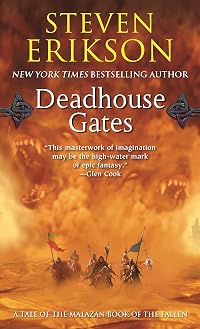
Before reading this series, I was impressed by the number of reviewers and blurbers comparing this rising star Bakker with Stephen Erikson. The further I got into this book, though, the less it seemed like Bakker is the next Stephen Erikson, and the more it seemed like he's merely a cheap imitation. And I do mean "imitation." Chapter headings and year reckonings which are basically carbon copies of those in Malazan, for example, or the centrality to the story-line of a holy war, as well as a major figure taking advantage of local myth to prop him/herself up as a prophet despite not believing it him/herself - these things just scream Deadhouse Gates to me. Bakker even repeatedly refers to the confluence of events as a "whirlwind."
Perhaps this is over-sensitivity on my part, and a reflection of my own obsession with Stephen Erikson as the master of contemporary epic fantasy. But there is a bigger objection to this series that I can't dismiss as easily, and it is this: the conspicuous lack of valuable female characters. There are three to be exact. Female characters, that is. A whore. A slave. And a mother... who is depicted as, and repeatedly referred to as? That's right: a whore. Although two of these characters do play actual important roles in the story, in both cases it is more as a result of who they sleep with and the jealousies they generate, than through any operation of their intellect or demonstration of autonomous decision-making. I would hope for more out of a fantasy series with a growing fan-base.
Ultimately, I'm still reading, and haven't given up on the series as a whole yet. But I will need a lot more out of the third book of this first trilogy to stick it out and read the rest of this trilogy of trilogies. show less
This book was not nearly as entertaining as its predecessor. Despite this trilogy's primary focus on the interminable march of a war, Bakker's weakest trait as a writer appears to be his ability to write about war. His descriptions of battle scenes are long and boring, and seem to be comprised mostly of long lists of names and tribes the reader has never before heard of. They are dry, uninteresting, and lacking in any real portrayal of strategy or intellectual content. They are periodically interspersed show more with rambling, overly-inflated, and mostly pointless philosophical soliloquies by the main characters which do less to interest the reader or move the story forward than they do to inflate Bakker's apparent self-image as a philosophical fantasy writer.
Before reading this series, I was impressed by the number of reviewers and blurbers comparing this rising star Bakker with Stephen Erikson. The further I got into this book, though, the less it seemed like Bakker is the next Stephen Erikson, and the more it seemed like he's merely a cheap imitation. And I do mean "imitation." Chapter headings and year reckonings which are basically carbon copies of those in Malazan, for example, or the centrality to the story-line of a holy war, as well as a major figure taking advantage of local myth to prop him/herself up as a prophet despite not believing it him/herself - these things just scream Deadhouse Gates to me. Bakker even repeatedly refers to the confluence of events as a "whirlwind."
Perhaps this is over-sensitivity on my part, and a reflection of my own obsession with Stephen Erikson as the master of contemporary epic fantasy. But there is a bigger objection to this series that I can't dismiss as easily, and it is this: the conspicuous lack of valuable female characters. There are three to be exact. Female characters, that is. A whore. A slave. And a mother... who is depicted as, and repeatedly referred to as? That's right: a whore. Although two of these characters do play actual important roles in the story, in both cases it is more as a result of who they sleep with and the jealousies they generate, than through any operation of their intellect or demonstration of autonomous decision-making. I would hope for more out of a fantasy series with a growing fan-base.
Ultimately, I'm still reading, and haven't given up on the series as a whole yet. But I will need a lot more out of the third book of this first trilogy to stick it out and read the rest of this trilogy of trilogies. show less
Despite a promising beginning, this series botched the characters, plot, and story structure so badly that it isn't worth reading. Whether you're looking for good writing and deeper meaning or just an entertaining fantasy story, you'll find neither here.
Let's start with story structure: despite ostensibly being a series, none of the three books here stand by themselves, instead each abruptly ends and then immediately starts up again in the next volume. Thus, The Prince of Nothing is a single book divided into three parts. Even taking this view, however, The Prince of Nothing is still an unsatisfying story because there is no resolution to speak of. Bakker proves incapable of writing a beginning, middle, and end even when given over show more 1,800 pages to do so. Instead, this whole series feels like one big prologue to whatever book set in this world he writes next.
Considering the pure tonnage of writing here you would expect the world to be fleshed out, since that's the only thing this massive tome actually seems to try to accomplish. Instead the world is strangely muddled, as Bakker chooses to hide elements of the world from the reader for no sufficiently good reason. There is, for instance, a chronicle of an event known as the First Apocalypse that is widely known in this fictional world, even by characters that can't read the chronicle itself. Thus, every character in the book knows the full saga, but instead of Bakker allowing the reader to know about these events as well, he gives a trickle of information that never edifies. When a writer keeps the reader ignorant in a way that a character is also ignorant then that can create sympathy. When a writer keeps the reader ignorant where all the characters are in-the-know, at best it's an unnecessary irritation and at worst it creates a hole in the world building. Apparently Bakker doesn't realize this. He also keeps the reader in the dark for a huge number of pages concerning the magic system on this world, though that seemingly stems as much from his own lack of understanding of the system as it does his desire to give the reader only scraps of information.
Moving on to the plot: there are machinations between characters here, but the main plot is a fantasy take on the Crusades, where a Holy War is launched by the fantasy Christians to retake the land occupied by the fantasy Muslims. Hundreds upon hundreds of pages are devoted to depictions of the battles of the Holy War and the trials and tribulations of the army. The problem is, none of the main characters of this novel care about the war at all. They use the war for their own interests, or follow it as part of an unrelated mission, and have no personal investment as to whether it succeeds or fails. The lone character who genuinely believes in the Holy War is a character named Proyas, a second-tier character who is fleshed out little. Thus, for the hundreds of pages of battles it's impossible to care if the army takes that city or fights off that cavalry charge or if troop morale is low or high. What was Bakker thinking, making every major character care about revenge, power, control, knowledge, love, every conceivable motivation except for the one motivation of faith that actually would drive a Holy War? Thus, all the battles are mere background to the different plots of the characters.
This flaw is magnified by the fact that we learn early on that this whole war between the fantasy Christians and fantasy Muslims isn't important, because the battle between good and evil is right around the corner. The passages where dreams explore the First Apocalypse are actually interesting, and have stakes, compared to the Holy War where it seems of little import who wins or who loses- the real battle is up ahead. The fact that the real battle is never reached (is never even begun) further emphasizes the prologue nature of this series.
When the final volume "explains" the Holy War, it makes very little sense (if I'm understanding it correctly the idea was that it would allow for the world to be unified against the great evil that will soon emerge. How exactly does the slaughter of hundreds of thousands of people based on religious and ethnic differences lead to unity?). The main overarching plot is a huge mistake on Bakker's part.
Finally, on to the biggest flaw of this book, the characters. Specifically one character, Kellhus. Kellhus is at first presented as preternaturally good at manipulating people. Fine, though I think it strange that Bakker identifies homeschooling as the path to extreme social competence. But then it's revealed that he's also the most amazing fighter ever, capable of beating the best warrior in the world in single combat having only suffered one blow. Later on someone mentions that the only thing he lacks is the ability to use magic. Then it's discovered that he is one of the very, very few who can use magic, and he's the best ever at it. He's also an incredibly quick learner of everything, and even designs some siege weapons that makes everyone's jaw drop, because why not? In short, Kellhus suffers from superman syndrome, being so good at everything that he's unsympathetic, there's no dramatic tension to anything he does, and in general he's not so much a character as he is a plot robot.
I don't mean to suggest that Kellhus would be a better character if he had fewer strengths, though, since as soon as Bakker granted Kellhus the ability to manipulate people this whole character was hopeless. An author has certain limitations on what characteristics he can write, and those limitations are based on the author's own characteristics. Thus, if an author isn't smart, that author won't be able to write very smart characters. He can write characters that are quicker with a comeback, or who know a lot about a topic, because for the former the author can take time writing something that he or she wouldn't be able to think of on the spur of the moment, and for the latter the author can do research and put that in the character's mouth. How smart a character is, though, is limited by how smart the author is, since if an author were able to successfully answer the question "hmm, what would someone smarter than me do?" then that author would be the smarter person. That's not a loop that happens. In this case, the relevant limitation is that an author can't believably write a character who can understand and manipulate people better than the author can. Bakker is clearly no savant at manipulating people: the chapters showcasing Kellhus's mastery over others are thoroughly unconvincing, the theoretical underpinnings of that mastery are laughable as well. Instead we have a character mentioning bland "truths" about people and then those people begin licking that character's boots. It reminded me a bit of Ayn Rand, who populated her books with selfish lazy parasites to make the characters espousing her philosophy look better by comparison. Here we have a world populated by easily manipulated idiots in order to try to convince us that Kellhus is truly a master manipulator (and thus that Bakker can convincingly write such manipulation and understanding). Because of this the character that serves as the keystone of this narrative is not written believably or interestingly. It makes the book a mess.
This book raised my hopes in the beginning, depicting a dying world filled with monumental ruins of ages past, populated by strange creatures and a few humans struggling to survive. Then it turned into generic fantasy stuff, even including the cliche of a game with unexplained rules that symbolizes whatever the author needs it to. Then it turned into below average fantasy as the character of Kellhus gained more prominence. When it became clear that this book was going to focus on a war that no one cared about, while hiding some of the only interesting parts of the world, that it would blatantly serve as a prologue and not a complete book, and that it would take 1,800 pages to do it, it was revealed as yet another crappy fantasy series. Don't let the opening chapters fool you, this series (book) is a waste of time. show less
Let's start with story structure: despite ostensibly being a series, none of the three books here stand by themselves, instead each abruptly ends and then immediately starts up again in the next volume. Thus, The Prince of Nothing is a single book divided into three parts. Even taking this view, however, The Prince of Nothing is still an unsatisfying story because there is no resolution to speak of. Bakker proves incapable of writing a beginning, middle, and end even when given over show more 1,800 pages to do so. Instead, this whole series feels like one big prologue to whatever book set in this world he writes next.
Considering the pure tonnage of writing here you would expect the world to be fleshed out, since that's the only thing this massive tome actually seems to try to accomplish. Instead the world is strangely muddled, as Bakker chooses to hide elements of the world from the reader for no sufficiently good reason. There is, for instance, a chronicle of an event known as the First Apocalypse that is widely known in this fictional world, even by characters that can't read the chronicle itself. Thus, every character in the book knows the full saga, but instead of Bakker allowing the reader to know about these events as well, he gives a trickle of information that never edifies. When a writer keeps the reader ignorant in a way that a character is also ignorant then that can create sympathy. When a writer keeps the reader ignorant where all the characters are in-the-know, at best it's an unnecessary irritation and at worst it creates a hole in the world building. Apparently Bakker doesn't realize this. He also keeps the reader in the dark for a huge number of pages concerning the magic system on this world, though that seemingly stems as much from his own lack of understanding of the system as it does his desire to give the reader only scraps of information.
Moving on to the plot: there are machinations between characters here, but the main plot is a fantasy take on the Crusades, where a Holy War is launched by the fantasy Christians to retake the land occupied by the fantasy Muslims. Hundreds upon hundreds of pages are devoted to depictions of the battles of the Holy War and the trials and tribulations of the army. The problem is, none of the main characters of this novel care about the war at all. They use the war for their own interests, or follow it as part of an unrelated mission, and have no personal investment as to whether it succeeds or fails. The lone character who genuinely believes in the Holy War is a character named Proyas, a second-tier character who is fleshed out little. Thus, for the hundreds of pages of battles it's impossible to care if the army takes that city or fights off that cavalry charge or if troop morale is low or high. What was Bakker thinking, making every major character care about revenge, power, control, knowledge, love, every conceivable motivation except for the one motivation of faith that actually would drive a Holy War? Thus, all the battles are mere background to the different plots of the characters.
This flaw is magnified by the fact that we learn early on that this whole war between the fantasy Christians and fantasy Muslims isn't important, because the battle between good and evil is right around the corner. The passages where dreams explore the First Apocalypse are actually interesting, and have stakes, compared to the Holy War where it seems of little import who wins or who loses- the real battle is up ahead. The fact that the real battle is never reached (is never even begun) further emphasizes the prologue nature of this series.
When the final volume "explains" the Holy War, it makes very little sense (if I'm understanding it correctly the idea was that it would allow for the world to be unified against the great evil that will soon emerge. How exactly does the slaughter of hundreds of thousands of people based on religious and ethnic differences lead to unity?). The main overarching plot is a huge mistake on Bakker's part.
Finally, on to the biggest flaw of this book, the characters. Specifically one character, Kellhus. Kellhus is at first presented as preternaturally good at manipulating people. Fine, though I think it strange that Bakker identifies homeschooling as the path to extreme social competence. But then it's revealed that he's also the most amazing fighter ever, capable of beating the best warrior in the world in single combat having only suffered one blow. Later on someone mentions that the only thing he lacks is the ability to use magic. Then it's discovered that he is one of the very, very few who can use magic, and he's the best ever at it. He's also an incredibly quick learner of everything, and even designs some siege weapons that makes everyone's jaw drop, because why not? In short, Kellhus suffers from superman syndrome, being so good at everything that he's unsympathetic, there's no dramatic tension to anything he does, and in general he's not so much a character as he is a plot robot.
I don't mean to suggest that Kellhus would be a better character if he had fewer strengths, though, since as soon as Bakker granted Kellhus the ability to manipulate people this whole character was hopeless. An author has certain limitations on what characteristics he can write, and those limitations are based on the author's own characteristics. Thus, if an author isn't smart, that author won't be able to write very smart characters. He can write characters that are quicker with a comeback, or who know a lot about a topic, because for the former the author can take time writing something that he or she wouldn't be able to think of on the spur of the moment, and for the latter the author can do research and put that in the character's mouth. How smart a character is, though, is limited by how smart the author is, since if an author were able to successfully answer the question "hmm, what would someone smarter than me do?" then that author would be the smarter person. That's not a loop that happens. In this case, the relevant limitation is that an author can't believably write a character who can understand and manipulate people better than the author can. Bakker is clearly no savant at manipulating people: the chapters showcasing Kellhus's mastery over others are thoroughly unconvincing, the theoretical underpinnings of that mastery are laughable as well. Instead we have a character mentioning bland "truths" about people and then those people begin licking that character's boots. It reminded me a bit of Ayn Rand, who populated her books with selfish lazy parasites to make the characters espousing her philosophy look better by comparison. Here we have a world populated by easily manipulated idiots in order to try to convince us that Kellhus is truly a master manipulator (and thus that Bakker can convincingly write such manipulation and understanding). Because of this the character that serves as the keystone of this narrative is not written believably or interestingly. It makes the book a mess.
This book raised my hopes in the beginning, depicting a dying world filled with monumental ruins of ages past, populated by strange creatures and a few humans struggling to survive. Then it turned into generic fantasy stuff, even including the cliche of a game with unexplained rules that symbolizes whatever the author needs it to. Then it turned into below average fantasy as the character of Kellhus gained more prominence. When it became clear that this book was going to focus on a war that no one cared about, while hiding some of the only interesting parts of the world, that it would blatantly serve as a prologue and not a complete book, and that it would take 1,800 pages to do it, it was revealed as yet another crappy fantasy series. Don't let the opening chapters fool you, this series (book) is a waste of time. show less
This is an ambitious book, one that is at times riveting and yet at other times frustrating. It has a dark tone, gritty and frequently ugly. Bakker has a dazzling inventiveness that reminds me of one of my favorite authors, Steven Erikson. The world building is impressive; Bakker seems to be pulling location after location, character after character, culture after of culture, political faction after political faction, out of a hat, and yet each feels interesting, unique, and apt. And Bakker describes these people, places and things in concise (despite this book's heft) and very effective descriptive language. The battle scenes have a wonderful immediacy, bringing to mind a ride on an emotional roller coaster of terror, exhaustion, show more confusion, and elation in turns.
The male lead characters, Kellhus, Achamian, and Cnaiur are intriguing and complex. They each have a bit of the tragic Greek hero in them. Kellhus is again a very ambitious character, one who becomes less sympathetic as the book progresses (indeed at times he almost becomes a bit of a caricature). And yet I found myself confident that he still has a chance for redemption. Bakker also does a nice job of building a large cast of colorful characters within the conflicting factions of the Holy War.
The female characters are less convincing. Serwe gets less focus here than she did in the first book, and when she does appear she seems to be little more than a symbol of woman as sexual object and/or dupe of man. Esmi also gets less screen time in this book. I found her character the least compelling of the main POVs in the first book, and if anything I found Esmi's actions to be less and less convincing as this book went along, leaving me with little empathy for her as it ends.
My biggest frustration with the book has to do with military strategy and tactics. Victory seems to be determined purely by where the author wants the plot to go. These are contests of will as opposed to contests of training, intelligence, leadership, logistics, communications, reconnaissance, etc. Generals seem to forget that they (or the other side) have sorcerers available much of the time, until it’s time for the battle scene to conclude cataclysmically. It made absolutely no sense strategically for the Fanim to fight the turning battle of part 2 of the book in the location and manner that they did. And Kellhus’ role in this same battle felt like something out of a comic book.
Still, this is an intriguing book. I’ll definitely be moving on to book 3. show less
The male lead characters, Kellhus, Achamian, and Cnaiur are intriguing and complex. They each have a bit of the tragic Greek hero in them. Kellhus is again a very ambitious character, one who becomes less sympathetic as the book progresses (indeed at times he almost becomes a bit of a caricature). And yet I found myself confident that he still has a chance for redemption. Bakker also does a nice job of building a large cast of colorful characters within the conflicting factions of the Holy War.
The female characters are less convincing. Serwe gets less focus here than she did in the first book, and when she does appear she seems to be little more than a symbol of woman as sexual object and/or dupe of man. Esmi also gets less screen time in this book. I found her character the least compelling of the main POVs in the first book, and if anything I found Esmi's actions to be less and less convincing as this book went along, leaving me with little empathy for her as it ends.
My biggest frustration with the book has to do with military strategy and tactics. Victory seems to be determined purely by where the author wants the plot to go. These are contests of will as opposed to contests of training, intelligence, leadership, logistics, communications, reconnaissance, etc. Generals seem to forget that they (or the other side) have sorcerers available much of the time, until it’s time for the battle scene to conclude cataclysmically. It made absolutely no sense strategically for the Fanim to fight the turning battle of part 2 of the book in the location and manner that they did. And Kellhus’ role in this same battle felt like something out of a comic book.
Still, this is an intriguing book. I’ll definitely be moving on to book 3. show less
*** Spoilers contained in this review ***
The Warrior Prophet is certainly a slight step down from its predecessor, The Darkness That Comes Before. Having said that, the writing is still a definite notch above your average fantasy series and most of what made TDTCB so great is still in evidence here. If you liked the first book you will still find a great deal to like in this one. Hence, the four stars good rating. Having said that, I do think this book is slightly less impressive than what came before and I'll outline why.
The main reason, for me, is the realigned structure of the cast. The twitchy, slightly maniacal Emperor Xerius and his grasping, ageing mother feature for a scant few pages, and the brilliant, narcissistic Conphas is show more relegated to something of a bit part player this time. These interesting and well written characters were a big part of the previous novel and their relegation to much smaller roles hurts TWP as what fills their gap is a disappointment.
In their stead we get a lot more philosophy from Kellhus, which just about stays bearable, and a whole load of rather nauseating love from Serwë and Esmi directed towards the Warrior Prophet. Cnaiür still features prominently but is mostly neutered and this is perhaps the biggest problem with the novel. With Cnaiür essentially broken Kellhus has no rival and his character suddenly becomes quite boring - a Gary Sue who for 90% of the novel who can do wrong and wraps everyone around his finger. This problem is compounded by the fact that I'm not even sure if, as a reader, I'm supposed to cheer Kellhus getting his way, be appalled by it, or view it as a necessary evil. Achamian is the only one I wanted to root for and in a novel much more dominated by Kellhus that's an issue.
Of course, some of these changes might be necessary for what happens in the future. Esmenet seems as if she will be more than just a fawning piece of eye candy like Serwë and perhaps Cnaiür needs to be broken down before he can emerge as something stronger. I hope these developments bear some fruit but am a little worried that might not be the case.
Bakker's switch from Machiavellian court politics to war is another move that doesn't work terribly well. His battle scene descriptions are perfectly all right but they're not up there with the best of them and much time is spent in Iliad like roll calls of names, families and places we're not familiar with. The book's final battle outside Caraskand is a monumental anti-climax too. Just when you think Cnaiür has a great plan to break the siege Bakker falls back on "unconquerable belief" to win against all the odds. Of course there's something to be said for that in battle but here, in a novel, and under the circumstances provided it seems a feeble way out of the trap.
My last major gripe with TWP compared to TDTCB is how much more predictable it feels. The shifting court politics made anything seem possible back in the first book. Yet here it felt inevitable that the Holy War was going to win and march on. Naturally we expect the protagonists to win in the end but never during this novel was I convinced that Holy War might not make it. There was a disappointing sense of expectation that, yes, of course they were going to win and couldn't they hurry up to Shimeh because that's where the story will get interesting again. Although I must be fair and state that given Achamian writes The Compendium of the First Holy War (which is often quoted at the start of chapters) he surely survives this campaign and Bakker did at least make me wonder in uncertainty about his fate.
As I said right at the start I do think this is still a very good book and worth four stars. It has more obvious faults than TDTCB but I still raced through its 600 pages in just a few days. Hopefully The Thousandfold Thought corrects some of the criticisms I made here and the Second Apocalypse series will get back to be great rather than just good. show less
The Warrior Prophet is certainly a slight step down from its predecessor, The Darkness That Comes Before. Having said that, the writing is still a definite notch above your average fantasy series and most of what made TDTCB so great is still in evidence here. If you liked the first book you will still find a great deal to like in this one. Hence, the four stars good rating. Having said that, I do think this book is slightly less impressive than what came before and I'll outline why.
The main reason, for me, is the realigned structure of the cast. The twitchy, slightly maniacal Emperor Xerius and his grasping, ageing mother feature for a scant few pages, and the brilliant, narcissistic Conphas is show more relegated to something of a bit part player this time. These interesting and well written characters were a big part of the previous novel and their relegation to much smaller roles hurts TWP as what fills their gap is a disappointment.
In their stead we get a lot more philosophy from Kellhus, which just about stays bearable, and a whole load of rather nauseating love from Serwë and Esmi directed towards the Warrior Prophet. Cnaiür still features prominently but is mostly neutered and this is perhaps the biggest problem with the novel. With Cnaiür essentially broken Kellhus has no rival and his character suddenly becomes quite boring - a Gary Sue who for 90% of the novel who can do wrong and wraps everyone around his finger. This problem is compounded by the fact that I'm not even sure if, as a reader, I'm supposed to cheer Kellhus getting his way, be appalled by it, or view it as a necessary evil. Achamian is the only one I wanted to root for and in a novel much more dominated by Kellhus that's an issue.
Of course, some of these changes might be necessary for what happens in the future. Esmenet seems as if she will be more than just a fawning piece of eye candy like Serwë and perhaps Cnaiür needs to be broken down before he can emerge as something stronger. I hope these developments bear some fruit but am a little worried that might not be the case.
Bakker's switch from Machiavellian court politics to war is another move that doesn't work terribly well. His battle scene descriptions are perfectly all right but they're not up there with the best of them and much time is spent in Iliad like roll calls of names, families and places we're not familiar with. The book's final battle outside Caraskand is a monumental anti-climax too. Just when you think Cnaiür has a great plan to break the siege Bakker falls back on "unconquerable belief" to win against all the odds. Of course there's something to be said for that in battle but here, in a novel, and under the circumstances provided it seems a feeble way out of the trap.
My last major gripe with TWP compared to TDTCB is how much more predictable it feels. The shifting court politics made anything seem possible back in the first book. Yet here it felt inevitable that the Holy War was going to win and march on. Naturally we expect the protagonists to win in the end but never during this novel was I convinced that Holy War might not make it. There was a disappointing sense of expectation that, yes, of course they were going to win and couldn't they hurry up to Shimeh because that's where the story will get interesting again. Although I must be fair and state that given Achamian writes The Compendium of the First Holy War (which is often quoted at the start of chapters) he surely survives this campaign and Bakker did at least make me wonder in uncertainty about his fate.
As I said right at the start I do think this is still a very good book and worth four stars. It has more obvious faults than TDTCB but I still raced through its 600 pages in just a few days. Hopefully The Thousandfold Thought corrects some of the criticisms I made here and the Second Apocalypse series will get back to be great rather than just good. show less
Members
- Recently Added By
Lists


Author Information

21+ Works 7,424 Members
R. Scott Bakker holds a B.A. in English language and literature, an M.A. in theory and criticism, and is currently completing his Ph.D. in philosophy at Vanderbilt University
Awards and Honors
Notable Lists
Series


Work Relationships
Common Knowledge
- Canonical title
- The Warrior Prophet
- Original title
- The Warrior Prophet
- Original publication date
- 2005-01-13
- People/Characters
- Anasurimbor Kellhus; Drusas Achamian; Esmenet
- Epigraph
- Here we see philosophy brought to what is, in fact, a precarious position, which should be made fast even though it is supported by nothing in either heaven or earth. Here philosophy must show its purity as the absolute susta... (show all)iner of its laws, and not as a herald of laws which implanted sense or who knows what tutelary nature whispers to it.
-- IMMANUEL KANT, FOUNDATIONS OF THE METAPHYSICS OF MORALS - Dedication
- To Bryan my brother, both of heart and vision.
- First words
- Drusas Achamian sat cross-legged in the darkness of his tent, a silhouette rocking slowly to and fro, muttering dark words.
- Quotations
- To open a book was not only to seize a moment of helplessness, not only to relinquish a jealous handful of heartbeats to the unpredictable mark of another man's quill, it was to allow oneself to be written. For what was a boo... (show all)k if not a long consecutive surrender to the movements of another's soul?
- Last words
- (Click to show. Warning: May contain spoilers.)Who are the Dunyain?
- Original language
- English; English Canada
Classifications
Statistics
- Members
- 1,593
- Popularity
- 14,354
- Reviews
- 25
- Rating
- (3.91)
- Languages
- 5 — Czech, English, French, German, Spanish
- Media
- Paper, Audiobook, Ebook
- ISBNs
- 20
- UPCs
- 1
- ASINs
- 12