On This Page
Description
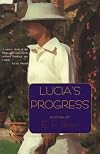
Lucia and Mapp's adventures in Tilling continue in LUCIA'S PROGRESS, previously published in the U.S. as THE WORSHIPFUL LUCIA. In this volume both Lucia and Mapp stand for election to the Town Council, and Lucia speculates in gold shares. While re-decorating Miss Mapp's house, Lucia "discovers" and hide the remains of a Roman Villa. Excitements ensue!Tags
Recommendations




















Member Reviews
More ruthless scheming and social climbing set in a small English town in the late 1920s. Lucia and Elizabeth's determined games of one-upmanship are bitter because the stakes are so low. E.F. Benson writes with a clear eye for the satirical possibilities of Tilling and its inhabitants, and there's much here that's very amusing, but perhaps without quite the bite of the previous installment in the series.
I wonder how how E.F. Benson devised the idea of including Emmeline "Lucia" Lucas and Elizabeth Mapp, both conniving, social-climbing queen bees, in the same book. I can imagine it now: In a moment of leisure, Benson suddenly had a stroke of brilliance: Include Mrs. Lucas and Miss Mapp in the same novel and watch the fur fly!
Elizabeth Mapp has long been the uncontested queen of Tilling society -- at least in her own mind; however, when Lucia takes Mapp's cottage for a two-month holiday, she can no more not dominate her social mileu than a shark can survive without swimming. Before chapter 5 in Miss Mapp and Lucia, Lucia has begun her plan to "teach [Miss Mapp] her place." Needless to say, Miss Mapp isn't about to abdicate the throne show more without a fight, and plots, in her own words, a "romantic revenge on that upstart visitor for presuming to set herself up as Queen of the social life of Tilling." But Miss Mapp is slow to grasp just how tenacious an opponent she has in Lucia. Which of these femmes formidables will prevail in this battle for top social billing?
In Lucia's Progress, the next book in the series, Lucia feels listless. Having accomplished so much and with her 50th birthday fast approaching, Lucia feels ennui: What has she really accomplished? Lucia hits on several schemes to give her life greater meaning. When a tipsy Colonel Benjy Flint reveals that he's standing for Town Council, Lucia decides to run for Town Council of Tilling (a thinly fictionalized portrait of Rye in East Sussex), too. Needless to say, Miss Mapp throws herself into thwarting Lucia's political ambitions. In addition to politics, Lucia turns her hand to archeology (having decided her house is built atop a Roman ruin), culture, philanthropy, sports, and -- could it be? -- matrimony. What are the results? Well, the title of the volume that anthologizes all of the Lucia works isn't called Make Way for Lucia for nothing!
I've loved all of the Lucia books, and Mapp and Lucia is probably the best. The clashes between Lucia Lucas and Elizabeth Mapp deliver laugh-out-loud hilarity. However, be sure to read the books in order -- Queen Lucia, which introduces us to Lucia in her native setting of Riseholme, and its sequel, Lucia in London, in which Lucia takes her snobbery and social climbing to greater heights in the big city, and Miss Mapp, which introduces the calculating, miserly and passive-aggressive busybody Elizabeth Mapp -- before reading Mapp and Lucia and its sequel, Lucia's Progress. The latter two are paired in an extremely reasonably priced Kindle edition. show less
Elizabeth Mapp has long been the uncontested queen of Tilling society -- at least in her own mind; however, when Lucia takes Mapp's cottage for a two-month holiday, she can no more not dominate her social mileu than a shark can survive without swimming. Before chapter 5 in Miss Mapp and Lucia, Lucia has begun her plan to "teach [Miss Mapp] her place." Needless to say, Miss Mapp isn't about to abdicate the throne show more without a fight, and plots, in her own words, a "romantic revenge on that upstart visitor for presuming to set herself up as Queen of the social life of Tilling." But Miss Mapp is slow to grasp just how tenacious an opponent she has in Lucia. Which of these femmes formidables will prevail in this battle for top social billing?
In Lucia's Progress, the next book in the series, Lucia feels listless. Having accomplished so much and with her 50th birthday fast approaching, Lucia feels ennui: What has she really accomplished? Lucia hits on several schemes to give her life greater meaning. When a tipsy Colonel Benjy Flint reveals that he's standing for Town Council, Lucia decides to run for Town Council of Tilling (a thinly fictionalized portrait of Rye in East Sussex), too. Needless to say, Miss Mapp throws herself into thwarting Lucia's political ambitions. In addition to politics, Lucia turns her hand to archeology (having decided her house is built atop a Roman ruin), culture, philanthropy, sports, and -- could it be? -- matrimony. What are the results? Well, the title of the volume that anthologizes all of the Lucia works isn't called Make Way for Lucia for nothing!
I've loved all of the Lucia books, and Mapp and Lucia is probably the best. The clashes between Lucia Lucas and Elizabeth Mapp deliver laugh-out-loud hilarity. However, be sure to read the books in order -- Queen Lucia, which introduces us to Lucia in her native setting of Riseholme, and its sequel, Lucia in London, in which Lucia takes her snobbery and social climbing to greater heights in the big city, and Miss Mapp, which introduces the calculating, miserly and passive-aggressive busybody Elizabeth Mapp -- before reading Mapp and Lucia and its sequel, Lucia's Progress. The latter two are paired in an extremely reasonably priced Kindle edition. show less
NOTE: This review applies to the entire Mapp and Lucia series.
This appears to be one of those series that people either love or hate. Set in the early decades of the 20th century, E.F. Benson skewers the frivolous lives of the elite in rural English villages. The heroine is Mrs. Emmeline Lucas, known to all as Lucia (the Italian pronunciation, if you please). Lucia rules the village of Riseholme with an iron fist in a velvet glove, ruthlessly running the social lives of the others in her social class. Despite their occasional resentment and attempts to break free of Lucia's influence, the village invariably finds life gray and boring without their benevolent dictator in residence.
The second book in the series, Miss Mapp, at first show more appears to be a completely unrelated book, as Lucia does not appear and instead the main character is Elizabeth Mapp, a never-married woman "of a certain age" in the village of Tilling. Like Lucia, she rules her social class with a strong will, although with somewhat less grace than her counterpart in Riseholme. The third book, Lucia in London, leaves Mapp and Tilling behind and returns to focus on Lucia, this time on her adventures during the social season in London.
Finally, in Book Four (Mapp and Lucia), the irresistible force (Lucia) meets the immovable object (Mapp) when Lucia decides to move to Tilling. This town is not big enough for both of them to rule, and the schemes and shenanigans that ensue are delightfully sharp and witty. Their tussles continue in the final two books in the series, Lucia's Progress and Trouble for Lucia.
The lives of the people spotlighted in Riseholme and in Tilling are spectacularly shallow. The biggest intrigues involve who is paired with who at the evening bridge games, and gossip is traded freely during the morning marketing, when anyone who is anyone gathers on the High Street with their baskets and their cutting observations. Scarcely a reference is ever made to world wars or depressions, even though both raged throughout the time period of these books. To read such accounts written in a serious manner would be intolerably smug, but Benson's writing is slyly cutting, as he appears to take all of the plotting with the utmost sincerity even while winking at the reader with his asides.
Readers who prefer their heroes and heroines to be a bit less shallow and a bit more kind will find the Lucia series less than enjoyable, as will those readers neither old enough to remember the early 20th century nor with any interest in life among the middle class (being, in those days and in that country, truly in the middle between the poor and working classes on one end and the aristocracy on the other). Those who, like me, enjoy a sharp bite to their fiction will find themselves alternately rooting for the downfall of Mapp and Lucia and cheering their subsequent rise back to prominence. show less
This appears to be one of those series that people either love or hate. Set in the early decades of the 20th century, E.F. Benson skewers the frivolous lives of the elite in rural English villages. The heroine is Mrs. Emmeline Lucas, known to all as Lucia (the Italian pronunciation, if you please). Lucia rules the village of Riseholme with an iron fist in a velvet glove, ruthlessly running the social lives of the others in her social class. Despite their occasional resentment and attempts to break free of Lucia's influence, the village invariably finds life gray and boring without their benevolent dictator in residence.
The second book in the series, Miss Mapp, at first show more appears to be a completely unrelated book, as Lucia does not appear and instead the main character is Elizabeth Mapp, a never-married woman "of a certain age" in the village of Tilling. Like Lucia, she rules her social class with a strong will, although with somewhat less grace than her counterpart in Riseholme. The third book, Lucia in London, leaves Mapp and Tilling behind and returns to focus on Lucia, this time on her adventures during the social season in London.
Finally, in Book Four (Mapp and Lucia), the irresistible force (Lucia) meets the immovable object (Mapp) when Lucia decides to move to Tilling. This town is not big enough for both of them to rule, and the schemes and shenanigans that ensue are delightfully sharp and witty. Their tussles continue in the final two books in the series, Lucia's Progress and Trouble for Lucia.
The lives of the people spotlighted in Riseholme and in Tilling are spectacularly shallow. The biggest intrigues involve who is paired with who at the evening bridge games, and gossip is traded freely during the morning marketing, when anyone who is anyone gathers on the High Street with their baskets and their cutting observations. Scarcely a reference is ever made to world wars or depressions, even though both raged throughout the time period of these books. To read such accounts written in a serious manner would be intolerably smug, but Benson's writing is slyly cutting, as he appears to take all of the plotting with the utmost sincerity even while winking at the reader with his asides.
Readers who prefer their heroes and heroines to be a bit less shallow and a bit more kind will find the Lucia series less than enjoyable, as will those readers neither old enough to remember the early 20th century nor with any interest in life among the middle class (being, in those days and in that country, truly in the middle between the poor and working classes on one end and the aristocracy on the other). Those who, like me, enjoy a sharp bite to their fiction will find themselves alternately rooting for the downfall of Mapp and Lucia and cheering their subsequent rise back to prominence. show less
This book seems to go by two different titles. I also found it under Lucia's Progress. It is 5th in the wonderful Mapp & Lucia series.
Lucia has turned 50, and is feeling as if she has wasted her life.
"'I must put up in large capital letters over my bed 'I am fifty'', she thought as she let herself into her house,'and that will remind me every morning and evening that I've done nothing yet which will be remembered after I am gone. I've been busy (I will say that for myself) but beyond giving others a few hours of enchantment at the piano, and helping them to keep supple, I've done nothing for the world or indeed for Tilling. I must take myself in hand.'"
The stories are set in the period between the wars, and finances are changing. show more Lucia decides to try investing in the market. Of course, Elizabeth Mapp follows Lucia's lead with hilarious results. Gossip, cards, dinner parties, golf, and more gossip are the things that take up the life of the people of Tilling. Jealousies, house swapping, and local politics add to the fun. E.F. Benson's social commentary is filled with the wry British humor of the time.
There is only one book left in Benson's series. I will be sad to see it end, but I am sure this series will warrant a re-read at some point.
Read Dec 2013 show less
Lucia has turned 50, and is feeling as if she has wasted her life.
"'I must put up in large capital letters over my bed 'I am fifty'', she thought as she let herself into her house,'and that will remind me every morning and evening that I've done nothing yet which will be remembered after I am gone. I've been busy (I will say that for myself) but beyond giving others a few hours of enchantment at the piano, and helping them to keep supple, I've done nothing for the world or indeed for Tilling. I must take myself in hand.'"
The stories are set in the period between the wars, and finances are changing. show more Lucia decides to try investing in the market. Of course, Elizabeth Mapp follows Lucia's lead with hilarious results. Gossip, cards, dinner parties, golf, and more gossip are the things that take up the life of the people of Tilling. Jealousies, house swapping, and local politics add to the fun. E.F. Benson's social commentary is filled with the wry British humor of the time.
There is only one book left in Benson's series. I will be sad to see it end, but I am sure this series will warrant a re-read at some point.
Read Dec 2013 show less
The fifth book in the Mapp / Lucia series, published in 1935. Lucia is now permanently established in Tilling, and launches herself with gusto into everything from high finance and local politics to archaeology and the cricket club. Miss Mapp isn't going to let her take over Tilling society without a fight, but Lucia is usually more than a match for her.
Like Mapp and Lucia, this is Benson on top form, intricately plotted and full of hilariously telling social detail.
Like Mapp and Lucia, this is Benson on top form, intricately plotted and full of hilariously telling social detail.
Geez, was this written by an upper middle-class chap for the amusement of other upper middle-class folk after having read Jane Austen and Mrs. Gaskell? This is by no means the wonderful, sly, comedy of manners that Austen wrote so exquisitely, nor the lovely involvement of the world of Cranford that Mrs. Gaskell (when not feeling socially and politically motivated) wrote about. Angst-ridden social climbers, amusing to his intended audience or those who had aspirations to be that class, but not to me. I don't know why I bothered finishing it.
I thought that I had read the entire Mapp & Lucia series but nothing in this 5th entry in the series struck me as familiar. In any case, I continue to enjoy the rivalry between Miss Mapp (now Mrs. Mapp-Flint) and Lucia!
Members
- Recently Added By
Lists

Books Read in 2021
5,361 works; 114 members

Folio Society
831 works; 53 members
Author Information

256+ Works 9,808 Members
Some Editions
Series

Work Relationships
Is contained in
Common Knowledge
- Canonical title
- Lucia's Progress
- Original title
- Lucia's Progress
- Alternate titles
- The Worshipful Lucia (USA) (USA)
- Original publication date
- 1935
- People/Characters
- Emmeline Lucas (Lucia); Elizabeth Mapp (Elizabeth Mapp-Flint); Georgie Pillson; Benjamin Flint (Benjamin Mapp-Flint, Major Benjy); Godiva Plaistow; Foljambe (Georgie's parlourmaid) (show all 17); Godiva Plaistow (Diva); Algernon Wyse; Susan Wyse; Grosvenor (Lucia's parlourmaid); Evie Bartlett; Kenneth Bartlett (Padre); Irene Coles (Quaint Irene); Lucy (Quaint Irene's parlourmaid); Mr. Twistevant; Amelia Faraglione (Contessa); Mr. Meriton
- Important places
- Tilling, Hampshire, England, UK; Grebe, Tilling, Hampshire, England, UK; Mallards, Tilling, Hampshire, England, UK; Mallards Cottage, Tilling, Hampshire, England, UK; Starlings Cottage, Porpoise Street, Tilling, Hampshire, England, UK
- Dedication
- Cordially dedicated to the Marquess of Carisbrooke
- First words
- Mrs. Emmeline Lucas was walking briskly and elegantly up and down the cinder path which traversed her kitchen garden and was so conveniently dry underfoot even after heavy rain.
- Last words
- (Click to show. Warning: May contain spoilers.)"Yes, I think it does suit us," said Georgie, blushing a little.
- Original language
- English
Classifications
Statistics
- Members
- 466
- Popularity
- 65,104
- Reviews
- 9
- Rating
- (4.27)
- Languages
- English, French, German
- Media
- Paper, Audiobook, Ebook
- ISBNs
- 21
- ASINs
- 9