On This Page
Description
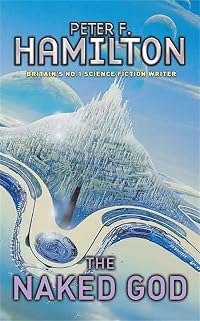
The Confederation is starting to collapse politically and economically, allowing the "possessed" to infiltrate more worlds. Quinn Dexter is loose on Earth, destroying the giant arcologies one at a time. As Louise Kavanagh tries to track him down, she manages to acquire some strange and powerful allies whose goal doesn't quite match her own. The campaign to liberate Mortonridge from the possessed degenerates into a horrendous land battle, the kind which hasn't been seen by humankind for six show more hundred years; then some of the protagonists escape in a very unexpected direction. Joshua Calvert and Syrinx fly their starships on a mission to find the Sleeping God, which an alien race believes holds the key to overthrowing the possessed. The Naked God is the brilliant climax to Peter F. Hamilton's awe-inspiring Night's Dawn trilogy. show lessTags
Recommendations




Member Reviews
This book single handedly made me stop reading sci-fi/fantasy for several years, which I guess I should be thankful for. The ending to this book and series is honestly one of the most incomprehensibly badly written endings to any book I've ever seen, and it was especially stunning given how highly regarded this series seems to be. The series itself is full of misogyny, has a blatant self insert as a main character who every woman finds super sexy and who solves everything amazingly perfectly but it has enjoyable moments and although the set up is kind of ridiculous there are some cool ideas - the series has REALLY cool aliens, comparatively, who are actually sketched interestingly and I really liked the scenes they were in. And then. show more You get to the ending of this. And it makes everything that came before come that much worse. Details are somewhat hazy 6 years from when I read it but what actually happened was at least as absurd as what I say.
The ending is a literal deus ex machina. Fair enough, it's telegraphed throughout the book. But. So they find this thing which is literally like a kind of god. And it's also like some sort of genie wishing thing. And then of course the main character "takes responsibility" for resolving the plot. And he becomes god for a while. And it's the most macho thing. He's got the perfect brain to not go ~mad with power~ apparently and so he just does the necessary "common sense" things. One of the things of the book is that each alien species has to deal eventually with all the dead people who are trapped in the other dimension, they have to find some way to soothe their pain and let them carry on. So what does main character do? He does something dimensionally so all the dead who are possessing human bodies are sent back into the afterlife. IIRC they go to the "good" afterlife this time but there's a specific point about humans "not being responsible" enough or something so they couldn't do things "properly" but it was an absurd solution to a big built up point and to the entire plot of the books - like 2 pages "right they're gone now we don't have to deal with that, thanks god". There's also a plot thread about one of the alien species preparing to invade human planets. This is solved by all the human planets being moved far away to a different part of the galaxy. They're also made closer together to reduce fuel problems. No, seriously. All the plot points in the books which have been built up over and over are just done, 10 pages max. All the dead characters we've seen before? No serious goodbyes, they just go. And main character gets his perfect dream life where he gains superhuman powers too. Woooo. Great book.
I realised after reading this that so much sci-fi is like this - crappy self insert character with a bad plot that even if it has good ideas or good "world building" inevitably fizzles out in an awful way, after way too much writing. It was a good wake up call. Don't read this series. Oh and another thing - the entire second book is almost 100% irrelevant -the big plot point throughout the book gets tossed right near the end and barely anything else actually happens show less
I realised after reading this that so much sci-fi is like this - crappy self insert character with a bad plot that even if it has good ideas or good "world building" inevitably fizzles out in an awful way, after way too much writing. It was a good wake up call. Don't read this series. Oh and another thing - the entire second book is almost 100% irrelevant -
Hamilton finishes his trilogy with a bang. The novel opens pretty much where the second one closes and it follows the already familiar pattern - a lot of subplots and characters, returning to each in a somewhat random orders; a lot of new characters (and races) showing up (and some of them dying almost immediately). And the observers - more than one race, and being always where they should be to help humanity (or whoever). It was hinted in the earlier books but here this is taken to a whole new level, with pretty much any event being explained with a deus ex machina device (or race, or an observer, or just a blind chance). Which works to some extent (there is nothing that could have worked really) - and excluding the very end. To which show more I will return shortly.
It's another broad picture of the world - with all the problems (humans had not changed that much) and sometimes with the stupid mistakes that only we can do. Battles, destruction, love, interests - you can find anything. Plus space travel, a lot of technical and astronomical talk, the thinking habitats (some of them ending up a lot more surprising and powerful than anyone thought). But at the same time, Hamilton decides to make sure that Joshua has a clean way to the end - emotionally at least - battles and flying and whatsnot is still around but any time when he should have taken a really important decision, something happened and left him with a clear path. Yes - most of those were because other people took the hard decisions but still.
Until the very end. I have NO issues whatsoever with the Sleeping God and that it would be there or the way it was important to the story. But Joshua's choices and actions were... probably the best word will be scripted. They all had good reasons but something just sounded more like a "and they lived happily ever after" than the end of this trilogy. And the observers, the knowledge, the Sleeping God and everything else were not forcing these decisions and choices - they were a happy end kind of solution when almost anything else would have been a lot more logical (and satisfactory).
Overall, the trilogy is worth reading. Despite the very end - even if the third book was weaker in some ways, it did wrap up most of the tangling ends and finished what the first 2 had started. It is an adventure story on a grand scale but at the same time it builds a possible future that I can just imagine happening (and that is why I wish the choice Joshua made was different). And I am not even upset about the whole observers/deus ex machina elements (as a lot of the reviews and talks I had seen had been) - there was nothing else that could have worked and it did make sense (well... I found some of them unnecessary but...) show less
It's another broad picture of the world - with all the problems (humans had not changed that much) and sometimes with the stupid mistakes that only we can do. Battles, destruction, love, interests - you can find anything. Plus space travel, a lot of technical and astronomical talk, the thinking habitats (some of them ending up a lot more surprising and powerful than anyone thought). But at the same time, Hamilton decides to make sure that Joshua has a clean way to the end - emotionally at least - battles and flying and whatsnot is still around but any time when he should have taken a really important decision, something happened and left him with a clear path. Yes - most of those were because other people took the hard decisions but still.
Until the very end. I have NO issues whatsoever with the Sleeping God and that it would be there or the way it was important to the story. But Joshua's choices and actions were... probably the best word will be scripted. They all had good reasons but something just sounded more like a "and they lived happily ever after" than the end of this trilogy. And the observers, the knowledge, the Sleeping God and everything else were not forcing these decisions and choices - they were a happy end kind of solution when almost anything else would have been a lot more logical (and satisfactory).
Overall, the trilogy is worth reading. Despite the very end - even if the third book was weaker in some ways, it did wrap up most of the tangling ends and finished what the first 2 had started. It is an adventure story on a grand scale but at the same time it builds a possible future that I can just imagine happening (and that is why I wish the choice Joshua made was different). And I am not even upset about the whole observers/deus ex machina elements (as a lot of the reviews and talks I had seen had been) - there was nothing else that could have worked and it did make sense (well... I found some of them unnecessary but...) show less
I've said it before, these books are too damn long. I think the majority of the problem is that Hamilton takes half of his wordcount and puts it into character-building and while this is admirable, his characters are kind of shit. Louise is the damsel in distress, Dexter is almost literally the force of all evil and Joshua is Space Adventure Cobra, and while SAC was just silly enough to be thouroughly entertaining, Joshua just permanently pissed me the fuck off (and I'm not even mentioning fucking Al Capone...). Ione could have been a pretty cool powerful woman in the series except that she does almost nothing of consequence. I think you can throw thousands of pages at these characters while not adding a millimeter of depth to them show more because they are just so very archtypical.
All in all, I don't actually mind the characters being bad, that is not really what I'm looking for in a gigantic space opera series. I'm looking to have my brain crammed full of fresh ideas about a time that i will never experience. It did dissapoint me because in between these books I read the entire "Rememberance of Earths past" series by Cixin Liu which does exactly that. So, while I'm not actively annoyed at Hamiltons' character building, I am kind of mad that it took up such a large part of the series to the point that I was simultaneously exited to read the rest of the series and entirely unmotivated to wade through hundreds of pages with fucking Al Capone. Also, having read this last installment I am not sure what the point was of book 2. At all.
So, I did enjoy myself with these books, but they were not worth the massive amount of time and discipline I put in reading it. (I know, I know) show less
All in all, I don't actually mind the characters being bad, that is not really what I'm looking for in a gigantic space opera series. I'm looking to have my brain crammed full of fresh ideas about a time that i will never experience. It did dissapoint me because in between these books I read the entire "Rememberance of Earths past" series by Cixin Liu which does exactly that. So, while I'm not actively annoyed at Hamiltons' character building, I am kind of mad that it took up such a large part of the series to the point that I was simultaneously exited to read the rest of the series and entirely unmotivated to wade through hundreds of pages with fucking Al Capone. Also, having read this last installment I am not sure what the point was of book 2. At all.
So, I did enjoy myself with these books, but they were not worth the massive amount of time and discipline I put in reading it. (I know, I know) show less
“I’m an appropriate companion personality for a girl your age, young missy. We spent all night ransacking that library to see what I should be like. You got any idea what it’s like watching eight million hours of Disney AVs?”
In "The Naked God" by Peter F. Hamilton
Hamilton is giving Doc Smith a reboot. That’s what I thought of when I tried to read some of Hamilton back in the day and didn’t like it, namely "Night’s Dawn" trilogy. Everything in the book is the biggest, baddest, most world-ending threat anyone has ever seen—until the next thing shows up in a couple chapters. The alien technology is always perfect and unassailable. And the above excerpt exhibits some hallmarks of the same juvenilia. I’m gonna pass. Also show more that’s not to mention the super off-putting sexual dynamics in those books. Written in the 90s by the way. Not joking, almost every single female character is a slut and/or brazen nymphomaniac. Except the ones who are soulless demons, well actually some of them are sluts too. The main dude sleeps with much all of them.
(Bought in 1999)
And they are pretty much all killed or in some way punished exactly in proportion to their sluttiness, except the one who’s loyal to the main dude. I’m all for sex and even occasional "male gaze" in my SF. But this author is or was, completely over the top. "The Naked God", being the final volume of the trilogy, returns to an exacerbated version of the flaws that were so prevalent in the first book’s structure. Once again, we’re seeing events through several hard to connect plot threads, and since the number only swells as the series progressed, the amount of different side stories is truly unwieldy by this point making it a mess by the end of it. And don't get me started on the plot twists: "We just created a bunch of immensely powerful weapons using future knowledge." Now ground them and only copy information on how to build them in an unsupervised asteroid in a unsupervised solar system of your choosing. It's not like that Ultras are nomadic and roam all around known space, and are capable of hacking the locks... (*I know what you're thinking*)
All in all I prefer "Doc" Smith. show less
In "The Naked God" by Peter F. Hamilton
Hamilton is giving Doc Smith a reboot. That’s what I thought of when I tried to read some of Hamilton back in the day and didn’t like it, namely "Night’s Dawn" trilogy. Everything in the book is the biggest, baddest, most world-ending threat anyone has ever seen—until the next thing shows up in a couple chapters. The alien technology is always perfect and unassailable. And the above excerpt exhibits some hallmarks of the same juvenilia. I’m gonna pass. Also show more that’s not to mention the super off-putting sexual dynamics in those books. Written in the 90s by the way. Not joking, almost every single female character is a slut and/or brazen nymphomaniac. Except the ones who are soulless demons, well actually some of them are sluts too. The main dude sleeps with much all of them.
(Bought in 1999)
And they are pretty much all killed or in some way punished exactly in proportion to their sluttiness, except the one who’s loyal to the main dude. I’m all for sex and even occasional "male gaze" in my SF. But this author is or was, completely over the top. "The Naked God", being the final volume of the trilogy, returns to an exacerbated version of the flaws that were so prevalent in the first book’s structure. Once again, we’re seeing events through several hard to connect plot threads, and since the number only swells as the series progressed, the amount of different side stories is truly unwieldy by this point making it a mess by the end of it. And don't get me started on the plot twists: "We just created a bunch of immensely powerful weapons using future knowledge." Now ground them and only copy information on how to build them in an unsupervised asteroid in a unsupervised solar system of your choosing. It's not like that Ultras are nomadic and roam all around known space, and are capable of hacking the locks... (*I know what you're thinking*)
All in all I prefer "Doc" Smith. show less
This particular novel was almost 1,200 pages and between it and the other two in the ongoing single story that takes up this trilogy, it's almost 3000 pages. Let me stress this: It's a single story. This isn't a huge ongoing big-book deal like the one Robert Jordan made... but it's close.
And it's epic Space-Opera with anti-mater explosions, the dead coming back to take over the living, vast interstellar exploration, hunting for a god, and lots and lots of regular people just happening to make up pop superstars, Al Capone, runaway rich kids, and the fate of us all... considering the idea that souls persist. The dead come back. And we have a choice to make... as a species.
The aliens refuse to get involved. They had to make their own show more choices when it came to this.
In the meantime, humanity is devolving in a war between possessed bodies and the high-tech remaining populace. Earth is under siege. Both sides are running out of options even with the ability to transmute matter, move whole planets, put themselves in zero-tau, or live in shared-consciousness ecologies. :)
Just... wow. The ideas and the buildup is freaking amazing.
BUT. I should mention, the execution is often bloated, full of long sequences about nothing much in particular, and while it helps develop characters, there's just SO MUCH OF IT and I found myself wanting the really BIG stuff to happen. And it eventually does. The reward for putting up with over 50 hours of this third novel is well worth the wait. :) BUT.
My observation? Be patient. Enjoy the ride. It's not a race. Enjoy this honker of a novel for what it is and watch the original Poltergeist again for the sheer enjoyment of it. :) show less
And it's epic Space-Opera with anti-mater explosions, the dead coming back to take over the living, vast interstellar exploration, hunting for a god, and lots and lots of regular people just happening to make up pop superstars, Al Capone, runaway rich kids, and the fate of us all... considering the idea that souls persist. The dead come back. And we have a choice to make... as a species.
The aliens refuse to get involved. They had to make their own show more choices when it came to this.
In the meantime, humanity is devolving in a war between possessed bodies and the high-tech remaining populace. Earth is under siege. Both sides are running out of options even with the ability to transmute matter, move whole planets, put themselves in zero-tau, or live in shared-consciousness ecologies. :)
Just... wow. The ideas and the buildup is freaking amazing.
BUT. I should mention, the execution is often bloated, full of long sequences about nothing much in particular, and while it helps develop characters, there's just SO MUCH OF IT and I found myself wanting the really BIG stuff to happen. And it eventually does. The reward for putting up with over 50 hours of this third novel is well worth the wait. :) BUT.
My observation? Be patient. Enjoy the ride. It's not a race. Enjoy this honker of a novel for what it is and watch the original Poltergeist again for the sheer enjoyment of it. :) show less
A flawed masterpiece.
The flaws are linguistic. Word for word, Hamilton is not the best writer ever born. He sometimes runs two sentences together with a comma, this can be annoying. Also, sometimes you know what he means, but technically he hasn't said it.
On the other hand, he a superb story teller, with amazing control over many different strands. The themes are broadly sociological, mainly religion, politics and government, and social stratification. What really struck me, and which have stayed with me in the ten years since I first read it, are the ideas. It's like Arthur C Clarke, Iain M Banks and the internet all taken to the nth degree. Superb!
It's a long novel subdivided into three parts rather than a trilogy in the normal sense. show more There's no point reading this if you haven't read the first two. It's well worth it. Here all secrets are revealed and the Kiint are on top form. show less
The flaws are linguistic. Word for word, Hamilton is not the best writer ever born. He sometimes runs two sentences together with a comma, this can be annoying. Also, sometimes you know what he means, but technically he hasn't said it.
On the other hand, he a superb story teller, with amazing control over many different strands. The themes are broadly sociological, mainly religion, politics and government, and social stratification. What really struck me, and which have stayed with me in the ten years since I first read it, are the ideas. It's like Arthur C Clarke, Iain M Banks and the internet all taken to the nth degree. Superb!
It's a long novel subdivided into three parts rather than a trilogy in the normal sense. show more There's no point reading this if you haven't read the first two. It's well worth it. Here all secrets are revealed and the Kiint are on top form. show less
Well that took just over three weeks to read. There is more of a sense of accomplishment from reading this last volume of the Night’s Dawn Trilogy than with the others. Due to each volume being a continuation of the previous ones finishing the last volume feels like having just read a 3000 pages book, rather than just a measly 1000 or so pages.
I have been a little too lenient with my rating of the books in this series I think. At more than 1000 pages per volume I clearly have to like the books quite a lot to go through all those pages. However, the books are clearly overwritten with quite a few superfluous characters and scenes. There are so many side characters I forget who half of them are. Still, to Hamilton’s credit his show more narrative style is always readable, often quite riveting and the less exciting scenes never actually grind to a halt. I never felt like I was wading through molasses of dense, yawn-inducing text.
The Naked God of course carries on immediately from where the [b:The Neutronium Alchemist Night's Dawn 2|479561|The Neutronium Alchemist (Night's Dawn, #2)|Peter F. Hamilton|https://d202m5krfqbpi5.cloudfront.net/books/1347555003s/479561.jpg|6519560] left off. The possessed people are generally at war with the living except for the few nice or heroic possessed characters. Some planets and one city have been moved by the possessed to another dimension where they expect that they will be free to live their stolen lives. As with the previous volumes there are multiple plot strands to follow and it is to Hamilton’s credit that they are not hard to follow, though some subplots are more interesting than others.
In some way the Night’s Dawn Trilogy is comparable to “science fantasy” books like Edgar Rice Burroughs’ Barsoom (John Carter) series or C.S. Lewis’ Space Trilogy due to the inclusion of magical or supernatural elements like possession, ghosts and souls, not to mention the possessed characters wielding seemingly magical powers including conjuring things out of thin air. However, for this third volume Hamilton incorporates more actual science into the story than the previous ones with expositions about event horizons, naked singularities, anti-matter etc. The more “magical” elements are explained away with “handwavium” pseudo-science.
Hamilton puts a lot of effort into developing characters though some of them turn out to be quite irritating. The worst by far is the uber- possessed Quin Dexter who for some reason is blessed with the power of invisibility. This would be fine if he has more of a formidable “dark lord” type of personality rather than the foulmouthed yobbo thing he does. On the side of the angels Joshua Calvert and Louise Kavanagh are not quite believable.
One frequent criticism of this book that I have come across is the “Deus Ex Machina” ending. I personally don’t mind it too much as I feel Hamilton had been building up to it from the first book, he did not simply pull this ending out of his backside. It reminds me of the climax of a Doctor Who episode called “The Parting of the Ways”. If you have no idea what I am talking about all I can say is “I’m so so sorry!”
The main strength of this book and the series as a whole is surely the meticulous worldbuilding. I imagine the creative process involves a lot of graphing, flow charting, mind mapping and such. You get a sense of the size of the universe by the diverse settings which encompasses other continuums and the very strange creatures that live in them. Fans of inscrutable weird aliens should have nothing to complain about.
I always find Hamilton’s prose style reader-friendly without being either literary or hack-like. The odd metaphysical or philosophical passages are quite thought provoking while the few pervy sex scenes barely readable. I was quite pleased when I arrived at the end of the book and found the series to be an overwritten but fun read. Peter F. Hamilton has gone on to write better books and series. I have probably read enough from him for this year but I definitely intend to wade through more of his mega-tomes next year.
4.5 stars for the book and the series as a whole then, I am penalizing him half a star for excessive writing and he is getting off lightly here! show less
I have been a little too lenient with my rating of the books in this series I think. At more than 1000 pages per volume I clearly have to like the books quite a lot to go through all those pages. However, the books are clearly overwritten with quite a few superfluous characters and scenes. There are so many side characters I forget who half of them are. Still, to Hamilton’s credit his show more narrative style is always readable, often quite riveting and the less exciting scenes never actually grind to a halt. I never felt like I was wading through molasses of dense, yawn-inducing text.
The Naked God of course carries on immediately from where the [b:The Neutronium Alchemist Night's Dawn 2|479561|The Neutronium Alchemist (Night's Dawn, #2)|Peter F. Hamilton|https://d202m5krfqbpi5.cloudfront.net/books/1347555003s/479561.jpg|6519560] left off. The possessed people are generally at war with the living except for the few nice or heroic possessed characters. Some planets and one city have been moved by the possessed to another dimension where they expect that they will be free to live their stolen lives. As with the previous volumes there are multiple plot strands to follow and it is to Hamilton’s credit that they are not hard to follow, though some subplots are more interesting than others.
In some way the Night’s Dawn Trilogy is comparable to “science fantasy” books like Edgar Rice Burroughs’ Barsoom (John Carter) series or C.S. Lewis’ Space Trilogy due to the inclusion of magical or supernatural elements like possession, ghosts and souls, not to mention the possessed characters wielding seemingly magical powers including conjuring things out of thin air. However, for this third volume Hamilton incorporates more actual science into the story than the previous ones with expositions about event horizons, naked singularities, anti-matter etc. The more “magical” elements are explained away with “handwavium” pseudo-science.
Hamilton puts a lot of effort into developing characters though some of them turn out to be quite irritating. The worst by far is the uber- possessed Quin Dexter who for some reason is blessed with the power of invisibility. This would be fine if he has more of a formidable “dark lord” type of personality rather than the foulmouthed yobbo thing he does. On the side of the angels Joshua Calvert and Louise Kavanagh are not quite believable.
One frequent criticism of this book that I have come across is the “Deus Ex Machina” ending. I personally don’t mind it too much as I feel Hamilton had been building up to it from the first book, he did not simply pull this ending out of his backside. It reminds me of the climax of a Doctor Who episode called “The Parting of the Ways”. If you have no idea what I am talking about all I can say is “I’m so so sorry!”
The main strength of this book and the series as a whole is surely the meticulous worldbuilding. I imagine the creative process involves a lot of graphing, flow charting, mind mapping and such. You get a sense of the size of the universe by the diverse settings which encompasses other continuums and the very strange creatures that live in them. Fans of inscrutable weird aliens should have nothing to complain about.
I always find Hamilton’s prose style reader-friendly without being either literary or hack-like. The odd metaphysical or philosophical passages are quite thought provoking while the few pervy sex scenes barely readable. I was quite pleased when I arrived at the end of the book and found the series to be an overwritten but fun read. Peter F. Hamilton has gone on to write better books and series. I have probably read enough from him for this year but I definitely intend to wade through more of his mega-tomes next year.
4.5 stars for the book and the series as a whole then, I am penalizing him half a star for excessive writing and he is getting off lightly here! show less
Members
- Recently Added By
Author Information

123+ Works 42,676 Members
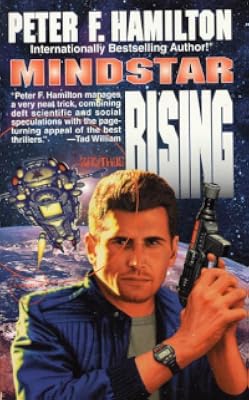
Peter F. Hamilton was born in Rutland, England on March 2, 1960. He started writing in 1987 and sold his first short story to Fear magazine in 1988. His first novel, Mindstar Rising, was published in 1993. His other works include the Night's Dawn series; Fallen Dragon; and the Void series. (Bowker Author Biography)
Some Editions
Series

Work Relationships
Is contained in
Contains
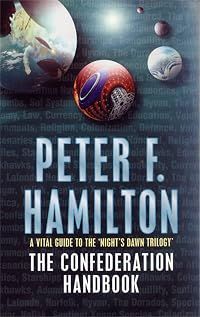
Has as a reference guide/companion
Common Knowledge
- Canonical title
- The Naked God
- Original title
- The Naked God
- Original publication date
- 1999-10
- First words
- Jay Hilton was sound asleep when every electrophorescent strip in the paediatric ward sprang up to full intensity.
- Original language
- English
- Disambiguation notice
- In some areas The Naked God is published as two separate books, The Naked God, Part 1: Flight and The Naked God, Part 2: Faith. This is the complete book, please do not combine it with either part.
Classifications
Statistics
- Members
- 2,214
- Popularity
- 9,119
- Reviews
- 20
- Rating
- (4.00)
- Languages
- English
- Media
- Paper, Audiobook, Ebook
- ISBNs
- 20
- ASINs
- 11