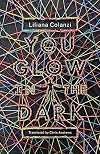
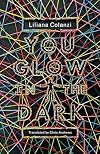
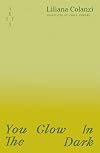
You Glow in the Dark
by Liliana Colanzi
On This Page
Description
"The seven stories of You Glow in the Dark unfold in a Latin America wrecked and poisoned by human greed, and yet Colanzi's writing-at once sleek and dense, otherworldly and intensely specific-casts an eerily bright spell over the wreckage. Some stories seem to be set in a near future; all are superbly executed and yet hard to pin down; they often leave the reader wondering: Was that realistic or fantastic? Colanzi draws power from Andean cyberpunk just as much as from classic horror show more writers, and this daring is matched by her energizing simultaneous use of multiplicity and fragmentation-the book's stylistic trademarks. Freely mixing worlds, she uses the Bolivian altiplano as the backdrop for an urban dystopia and blends Aymara with Spanish. Colanzi never gets bogged down; she can be brutal and direct or light-handed and subtle. Her materials are dark, but always there's the lift of her vivid sense of humor. You Glow in the Dark seizes the reader's attention (from the title on) and holds it: this is a book that announces the arrival of a major new talent"-- show lessTags
Recommendations




Member Reviews
“The Cave” - Nine mini-stories in a story reveal a cave in different times, and possibly different places/worlds as different animals and people interact. Everything is ephemeral as people are born and killed, meet for the last time as lovers, or as bats first experience a mutation and years later an extermination, and finally the cave itself is reduced to a hill.
“Atomito” - A group of friends deal with living in a dystopian society in an apartment near a nuclear power plant. Kurmi’s mother has died, and she has a constant migraine. Yoni works as a delivery man. Former DJ Orki disappears and then goes viral dancing towards the plant. There was something otherworldly about this place (for example, Yoni seems to be in a video show more game, getting gold coins raining down on him when he unlocks a new level in delivery), and I didn’t always get what was going on.
“The Debt” - A secretly pregnant young woman and her aunt return to their failing village of origin to collect on a debt owed to her aunt.
“Chaco” - A supremely odd story told from the perspective of a young white man whose drunk grandfather accuses him of being a liar, and who believes he is inhabited by an old Indian that he kills.
“The Greenest Eyes” - A little girl’s greatest wish is to have green eyes like her father.
“The Narrow Way” - One of two sisters in a cult that doesn’t allow electricity or other technological advancements narrates the story. Something about how much gets conveyed in a short space - the control of the Reverend and the demand for obedience, what’s considered a sin and what’s acceptable - is exceptionally eerie and unsettling. The narrator, Susana, doesn’t question it while her sister, Olga, “got tired of life on the narrow way.”
“You Glow in the Dark” - Vignettes pulled together in a short story based on a real event that happened in Goiânia, Brazil, in 1987, when a radioactive material is found by scrap metal dealers and several people go on to be contaminated.
Inventive and challenging, I enjoyed this collection even more than Our Dead World. show less
“Atomito” - A group of friends deal with living in a dystopian society in an apartment near a nuclear power plant. Kurmi’s mother has died, and she has a constant migraine. Yoni works as a delivery man. Former DJ Orki disappears and then goes viral dancing towards the plant. There was something otherworldly about this place (for example, Yoni seems to be in a video show more game, getting gold coins raining down on him when he unlocks a new level in delivery), and I didn’t always get what was going on.
“The Debt” - A secretly pregnant young woman and her aunt return to their failing village of origin to collect on a debt owed to her aunt.
“Chaco” - A supremely odd story told from the perspective of a young white man whose drunk grandfather accuses him of being a liar, and who believes he is inhabited by an old Indian that he kills.
“The Greenest Eyes” - A little girl’s greatest wish is to have green eyes like her father.
“The Narrow Way” - One of two sisters in a cult that doesn’t allow electricity or other technological advancements narrates the story. Something about how much gets conveyed in a short space - the control of the Reverend and the demand for obedience, what’s considered a sin and what’s acceptable - is exceptionally eerie and unsettling. The narrator, Susana, doesn’t question it while her sister, Olga, “got tired of life on the narrow way.”
“You Glow in the Dark” - Vignettes pulled together in a short story based on a real event that happened in Goiânia, Brazil, in 1987, when a radioactive material is found by scrap metal dealers and several people go on to be contaminated.
Inventive and challenging, I enjoyed this collection even more than Our Dead World. show less
Wow, are these stories deep and thoughtful. I wasn't too keen on them in the first half, but each story kept getting better until I was completely blown away by the last, titular short story, "You Glow in the Dark."
This book is a collection of seven short stories by Bolivian author Liliana Colanzi. I'd never heard of her before, and this very slim collection called out to me (there's just something about succinct stories lately), so it couldn't resist checking it out from the library. Each of the works are fairly dark and draw inspiration from both classic horror and Andean cyberpunk, according to the summary. It's impossible not to be intrigued by that.
Content warnings:
- infanticide (The Cave)
- racism against indigenous people (Chaco, show more The Narrow Way)
- genocide (Chaco)
- rape (Chaco)
- substance addiction (Chaco)
- LGBT slurs (Chaco)
- child abuse (Chaco)
- sexual assault, forced/coerced sex (Chaco)
- misogyny (The Narrow Way)
- abortion (The Narrow Way)
- ableism and ableist slurs (The Narrow Way)
- incest (The Narrow Way)
- white supremacy (The Narrow Way)
Many of these stories are fairly grim, and they sometimes get pretty violent. Many of them also focus on nature and pollution. The first story, The Cave, was the most interesting and experimental. It focuses on one location—a cave—and writes about the events that happened there, from the times of early man to the far future. Chaco, while definitely being the most difficult to read (aside from the very last one), was one of my favorites. Even if, though I know it was intentional, the racism against indigenous people took my breath away.
The theme continues in The Narrow Way, where white settlers have formed their own "pure" colony and where biracial children are not tolerated. "We are the people of the narrow way, who work the earth and speak the name of God while waiting for the end of time. Here we conquer nature by the force of tractors and prayer, taming the wilderness, subjecting it to order." As someone who was raised Catholic, this was definitely an experience. I've tried to describe to people how conquering nature is such a Christian thing (or maybe Western or even Abrahamic?), but many haven't recognized it yet. It's funny how a different perspective can lay it out so simply. The story had in amazing ending, but what's even better is how all of the themes were so cleanly integrated in the story itself. That's the sign of a great writer.
But that last story. All I have in my notes are the two words "holy shit." It seems to be a fictionalized retelling of the Goiânia accident, where a radiotherapy source was taken from an abandoned hospital site and passed around in 1987, Brazil. According to Wikipedia, "About 112,000 people were examined for radioactive contamination and 249 of them were found to have been contaminated." Four died. The ending of this one is particularly haunting (and departs from real life).
These stories will stay in my head a long while. I hope more of Colanzi's works get translated, because I would love to read them. She definitely deserves a wider audience. show less
This book is a collection of seven short stories by Bolivian author Liliana Colanzi. I'd never heard of her before, and this very slim collection called out to me (there's just something about succinct stories lately), so it couldn't resist checking it out from the library. Each of the works are fairly dark and draw inspiration from both classic horror and Andean cyberpunk, according to the summary. It's impossible not to be intrigued by that.
Content warnings:
- infanticide (The Cave)
- racism against indigenous people (Chaco, show more The Narrow Way)
- genocide (Chaco)
- rape (Chaco)
- substance addiction (Chaco)
- LGBT slurs (Chaco)
- child abuse (Chaco)
- sexual assault, forced/coerced sex (Chaco)
- misogyny (The Narrow Way)
- abortion (The Narrow Way)
- ableism and ableist slurs (The Narrow Way)
- incest (The Narrow Way)
- white supremacy (The Narrow Way)
Many of these stories are fairly grim, and they sometimes get pretty violent. Many of them also focus on nature and pollution. The first story, The Cave, was the most interesting and experimental. It focuses on one location—a cave—and writes about the events that happened there, from the times of early man to the far future. Chaco, while definitely being the most difficult to read (aside from the very last one), was one of my favorites. Even if, though I know it was intentional, the racism against indigenous people took my breath away.
The theme continues in The Narrow Way, where white settlers have formed their own "pure" colony and where biracial children are not tolerated. "We are the people of the narrow way, who work the earth and speak the name of God while waiting for the end of time. Here we conquer nature by the force of tractors and prayer, taming the wilderness, subjecting it to order." As someone who was raised Catholic, this was definitely an experience. I've tried to describe to people how conquering nature is such a Christian thing (or maybe Western or even Abrahamic?), but many haven't recognized it yet. It's funny how a different perspective can lay it out so simply. The story had in amazing ending, but what's even better is how all of the themes were so cleanly integrated in the story itself. That's the sign of a great writer.
But that last story. All I have in my notes are the two words "holy shit." It seems to be a fictionalized retelling of the Goiânia accident, where a radiotherapy source was taken from an abandoned hospital site and passed around in 1987, Brazil. According to Wikipedia, "About 112,000 people were examined for radioactive contamination and 249 of them were found to have been contaminated." Four died. The ending of this one is particularly haunting (and departs from real life).
These stories will stay in my head a long while. I hope more of Colanzi's works get translated, because I would love to read them. She definitely deserves a wider audience. show less
These stories lie somewhere in between sci-fi, dystopian border lit, Borges and Rulfo.
I liked a fair amount of these stories. The first two were so short, violent, and primal. It really got my attention. My favorites were "The Cave", "Chaco", "The Narrow Way" and "You Glow In the Dark".
A writer to watch. She's on my radar.
I liked a fair amount of these stories. The first two were so short, violent, and primal. It really got my attention. My favorites were "The Cave", "Chaco", "The Narrow Way" and "You Glow In the Dark".
A writer to watch. She's on my radar.
Ratings
Members
- Recently Added By
Lists

Favorite Books in Translation
320 works; 133 members

Books Read in 2025
4,090 works; 97 members
Author Information

11+ Works 167 Members
Some Editions
Awards and Honors
Awards
Distinctions
Common Knowledge
- Original title
- Ustedes brillan en lo oscuro
- Original publication date
- 2022
- Important places
- Guelaguetza, Oaxaca, Mexico; El Alto, Bolivia; La Ceja, El Alto, Bolivia; Goiânia, Goiás, Brazil
- Important events
- Goiânia accident
- Original language
- Spanish
- Canonical DDC/MDS
- 863.077622; 863.077621
Classifications
- Genres
- Fiction and Literature, General Fiction, Horror, Science Fiction
- DDC/MDS
- 863.077622 — Literature & rhetoric Spanish, Portuguese, Galician literatures Spanish fiction By Type Genre fiction Adventure fiction Speculative fiction Science fiction Post-apocalypse
- LCC
- PQ7822 .C653 .U8813 — Language and Literature French, Italian, Spanish and Portuguese literatures Spanish literature Provincial, local, colonial, etc. Spanish America
- BISAC
Statistics
- Members
- 82
- Popularity
- 386,256
- Reviews
- 3
- Rating
- (3.75)
- Languages
- English, Spanish, Swedish
- Media
- Paper, Ebook
- ISBNs
- 5
- ASINs
- 3