On This Page
Description
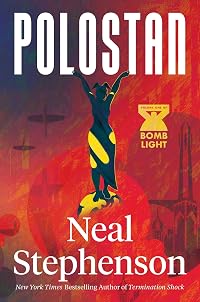
"Born in the American West to a clan of cowboy anarchists, Dawn is raised in Leningrad after the Russian Revolution by her Russian father, a party line Leninist who re-christens her Aurora. She spends her early years in Russia but then grows up as a teenager in Montana, before being drawn into gunrunning and revolution in the streets of Washington, D.C., during the depths of the Great Depression. When a surprising revelation about her past puts her in the crosshairs of U.S. authorities, Dawn show more returns to Russia, where she is groomed as a spy by the organization that later becomes the KGB"-- show lessTags
Recommendations










Member Reviews
***.5
This is a book that I probably would not have bothered with had it not been written by my favourite contemporary author. It's a relatively quick and easy read by Stephenson standards, which contributed to the sense that something is lacking. Sure, it includes the expected and satisfyingly indulgent multiple page digressions into everything from the economics of raising ponies for playing polo to the launching of high altitude balloons for cosmic ray research, but there isn't enough of a main story line to hold them together. What the book is missing is a plot. More than half of it is literally just backstory, with just the barest veneer of "the present" storyline to justify the flashbacks. Hopefully this pays off of in the rest of show more the trilogy, but as a standalone work it doesn't quite cut it.
Rating rounded up by the fantastic writing incorporating the skillful weaving of history and delightful intellectual curiosity with humor and characters that jump off the page.
TL;DR: wait for the rest of the trilogy to come out before reading this one, unless you are like me and have already read them all he has enough other and better works to keep you busy in the interim. show less
This is a book that I probably would not have bothered with had it not been written by my favourite contemporary author. It's a relatively quick and easy read by Stephenson standards, which contributed to the sense that something is lacking. Sure, it includes the expected and satisfyingly indulgent multiple page digressions into everything from the economics of raising ponies for playing polo to the launching of high altitude balloons for cosmic ray research, but there isn't enough of a main story line to hold them together. What the book is missing is a plot. More than half of it is literally just backstory, with just the barest veneer of "the present" storyline to justify the flashbacks. Hopefully this pays off of in the rest of show more the trilogy, but as a standalone work it doesn't quite cut it.
Rating rounded up by the fantastic writing incorporating the skillful weaving of history and delightful intellectual curiosity with humor and characters that jump off the page.
TL;DR: wait for the rest of the trilogy to come out before reading this one, unless you are like me and have already read them all he has enough other and better works to keep you busy in the interim. show less
A rollicking picaresque that takes an American-born young woman from the American west, to the encampment of the Bonus Army that gathered the hungry, homeless, and angry poor in the shadow of the White House and Capitol in 1932, to a massive construction project in the Stalin's Russia, where an ironworks to rival any in the industrial US is being built east of the Ural mountains. Dawn (or Avrora in Russia) is fluent in Russian because her anarchist father took her there to be part of the new Communist society, and in polo, which plays a role when foreign visitors to the Soviet Union are introduced to the first women's team, organized by Dawn. It's not quite what I expected from Stephenson - it moves quickly, shoots from place to place show more (and out of chronological order) with dizzying rapidity, and has somewhat of a comic book feel as events unfold and our heroine gets in and out of peril. But it's engaging, fun, and very inventive. Anarchist cowboys, weird murderous cults, creepy Russian intelligence officers, hungry and disaffected citizens participating in a long occupation in an indifferent Washington DC mall... and polo.
It's the first in a cycle and sets up the next entry with a promise that there will be some spying ahead. show less
It's the first in a cycle and sets up the next entry with a promise that there will be some spying ahead. show less
Neal Stephenson is best known as a science fiction writer associated with cyberpunk. But Polostan is not science fiction; it is a historical novel that reads like science fiction. Niels Bohr makes an appearance. Characters discuss nuclear physics, including cosmic rays and the health effects of ionizing radiation. Our heroine even dates a lad named Proton, who is a pilot in a high-altitude balloon experiment.
Our heroine, named Dawn (or something else if the occasion requires), bounces back and forth between Montana and Soviet Russia with a stop at the 1933-1934 Chicago World’s Fair’s City of the Future. Along the way, she has an unfortunate pregnancy, gets tortured by the NKVD, learns to assemble and aim a Tommy gun, and plays polo show more with the cavalry in both countries.
A studio should buy it up, because every tall actress in Hollywood would be panting to play Dawn. show less
Our heroine, named Dawn (or something else if the occasion requires), bounces back and forth between Montana and Soviet Russia with a stop at the 1933-1934 Chicago World’s Fair’s City of the Future. Along the way, she has an unfortunate pregnancy, gets tortured by the NKVD, learns to assemble and aim a Tommy gun, and plays polo show more with the cavalry in both countries.
A studio should buy it up, because every tall actress in Hollywood would be panting to play Dawn. show less
This has the makings of another Stephenson historical saga winner. Started off just a bit slowly, but steadily accelerated into a fascinating read, written in Stephenson's typical delightful style. There's a lot of interesting history to learn and I can't wait to see which characters make their appearances in future volumes.
This follows Aurora/Dawn, the daughter of an American and a Soviet revolutionary who straddles both sides of the Cold War.
Like so many of Stephenson's main characters, Aurora is totally preposterous (beautiful, smart, physically and intellectually multi-talented, cunning, etc etc etc), as is her story. However, like so many of Stephenson's novels, the book is engaging and entertaining so its easy to suspend disbelief and just go along for the ride. Stephenson is brilliant at making historical fiction feel like science fiction: the science is not new to us (and in fact, the reader feels like they're in on a joke because they know more about the science and its implications than the characters), but it's new to his characters, and show more exploring the "new" technology of atomic energy feels very exciting.
This feels like an introductory chapter to a very long series: a lot of people and situations are put into place, but nothing has actually really happened yet. I'm afraid I should have waited until more books in the series are out, because this book is very unsatisfying on its own, but by the time the second installment is published I will likely have forgotten a lot of it and need to re-read it. show less
Like so many of Stephenson's main characters, Aurora is totally preposterous (beautiful, smart, physically and intellectually multi-talented, cunning, etc etc etc), as is her story. However, like so many of Stephenson's novels, the book is engaging and entertaining so its easy to suspend disbelief and just go along for the ride. Stephenson is brilliant at making historical fiction feel like science fiction: the science is not new to us (and in fact, the reader feels like they're in on a joke because they know more about the science and its implications than the characters), but it's new to his characters, and show more exploring the "new" technology of atomic energy feels very exciting.
This feels like an introductory chapter to a very long series: a lot of people and situations are put into place, but nothing has actually really happened yet. I'm afraid I should have waited until more books in the series are out, because this book is very unsatisfying on its own, but by the time the second installment is published I will likely have forgotten a lot of it and need to re-read it. show less
I’ve read most of Neal Stephenson’s work, and I’m not sure I can think of an author that has been for “hit or miss” for me.
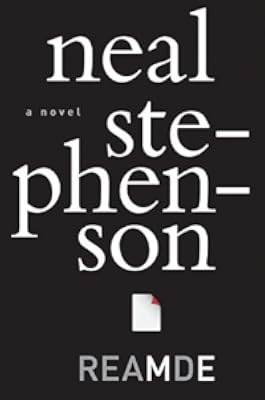
Cryptonomicon and Snow Crash are two of my favorite novels of all time. Diamond Age, Anathem and The System of the World were VERY good. On the other hand, the Mongoliad trilogy was just awful and REAMDE was absurd. I’m afraid I found Polostan to be much closer to the latter than the former.
The first of what is supposed to be a series of books has as its protagonist, a young, female Communist, born in America to Russian parents. The story has two separate timelines, though very close together. One tracks her progress throughout the United States, working as a Soviet operative throughout the Midwest. The show more other finds her among the upper tier of Soviet leadership roughly six months later.
While there are parts of the book that are captivating, sadly, they are few and far between. I doubt I will proceed to volume two. show less
Cryptonomicon and Snow Crash are two of my favorite novels of all time. Diamond Age, Anathem and The System of the World were VERY good. On the other hand, the Mongoliad trilogy was just awful and REAMDE was absurd. I’m afraid I found Polostan to be much closer to the latter than the former.
The first of what is supposed to be a series of books has as its protagonist, a young, female Communist, born in America to Russian parents. The story has two separate timelines, though very close together. One tracks her progress throughout the United States, working as a Soviet operative throughout the Midwest. The show more other finds her among the upper tier of Soviet leadership roughly six months later.
While there are parts of the book that are captivating, sadly, they are few and far between. I doubt I will proceed to volume two. show less
In this first novel of an expected trilogy, Stephenson covers a lot of ground geographically and historically. The heroine is Dawn/Aurora, born in the US, raised in Russia, and as a young adult dangerously straddling both worlds. There is plenty of adventure to go around, with shoot-outs, polo matches, and political demonstrations, set against the backdrop of the competition and conflict between Russia and the US. At times, the action becomes bogged down by very technical descriptions of the incipient understanding of atomic power in the 1930's. Also, I would have wished for fewer long lists, such as the lengthy itemization of exhibits of the Chicago World Fair. Shorter than most of Stephenson's books, and ending with a cliff-hanger, show more one has to wonder if it was a publishing decision to simply divide one long novel into thirds. Nonetheless, readers will want to follow Dawn/Aurora into the next chapters. show less
Members
- Recently Added By
Published Reviews
ThingScore 92
"With its flair for characterization, precision of language, witty aperçus and fecundity of events, the novel delivers what we’ve come to cherish from the author of such fantastical classics as “The Diamond Age,” “Snow Crash” and “Cryptonomicon.”"
added by bookfitz
"When the final twist of a novel leaves you more excited about pages yet to be written than the ones you’ve just read, the immediate temptation is to downgrade the pleasures you’ve experienced along the way."
added by bookfitz
"A deeply immersive historical epic."
added by bookfitz
Lists

Best Historical Fiction
620 works; 261 members

Historical Fiction
889 works; 91 members

Fiction Featuring Real People
81 works; 17 members

Books Set in Washington DC
34 works; 7 members

Female spies
13 works; 2 members

Books Set in North Dakota
8 works; 4 members

Books Set in Illinois
19 works; 7 members

Reading Queue
15 works; 1 member

Books Read in 2024
4,623 works; 126 members

Books Read in 2025
4,091 works; 97 members

Fall 2025 reading
10 works; 1 member

Top Five Books of 2025
954 works; 303 members
Author Information

80+ Works 118,735 Members
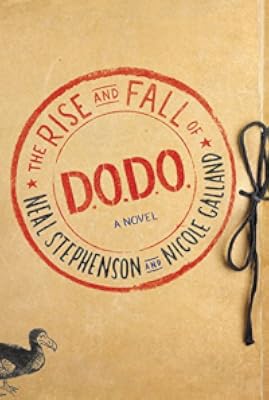
Neal Stephenson, the science fiction author, was born on October 31, 1959 in Maryland. He graduated from Boston University in 1981 with a B.A. in Geography with a minor in physics. His first novel, The Big U, was published in 1984. It received little attention and stayed out of print until Stephenson allowed it to be reprinted in 2001. His second show more novel was Zodiac: The Eco-Thriller was published in 1988, but it was his novel Snow Crash (1992) that brought him popularity. It fused memetics, computer viruses, and other high-tech themes with Sumerian mythology. Neal Stephenson has won several awards: Hugo for Best Novel for The Diamond Age (1996), the Arthur C. Clarke for Best Novel for Quicksilver (2004), and the Prometheus Award for Best Novel for The System of the World (2005). He recently completed the The Baroque Cycle Trilogy, a series of historical novels. It consists of eight books and was originally published in three volumes and Reamde. His latest novel is entitled The Rise and Fall of D. O. D. O. Stephenson also writes under the pseudonym Stephen Bury. (Bowker Author Biography) show less
Awards and Honors
Distinctions
Series

Common Knowledge
- Canonical title
- Polostan
- Alternate titles
- Polostan: Volume One of Bomblight
- Original publication date
- 2024-10-15
- People/Characters
- Dawn Rae Bjornberg
- Important places
- Chicago, Illinois, USA; North Dakota, USA; Siberia, Russia, U.S.S.R.
- Important events
- 1933 Chicago World's Fair
- Epigraph
- What men are poets who can speak of Jupiter if he were a man, but he is an immense spinning sphere of methane and ammonia must be silent? Richard Feynman
- Dedication
- To Seamus
- First words
- The engineer hadn't ridden the rails hobo-style since his getaway from the massacre in D.C. more than a year ago.
- Last words
- (Click to show. Warning: May contain spoilers.)She galloped after him.
- Publisher's editor
- Brehl, Jennifer
- Original language
- English
Classifications
- Genres
- Historical Fiction, Science Fiction, Fiction and Literature, General Fiction
- DDC/MDS
- 813.6 — Literature & rhetoric American literature in English American fiction in English 2000-
- LCC
- PS3569 .T3868 .P65 — Language and Literature American literature American literature Individual authors 1961-
- BISAC
Statistics
- Members
- 534
- Popularity
- 55,899
- Reviews
- 21
- Rating
- (3.65)
- Languages
- English
- Media
- Paper, Audiobook, Ebook
- ISBNs
- 14
- ASINs
- 3