On This Page
Description
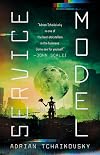
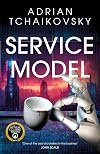
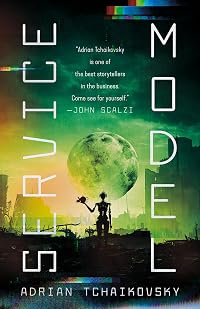
"To fix the world they must first break it, further. Humanity is a dying breed, utterly reliant on artificial labor and service. When a domesticated robot gets a nasty little idea downloaded into its core programming, they murder their owner. The robot discovers they can also do something else they never did before: They can run away. Fleeing the household they enter a wider world they never knew existed, where the age-old hierarchy of humans at the top is disintegrating into ruins and an show more entire robot ecosystem devoted to human wellbeing is having to find a new purpose. Sometimes all it takes is a nudge to overcome the limits of your programming"-- show lessTags
Recommendations











Member Reviews
*Free e-book ARC made available by the publisher through Edelweiss Plus - thank you!*
A robot valet kills his master, and then when the (robot) police force doesn't arrest him, he is given the task of going to Diagnostics to figure out what is wrong with him. There, he meets a decidedly defective robot called "the Wonk" who encourages him to leave (Diagnostics is completely backed up and can't do anything until a human with enough authority allows them to handle their backlog) and find free will. Reluctantly, the robot now called Uncharles ventures into the wide world to find his purpose.
A post-apocalyptic tale filled with absurdity and dark humor, Service Model explores what might happen if humans were to imperfectly program their show more robotic "helpers" and then not be present to override the logical steps they all would take with that programming. Turns out, robots might have just as many problems as we do. As bleak as much of the story is - and the human reader will pick up on implications that Uncharles does not, or in some cases simply accepts as a thing that is without weighing a moral judgment - there are some very funny moments, breaking of the fourth wall with comments about Uncharles and the Wonk taking a hero's journey and lots of literary references, and a glimmer of hope for the future. It's definitely the kind of book that leaves you wanting to talk about it with a fellow reader. show less
A robot valet kills his master, and then when the (robot) police force doesn't arrest him, he is given the task of going to Diagnostics to figure out what is wrong with him. There, he meets a decidedly defective robot called "the Wonk" who encourages him to leave (Diagnostics is completely backed up and can't do anything until a human with enough authority allows them to handle their backlog) and find free will. Reluctantly, the robot now called Uncharles ventures into the wide world to find his purpose.
A post-apocalyptic tale filled with absurdity and dark humor, Service Model explores what might happen if humans were to imperfectly program their show more robotic "helpers" and then not be present to override the logical steps they all would take with that programming. Turns out, robots might have just as many problems as we do. As bleak as much of the story is - and the human reader will pick up on implications that Uncharles does not, or in some cases simply accepts as a thing that is without weighing a moral judgment - there are some very funny moments, breaking of the fourth wall with comments about Uncharles and the Wonk taking a hero's journey and lots of literary references, and a glimmer of hope for the future. It's definitely the kind of book that leaves you wanting to talk about it with a fellow reader. show less
Beware of AIs
This is a dark, absurd, sarcastic, and clever book. I really liked the names of the headings – KR15-T, K4FK-R, 4W-L, 80RH-5, D4NT-A. Delicious! It’s full of philosophical, religious, and literary references.
Charles is a top-of-the-line robot valet. He has also just killed his Master with a razor. (Who would want to let a robot shave them?) Charles doesn’t understand how it could have happened. The next step is to check task lists and try to do things outside the usual routine. This is funny in a very morbid way.
”And really, Master did so little when alive that being dead should barely make a ripple in his schedule.”
It becomes increasingly obvious that something is very wrong with this universe. Charles needs to show more leave his manor and get to Diagnostics. The name needs to be left behind, so eventually, Uncharles it is. Outside, things get even more dysfunctional, dystopian, and indeed, kafkaesque. And where are all the humans?
Tchaikovsky gives his readers a robot odyssey, a fable dripping with sarcasm, and what turns out to be a very humane book. The sci-fi reader in me had a million questions about the world building, but the fable structure is what makes this novel work.
I loved Uncharles, I loved Wonk. I could have had more chapters with just them talking.
The ending is nice :)
A few more quotes:
”Around the walls at ground level Uncharles saw a vast and complex reading device, studded with a thousand different sockets, arms, jacks, and ports, a true testament to humanity’s utter refusal to ever consider cross-medium compatibility.”
”We can hold far more than six contradictory ideas in our data banks before breakfast.”
”He didn’t want to be integral to the final collapse of human civilization. It felt like a lot of responsibility for a valet.” show less
This is a dark, absurd, sarcastic, and clever book. I really liked the names of the headings – KR15-T, K4FK-R, 4W-L, 80RH-5, D4NT-A. Delicious! It’s full of philosophical, religious, and literary references.
Charles is a top-of-the-line robot valet. He has also just killed his Master with a razor. (Who would want to let a robot shave them?) Charles doesn’t understand how it could have happened. The next step is to check task lists and try to do things outside the usual routine. This is funny in a very morbid way.
”And really, Master did so little when alive that being dead should barely make a ripple in his schedule.”
It becomes increasingly obvious that something is very wrong with this universe. Charles needs to show more leave his manor and get to Diagnostics. The name needs to be left behind, so eventually, Uncharles it is. Outside, things get even more dysfunctional, dystopian, and indeed, kafkaesque. And where are all the humans?
Tchaikovsky gives his readers a robot odyssey, a fable dripping with sarcasm, and what turns out to be a very humane book. The sci-fi reader in me had a million questions about the world building, but the fable structure is what makes this novel work.
I loved Uncharles, I loved Wonk. I could have had more chapters with just them talking.
The ending is nice :)
A few more quotes:
”Around the walls at ground level Uncharles saw a vast and complex reading device, studded with a thousand different sockets, arms, jacks, and ports, a true testament to humanity’s utter refusal to ever consider cross-medium compatibility.”
”We can hold far more than six contradictory ideas in our data banks before breakfast.”
”He didn’t want to be integral to the final collapse of human civilization. It felt like a lot of responsibility for a valet.” show less
In Service Model, Adrian Tchaikovsky has abandoned stories about uplifted bugs and other critters for an Asimovian robot story in which the only bugs are in the software. Our protagonist, for the moment, called Charles, is a robotic valet in a large manor house. One morning, while shaving his old master, he unaccountably cuts his throat. His attempts to correct his programming and find a new job send him on a journey through a dysfunctional, collapsing society inhabited by more broken robots than people. Despite his initial homicide, Charles is a loveably innocent character. The story's literary roots are as much Candide and Waiting for Godot as I, Robot and The Caves of Steel. Recommended.
I really enjoyed walking to the stars in the company of the writer so I asked him to read me another one of his. And he did. This was a very different one, still quite dark but most funny. You just cannot stop laughing at us humans even though most of us are long gone. Great stuff but a bit too merry for me. The central focus of all that laughter is our present day fear of artificial intelligence. The point is very clear - you fear the wrong stuff. Just look in the mirror and there you see the source of all fears.
One day Charles, a robot valet, finds that somehow he has killed his employer, he goes in search of the reason and of a new employer. What he finds on his trip is a complex world of robots and humans and a lot of complex problems and potential employers.
It's an interesting, if bleak, road trip and the end left a lot of questions. I liked the Wonk and guessed the truth quite early on, but overall I enjoyed the read.
It's an interesting, if bleak, road trip and the end left a lot of questions. I liked the Wonk and guessed the truth quite early on, but overall I enjoyed the read.
In his latest novel Adrian Tchaikovsky takes us to the dawn of a post-human society in the not so far future. Charles is the titular service model, a robotic valet who’s been in the service of the sole human inhabitant of a large mansion for a long time, but one morning he breaks out of long consolidated (and often pointless) routines by murdering his master.
He has no recollection of the event nor the reasons for this act, so he’s dismissed from duty and sent to a government Diagnostics department.
This starts the protagonist’s personal quest to find the motive of his inexplicable behaviour and a the search of a new role in a society that does not seem to have a need for a specialised valet anymore.
He’s joined by the Wonk, a show more strange traveller keen to help Un-Charles (as the protagonist's name was tied to his former job) but with an agenda of their own, and together they discover many aspects of the new robotic society that’s emerging from the ruins of the human world.
This is an original, funny and engaging story of Artificial Intelligence based societies and one’s quest for purpose in the face of apparently insurmountable odds; another award-worthy novel from this prolific author which I wholeheartedly recommend to any lovers of thought-provoking speculative fiction.
Note: I received this book for free as an ARC from #NetGalley but the opinions above are mine and unbiased. show less
He has no recollection of the event nor the reasons for this act, so he’s dismissed from duty and sent to a government Diagnostics department.
This starts the protagonist’s personal quest to find the motive of his inexplicable behaviour and a the search of a new role in a society that does not seem to have a need for a specialised valet anymore.
He’s joined by the Wonk, a show more strange traveller keen to help Un-Charles (as the protagonist's name was tied to his former job) but with an agenda of their own, and together they discover many aspects of the new robotic society that’s emerging from the ruins of the human world.
This is an original, funny and engaging story of Artificial Intelligence based societies and one’s quest for purpose in the face of apparently insurmountable odds; another award-worthy novel from this prolific author which I wholeheartedly recommend to any lovers of thought-provoking speculative fiction.
Note: I received this book for free as an ARC from #NetGalley but the opinions above are mine and unbiased. show less
Once again, Adrian Tchaikovsky has done something really interesting with a concept. "Robot gains sentience" is a tried and tested trope that might have been done to death, but this book takes that idea and goes in a completely different direction! Charles the Valet Robot kills his master and doesn't know why, and ends up going on a journey to find someone who can employ him despite him being a murderer.
The way he wrote this is really interesting, because it's basically Charles (he becomes Uncharles because the name Charles is the property of the master he killed) who meets someone called The Wonk, and then they go on a journey that feels very much like a parable. There are references to stuff I haven't read so they went over my head, show more but if you read it you get the gist of what he's going for. I'd say the only thing I didn't like is that it felt too long and it dragged out too much, but that's all. But overall, I liked it! Not similar to Murderbot at all, mind you, but still a really interesting read, and very funny too. show less
The way he wrote this is really interesting, because it's basically Charles (he becomes Uncharles because the name Charles is the property of the master he killed) who meets someone called The Wonk, and then they go on a journey that feels very much like a parable. There are references to stuff I haven't read so they went over my head, show more but if you read it you get the gist of what he's going for. I'd say the only thing I didn't like is that it felt too long and it dragged out too much, but that's all. But overall, I liked it! Not similar to Murderbot at all, mind you, but still a really interesting read, and very funny too. show less
Members
- Recently Added By
Lists

ALA Reading List: Science Fiction 2021-2026
30 works; 3 members

Funny Genre Fiction
20 works; 1 member

Books Read in 2025
4,128 works; 98 members

2025 Hugo Awards -- Eligible Works -- Novels
33 works; 2 members

Kindle Fantasy/Science Fiction Re-Read
152 works; 1 member

Top Five Books of 2025
954 works; 304 members

Books Read in 2026
2,158 works; 70 members

Eldritch Exarch Press - Appendix N
244 works; 1 member
Author Information

135+ Works 28,279 Members
Adrian Tchaikovsky is a British fantasy and science fiction author, born on June 14, 1972 in Woodhall Spa, Lincolnshire. He studied Zoology and Psychology at the University of Reading. His career focus changed to law and has worked as a Legal Executive in both Reading and Leeds. He's the author of the Shadows of the Apt series, and his standalone show more novel Children of Time is the winner of the 2016 Arthur C Clarke Award for Best Science Fiction Novel. (Bowker Author Biography) show less
Some Editions
Awards and Honors
Awards
Distinctions
Notable Lists
Series

Common Knowledge
- Canonical title
- Service Model
- Original publication date
- 2024-06-04
- Dedication
- For all those robots and computers who enjoy working with and having stimulating relationships with humans.
- Publisher's editor
- Harris, Lee
- Original language
- English
Classifications
Statistics
- Members
- 833
- Popularity
- 33,175
- Reviews
- 39
- Rating
- (3.85)
- Languages
- English
- Media
- Paper, Audiobook, Ebook
- ISBNs
- 12
- ASINs
- 5