Thanks to the Animals
by Allen J. Sockabasin
On This Page
Description
In 1900 during the Passamaquoddy winter migration in Maine, Baby Zoo Sap falls off the family bobsled and the forest animals hearing his cries, gather to protect him until his father returns to find him.Tags
Recommendations










Member Reviews
This lovely book not only offers warm reassurance to small children about being protected, but helps convey the Native American approach to nature, including the idea that both the animals and the land are deserving of our respect and gratitude.
It is the year 1900, and the time for the Passamaquoddy tribe to make their winter migration in Maine. Baby Zoo Sap is loaded onto the family bobsled when his family moves from their summer home into the deep woods for the winter. Zoo Sap falls off the sled and the family isn’t aware of it at first. But the animals in the forest hear his cries, and come together to snuggle him and keep him warm and safe until his father, Papa Joo Tum, comes back to find him. Joo Tum thanks each of the animals show more for saving his boy, and carries Zoo Sap back to the family.
Parent/Teacher material at the end of the book provides background on the Passamaquoddy tribe. (The Passamaquoddy are original natives of the area between Maine and New Brunswick.) A guide is also included for the Passamaquoddy names for the animals appearing in the story.
The author is a Passamaquoddy Storyteller, and actually has a young son named Zoo Sap. He has done a great deal of work to advance the cause of native peoples, having grown up in a world of hurt and outrage, as this bit of his biography demonstrates (from the write-up accompanying his 2010 Sampson Catalyst for Change Award from the University of Southern Maine ):
"Sockabasin, born in 1944 in the Native American village of Peter Dana Point, has worked for decades to gain recognition of and fair treatment for his people. The 10th of 11 children, he grew up in eastern Maine when native people were denied voting rights and use of public restrooms, were refused service by white barbers and were segregated from whites in movie theaters.”
Admirably, Sockabasin did not turn inward, or become consumed by anger, but instead became a tireless activist for native rights and native language preservation (one of the more popular features of his speaking tours is when he plays “Ain’t Nothing’ But A Hound Dog” using Passamaquoddy words). In addition, through his storytelling, he has helped to instigate change through the fostering of empathy and understanding.
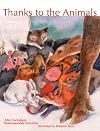
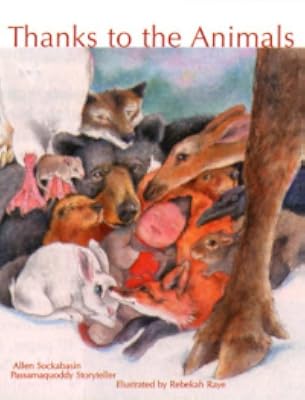
The illustrator, Rebekah Raye, is well-known for her paintings of birds and animals. Her watercolor-and-ink pictures in this book are as warm and cozy as Zoo Sap must have been, surrounded by warm furry animals as he was kept safe and sound.
Evaluation: This is a charming book, and a perfect winter and/or bedtime story for younger children. show less
It is the year 1900, and the time for the Passamaquoddy tribe to make their winter migration in Maine. Baby Zoo Sap is loaded onto the family bobsled when his family moves from their summer home into the deep woods for the winter. Zoo Sap falls off the sled and the family isn’t aware of it at first. But the animals in the forest hear his cries, and come together to snuggle him and keep him warm and safe until his father, Papa Joo Tum, comes back to find him. Joo Tum thanks each of the animals show more for saving his boy, and carries Zoo Sap back to the family.
Parent/Teacher material at the end of the book provides background on the Passamaquoddy tribe. (The Passamaquoddy are original natives of the area between Maine and New Brunswick.) A guide is also included for the Passamaquoddy names for the animals appearing in the story.
The author is a Passamaquoddy Storyteller, and actually has a young son named Zoo Sap. He has done a great deal of work to advance the cause of native peoples, having grown up in a world of hurt and outrage, as this bit of his biography demonstrates (from the write-up accompanying his 2010 Sampson Catalyst for Change Award from the University of Southern Maine ):
"Sockabasin, born in 1944 in the Native American village of Peter Dana Point, has worked for decades to gain recognition of and fair treatment for his people. The 10th of 11 children, he grew up in eastern Maine when native people were denied voting rights and use of public restrooms, were refused service by white barbers and were segregated from whites in movie theaters.”
Admirably, Sockabasin did not turn inward, or become consumed by anger, but instead became a tireless activist for native rights and native language preservation (one of the more popular features of his speaking tours is when he plays “Ain’t Nothing’ But A Hound Dog” using Passamaquoddy words). In addition, through his storytelling, he has helped to instigate change through the fostering of empathy and understanding.
The illustrator, Rebekah Raye, is well-known for her paintings of birds and animals. Her watercolor-and-ink pictures in this book are as warm and cozy as Zoo Sap must have been, surrounded by warm furry animals as he was kept safe and sound.
Evaluation: This is a charming book, and a perfect winter and/or bedtime story for younger children. show less
When winter arrives, Joo Tum and his family prepare for the move from their summer home along the coast, to their cold-weather quarters, deep in the woods. Disassembling their log cabin, loading all their belongings onto a horse-drawn sled, they are soon on their way. But when Zoo Sap, the baby of the family, falls off the back of the sled, where all the other children are sleeping together in a fur-wrapped pile, he is soon left behind - alone in the cold night! Luckily, his wails bring the forest animals to his side, and they use their own bodies to create a warm bed for him...
This gentle tale from Passamaquoddy storyteller and elder, Allen Sockabasin - who has also published an autobiography for adult readers, An Upriver Passamaquoddy show more - would make a wonderful reassurance story at bedtime. Not only does Zoo Sap's father come for him - walking back through the cold forest, when it is discovered that he is missing - but all the creatures of the forest take care of him, in the absence of his parents. I liked the positive view of the natural world offered in Thanks to the Animals, and the gratitude shown by Joo Tum to the animals, when he discovers his son safe in their care. The accompanying illustrations by Rebekah Raye, whose Bear-ly There made such a good impression on me, accentuate both the cold of the winter landscape, and the warmth of Zoo Sap's animal companions. All in all, an excellent winter-time story - a list of Passamaquoddy words is even included, at the rear! show less
This gentle tale from Passamaquoddy storyteller and elder, Allen Sockabasin - who has also published an autobiography for adult readers, An Upriver Passamaquoddy show more - would make a wonderful reassurance story at bedtime. Not only does Zoo Sap's father come for him - walking back through the cold forest, when it is discovered that he is missing - but all the creatures of the forest take care of him, in the absence of his parents. I liked the positive view of the natural world offered in Thanks to the Animals, and the gratitude shown by Joo Tum to the animals, when he discovers his son safe in their care. The accompanying illustrations by Rebekah Raye, whose Bear-ly There made such a good impression on me, accentuate both the cold of the winter landscape, and the warmth of Zoo Sap's animal companions. All in all, an excellent winter-time story - a list of Passamaquoddy words is even included, at the rear! show less
A beautiful story of how a Native American family is interconnected to the land and wildlife. Every year the family migrates during the winter to another region. They pack up their whole cabin, logs included on a sleigh. The mother and children sleep on the end of the sleigh as it is being pulled by a team of horses. The youngest child who is around 1 years old, stands up on the sleigh and rolls off. No one notices. The baby begins to cry and the animals from all around lay around the baby to keep him warm. There is even a seagull! The father realizes the baby is missing when they reach their destination and follows their tracks back. The father sees all the animals keep his baby warm and thanks them one by one. The back of the book has show more the names of the animals in the Passamaquddy language.The illistarttions are beautifully done in pencil and water colors. show less
A charming original fable from a (OwnVoices) Passamaquoddy storyteller. Terrific to share with your littles in November (ticks at least three boxes as you can count thankfulness, getting ready for winter, and Native American month). I love the author photo, with young son, on the back flap.
A story of a Native American family that is moving from their summer home near the river to their winter home deep in the woods by bobsled. When little Zoo Sap begins to play on the sled he falls off in to the snow unnoticed by the rest of the family. The animals hear his cries and rush to his aid working together to keep him warm and safe from the snow. When Joo Tum, his dad, reaches the winter home and notices Zoo Sap is missing he quickly returns to look for him finding him warm and happy under a very large pile of snow covered animals.
Personal Reflection: What a great story about the way nature and humans can coexist. The animals react to the cries of the little one as a parent and do the only thing they know to do, keep Zoo Sap show more warm. Having had the experience of losing my child in the mall (he was actually hiding from me the little stinker) I can relate to the panic that the father was feeling and the joy and relief when he found Zoo Sap safe and warm.
Classroom Extension:
1. Could be used in conjunction with a lesson on cultural tales. Native American tales have some very strong morals in the stories.
2. This book could be used to teach a lesson on helping those that need help even if they are different from you. Zoo Sap wasn’t one of the animals but they knew how to keep him warm. show less
Personal Reflection: What a great story about the way nature and humans can coexist. The animals react to the cries of the little one as a parent and do the only thing they know to do, keep Zoo Sap show more warm. Having had the experience of losing my child in the mall (he was actually hiding from me the little stinker) I can relate to the panic that the father was feeling and the joy and relief when he found Zoo Sap safe and warm.
Classroom Extension:
1. Could be used in conjunction with a lesson on cultural tales. Native American tales have some very strong morals in the stories.
2. This book could be used to teach a lesson on helping those that need help even if they are different from you. Zoo Sap wasn’t one of the animals but they knew how to keep him warm. show less
Summary:
This Passamaquoddy tale tells of the winter migration when these people moved inland for shelter during the winter. Young Zoo Sap falls off the sled unnoticed and ends up left on the trail. The animals hear his cries and come to provide warmth and shelter until his father returns for him. This book also includes an Author’s Note about the Passamaquoddy people and why they migrated from the shore as well as a glossary of animal names in the Passamaquoddy language.
Personal Response:
I always feel a sense of responsibility to make sure I represent a story correctly when it is one that has been passed down or is based on the traditions of a native group of people. I didn’t know anything about the Passamaquoddy when I opened this show more book, and I am thankful for the bit of information I did learn. The story was simply stated, and the illustrations are full of kind faces and soft colors. I enjoyed reading the Author’s Note and how the book offers thanks to the animals that have sustained the Passamaquoddy people.
Curriculum Connections:
It is so important to include multicultural stories in our libraries and classrooms, and I feel this one could be shared and understood with even young students. A geographical study could also evolve out of this book as students research the area where the Passamaquoddy live now and migrated in the past. show less
This Passamaquoddy tale tells of the winter migration when these people moved inland for shelter during the winter. Young Zoo Sap falls off the sled unnoticed and ends up left on the trail. The animals hear his cries and come to provide warmth and shelter until his father returns for him. This book also includes an Author’s Note about the Passamaquoddy people and why they migrated from the shore as well as a glossary of animal names in the Passamaquoddy language.
Personal Response:
I always feel a sense of responsibility to make sure I represent a story correctly when it is one that has been passed down or is based on the traditions of a native group of people. I didn’t know anything about the Passamaquoddy when I opened this show more book, and I am thankful for the bit of information I did learn. The story was simply stated, and the illustrations are full of kind faces and soft colors. I enjoyed reading the Author’s Note and how the book offers thanks to the animals that have sustained the Passamaquoddy people.
Curriculum Connections:
It is so important to include multicultural stories in our libraries and classrooms, and I feel this one could be shared and understood with even young students. A geographical study could also evolve out of this book as students research the area where the Passamaquoddy live now and migrated in the past. show less
In the deep woods of winter, forest animals protect an infant named Zoo Sap from freezing to death in the snow. The animals work together, keeping him warm and safe. This book has themes of cooperation and mutualism. It helps show that we can assist one another through times of difficulty.
Members
- Recently Added By
Published Reviews
ThingScore 100
K-Gr 3–As a family transports its home and belongings for the winter, a toddler accidentally falls from the family sled. One by one, the animals of the forest encircle and protect him until his father returns. Detailed watercolors bring this story of physical and emotional warmth to life. The final page includes information on the Passamaquoddy people, and the story can be heard in show more Passamaquoddy and English at: www.tilburyhouse.com/Children%27s%20Frames/child_thanking.html. show less
added by private library
Lists

Top 100 books by Indigenous Masters
134 works; 7 members
Author Information
3 Works 198 Members
All Editions
Awards and Honors
Awards
Distinctions
Classifications
Statistics
- Members
- 178
- Popularity
- 184,025
- Reviews
- 12
- Rating
- (3.83)
- Languages
- English
- Media
- Paper, Ebook
- ISBNs
- 8
- ASINs
- 1