On This Page
Description
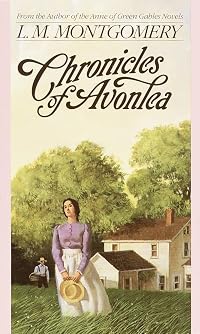
Get swept into another era in this classic from author L. M. Montgomery. Originally penned with younger audiences in mind, Chronicles of Avonlea is a comfort read that will captivate readers of all ages. This collection of heartwarming short stories capturing the vicissitudes of life in a sleepy seaside town will draw you in again and again..
Tags
Recommendations








Member Reviews
I have read this collection of short stories by L.M. Montgomery - the author of such beloved children's classics as Anne of Green Gables and Emily of New Moon - more times than I can count. But despite that fact, and no matter that I know what's coming, I never seem to be prepared for the emotional impact that some of these "Chronicles of Avonlea" have upon me. I always laugh when reading The Hurrying of Ludovic and The Quarantine at Alexander Abraham's, thrill in sympathy at Each in His Own Tongue, and weep with Old Lady Lloyd and Little Joscelyn. Familiarity does not seem to lessen the power of these tales, nor does my awareness of their overt sentimentality detract from their appeal, and I return to them from time to time, always show more with a feeling of coming home. The treasures found in The Chronicles of Avonlea include:
The Hurrying of Ludovic, in which Anne Shirley plays a role in bringing the courtship of Ludovic Speed and Theodora Dix to a happy conclusion...
Old Lady Lloyd, in which a lonely old woman, reduced to poverty but too proud to ask for help, finds someone to love...
Each In His Own Tongue, in which the loving but stern Mr. Leonard discovers that his grandson's gift for playing the violin is just as much a gift from God as his own call to the ministry...
Little Joscelyn, in which elderly Aunty Nan has her fondest wish granted, when "Little Joscelyn," all grown up and a world-famous singer, comes to visit her one last time...
The Winning of Lucinda, in which an fifteen-year-old quarrel between Lucinda and Romney Penhallow is most unexpectedly resolved...
Old Man Shaw's Girl, in which a father and daughter are joyfully reunited...
Aunt Olivia's Beau, in which Mary and Peggy Sterling witness the reunion of their old-maid aunt with Mr. Malcolm MacPherson, her suitor from years before...
The Quarantine at Alexander Abraham's, in which a man-hating, cat-loving woman, and a woman-hating, dog-loving man are unexpectedly stuck with each other due to a smallpox quarantine...
Pa Sloane's Purchase, in which the elderly Pa Sloane returns from an auction with a most unusual "purchase"...
The Courting of Prissy Strong, in which a long-abandoned courtship is resumed between Stephen Clark and Prissy Strong, despite the vehement objections of Prissy's older sister...
The Miracle at Carmody, in which Judith Marsh decides that she does believe in God after all, when her sister Salome's lameness is cured...
And finally, The End of a Quarrel, in which Nancy Rogerson and Peter Wright get a second chance at love, and this time don't let bad grammar stand in their way...
Addendum: Not unexpectedly, my latest reread of Chronicles of Avonlea, for our August discussion, over in the L.M. Montgomery Book-Club to which I belong, has only confirmed my love for these stories. Their humor, both broad and subtle, was just as appealing as ever, and their sense of pathos just as moving. I was particularly struck, this time around, by the importance of religion in so many of Montgomery's stories, and by the truly respectful and intelligent way in which issues of the spirit are handled in her text. It's not that the ubiquity of religious belief - usually of an unbending Presbyterian sort - in the society Montgomery is depicting had escaped me before, but it occurred to me, as I was reading, that her work stands above so many other popular stories in which religion plays an important role because there is no hidden didactic aim in her writing (she is not writing to convince you of anything), there is no hateful, smug sense of superiority (the one true atheist, Judith and Salome Marsh's father, in Miracle at Carmody, is described as a loving and thoughtful man), and there is no sense of religious authority being above challenge, or incapable of error (even the saintly Rev. Leonard, in Each in His Own Tongue, discovers that he is wrong, and that the sinful old reprobate, Abel Blair, is right). I think that it is this quality, this way of treating religion seriously, as a meaningful part of people's emotional and intellectual lives, rather than just as a "practice," but without descending (usually) into any sort of treacly sentimentality about it, or displaying any unctuous piety, that spoke to me so strongly, as a girl, and still does. This is akin to the sort of religious upbringing I had. How lovely to discover that I am kindred spirits with L.M. Montgomery in yet another way! show less
The Hurrying of Ludovic, in which Anne Shirley plays a role in bringing the courtship of Ludovic Speed and Theodora Dix to a happy conclusion...
Old Lady Lloyd, in which a lonely old woman, reduced to poverty but too proud to ask for help, finds someone to love...
Each In His Own Tongue, in which the loving but stern Mr. Leonard discovers that his grandson's gift for playing the violin is just as much a gift from God as his own call to the ministry...
Little Joscelyn, in which elderly Aunty Nan has her fondest wish granted, when "Little Joscelyn," all grown up and a world-famous singer, comes to visit her one last time...
The Winning of Lucinda, in which an fifteen-year-old quarrel between Lucinda and Romney Penhallow is most unexpectedly resolved...
Old Man Shaw's Girl, in which a father and daughter are joyfully reunited...
Aunt Olivia's Beau, in which Mary and Peggy Sterling witness the reunion of their old-maid aunt with Mr. Malcolm MacPherson, her suitor from years before...
The Quarantine at Alexander Abraham's, in which a man-hating, cat-loving woman, and a woman-hating, dog-loving man are unexpectedly stuck with each other due to a smallpox quarantine...
Pa Sloane's Purchase, in which the elderly Pa Sloane returns from an auction with a most unusual "purchase"...
The Courting of Prissy Strong, in which a long-abandoned courtship is resumed between Stephen Clark and Prissy Strong, despite the vehement objections of Prissy's older sister...
The Miracle at Carmody, in which Judith Marsh decides that she does believe in God after all, when her sister Salome's lameness is cured...
And finally, The End of a Quarrel, in which Nancy Rogerson and Peter Wright get a second chance at love, and this time don't let bad grammar stand in their way...
Addendum: Not unexpectedly, my latest reread of Chronicles of Avonlea, for our August discussion, over in the L.M. Montgomery Book-Club to which I belong, has only confirmed my love for these stories. Their humor, both broad and subtle, was just as appealing as ever, and their sense of pathos just as moving. I was particularly struck, this time around, by the importance of religion in so many of Montgomery's stories, and by the truly respectful and intelligent way in which issues of the spirit are handled in her text. It's not that the ubiquity of religious belief - usually of an unbending Presbyterian sort - in the society Montgomery is depicting had escaped me before, but it occurred to me, as I was reading, that her work stands above so many other popular stories in which religion plays an important role because there is no hidden didactic aim in her writing (she is not writing to convince you of anything), there is no hateful, smug sense of superiority (the one true atheist, Judith and Salome Marsh's father, in Miracle at Carmody, is described as a loving and thoughtful man), and there is no sense of religious authority being above challenge, or incapable of error (even the saintly Rev. Leonard, in Each in His Own Tongue, discovers that he is wrong, and that the sinful old reprobate, Abel Blair, is right). I think that it is this quality, this way of treating religion seriously, as a meaningful part of people's emotional and intellectual lives, rather than just as a "practice," but without descending (usually) into any sort of treacly sentimentality about it, or displaying any unctuous piety, that spoke to me so strongly, as a girl, and still does. This is akin to the sort of religious upbringing I had. How lovely to discover that I am kindred spirits with L.M. Montgomery in yet another way! show less
My earliest memory of this book is from when I was twelve. I had just finished Anne of Avonlea and I was annoyed that my school had a copy of Chronicles and some of the later Anne books, but no copy of Anne of the Island, which I was desperate to read! I ended up borrowing that one from a friend or a local library, and I didn’t ever read Chronicles.
Not even though I’ve reread various of Montgomery’s books over the years. Not even though I have had a copy of Chronicles sitting on my own shelf for the past twelve years.
I’m not sure what I would have thought about Chronicles of Avonlea when I was twelve. Annoyed by the absence of Anne, certainly (her appearances are limited to being a character in one story and being briefly show more referred to in a few others) but once I got over that? Most of the stories are about spinsters – spinsters and long-standing quarrels – and I have a different perspective on such things from when I was a child.
There’s something sentimental, even saccharine, about all of these stories, and I enjoyed reading all of them! They’re full of personality and perspicacious insights into people. They’re atmospheric with a vivid sense of place. (Despite the title, most of these are set in neighbouring communities rather than Avonlea itself.) They’re heartwarming. They have moments of humour and of intense emotion.
The longest of these stories is “Old Lady Lloyd”, about an old lady who has been a recluse for years because she is ashamed by her poverty but begins to reconnect with her community because she wants to play fairy godmother to her ex-fiancé’s daughter.
It’s a more substantial narrative, which is likely why it was one of my favourites. But it’s also a story in which the lovers who quarrelled years ago cannot get back together (Old Lady Lloyd’s ex-fiancé has died), and so this is a story about a spinster whose happy ending doesn’t involve romance and marriage.
I certainly enjoyed the romantic happy endings! I enjoyed the emotions in “The Winning of Lucinda” and “The End of a Quarrel”, especially “The End of a Quarrel”, and because I was invested and wanted to see these characters be happy, I was fully willing to suspend any possible critical thoughts about whether it is realistic, or wise, to resolve a long-standing quarrel so easily. Nevertheless it was interesting to also have stories which resolved satisfactorily for the characters without romance.
(Another story in that category would be “Little Joscelyn”, in which Aunty Nan wants to hear Joscelyn, a young woman who once spent a summer at Aunty Nan’s family’s farm when she was a child, sing again.)
My other favourite of the stories was “The Quarantine at Alexander Abraham’s”, in which a woman who prefers cats to men, pays a visit to a man with an aversion to women (to inquire why his hired boy hasn’t been attending Sunday school) and becomes caught up in a smallpox quarantine. It’s a fun romcom told by a strong-willed, opinionated woman, and it is all the more amusing, perhaps, for having experienced quarantine myself.
Two other stories have first-person narrators who are not spinsters but who are reporting on, and becoming involved in, a spinster’s love affair: “The Courting of Prissy Strong” is told by Prissy’s married neighbour, and “Aunt Olivia’s Beau” is from the perspective of one of Olivia’s young nieces.
The stories not about spinsters are: “Each In His Own Tongue”, about a boy, a gifted violinist, whose grandfather wants him to go into the church instead of pursuing his passion for music; “Old Man Shaw’s Girl”, about a father anticipating his daughter’s return after she has been away at school; and “Pa Sloane’s Purchase”, about a man with a weakness for buying things at auction.
Not even though I’ve reread various of Montgomery’s books over the years. Not even though I have had a copy of Chronicles sitting on my own shelf for the past twelve years.
I’m not sure what I would have thought about Chronicles of Avonlea when I was twelve. Annoyed by the absence of Anne, certainly (her appearances are limited to being a character in one story and being briefly show more referred to in a few others) but once I got over that? Most of the stories are about spinsters – spinsters and long-standing quarrels – and I have a different perspective on such things from when I was a child.
There’s something sentimental, even saccharine, about all of these stories, and I enjoyed reading all of them! They’re full of personality and perspicacious insights into people. They’re atmospheric with a vivid sense of place. (Despite the title, most of these are set in neighbouring communities rather than Avonlea itself.) They’re heartwarming. They have moments of humour and of intense emotion.
The longest of these stories is “Old Lady Lloyd”, about an old lady who has been a recluse for years because she is ashamed by her poverty but begins to reconnect with her community because she wants to play fairy godmother to her ex-fiancé’s daughter.
It’s a more substantial narrative, which is likely why it was one of my favourites. But it’s also a story in which the lovers who quarrelled years ago cannot get back together (Old Lady Lloyd’s ex-fiancé has died), and so this is a story about a spinster whose happy ending doesn’t involve romance and marriage.
I certainly enjoyed the romantic happy endings! I enjoyed the emotions in “The Winning of Lucinda” and “The End of a Quarrel”, especially “The End of a Quarrel”, and because I was invested and wanted to see these characters be happy, I was fully willing to suspend any possible critical thoughts about whether it is realistic, or wise, to resolve a long-standing quarrel so easily. Nevertheless it was interesting to also have stories which resolved satisfactorily for the characters without romance.
(Another story in that category would be “Little Joscelyn”, in which Aunty Nan wants to hear Joscelyn, a young woman who once spent a summer at Aunty Nan’s family’s farm when she was a child, sing again.)
My other favourite of the stories was “The Quarantine at Alexander Abraham’s”, in which a woman who prefers cats to men, pays a visit to a man with an aversion to women (to inquire why his hired boy hasn’t been attending Sunday school) and becomes caught up in a smallpox quarantine. It’s a fun romcom told by a strong-willed, opinionated woman, and it is all the more amusing, perhaps, for having experienced quarantine myself.
[...] it had always been a matter of principle with me never to do anything a man asked me to do if I could help it. I was noted for that. It saves a great deal of trouble and it simplifies everything beautifully. I had always disliked men. It must have been born in me, because, as far back as I can remember, an antipathy to men and dogs was one of my strongest characteristics. I was noted for that. My experiences through life only served to deepen it. The more I saw of men, the more I liked cats.
Two other stories have first-person narrators who are not spinsters but who are reporting on, and becoming involved in, a spinster’s love affair: “The Courting of Prissy Strong” is told by Prissy’s married neighbour, and “Aunt Olivia’s Beau” is from the perspective of one of Olivia’s young nieces.
The stories not about spinsters are: “Each In His Own Tongue”, about a boy, a gifted violinist, whose grandfather wants him to go into the church instead of pursuing his passion for music; “Old Man Shaw’s Girl”, about a father anticipating his daughter’s return after she has been away at school; and “Pa Sloane’s Purchase”, about a man with a weakness for buying things at auction.
She looked over the valley to the light in the kitchen of the Wright farmhouse, and pictured Peter sitting there, lonely and uncared for, with naught but the cold comfort of his own providing.show less
“Well, he should have got married,” she said snappishly. “I am not going to worry because he is a lonely old bachelor when all these years I have supposed him a comfy Benedict. Why doesn’t he hire him a housekeeper, at least? He can afford it; the place looks prosperous. Ugh! I’ve a fat bank account, and I’ve seen almost everything in the world worth seeing; but I’ve got several carefully hidden gray hairs and a horrible conviction that grammar isn’t one of the essential things in life after all. Well, I’m not going to moon out here in the dew any longer. I’m going in to read the smartest, frilliest, frothiest society novel in my trunk.”
In the week that followed Nancy enjoyed herself after her own fashion. She read and swung in the garden, having a hammock hung under the firs. She went far afield, in rambles to woods and lonely uplands.
“I like it much better than meeting people,” she said, when Louisa suggested going to see this one and that one, “especially the Avonlea people. All my old chums are gone, or hopelessly married and changed, and the young set who have come up know not Joseph, and make me feel uncomfortably middle-aged. It’s far worse to feel middle-aged than old, you know. Away there in the woods I feel as eternally young as Nature herself. And oh, it’s so nice not having to fuss with thermometers and temperatures and other people’s whims. Let me indulge my own whims, Louisa dear [...]”
-- From “The End of a Quarrel”
This entry in the Anne of Green Gables series is interesting in that it barely has anything to do with Anne, Gilbert or their family. Out of the 12 stories in the book, Anne makes very a very short appearance in two of them.
The stories instead feature other Avonlea residents, most of whom don't make any other appearances in the series.
Something that I didn't know before reading this book is that some of the short stories were actually written and publishing by L. M. Montgomery before Anne of Green Gables was ever published! Then, after the release of the first two Anne books, while under the pressure from her publisher, Montgomery reworked and collected many of the stories to publish as a companion book.
Overall, I enjoyed my brief time show more with this collection. There were a couple stories that stood out from the rest, others feeling too similar to plots from other books or not quite as memorable.
Similar to other short story collections, I'll be reviewing each story on its own then using the average rating for the whole book.
1. The Hurrying of Ludovic (3 stars): I think this plot is very similar to another one we saw in Anne of Windy Poplars. Anne is asked to help Theodore Dix with her long, and frustratingly slow, courtship. Ultimately, I found myself remembering almost nothing from the story after it was done but enjoyed it enough while listening to it.
2. Old Lady Lloyd (5 stars): I think one of my favourite stories in this collection. A good reminder that often times what we see of people can be farthest from their truths. An old reclusive woman comes across the daughter of her past, and only, love. It was very emotional and sweet.
3. Each in His Own Tongue (5 stars): I listened to this one twice. It addresses generational conflict as well as second chances. An older minister prohibits his grandson from ever touching another violin only to be taught a lesson in the power and passion for music. I cried listening to this one.
4. Little Joscelyn (4 stars): An elderly woman longs to hear the singing voice of a young woman she once saw as her daughter. It was heartwrenching to me. Just not as powerful as the previous two in my opinion.
5. The Winning of Lucinda (4 stars): This one was very cute. A longtime feud between two stubborn lovers. Each of them refusing to be the first one to speak leads to years and years of them not proceeding with the wedding.
6. Old Man Shaw's Girl (3 stars): An elder man awaits eagerly for the return of his daughter after years studying in Toronto and fearing change brought upon by worldliness. It was sweet enough but for some reason I felt like ultimately nothing happened. It was a good character study though.
7. Aunt Olivia's Beau (3 stars): A cute story about a woman who longed to be married only to suddenly be engaged.
8. Quarantine at Alexander Abraham's (3 stars): A man-hating cat-loving woman ends up quarantined with woman-hating dog-loving man and the chaos that ensued. Overall was fine. Not entirely sure I quite agree with the relationship depicted.
9. Pa Sloane's Purchase (2 stars): A man purchases a baby at an auction that starts out as a joke then ends up turning into the real thing.
10. The Courting of Prissy Strong (3 stars): This was another story that I felt like it was too similar to plots in the other books. A woman seeks a courtship despite the strong objections by her sister who prohibited her from courting seeing that she never married herself.
11. The Miracle at Carmody (2 stars): An angry protective woman prohibits her sister and her adopted son from going to church.
12. The End of a Quarrel (4 stars): A cute story of romantic second chances and accepting the ones we love as they are. show less
The stories instead feature other Avonlea residents, most of whom don't make any other appearances in the series.
Something that I didn't know before reading this book is that some of the short stories were actually written and publishing by L. M. Montgomery before Anne of Green Gables was ever published! Then, after the release of the first two Anne books, while under the pressure from her publisher, Montgomery reworked and collected many of the stories to publish as a companion book.
Overall, I enjoyed my brief time show more with this collection. There were a couple stories that stood out from the rest, others feeling too similar to plots from other books or not quite as memorable.
Similar to other short story collections, I'll be reviewing each story on its own then using the average rating for the whole book.
1. The Hurrying of Ludovic (3 stars): I think this plot is very similar to another one we saw in Anne of Windy Poplars. Anne is asked to help Theodore Dix with her long, and frustratingly slow, courtship. Ultimately, I found myself remembering almost nothing from the story after it was done but enjoyed it enough while listening to it.
2. Old Lady Lloyd (5 stars): I think one of my favourite stories in this collection. A good reminder that often times what we see of people can be farthest from their truths. An old reclusive woman comes across the daughter of her past, and only, love. It was very emotional and sweet.
3. Each in His Own Tongue (5 stars): I listened to this one twice. It addresses generational conflict as well as second chances. An older minister prohibits his grandson from ever touching another violin only to be taught a lesson in the power and passion for music. I cried listening to this one.
4. Little Joscelyn (4 stars): An elderly woman longs to hear the singing voice of a young woman she once saw as her daughter. It was heartwrenching to me. Just not as powerful as the previous two in my opinion.
5. The Winning of Lucinda (4 stars): This one was very cute. A longtime feud between two stubborn lovers. Each of them refusing to be the first one to speak leads to years and years of them not proceeding with the wedding.
6. Old Man Shaw's Girl (3 stars): An elder man awaits eagerly for the return of his daughter after years studying in Toronto and fearing change brought upon by worldliness. It was sweet enough but for some reason I felt like ultimately nothing happened. It was a good character study though.
7. Aunt Olivia's Beau (3 stars): A cute story about a woman who longed to be married only to suddenly be engaged.
8. Quarantine at Alexander Abraham's (3 stars): A man-hating cat-loving woman ends up quarantined with woman-hating dog-loving man and the chaos that ensued. Overall was fine. Not entirely sure I quite agree with the relationship depicted.
9. Pa Sloane's Purchase (2 stars): A man purchases a baby at an auction that starts out as a joke then ends up turning into the real thing.
10. The Courting of Prissy Strong (3 stars): This was another story that I felt like it was too similar to plots in the other books. A woman seeks a courtship despite the strong objections by her sister who prohibited her from courting seeing that she never married herself.
11. The Miracle at Carmody (2 stars): An angry protective woman prohibits her sister and her adopted son from going to church.
12. The End of a Quarrel (4 stars): A cute story of romantic second chances and accepting the ones we love as they are. show less
This book contains a number of short stories tangentially related to beloved character Anne Shirley, of Anne of Green Gables fame. In total, there are twelve stories, each dealing with the various going-ons of people in the small towns of Prince Edward Island.
Somewhat recently I decided to re-read all of the Anne books in order, selecting audiobook versions this time around. It was the first time I had read any of these books since I was a child myself, and not all of them lived up to the memories. But I digress, mentioning this here only to say that I decided to continue on with this Chronicles of Avonlea book that is not quite an official part of the Anne of Green Gables series. I no longer recall if I read this particular title as a show more child or not, although apparently some of these stories became the basis of the television series Road to Avonlea, which I loved as a child but have not revisited as an adult. (Frankly, I don't see any resemblance between the two media beyond the setting, although as noted, it's been a long time since I watched Road to Avonlea.)
The stories are completely unconnected to one another and bounce around in locations and possibly time as well. It's a little unclear on the timeframe for some of these stories; the book itself was written between the second and third titles of the Anne of Green Gables series proper. Despite what its name implies, this book takes place in several towns on Prince Edward Island, not just the fictional Avonlea. Anne is a notable character in a few stories, but other times she is merely mentioned in the briefest of passing comments, and sometimes she does not have a role at all.
In "The Hurrying of Ludovic," Anne plays matchmaker and is a little obnoxious about it in my opinion, but all's well that ends well, I guess. "Old Lady Lloyd" was apparently so forgettable that I started writing this review before I finished reading the rest of the stories so they wouldn't fade away from memory, too. In "Each in His Own Tongue," a grandfather learns that he can't keep a passion for music away from his grandson just because of his own grief. In "Little Joscelyn," a frail, elderly woman reminisces about a young boarder who used to reside at the family farm and who is now a famous singer touring all over Canada. In "The Winning of Lucinda," a pair of quarreling ex-lovers are reunited after things go awry at a family wedding (because, yes, they are distant cousins, and that's one of the moments where the age of this book is the most glaring). In "Old Man Shaw's Girl," a father expectantly waits for his daughter to return home after a few years away and worries that she will no longer find their small-town home to her taste.
The back half of the book starts off with "Aunt Olivia's Beau," which is probably the story I dislike the most out of everything Montgomery ever wrote. An older woman reconnects with a suitor from her younger days, agreeing to marry him now that he's made money out in the western part of the country and is planning to return home to PEI. But once he arrives, showering her with lavish gifts she doesn't want, making a mess of her neat home, and buying a property out of town away from her family, she breaks off the engagement. Then, in a last-minute reversal right before he embarks on a journey away from PEI again, she changes her mind and in a wild flurry goes to the train station to ask him to marry her despite all this. I really hate this story. The amount of times "old maid" or some variation of it is used in a short story is disgusting. The beau, who admittedly seems smitten with Olivia and says he's wiling to change when she breaks off the engagement, is entirely oblivious to what his finance actually likes and does not make any actual changes before she takes him back. Her whole family basically just shames her and her "old maid" ways, making her feel like she has no choice but to marry. It could be a sweet story if she chose to marry him despite her family's objections to his poverty, but that's not the story. The story is he now has money and she prefers her life of singlehood but suddenly instead she *must* marry him rather than be an "old maid" forever. I hate it so much. And, frankly, for anyone who wants to argue that it is 'of its time' -- it's not. Plenty of women in the early 1900s were unmarried by choice, particularly if they had the financial means to do so, which it appears Olivia does.
"Quarantine at Alexander Abraham's" explores what happens when a self-described "man hater" and a self-described "woman hater" are forced into a weeks' long medical quarantine together in what frankly could be developed into a rom-com film script with some tweaks to make it more modern. In "Pa Sloane's Purchase," a man's love of auctions gets the better of him and he ends up bidding on a baby (yup, an actual, live baby ... another one of those moments where the book shows its age). In the largely humorous story of "The Courting of Prissy Strong," a widower tries to strike up an old flame despite her elder sister's strong disapproval, and Anne comes to the rescue with an unorthodox fix. Throughout "The Miracle at Carmody," a pair of siblings (not the Cuthberts) struggle on how best to raise their mischievous adopted child (not Anne Shirley). Finally, "The End of a Quarrel" concludes the collection with a story about a pair of middle-aged people who re-meet after years apart and re-kindle an old romance.
Some of the stories are a little too saccharine for my taste and they definitely re-tread the same ground with many stories being about similar themes of lovers separated by circumstances and/or time but eventually being thrust into each other's paths once more. Overall, they just give me the unsatisfied feeling that many works of short fiction do -- there's just not enough time to learn about these characters or grow feelings toward them that would make their stories remarkable. Although Anne's adventures over time could be noted as rather mundane, the love the reader has toward Anne as a character over the course of several novels help sustains the plotlines. Here, that's simply not the case because Anne is an ancillary character at best and the other characters are generally not ones we've met before so we don't have any history with them. It might have been more compelling to get richer stories for 'side' characters from the main series (e.g., what Diana Barry was up to while Anne was away at college), but that's not what Montgomery chose to write.
If you are a hard-core completionist or really, truly fell in love with the world of Avonlea, this book is worth checking out. However, you can read the rest of the Anne of Green Gables series without missing anything by skipping this title.
The audiobook version I listened to was narrated by Grace Conlin, who also narrated some of the Anne of Green Gables audiobooks I listed to this round, so that's good for continuity's sake, although many of the characters here aren't in the other books and vice versa. Conlin was one of the better audiobook narrators I've encountered along my journey of re-reading this series, so that's a plus. show less
Somewhat recently I decided to re-read all of the Anne books in order, selecting audiobook versions this time around. It was the first time I had read any of these books since I was a child myself, and not all of them lived up to the memories. But I digress, mentioning this here only to say that I decided to continue on with this Chronicles of Avonlea book that is not quite an official part of the Anne of Green Gables series. I no longer recall if I read this particular title as a show more child or not, although apparently some of these stories became the basis of the television series Road to Avonlea, which I loved as a child but have not revisited as an adult. (Frankly, I don't see any resemblance between the two media beyond the setting, although as noted, it's been a long time since I watched Road to Avonlea.)
The stories are completely unconnected to one another and bounce around in locations and possibly time as well. It's a little unclear on the timeframe for some of these stories; the book itself was written between the second and third titles of the Anne of Green Gables series proper. Despite what its name implies, this book takes place in several towns on Prince Edward Island, not just the fictional Avonlea. Anne is a notable character in a few stories, but other times she is merely mentioned in the briefest of passing comments, and sometimes she does not have a role at all.
In "The Hurrying of Ludovic," Anne plays matchmaker and is a little obnoxious about it in my opinion, but all's well that ends well, I guess. "Old Lady Lloyd" was apparently so forgettable that I started writing this review before I finished reading the rest of the stories so they wouldn't fade away from memory, too. In "Each in His Own Tongue," a grandfather learns that he can't keep a passion for music away from his grandson just because of his own grief. In "Little Joscelyn," a frail, elderly woman reminisces about a young boarder who used to reside at the family farm and who is now a famous singer touring all over Canada. In "The Winning of Lucinda," a pair of quarreling ex-lovers are reunited after things go awry at a family wedding (because, yes, they are distant cousins, and that's one of the moments where the age of this book is the most glaring). In "Old Man Shaw's Girl," a father expectantly waits for his daughter to return home after a few years away and worries that she will no longer find their small-town home to her taste.
The back half of the book starts off with "Aunt Olivia's Beau," which is probably the story I dislike the most out of everything Montgomery ever wrote. An older woman reconnects with a suitor from her younger days, agreeing to marry him now that he's made money out in the western part of the country and is planning to return home to PEI. But once he arrives, showering her with lavish gifts she doesn't want, making a mess of her neat home, and buying a property out of town away from her family, she breaks off the engagement. Then, in a last-minute reversal right before he embarks on a journey away from PEI again, she changes her mind and in a wild flurry goes to the train station to ask him to marry her despite all this. I really hate this story. The amount of times "old maid" or some variation of it is used in a short story is disgusting. The beau, who admittedly seems smitten with Olivia and says he's wiling to change when she breaks off the engagement, is entirely oblivious to what his finance actually likes and does not make any actual changes before she takes him back. Her whole family basically just shames her and her "old maid" ways, making her feel like she has no choice but to marry. It could be a sweet story if she chose to marry him despite her family's objections to his poverty, but that's not the story. The story is he now has money and she prefers her life of singlehood but suddenly instead she *must* marry him rather than be an "old maid" forever. I hate it so much. And, frankly, for anyone who wants to argue that it is 'of its time' -- it's not. Plenty of women in the early 1900s were unmarried by choice, particularly if they had the financial means to do so, which it appears Olivia does.
"Quarantine at Alexander Abraham's" explores what happens when a self-described "man hater" and a self-described "woman hater" are forced into a weeks' long medical quarantine together in what frankly could be developed into a rom-com film script with some tweaks to make it more modern. In "Pa Sloane's Purchase," a man's love of auctions gets the better of him and he ends up bidding on a baby (yup, an actual, live baby ... another one of those moments where the book shows its age). In the largely humorous story of "The Courting of Prissy Strong," a widower tries to strike up an old flame despite her elder sister's strong disapproval, and Anne comes to the rescue with an unorthodox fix. Throughout "The Miracle at Carmody," a pair of siblings (not the Cuthberts) struggle on how best to raise their mischievous adopted child (not Anne Shirley). Finally, "The End of a Quarrel" concludes the collection with a story about a pair of middle-aged people who re-meet after years apart and re-kindle an old romance.
Some of the stories are a little too saccharine for my taste and they definitely re-tread the same ground with many stories being about similar themes of lovers separated by circumstances and/or time but eventually being thrust into each other's paths once more. Overall, they just give me the unsatisfied feeling that many works of short fiction do -- there's just not enough time to learn about these characters or grow feelings toward them that would make their stories remarkable. Although Anne's adventures over time could be noted as rather mundane, the love the reader has toward Anne as a character over the course of several novels help sustains the plotlines. Here, that's simply not the case because Anne is an ancillary character at best and the other characters are generally not ones we've met before so we don't have any history with them. It might have been more compelling to get richer stories for 'side' characters from the main series (e.g., what Diana Barry was up to while Anne was away at college), but that's not what Montgomery chose to write.
If you are a hard-core completionist or really, truly fell in love with the world of Avonlea, this book is worth checking out. However, you can read the rest of the Anne of Green Gables series without missing anything by skipping this title.
The audiobook version I listened to was narrated by Grace Conlin, who also narrated some of the Anne of Green Gables audiobooks I listed to this round, so that's good for continuity's sake, although many of the characters here aren't in the other books and vice versa. Conlin was one of the better audiobook narrators I've encountered along my journey of re-reading this series, so that's a plus. show less
One thing Ms. Montgomery had and that was a knack for short stories. Each one in this collection has a satisfying completeness to it. If I had to pick a theme running through each of the twelve stories I would say it is love in all its different varieties. Some stories pose pride against love and others celebrate the power of love to change a person. These stories are only loosely tied to the Anne of Green Gables series in the form of short references to one of the characters in the series, though all are set in the towns around Avonlea. Some of the situations or types of characters in this collection of stories show up in other collections or even in the novels themselves, which is interesting in terms of how Ms. Montgomery practiced show more her craft. show less
It's not easy to write about childhood favourites in other than glowing terms. I can see all the things I would criticise - even dislike - had I first read this book now. The overwhelming heteronormativity, the association of singlehood with a poorer, less worthwhile life, the demonstration that any woman who says she doesn't want to marry is lying both to herself and everyone else, that women are the houseworkers and that a man who cleans house is an oddbod, rare and remarkable, but laudable if he is a single dad.
On the other hand, I love these stories. They make me happy.
On the other hand, I love these stories. They make me happy.
It's not easy to write about childhood favourites in other than glowing terms. I can see all the things I would criticise - even dislike - had I first read this book now. The overwhelming heteronormativity, the association of singlehood with a poorer, less worthwhile life, the demonstration that any woman who says she doesn't want to marry is lying both to herself and everyone else, that women are the houseworkers and that a man who cleans house is an oddbod, rare and remarkable, but laudable if he is a single dad.
On the other hand, I love these stories. They make me happy.
On the other hand, I love these stories. They make me happy.
Members
- Recently Added By
Lists

Favorite Childhood Books
1,651 works; 519 members

The Best of Canadian Literature
235 works; 33 members
NPRs Ultimate Backseat Bookshelf: 100 Must-Reads for kids 9-14
222 works; 30 members

NPRs your favorites: 100 Best Ever Teen Novels
237 works; 49 members

Books Read in 2014
2,344 works; 86 members

Read in 2014
334 works; 11 members

Children's Literature 1900 - 1950 in order
413 works; 8 members

Recommended Reading List
219 works; 1 member
Author Information

384+ Works 159,680 Members
One of the best-loved children's/young adult authors, Lucy Maud Montgomery was born on November 30, 1874 in Clifton, Prince Edward Island, Canada, the daughter of Hugh John and Clara Woolner. After attending Prince of Wales College and Dalhouse College in Halifax, she became a certified teacher, eventually teaching in Bideford, Prince Edward show more Island. She also served as an assistant at the post office and as a writer for the local newspaper, The Halifax Daily Echo. Best known for her Anne of Avonlea and Anne of Green Gables books, Montgomery received many high honors. She was named a Fellow of the Royal Society of Arts in 1923 and a Canadian stamp commemorates Montgomery and Anne of Green Gables. In addition, various museums dedicated to the book series and Montgomery's life dot Prince Edward Island. The books in the Anne series follow the growth and adventures of a red-haired, spritely, high-spirited and imaginative orphan named Anne who lives on Prince Edward Island. The success of these books rested in Montgomery's ability to vividly recollect childhood and her easy storytelling ability. They are tremendously popular to this day and have been translated into more than 35 languages and adapted as movies and PBS television productions. On July 5, 1911, L.M. Montgomery married Ewan Macdonald, a Presbyterian minister, and the marriage produced three children. She died on April 24, 1942. (Bowker Author Biography) show less
Series

Work Relationships
Common Knowledge
- Canonical title
- Chronicles of Avonlea
- Original title
- Chronicles of Avonlea
- Alternate titles*
- Váratlan utazás
- Original publication date
- 1912; 1998 (Nouvelle édition française, Presses de la Cité) (Nouvelle édition française, Presses de la Cité)
- People/Characters
- Anne Shirley; Ludovic Speed; Old Man Shaw; Theodora Dix
- Important places
- Prince Edward Island, Canada; Avonlea
- Epigraph
- The unsung beauty hid life's common things below. WHITTIER.
- Dedication
- To the memory of Mrs. William A. Houston, a dear friend, who has gone beyond.
- First words
- Anne Shirley was curled up on the window seat of Theodora Dix's sitting-room one Saturday evening, looking dreamily afar at some fair starland beyond the hills of sunset.
- Last words
- (Click to show. Warning: May contain spoilers.)"Nancy, my girl!" he said.
- Original language*
- Anglais (Canada) (Canada)
*Some information comes from Common Knowledge in other languages. Click "Edit" for more information.
Classifications
Statistics
- Members
- 2,516
- Popularity
- 7,675
- Reviews
- 29
- Rating
- (3.76)
- Languages
- 11 — Chinese, English, French, German, Hungarian, Italian, Polish, Russian, Spanish, Swedish, Portuguese (Portugal)
- Media
- Paper, Audiobook, Ebook
- ISBNs
- 159
- ASINs
- 57