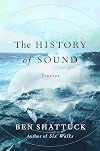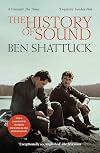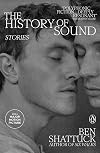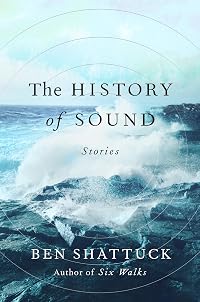
The History of Sound: Stories
by Ben Shattuck
On This Page
Description
"A stunning collection of interconnected stories, set mostly in New England, exploring how the past is often misunderstood and how history, family, heartache, and desire can echo over centuries In twelve luminous stories set across three centuries, The History of Sound examines the unexpected ways the past returns to us and how love and loss are entwined and transformed over generations. In Ben Shattuck's ingenious collection, each story has a companion story, which contains a revelation show more about the previous, paired story. Mysteries are revealed, history is refracted, and deep emotional connections are woven between characters and families. The haunting title story recalls the journey of two men who meet around a piano in a smoky, basement bar only to spend a summer walking the Maine woods collecting folk songs in the shadow of the first World War, forever marked by the odyssey. Decades later, a woman discovers the wax cylinders recorded that fateful summer while cleaning out her new house in Maine. Shattuck's inventive, exquisite stories transport readers from colonial Nantucket to the woods of New Hampshire-into a landscape both enduring and unmistakably modern. Memories, artifacts, paintings, and journals resurface in surprising and poignant ways among evocative beaches, forests, and orchards, revealing the secrets, misunderstandings, and love that linger across centuries. Written with breathtaking humanity and humor, The History of Sound is a love letter to New England, a radiant conversation between past and present, and a moving meditation on the abiding search for home"-- show lessTags
Recommendations





Member Reviews
I loved these stories. I loved their emotional intelligence, and how successive stories reflected illuminating light on the previous stories. I loved the beauty of the sentences and the book’s inventiveness, and the unflinching study of the best and worst of humanity. I savoured this book, one story at a time. These are stories that invite us to reread them, knowing we will gain deeper appreciation with each rereading.
I am so glad to see so much love for this book. I'm a fan of a great short story collection and I think most readers don't want to give short stories a chance. This is a very solid collection. Set in various times/places in New England, there is something very necessary about this book right now. One of the characters talks about nostalgia, and I think there is something that leaves the reader pining for the times in this book during THESE TIMES. I love that the stories were paired in some way... this also made me try to read even closer to see if there were connections with all of the stories. I love the nature of it all. I can tell Shattuck really appreciates nature. Vivid, gentle, detailed, finely crafted sentences, very well show more constructed all around. An even strength between character, plot, place. Great work. My only complaint might be that I would have liked to have two of the stories be more detailed and a bit longer ('The Children of New Eden' and 'Introduction to The Dietzens'). I also did love the format of the radio chapter. I would set this on the shelf next to 'Barkskins' by Annie Proulx. I was seeing lots of love for this book and those high expectations have been met. I will definitely add this to my favorite short story collections list.
*Book #162/358 I have read of the shortlisted Morning News Tournament of Books show less
*Book #162/358 I have read of the shortlisted Morning News Tournament of Books show less
I was attracted to this book because the writer has an affinity for New England and for Henry David Thoreau, and it sounded like the stories would reflect the natural landscape of that area. They do, somewhat; most are set in New England. The twelve stories span three centuries and are interconnected by characters, locales, or objects. For example, the title story, set right before World War I, is about a musicologist who meets a piano player in a bar. There's an immediate attraction, and the two of them trek up to Maine to collect recordings of local folk songs. A century later, a woman purchases the home owned by one of the men and his wife and finds the wax scrolls of their recordings. There's the story of a widow in the 1700s who show more tries to keep up her husband's tavern; a journalist intrigued by the old mystery of a logging camp where all of the inhabitants were found dead; a man who poses a taxidermied auk on a remote island to fool his wife into thinking they still exist; the lovely tale of tundra swans and more. All of the stories reflect on the landscape, which links the characters, and on love, loss, loneliness, and misunderstanding. They show us how the past, its memories, and its artifacts (paintings, music, dead auks, a saw left in a tree, etc.) can connect people through time and place. A quiet, thoughtful, perfectly crafted collection, one to which I will undoubtedly return. show less
Ben Shattuck’s The History of Sound is not a novel, but to call it a story collection is to sell short the way he weaves the stories together. In fact, you would have to keep an incredibly detailed Venn diagram to chart all of the ways the characters, places, and items in the stories connect. All of them take place in New England, and Shattuck’s ability to establish and build each setting is one of the book’s strengths. Readers who like connected stories and don’t need a unified plot or deep character portrayals should definitely give The History of Sound a try.
The History of Sound, Ben Shattuck, author; Ben Shattuck, Zachary Chastain, Paul Mescal, Dion Graham, Ellen Adair, Steven Jay Cohen, Jim Seybert, Dawn Harvey, Chris Cooper, Rebecca Lowman, Jenny Slate, Ed Helms, Nick Offerman, narrators.
This book, with its 12 seemingly random tales, will captivate the reader as they ultimately connect. The narrators are superb with each playing their role perfectly with tone and emphasis. The story rolls out very calmly and lyrically with mellow voices and an interesting cast of characters that are sure to pique interest. When it begins, the reader meets 20-year-old Lionel Worthing and David White. It seems that Lionel has perfect pitch and sings really well. He sings for David who is a musician and show more composer. Together, in 1919, they decide to spend the summer traveling to collect songs from people.
Following this introduction, the author begins the other stories and finally continues with one called the Congregation of the Children of New Eden, which might be called a religious cult with a fanatic leader named Karl Dietzen. It follows that the now 84-year-old Dr. Lionel Worthing has written a book on Karl Dietzen, the founder and leader of the New Eden religious colony. A woman named Annie happens to be watching a television show with Ted Rosen who is interviewing Lionel about his new book. She recognizes his name on some papers she discovered in a secret compartment located in the floor of her new home. She also finds cylinders that are strange to her. They had actually been used to record music in David and Lionel’s day when they were looking for people to give them songs. Annie calls the realtor who sold her the house and explains that she might want to return some of the belongings left behind by the former owner, Belle LaSalle. It turns out that Belle is actually the widow of David White who traveled with Lionel to find songs in the summer of their youth. The connection grows.
Each tale is a tender, going back to the 1600’s and extending into the present day, complete with the mention of the pandemic, as it examines all of humanity and asks some important questions about life; one is, is life boring, another is, is this all there is to life? For sure, they are worthy questions to contemplate as we grow old.
Life is challenging and each of the chapters is unique as it touches on the ills a society is heir to and that its citizens suffer, even as they think they have achieved success and happiness. Among the subjects explored, there is romance, fidelity, love, experimental sexuality, fanatic religion, religious cults, the consequences of aging, parental failure, homelife, dementia, lies, secrets, trust, regret, loss, remorse, child abandonment, mental illness, spousal abuse, longing for something else or dreaming of more, and wondering if what you have achieved is truly the end of your life’s experiment. Is life in or out of our own control? Are we doomed to be controlled by others? Is there really such a thing as kismet? Although it sounds deep and dark, it is not because it is written with a light and lucid touch.
The stories are all about relationships, positive and negative. The characters all seem to be questioning their place in life. Have they made the right choices? Were they beyond their control? Could they forge ahead and change their way of life, or are they doomed to live with their first decision once it is made? Is first love the beginning of their new lives or the end of their old ones? There is a lot to contemplate on these pages. Is Lionel Worthing right when he says television has ruined the world, made it antisocial, shut people off from each other? It is funny, I have often blamed air conditioning because it shut out the outside world and enclosed everyone in their own cocoon.
When does the living of life end? Which age has the most interesting life? Which generation over the last three centuries enjoyed life more? So many of the characters feel that they have nothing more to gain, nothing more to live for, but isn’t that a choice one makes when deciding how to spend each day? It is a choice the reader will be left to consider. It is far better to make the choices that let us live life to the fullest, than to give up and wait for the end. show less
This book, with its 12 seemingly random tales, will captivate the reader as they ultimately connect. The narrators are superb with each playing their role perfectly with tone and emphasis. The story rolls out very calmly and lyrically with mellow voices and an interesting cast of characters that are sure to pique interest. When it begins, the reader meets 20-year-old Lionel Worthing and David White. It seems that Lionel has perfect pitch and sings really well. He sings for David who is a musician and show more composer. Together, in 1919, they decide to spend the summer traveling to collect songs from people.
Following this introduction, the author begins the other stories and finally continues with one called the Congregation of the Children of New Eden, which might be called a religious cult with a fanatic leader named Karl Dietzen. It follows that the now 84-year-old Dr. Lionel Worthing has written a book on Karl Dietzen, the founder and leader of the New Eden religious colony. A woman named Annie happens to be watching a television show with Ted Rosen who is interviewing Lionel about his new book. She recognizes his name on some papers she discovered in a secret compartment located in the floor of her new home. She also finds cylinders that are strange to her. They had actually been used to record music in David and Lionel’s day when they were looking for people to give them songs. Annie calls the realtor who sold her the house and explains that she might want to return some of the belongings left behind by the former owner, Belle LaSalle. It turns out that Belle is actually the widow of David White who traveled with Lionel to find songs in the summer of their youth. The connection grows.
Each tale is a tender, going back to the 1600’s and extending into the present day, complete with the mention of the pandemic, as it examines all of humanity and asks some important questions about life; one is, is life boring, another is, is this all there is to life? For sure, they are worthy questions to contemplate as we grow old.
Life is challenging and each of the chapters is unique as it touches on the ills a society is heir to and that its citizens suffer, even as they think they have achieved success and happiness. Among the subjects explored, there is romance, fidelity, love, experimental sexuality, fanatic religion, religious cults, the consequences of aging, parental failure, homelife, dementia, lies, secrets, trust, regret, loss, remorse, child abandonment, mental illness, spousal abuse, longing for something else or dreaming of more, and wondering if what you have achieved is truly the end of your life’s experiment. Is life in or out of our own control? Are we doomed to be controlled by others? Is there really such a thing as kismet? Although it sounds deep and dark, it is not because it is written with a light and lucid touch.
The stories are all about relationships, positive and negative. The characters all seem to be questioning their place in life. Have they made the right choices? Were they beyond their control? Could they forge ahead and change their way of life, or are they doomed to live with their first decision once it is made? Is first love the beginning of their new lives or the end of their old ones? There is a lot to contemplate on these pages. Is Lionel Worthing right when he says television has ruined the world, made it antisocial, shut people off from each other? It is funny, I have often blamed air conditioning because it shut out the outside world and enclosed everyone in their own cocoon.
When does the living of life end? Which age has the most interesting life? Which generation over the last three centuries enjoyed life more? So many of the characters feel that they have nothing more to gain, nothing more to live for, but isn’t that a choice one makes when deciding how to spend each day? It is a choice the reader will be left to consider. It is far better to make the choices that let us live life to the fullest, than to give up and wait for the end. show less
Set across time, from the 1600s to the present day, the stories in The History of Sound share a connection to the coast of Massachusetts, even if some are set far away from there. Each stands alone, but together they reflect each other, refer back and forwards to events in other stories, and together form a pleasing whole. A friend has trouble telling his childhood friend that he'd like a relationship with her, as she asks him for advice on a proposal she's received. Two young men travel through rural Appalachia in the 1920s, collecting folk music and falling in love. An elderly man comes up with a plan to delight his wife, who has Alzheimers, and in so doing, launches a wild mystery that will reinvigorate a small Newfoundland town. show more These are traditionally told short stories, with beautifully complex characters trying to figure out their own lives, no bells and whistles or experimental writing, just a book reminding us that a well-told story still resonates.
I read this book in paper form, but the audio version features a stellar cast of readers, different for every story, so if audiobooks are something you like, that might be a good way to read this one. show less
I read this book in paper form, but the audio version features a stellar cast of readers, different for every story, so if audiobooks are something you like, that might be a good way to read this one. show less
I listened to this in audiobook format.
This collection of related short stories is about history, and our largely blind inability to accurately recreate or interpret the past. The stories take place largely in Massachusetts, with a few other New England locations, and range in time from late 1600s to 2020. Each story is a work of art but the way they come together to weave a multi-century truth of place, and love, and community, is nothing short of brilliant. I have yet to see the film based on two of the stories but plan to do so. I highly recommend this book (even if you think you don't care for short stories) and especially if you live in Massachusetts.
This collection of related short stories is about history, and our largely blind inability to accurately recreate or interpret the past. The stories take place largely in Massachusetts, with a few other New England locations, and range in time from late 1600s to 2020. Each story is a work of art but the way they come together to weave a multi-century truth of place, and love, and community, is nothing short of brilliant. I have yet to see the film based on two of the stories but plan to do so. I highly recommend this book (even if you think you don't care for short stories) and especially if you live in Massachusetts.
Members
- Recently Added By
Lists

Top Five Books of 2024
795 works; 264 members
2025 Tournament of Books
18 works; 8 members
2025 Notable Books for Adults
26 works; 1 member

Books Read in 2025
4,091 works; 97 members
Top Five Books of 2025
954 works; 303 members
Author Information

4+ Works 449 Members
Some Editions
Awards and Honors
Awards
Distinctions
Common Knowledge
- Original publication date
- 2024-07-09
- Related movies
- The History of Sound (2025 | IMDb)
- Dedication
- to Jenny and Ida
- First words
- I was seventeen when I met David, back in 1916.
- Last words
- (Click to show. Warning: May contain spoilers.)But she couldn't read music, and so the artifact remained just that: something from a long time ago that she would never really understand.
- Blurbers
- Brooks, Geraldine; Greer, Andrew Sean; Philbrick, Nathaniel; Glass, Julia; Shepard, Jim; Baxter, Charles
- Original language
- English
Classifications
Statistics
- Members
- 314
- Popularity
- 101,632
- Reviews
- 18
- Rating
- (4.19)
- Languages
- English, French, German
- Media
- Paper, Audiobook, Ebook
- ISBNs
- 10
- ASINs
- 4