On This Page
Description
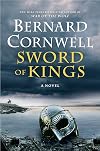
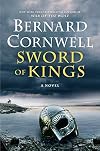
"Uhtred of Bebbanburg is a man of his word. An oath bound him to King Alfred. An oath bound him to AEthelflAEd. And now an oath will wrench him away from the ancestral home he fought so hard to regain. For Uhtred has sworn that on King Edward's death, he will kill two men. And now Edward is dying. A violent attack drives Uhtred south with a small band of warriors, and headlong into the battle for kingship. Plunged into a world of shifting alliances and uncertain loyalties, he will need all show more his strength and guile to overcome the fiercest warrior of them all. As two opposing Kings gather their armies, fate drags Uhtred to London, and a struggle for control that must leave one King victorious, and one dead. But fate - as Uhtred has learned to his cost - is inexorable. Wyrd bid ful ãræd. And Uhtred's destiny is to stand at the heart of the shield wall once again..."--Provided by publisher. show lessTags
Recommendations












Member Reviews
It took me longer to get into ‘Sword of Kings’ compared to most novels in this series. Perhaps this is owing to the amount of time spent on ships, as my ship/boat terminology isn’t expert, making it harder for me to picture what's happening. Having said that, I did enjoy a chase on the water at one part of the story.
I don’t know Uhtred’s exact age in this book, but as the first novel in the series opens in 866, and with this one being set during 924, he must be pushing 70 – at least 67. Yet, he’s still there battling away with the younger warriors.
It’s arguable whether he could still be such a great fighter in his late 60s, but when considering how much tougher a man needed to be in Anglo-Saxon times, I think it’s show more believable. It’s not unreasonable for any man hardened by a warrior lifestyle to remain effective in battle when they reach old age, providing illness doesn’t force them to call it a day. Uhtred is a character who’s known battles and tough times since boyhood, so he’s the epitome of a hard case.
So, we have some good conflict during the novel, along with upbeat humour injected here and there, as one expects from this series. It’s set during a fascinating time of my country’s (England) history, when the separate kingdoms were slowly being united as one.
While the story itself is very good, it sometimes suffers from “telling” instead of “showing”. For example, “The red-cloaked killer hesitated, plainly offended at being questioned.” When an author uses words like “plainly” or “clearly” in this context, they aren’t “showing” the reader anything.
Also, to state that a character “looked frustrated” or “looked puzzled” is blatant telling. "Show” the frustration or puzzlement with body language/facial expression.
To state “He seemed surprised” or “Wistan seemed bemused” is another form of “telling” that could have been “shown” with a line of action.
“Telling” is at its worst through overuse of adverbs. The following would’ve been vivid if the nervousness in each case was “shown”:
“He glanced nervously at Eadith who, like him, wore a cross. ‘Lord?’ he asked nervously.”
The above quote also demonstrates something that annoys me in most novels I read, namely that the paragraph formatting is wrong. The “new speaker, new line” rule is ignored time and again. In some cases in this book, a long fist-person narrated paragraph concludes with a short line of dialogue tagged on the end. As an experienced copy-editor myself, I don’t understand why the editors overlook this.
Another gripe I have with this book, and novels in general, is adverbs used in dialogue attribution. For example, with “‘Sharpen your swords, lads,’ Finan said softly” I needed to pause and mentally ‘adjust’ because I didn’t imagine Finan speaking softly. The dialogue sounds like a command, so I heard him speaking in a commanding tone, only to find out afterwards that he spoke softly. Few things interrupt the narrative flow more than this.
Most dialogue attribution is unnecessary if it’s made clear in the narration who’s about to speak, and therefore adverbs are not needed if the author uses some sort of action prior to the dialogue to suggest how the character speaks.
Bernard Cronwell’s characters are so vivid that he could cut over 90 per cent of his dialogue attribution. For example, The “I said” in the following quote is a waste of words that interrupts the narrative flow: “‘My name,’ I said, ‘is Uhtred, son of Uhtred, Lord of Bebbanburg.’”
It’s also a waste of words to overuse ‘had’ (past perfect). For example, why use “had taken” when “took” would do?
The problem with the past perfect ‘had’ is that it reports on the scene as opposed to taking the reader into the action as it unfolds. The odd one is inevitable, but in this book it’s common, even though it’s easy to omit them.
The narrative is in the past tense, so ‘had’ should only be used if a sentence sounds odd without it. For example, “He had shaken his head” flows better as “He shook his head” because “shook” is in the past tense. If a scene that’s past is being recalled, all that’s needed is to inform the reader that these events have already happened, after which the overuse of ‘had’ is unnecessary.
I know some readers only care about the story, not the style elements or correct paragraph formatting, but as someone who does value these attributes, I’m always distracted by the points criticised above. Quality style enhances a great story.
Besides the above criticisms, I did really like “Sword of Kings”, and will miss Uhtred when he finally hangs up his sword. show less
I don’t know Uhtred’s exact age in this book, but as the first novel in the series opens in 866, and with this one being set during 924, he must be pushing 70 – at least 67. Yet, he’s still there battling away with the younger warriors.
It’s arguable whether he could still be such a great fighter in his late 60s, but when considering how much tougher a man needed to be in Anglo-Saxon times, I think it’s show more believable. It’s not unreasonable for any man hardened by a warrior lifestyle to remain effective in battle when they reach old age, providing illness doesn’t force them to call it a day. Uhtred is a character who’s known battles and tough times since boyhood, so he’s the epitome of a hard case.
So, we have some good conflict during the novel, along with upbeat humour injected here and there, as one expects from this series. It’s set during a fascinating time of my country’s (England) history, when the separate kingdoms were slowly being united as one.
While the story itself is very good, it sometimes suffers from “telling” instead of “showing”. For example, “The red-cloaked killer hesitated, plainly offended at being questioned.” When an author uses words like “plainly” or “clearly” in this context, they aren’t “showing” the reader anything.
Also, to state that a character “looked frustrated” or “looked puzzled” is blatant telling. "Show” the frustration or puzzlement with body language/facial expression.
To state “He seemed surprised” or “Wistan seemed bemused” is another form of “telling” that could have been “shown” with a line of action.
“Telling” is at its worst through overuse of adverbs. The following would’ve been vivid if the nervousness in each case was “shown”:
“He glanced nervously at Eadith who, like him, wore a cross. ‘Lord?’ he asked nervously.”
The above quote also demonstrates something that annoys me in most novels I read, namely that the paragraph formatting is wrong. The “new speaker, new line” rule is ignored time and again. In some cases in this book, a long fist-person narrated paragraph concludes with a short line of dialogue tagged on the end. As an experienced copy-editor myself, I don’t understand why the editors overlook this.
Another gripe I have with this book, and novels in general, is adverbs used in dialogue attribution. For example, with “‘Sharpen your swords, lads,’ Finan said softly” I needed to pause and mentally ‘adjust’ because I didn’t imagine Finan speaking softly. The dialogue sounds like a command, so I heard him speaking in a commanding tone, only to find out afterwards that he spoke softly. Few things interrupt the narrative flow more than this.
Most dialogue attribution is unnecessary if it’s made clear in the narration who’s about to speak, and therefore adverbs are not needed if the author uses some sort of action prior to the dialogue to suggest how the character speaks.
Bernard Cronwell’s characters are so vivid that he could cut over 90 per cent of his dialogue attribution. For example, The “I said” in the following quote is a waste of words that interrupts the narrative flow: “‘My name,’ I said, ‘is Uhtred, son of Uhtred, Lord of Bebbanburg.’”
It’s also a waste of words to overuse ‘had’ (past perfect). For example, why use “had taken” when “took” would do?
The problem with the past perfect ‘had’ is that it reports on the scene as opposed to taking the reader into the action as it unfolds. The odd one is inevitable, but in this book it’s common, even though it’s easy to omit them.
The narrative is in the past tense, so ‘had’ should only be used if a sentence sounds odd without it. For example, “He had shaken his head” flows better as “He shook his head” because “shook” is in the past tense. If a scene that’s past is being recalled, all that’s needed is to inform the reader that these events have already happened, after which the overuse of ‘had’ is unnecessary.
I know some readers only care about the story, not the style elements or correct paragraph formatting, but as someone who does value these attributes, I’m always distracted by the points criticised above. Quality style enhances a great story.
Besides the above criticisms, I did really like “Sword of Kings”, and will miss Uhtred when he finally hangs up his sword. show less
(23) This is the newest Uhtred (The Last Kingdom Series) installment - I have lost track of which number this is but it is the most recent thus I am all caught up. The 3 stars are generous, but I guess because I am also watching the series on Netflix, I did take some enjoyment in it so I won't give it any lower. King Edward dies in this one and Alfred's grandsons battle for power. One, his second born coddled son, nephew of the powerful eldorman of Wessex Aethelhelm. The other Aethelstan, the eldest son, rumored to be illegitimate, but raised by Uhtred to be a great warrior, and in fact does go on to become the first 'king of a united England'. Uhtred makes a vow to kill both Aethelehlm and his nephew (Why? who can remember? It appears show more even the author forgets. . .) and so leaves Bebbanburg and joins the fight between the two brothers.
It is a complete rehash of scenes of the shield wall; turns of fortune with an army arriving when the good guys are on the brink of defeat, a gate managed to be opened from within the walled city, a triumphant definitive battle between Uhtred and a bad guy. Maybe another wife for Uhtred. Another tragic death for Uhtred to deal with. . . So repetitive even within the book itself the author repeats certain phrasing and sentences verbatim, such as his desire for the new female character introduced. Of course, the new female love interest has a warrior's heart, is stunningly beautiful, and Uhtred must avenge her in some way. Can you tell from this review I am tired of these books. Indeed.
Anyway, I keep reading so there are some redeeming qualities. The story and the Netflix series has become part of my Anglophile obsession of the history of Britain, the monarchy, medieval kings and queens, etc. I have read so much Sharon Kaye Penman, and recently read Hilary Mantel and watched 'Wolf Hall' that I can't resist. While I think I am a bit done with shield walls, I am thankful to the author for hours and hours of transformative storytelling. And yup, I will read the next one when it comes out. show less
It is a complete rehash of scenes of the shield wall; turns of fortune with an army arriving when the good guys are on the brink of defeat, a gate managed to be opened from within the walled city, a triumphant definitive battle between Uhtred and a bad guy. Maybe another wife for Uhtred. Another tragic death for Uhtred to deal with. . . So repetitive even within the book itself the author repeats certain phrasing and sentences verbatim, such as his desire for the new female character introduced. Of course, the new female love interest has a warrior's heart, is stunningly beautiful, and Uhtred must avenge her in some way. Can you tell from this review I am tired of these books. Indeed.
Anyway, I keep reading so there are some redeeming qualities. The story and the Netflix series has become part of my Anglophile obsession of the history of Britain, the monarchy, medieval kings and queens, etc. I have read so much Sharon Kaye Penman, and recently read Hilary Mantel and watched 'Wolf Hall' that I can't resist. While I think I am a bit done with shield walls, I am thankful to the author for hours and hours of transformative storytelling. And yup, I will read the next one when it comes out. show less
Nearing the end of the series, which started back in 2004! Can you believe it? 'The Saxon Stories', meanwhile turned into a TV-series under the title 'The Last Kingdom', has been published over the course of 17 years. It's a sort of coming-of-age of Osbert, eh, Uhtred... of Bebbanburg, the castle he always wanted to recapture/reconquer/reclaim ever since the Vikings invaded England (or rather, Northumbria, as England didn't exist yet), and farther into the other kingdoms (East Anglia, Mercia, and Wessex; not forgetting other territories, too, but they are less important for the series).
I haven't reviewed the last few volumes (for whatever reason), but number 7, 'The Pagan Lord', was, after a very good run, the first "less good" novel. show more Things got much better again, though I did leave a gap of eight years before continuing the series, for various reasons, several out of my control.
So, with volume 8, what with Aethelred sick and dying, Aethelflaed becoming Queen of Mercia, also thanks to Uhtred, it was another joy to dive back into this wonderful series.
'The Empty Throne', 'Warriors of the Storm', 'The Flame Bearer' (Here he finally managed to recapture Bebbanburg and thus find inner peace, settle down, and enjoy a well-deserved retirement. But somehow, fate would decree that he rest later, as the next volumes would have him back on the road and fend off new invaders and dangers to the throne(s) of Wessex and Mercia ) and 'War of the Wolf', Mr Cornwell more than delivered the goods. Uhtred still fighting around the various kingdoms, remaining royal to his oats, eh, oaths, whilst trying to make progress in his project to reclaim Bebbanburg.
A busy man, loved by many, despised by his enemies and Christian priests, except those he got along with.
In 'Sword of Kings', we see a much older Uhtred, a more than foolish Uhtred, who should have stayed at home after his last, heavy, weary battles in 'War of the Wolf'. But those events would have consequences for the next volumes, as many ends were not tied up yet. Like the claim to the throne of Wessex and Mercia (and East Anglia). King Edward would at some point, due to age and health issues, have to pass on the power. However, bad influence and power-hungry men, like one of his generals/advisors, Aethelhelm), had a different future in mind.
Edward had two children to succeed him: Aethelwaerd and Aethelstan, the last one being raised/protected by Aethelflaed and Uhtred, to make sure he survived. And this would be the core of 'Sword of Kings'. Uhtred, whilst not needed at all, would indulge in his pride and once again ride out to protect the interests of Aethelstan and King Edward. Like in a previous volume - the 10th or 11th - East Anglian troops were lured away, as a so-called army was on its way to invade. Previousy, it was Uhtred who had been lured away for a non-existing threat. And so, Uhtred returns to save the day.
Not exactly as this time he would make many mistakes, many miscalculations. His intuition would be wrong many times. But despite this all, he remained stubborn, not wanting to delegate (much), ... In fact, at this old age, he'd become a rather pathetic image of his former self.
Of course, it wouldn't be a good story, if it didn't end well. Uhtred did get beaten up, tried to see many times a sign of the gods in every flying bird, sound of the wind, what-have-you, to such an extent it became tedious and even obnoxious. Also, at his old age, not really worrying about his wife, children (he did lose his beloved daughter Stiorra previously, she reigned with Sigtrygger - a Dane Uhtred had fought and subjugated in 'Warriors of the Storm' - in Eoferwic/Yorvik, Northumbria) ), grand-children, but all the more about the kingship of Edward and Aethelstan, he came across as a selfish old man. A man more interested in his image, his reputation, and leaving all the fighting and policing to the next generations.
Long story short, 'Sword of Kings' is an uneven novel. It has its moments - Bernard Cornwell is one hell of a writer of battles, which are bloody, cruel, ... and show how man can be cruel to his own species. I did like, though maybe they were a wee bit too many in number, the flashbacks, the reflections of Uhtred on times and experiences past. They helped in refreshing my memory on the events in previous novels. Last but not least, despite this not being a very good book, Mr Cornwell's writing did make up for that.
The ending was a bit rushed, I find, and not what I had hoped or expected it to be. Sure, Uhtred has become old, should have retired a long time ago, certainly not have interfered here, but in all his stubbornness, he did help turn the tide. Also, and again, there were some threads left unresolved. Those have been resolved now, but let's see what 'War Lord' will bring, as Uhtred swore an oath to Aethelstan, but the latter also swore one to the former. Time to end it all, so there can be a proper conclusion.
----------
For more information on the series, there's this fandom-website. show less
I haven't reviewed the last few volumes (for whatever reason), but number 7, 'The Pagan Lord', was, after a very good run, the first "less good" novel. show more Things got much better again, though I did leave a gap of eight years before continuing the series, for various reasons, several out of my control.
So, with volume 8, what with Aethelred sick and dying, Aethelflaed becoming Queen of Mercia, also thanks to Uhtred, it was another joy to dive back into this wonderful series.
'The Empty Throne', 'Warriors of the Storm', 'The Flame Bearer' (
A busy man, loved by many, despised by his enemies and Christian priests, except those he got along with.
In 'Sword of Kings', we see a much older Uhtred, a more than foolish Uhtred, who should have stayed at home after his last, heavy, weary battles in 'War of the Wolf'. But those events would have consequences for the next volumes, as many ends were not tied up yet. Like the claim to the throne of Wessex and Mercia (and East Anglia). King Edward would at some point, due to age and health issues, have to pass on the power. However, bad influence and power-hungry men, like one of his generals/advisors, Aethelhelm), had a different future in mind.
Edward had two children to succeed him: Aethelwaerd and Aethelstan, the last one being raised/protected by Aethelflaed and Uhtred, to make sure he survived. And this would be the core of 'Sword of Kings'. Uhtred, whilst not needed at all, would indulge in his pride and once again ride out to protect the interests of Aethelstan and King Edward. Like in a previous volume - the 10th or 11th - East Anglian troops were lured away, as a so-called army was on its way to invade. Previousy, it was Uhtred who had been lured away for a non-existing threat. And so, Uhtred returns to save the day.
Not exactly as this time he would make many mistakes, many miscalculations. His intuition would be wrong many times. But despite this all, he remained stubborn, not wanting to delegate (much), ... In fact, at this old age, he'd become a rather pathetic image of his former self.
Of course, it wouldn't be a good story, if it didn't end well. Uhtred did get beaten up, tried to see many times a sign of the gods in every flying bird, sound of the wind, what-have-you, to such an extent it became tedious and even obnoxious. Also, at his old age, not really worrying about his wife, children (
Long story short, 'Sword of Kings' is an uneven novel. It has its moments - Bernard Cornwell is one hell of a writer of battles, which are bloody, cruel, ... and show how man can be cruel to his own species. I did like, though maybe they were a wee bit too many in number, the flashbacks, the reflections of Uhtred on times and experiences past. They helped in refreshing my memory on the events in previous novels. Last but not least, despite this not being a very good book, Mr Cornwell's writing did make up for that.
The ending was a bit rushed, I find, and not what I had hoped or expected it to be. Sure, Uhtred has become old, should have retired a long time ago, certainly not have interfered here, but in all his stubbornness, he did help turn the tide. Also, and again, there were some threads left unresolved. Those have been resolved now, but let's see what 'War Lord' will bring, as Uhtred swore an oath to Aethelstan, but the latter also swore one to the former. Time to end it all, so there can be a proper conclusion.
----------
For more information on the series, there's this fandom-website. show less
I found this effort by Cornwell to be one of the better novels he has written. Uhtred of Bebbanburg finds himself compelled to carry out an oath that he swore earlier. The oath was to kill several bad men in the service of Athelstan, who will eventually become the first king of a united England. Difficulties, some of them due to Uhtred's own arrogance, intervene. The ending contains a bit of homage to C.S. Forester, one of the giants in the field of action packed historical thrillers. I look forward to the next Uhtred book.
Uthred and his merry band are off to reduce the number of Athels, hooray! in pre-England Britain. His oaths continue to direct and plague him when the tension mounts and armies gather as King Edward nears his end of life. Challenges at sea and on land keep the story lively until Uthred is captured by his arch-enemy, Warman; then it gets painfully ugly. As always, Cornwell keeps your attention until the end of this mostly historically correct tale. With a tweak here a nudge there a bit of history is artfully presented.
very good but NOT great. There is an air of finality about this book. Utred is approaching 60/70 and is getting past it. Finan is the same age. There is no stopping time or progress. A curious thing: Utred never kills a priest in the whole book. Aside: Will BC fire up the Starbuck/American Civil War series? God I hope so.
What can I say about this book other than that it is exactly what you would expect. This is the last entry in a series of books set in England in the 10th Century that feature Uthred Lord of Bebbanburg. In this latest outing, Uthred must honor a vow he made to a dying king. A vow that may lead him to a grave himself.
Nobody does historical fiction like Cornwell and this book is a fine example of why he stands alone in this realm. The characters are rich, the scenery sharp, and the tale seems to spring from the pages. A thoroughly enjoyable read.
Nobody does historical fiction like Cornwell and this book is a fine example of why he stands alone in this realm. The characters are rich, the scenery sharp, and the tale seems to spring from the pages. A thoroughly enjoyable read.
Members
- Recently Added By
Lists

Best 21st Century Books (So Far)
670 works; 86 members

Top Five Books of 2019
387 works; 107 members

Books Read in 2023
5,547 works; 145 members

Books Read in 2019
4,052 works; 110 members
Author Information

168+ Works 93,474 Members
Bernard Cornwell was born in London, England, on February 23, 1944, and came to the United States in 1980. He received a B.A. from the University of London in 1967. Cornwell served as producer of the British Broadcasting Corporation from 1969-1976. After this he was head of current affairs for BBC-TV in Belfast, Northern Ireland. In 1979 he became show more editor of television news for Thames Television of London. Since 1980 he has been a freelance writer. he lives with his wife on Cape Cod. Cornwell's Sharpe series, adventure stories about a British soldier set in the Peninsula War of 1808-1814, are built on the author's interest in the Duke of Wellington's army. Titles include Sharpe's Rifles, Sharpe's Revenge, Sharpe's Siege, Sharpe's Regiment, and Sharpe's Waterloo. The Last Kingdom series has ten books. Book ten, The Flame Bearer is on the bestsellers list. He has also written other works including Wildtrack, Killer's Wake, Sea Lord, Stormchild, Rebel, Copperhead, and Battle Flag. His title Death of Kings made The New York Times Best Seller List in 2012 and In 2014 his title The Pagan Lord made the list again. (Bowker Author Biography) show less
Series

Work Relationships
Common Knowledge
- Canonical title
- Sword of Kings
- Original publication date
- 2019-11-26
- People/Characters
- Uhtred of Bebbanburg; Aethelstan
- Important places
- England, UK; Northumberland, England, UK
- Important events
- The death of Edward, King of Wessex; Viking Age; Middle Ages
- First words
- Gydene was missing.
Classifications
Statistics
- Members
- 706
- Popularity
- 40,268
- Reviews
- 18
- Rating
- (4.06)
- Languages
- 6 — English, Finnish, German, Italian, Portuguese, Spanish
- Media
- Paper, Audiobook, Ebook
- ISBNs
- 32
- ASINs
- 7