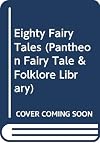
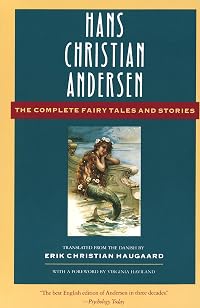
Eighty Fairy Tales (Pantheon Fairy Tale and Folklore Library)
by Hans Christian Andersen
On This Page
Description
Includes the well-known tales as well as less familiar ones such as "The Gardener and the Squire," "The Story of a Mother," "In a Thousand Years Time," and "The Shadow."Tags
Recommendations















Member Reviews
This collection in The Pantheon Fairy Tale and Folklore library published in 1982 is proud of its translations from the Danish by R P Keigwin. Elias Bredsdorf in his introduction points out that there are still many very bad; older translations from the Danish around because there are no copyright duties to pay on them. This collection of tales certainly reads smoothly and Andersens own particular writing style is evident in all of them. He was writing these stories for children or more probably to be read to children and so more adult themes emerge, which could be used for talking about afterwards or when the stories are reread. From 1835 until his death in 1875 Andersen wrote 156 stories, eighty of which are published here in largely show more chronological order.
“Now listen! I’m going to tell you a story I heard when I was a boy. Since then the story seems to have become nicer every time I’ve thought about it. You see, stories are like a good many people - they get nicer and nicer as they grow older and that is so pleasant”
This introduction to the Story Dad’s always Right is quite typical; Andersen immediately takes his reader into his confidence and at the same time makes it personal. It is though Andersen is sitting down in front of you and telling his story and hie finishes with:
“Well what do you think of that for a story? I heard it as a child and now you have heard it, too and realise that Dad’s always right.”
Most of the stories are from Andersen’s own imagination, very few come from Danish folklore. Most of the famous ones are included: The `Emperors New clothes’, The Ugly Duckling, The Little Mermaid, The Red Shoes, The Flying Trunk, The Staunch Tin Soldier etc, but unless you are an aficionado there are many stories that will be new. There are some familiar motifs that feature in many of the tales: animals and plants can talk and express their feelings as can many inanimate objects There is a story about a bottle that ends its life as just a bottleneck, but it is still useful in providing a water container for a caged bird. I particularly like one of the later stories called “What the Thistle Found Out” which is so typical; the thistle grows outside of a beautiful garden, but a young Scots lady who is going to marry the prince selects one of its flowers for her button hole. The thistle is so proud and wonders if she will be replanted in the garden, meanwhile the donkey tethered across the track spend its life wondering if he will ever get to reach the thistle, because it looks such a tasty morsel. Human frailties are certainly reflected in most of these tales.
Andersen does not spare his readers from the dark side of life and many of his stories end in the death of his characters, but as he explains we all know we are going to die and the best that most of us can hope for is to be useful while alive. This idea can become a little mawkish especially as one of his major tropes is the will of God. Modern readers should bear in mind that these stories date from the nineteenth century and he was writing for children whom he believed could be taught to love God. Where Andersen absolutely excels is his descriptions of nature and natural life , they are sharp and delight in a childish wonder at the world outside of the towns and cities.
This book was the next one on my shelf to read, I don’t know where I got it from, probably a charity shop, but it wont be going back there. I want to read some of the stories again and I wonder if children of today would like them, fantasy, wonder and good stories and an undeniable charm that courses through all of them, however there are not many fairies. My edition has plenty of illustrations and is nicely printed - 5 stars. show less
“Now listen! I’m going to tell you a story I heard when I was a boy. Since then the story seems to have become nicer every time I’ve thought about it. You see, stories are like a good many people - they get nicer and nicer as they grow older and that is so pleasant”
This introduction to the Story Dad’s always Right is quite typical; Andersen immediately takes his reader into his confidence and at the same time makes it personal. It is though Andersen is sitting down in front of you and telling his story and hie finishes with:
“Well what do you think of that for a story? I heard it as a child and now you have heard it, too and realise that Dad’s always right.”
Most of the stories are from Andersen’s own imagination, very few come from Danish folklore. Most of the famous ones are included: The `Emperors New clothes’, The Ugly Duckling, The Little Mermaid, The Red Shoes, The Flying Trunk, The Staunch Tin Soldier etc, but unless you are an aficionado there are many stories that will be new. There are some familiar motifs that feature in many of the tales: animals and plants can talk and express their feelings as can many inanimate objects There is a story about a bottle that ends its life as just a bottleneck, but it is still useful in providing a water container for a caged bird. I particularly like one of the later stories called “What the Thistle Found Out” which is so typical; the thistle grows outside of a beautiful garden, but a young Scots lady who is going to marry the prince selects one of its flowers for her button hole. The thistle is so proud and wonders if she will be replanted in the garden, meanwhile the donkey tethered across the track spend its life wondering if he will ever get to reach the thistle, because it looks such a tasty morsel. Human frailties are certainly reflected in most of these tales.
Andersen does not spare his readers from the dark side of life and many of his stories end in the death of his characters, but as he explains we all know we are going to die and the best that most of us can hope for is to be useful while alive. This idea can become a little mawkish especially as one of his major tropes is the will of God. Modern readers should bear in mind that these stories date from the nineteenth century and he was writing for children whom he believed could be taught to love God. Where Andersen absolutely excels is his descriptions of nature and natural life , they are sharp and delight in a childish wonder at the world outside of the towns and cities.
This book was the next one on my shelf to read, I don’t know where I got it from, probably a charity shop, but it wont be going back there. I want to read some of the stories again and I wonder if children of today would like them, fantasy, wonder and good stories and an undeniable charm that courses through all of them, however there are not many fairies. My edition has plenty of illustrations and is nicely printed - 5 stars. show less
Ratings
Members
- Recently Added By
Lists

Favorite Fairy Tales
269 works; 103 members
Author Information

3,954+ Works 54,144 Members
Hans Christian Andersen, one of the best known figures in literature, is best know for combining traditional folk tales with his own great imagination to produce fairy tales known to most children today. The Danish writer was born in the slums of Odense. Although he was raised in poverty, he eventually attended Copenhagen University. Although show more Andersen wrote poems, plays and books, he is best known for his Fairy Tales and Other Stories, written between 1835 and 1872. This work includes such famous tales as The Emperor's New Clothes, Little Ugly Duckling, The Tinderbox, Little Claus and Big Claus, Princess and the Pea, The Snow Queen, The Little Mermaid, The Nightingale, The Story of a Mother and The Swineherd. Andersen's greatest work is still influential today, helping mold some of the works of writers ranging from Charles Dickens to Oscar Wilde and inspiring many of the works of Disney and other motion pictures. Andersen, who traveled greatly during his life, died in his home in Rolighed on August 4, 1875. (Bowker Author Biography) show less
All Editions
Series
Belongs to Publisher Series
Classifications
- Genres
- Fiction and Literature, Children's Books
- DDC/MDS
- 839.8 — Literature & rhetoric German & related literatures Other Germanic literatures Danish and Norwegian literatures
- LCC
- PT8116 .E5 — Language and Literature German, Dutch and Scandinavian literatures Danish literature Individual authors or works 19th century Andersen, Hans Christian
Statistics
- Members
- 177
- Popularity
- 185,453
- Reviews
- 2
- Rating
- (4.30)
- Languages
- English, German
- Media
- Paper
- ISBNs
- 9
- ASINs
- 1