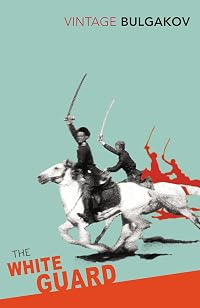
The White Guard
by Mikhail Bulgakov
On This Page
Description
White Guard, Mikhail Bulgakov's semi-autobiographical first novel, is the story of the Turbin family in Kiev in 1918. Alexei, Elena, and Nikolka Turbin have just lost their mother-their father had died years before-and find themselves plunged into the chaotic civil war that erupted in the Ukraine in the wake of the Russian Revolution. In the context of this family's personal loss and the social turmoil surrounding them, Bulgakov creates a brilliant picture of the existential crises brought show more about by the revolution and the loss of social, moral, and political certainties. He confronts the reader with the bewildering cruelty that ripped Russian life apart at the beginning of the last century as well as with the extraordinary ways in which the Turbins preserved their humanity. In this volume Marian Schwartz, a leading translator, offers the first complete and accurate translation of the definitive original text of Bulgakov's novel. She includes the famous dream sequence, omitted in previous translations, and beautifully solves the stylistic issues raised by Bulgakov's ornamental prose. Readers with an interest in Russian literature, culture, or history will welcome this superb translation of Bulgakov's important early work. This edition also contains an informative historical essay by Evgeny Dobrenko. show lessTags
Recommendations










Member Reviews
"Great was the year and terrible the Year of Our Lord 1918, the second since the revolution had begun." So begins Mikhail Bulgakov's tale of Kiev in the chaos of the Russian civil war. In the Ukraine, not only are Bolsheviks, the "Whites" (a loose conglomeration of anti-Bolsheviks of various stripes), and the Ukrainian nationalists under Petylura competing for control, but the Germans, who had put their puppet leader (the Hetman) in charge during the just ended World War I, are still hanging around. In the space of a few years, Kiev was to go back and forth among the warring factions at least eighteen times.
The story focuses on two brothers and a sister, Alexei, Elena, and Nikolai Turbin. Their mother has just died; Alexei, a doctor show more like Bulgakov, has recently returned from serving in the army; and Elena's new husband, Talberg, is on the verge of leaving to join a White general far away. The family lives in a large, cozy apartment, filled with books and memories; the beauty of the city of Kiev is lovingly described. But, as quoted in the introduction to the edition I read by Evgeny Dobrenko, Bulgakov wrote, in an essay on Kiev, "The legendary times came to an abrupt end, and history intruded, suddenly and menacingly."
In the novel, Bulgakov shows what happens when Petlyura's army of peasants from the countryside take over the city. In advance, the Germans and the Hetman flee, as do many of the army's officers and soldiers, leaving the city to scattered groups of eager but inexperienced and under-armed individual soldiers who are incapable of fighting the forces arrayed against them. Both Alexei and Nikolai become involved in the doomed fighting, along with some of their friends. The bulk of the novel covers just a few dramatic days. Throughout, we see not just the Turbins and their friends, but also the broader picture, the epic sweep of the nationalist forces (the countryside versus the city, the peasants versus the intelligentsia), the rumor-mongering within the city and the easy acceptance of the people of their new rulers, the antisemitism of the nationalists (heralding a pogrom under a later nationalist regime), and the abandonment of the city by the leaders and military. The courage and noble acts of the Turbins cannot stop the tide of history.
Bulgakov's writing is a delight. He paints a portrait of a beautiful, if legendary, city, and the stars and planets above, and displays deep familiarity with its streets and routes around and through it; he evokes the sounds of the phones and doorbells ringing, of cannons booming, of guns going off; he refers to Russian literature; he inserts a somewhat comic character in the form of a downstairs neighbor; he recounts his characters' dreams; and above all he brings to life the cold, the turmoil, the danger, the bravery and cowardice, the fear and love, of a confusing and frightening time. Like The Master and Margarita, it has religious references, in particular to the Book of Revelation (helpfully footnoted by the translator). This may be Bulgakov's first novel, but he is fully in control of the diverse techniques he uses to make this chaotic world real to the reader.
Although this novel could not be published in Russia until the 1960s, an adaptation of it became a play, "The Days of the Turbins," that became a Moscow hit and a favorite of Stalin's -- it must have been quite an adaptation, because there is no way that the book I read would have been acceptable to Stalin. I understand that this edition is the first complete translation into English of the novel.
And in the end?
"Great was the year and terrible the Year of Our Lord 1918, but more terrible still was 1919."
"What had it all been for? No one could say. And would anyone pay for the blood?
No. No one would.
The snow would melt, the green Ukrainian grass would come up and plait the earth, lush sprouts would emerge, the heat would shimmer above the fields, and no trace would remain of the blood. Blood is cheap in these dark red fields, and no one would ever redeem it.
No one." show less
The story focuses on two brothers and a sister, Alexei, Elena, and Nikolai Turbin. Their mother has just died; Alexei, a doctor show more like Bulgakov, has recently returned from serving in the army; and Elena's new husband, Talberg, is on the verge of leaving to join a White general far away. The family lives in a large, cozy apartment, filled with books and memories; the beauty of the city of Kiev is lovingly described. But, as quoted in the introduction to the edition I read by Evgeny Dobrenko, Bulgakov wrote, in an essay on Kiev, "The legendary times came to an abrupt end, and history intruded, suddenly and menacingly."
In the novel, Bulgakov shows what happens when Petlyura's army of peasants from the countryside take over the city. In advance, the Germans and the Hetman flee, as do many of the army's officers and soldiers, leaving the city to scattered groups of eager but inexperienced and under-armed individual soldiers who are incapable of fighting the forces arrayed against them. Both Alexei and Nikolai become involved in the doomed fighting, along with some of their friends. The bulk of the novel covers just a few dramatic days. Throughout, we see not just the Turbins and their friends, but also the broader picture, the epic sweep of the nationalist forces (the countryside versus the city, the peasants versus the intelligentsia), the rumor-mongering within the city and the easy acceptance of the people of their new rulers, the antisemitism of the nationalists (heralding a pogrom under a later nationalist regime), and the abandonment of the city by the leaders and military. The courage and noble acts of the Turbins cannot stop the tide of history.
Bulgakov's writing is a delight. He paints a portrait of a beautiful, if legendary, city, and the stars and planets above, and displays deep familiarity with its streets and routes around and through it; he evokes the sounds of the phones and doorbells ringing, of cannons booming, of guns going off; he refers to Russian literature; he inserts a somewhat comic character in the form of a downstairs neighbor; he recounts his characters' dreams; and above all he brings to life the cold, the turmoil, the danger, the bravery and cowardice, the fear and love, of a confusing and frightening time. Like The Master and Margarita, it has religious references, in particular to the Book of Revelation (helpfully footnoted by the translator). This may be Bulgakov's first novel, but he is fully in control of the diverse techniques he uses to make this chaotic world real to the reader.
Although this novel could not be published in Russia until the 1960s, an adaptation of it became a play, "The Days of the Turbins," that became a Moscow hit and a favorite of Stalin's -- it must have been quite an adaptation, because there is no way that the book I read would have been acceptable to Stalin. I understand that this edition is the first complete translation into English of the novel.
And in the end?
"Great was the year and terrible the Year of Our Lord 1918, but more terrible still was 1919."
"What had it all been for? No one could say. And would anyone pay for the blood?
No. No one would.
The snow would melt, the green Ukrainian grass would come up and plait the earth, lush sprouts would emerge, the heat would shimmer above the fields, and no trace would remain of the blood. Blood is cheap in these dark red fields, and no one would ever redeem it.
No one." show less
Right from the opening words, Mikhail Bulgakov leaves the reader in no doubt where and when his novel takes place, nor does he minimize the menace: Great and terrible was the year of Our Lord 1918, of the Revolution the second. Its summer abundant with warmth and sun, its winter with snow, highest in its heaven stood two stars: the shepherds' star, eventide Venus; and Mars --- quivering, red. He immediately introduces the Turbin family: the siblings Alexei, Elena and seventeen year old Nikolka, their maid Anyuta, and Elena's new husband Captain Sergei Talberg.
Pausing only to give a detailed description of their warm and comfortable apartment, a picture worthy of a Merchant - Ivory set designer, Bulgakov immediately moves on to hint once show more more at the subject of his novel. It may be cosy inside, but outside, The snow-storm from the north howled and howled, and now they themselves could sense a dull, subterranean rumbling, the groaning of an anguished land in travail. As 1918 drew to an end the threat of danger grew rapidly nearer.
The danger he alludes to was the Ukrainian Revolution. In December 1918, Ukraine was part of Russia. Russia itself was in turmoil following its own revolution and the murder of the Tsar and his family. Russia, along with Ukrainians, had been fighting the Germans on Ukrainian soil. The Treaty of Brest - Litovsk, which theoretically had awarded Ukraine its independence had just collapsed. Ukrainian nationalists were fighting Russia. White Russians and reds were fighting each other in Ukraine and eastward to the Pacific. At the heart of the Ukrainian turmoil was Kiev. Bulgakov himself was from Kiev. His minutely detailed descriptions of the city throughout the novel show his deep love of his birthplace. However, despite his immersion in the heart of Ukraine, he considered himself Russian.
His world was about to change. In 1918 Kiev was changing before both his eyes and those of the Turbins, as refugees from the Russian Revolution flocked to the city. Again there is that feeling of hurry and urgency:
Then, inevitably, all the turmoil from the fighting in the surrounding countryside came to Kiev. Petlyura, leader of Ukraine's fight for independence, overran the city. Alexei Turbin, like Bulgakov a former White Guard doctor, and Nikolka the young cadet, joined the forces of resistance. Street fighting from corner to corner provides gripping action. There is treachery, personal betrayal, and settling of scores, but Bulgakov skilfully intersperses these dramatic scenes with quieter domestic ones, or humorous ones from the life of the Turbins' landlord, Lisovich.
The battle for Kiev is fast and furious. Alexei was gravely wounded, again like Bulgakov himself. The reader sees the world of the noncombatants struggling through the turmoil as Alexei struggles for his life.
[The White Guard] was initially serialized, starting in 1925, in the magazine Rossiya, which ceased publication before the last episodes of the novel had been published. Permission was not given to publish in book form, but the story was made into a highly successful play, The Days of the Turbins. For reasons never fully understood, the play was a great favourite of Stalin's. There are those who feel this may have saved Bulgakov's life when so many of his peers were being purged.
There isn't much of the magical realism here* of Bulgakov's later [The Master and Margarita], but this first novel does have the same wonderful way with language. It seems more in line with those other masters of adventure, Dumas and Scott. It was not until 1966 that [The White Guard] was published in novel form in Russia.
_________________
* I just discovered when checking the publishing history, that the first English translation, the 1971 Michael Glenny one that I read from my TBR pile, actually omitted dream flashbacks. These might have given it a different feel altogether. There is a newer 2008 translation from Yale by Marian Schwartz, which has the complete novel. It also has background on the political situation which would have been much appreciated. I'll have to get this new edition. I'd certainly have no hesitation in reading it again. show less
Pausing only to give a detailed description of their warm and comfortable apartment, a picture worthy of a Merchant - Ivory set designer, Bulgakov immediately moves on to hint once show more more at the subject of his novel. It may be cosy inside, but outside, The snow-storm from the north howled and howled, and now they themselves could sense a dull, subterranean rumbling, the groaning of an anguished land in travail. As 1918 drew to an end the threat of danger grew rapidly nearer.
The danger he alludes to was the Ukrainian Revolution. In December 1918, Ukraine was part of Russia. Russia itself was in turmoil following its own revolution and the murder of the Tsar and his family. Russia, along with Ukrainians, had been fighting the Germans on Ukrainian soil. The Treaty of Brest - Litovsk, which theoretically had awarded Ukraine its independence had just collapsed. Ukrainian nationalists were fighting Russia. White Russians and reds were fighting each other in Ukraine and eastward to the Pacific. At the heart of the Ukrainian turmoil was Kiev. Bulgakov himself was from Kiev. His minutely detailed descriptions of the city throughout the novel show his deep love of his birthplace. However, despite his immersion in the heart of Ukraine, he considered himself Russian.
His world was about to change. In 1918 Kiev was changing before both his eyes and those of the Turbins, as refugees from the Russian Revolution flocked to the city. Again there is that feeling of hurry and urgency:
Among the refugees came grey-haired bankers and their wives, skilful businessmen who had left behind their faithful deputies in Moscow with instructions to them not to lose contact with the new world which was coming into existence in the Muscovite kingdom; landlords who had secretly left their property in the hands of trusted managers; industrialists, merchants, soldiers, politicians. There came journalists from Moscow and Petersburg, corrupt, grasping and cowardly. Prostitutes. Respectable ladies from aristocratic families and their delicate daughters, pale depraved women from Petersburg with carmine-painted lips; secretaries of civil service departmental chiefs; inert young homosexuals. Princes and junk-dealers, poets and pawnbrokers, gendarmes and actresses from the Imperial theatres. Squeezing its way through the crack, this mass of people converged on the city.
Then, inevitably, all the turmoil from the fighting in the surrounding countryside came to Kiev. Petlyura, leader of Ukraine's fight for independence, overran the city. Alexei Turbin, like Bulgakov a former White Guard doctor, and Nikolka the young cadet, joined the forces of resistance. Street fighting from corner to corner provides gripping action. There is treachery, personal betrayal, and settling of scores, but Bulgakov skilfully intersperses these dramatic scenes with quieter domestic ones, or humorous ones from the life of the Turbins' landlord, Lisovich.
The battle for Kiev is fast and furious. Alexei was gravely wounded, again like Bulgakov himself. The reader sees the world of the noncombatants struggling through the turmoil as Alexei struggles for his life.
[The White Guard] was initially serialized, starting in 1925, in the magazine Rossiya, which ceased publication before the last episodes of the novel had been published. Permission was not given to publish in book form, but the story was made into a highly successful play, The Days of the Turbins. For reasons never fully understood, the play was a great favourite of Stalin's. There are those who feel this may have saved Bulgakov's life when so many of his peers were being purged.
There isn't much of the magical realism here* of Bulgakov's later [The Master and Margarita], but this first novel does have the same wonderful way with language. It seems more in line with those other masters of adventure, Dumas and Scott. It was not until 1966 that [The White Guard] was published in novel form in Russia.
_________________
* I just discovered when checking the publishing history, that the first English translation, the 1971 Michael Glenny one that I read from my TBR pile, actually omitted dream flashbacks. These might have given it a different feel altogether. There is a newer 2008 translation from Yale by Marian Schwartz, which has the complete novel. It also has background on the political situation which would have been much appreciated. I'll have to get this new edition. I'd certainly have no hesitation in reading it again. show less
Bulgakov’s brilliant novel of war in city of Kiev following the Russian Revolution. The introduction by Evgeny Dobrinko in this edition is outstanding and somewhat necessary to explain the many forces vying for Kiev at this time: Germany, who had installed a puppet ‘Hetman’ after the Russian Revolution, the Ukrainian nationalist forces under Petylura, the Bolsheviks out of Moscow, and lastly the “Whites”, for whom the title “White Guard” derives. It is the Whites who are either monarchists or those most in favor of maintaining the provisional government, and this is the side that the Turbin family are on, whose two brothers and sister are at the heart of the novel.
Bulgakov describes the chaos and cruelty of war and its show more effect on this genteel family, taking a page from Tolstoy, and he reminds one of Dostoevsky in his nationalism. Dostoevsky was against nihilist forces in the middle of the 19th century and Bulgakov is against the forces which threaten the status quo in the early part of the 20th, but the unstated difficulty morally for both of them is that it’s hard to defend “the system” that Russians were living under. As Dobrinko says in the introduction, “The heroes’ high-minded blindness prevents them from seeing that the main enemy is not the Germans, Hetman Skoropadsky, Petlyura, or the Bolsheviks, but rather the Russian state itself, founded upon an age-old contempt for the individual and for freedom – the main spark that set off ‘Russian rebellion’. Russia was the only state founded simultaneously upon European values and Eastern despotism. … No other state ever held almost ninety percent of its own population in slavery for centuries.”
All is chaos, and few are admirable. The Germans are cruel and of course on foreign soil, Petylura carries out a brutal Jewish pogrom, the Reds will eventually install an autocratic government that is a parody of Marxism, and the Whites, while portrayed favorably at least in the form of the individuals in the novel, are defending autocracy. All of the leaders involved have a tendency to look out for themselves over their cause, fleeing when necessary, and sacrificing the soldiers or the people. It reminds one of Buffalo Springfield, “nobody’s right, if everybody’s wrong”, though the individual acts of humanity and the decency of the Turbin family do stand out as exceptions.
Great imagery, great historical fiction, and underrated novel.
Quotes:
On careers:
“Thus, actually, does it most often happen in our lives. Someone can do something a full twenty years – lecture on Roman law, for instance – and in the twenty-first suddenly realize that Roman law is neither here nor there, that he doesn’t even understand or like it, and in fact he is a subtle gardener and burns with a passion for flowers.”
On defeat:
“Only someone who has himself been beaten knows what that word means! It’s like an evening in a home where the electric lights are out. It’s like a room where green mold, full of diseased life, is climbing the wallpaper. It’s like demon children with rickets, like rancid vegetable oil, like obscenities sworn by women’s voices in the dark. In short, it was like death.”
On modernity:
“At four o’clock in the afternoon lights went on in building windows, in round electric globes, in the gas streetlamps, in the house lights and flame-red rooms, and in the solid glass windows of the power plants, which led people to thoughts of humanity’s terrible and empty future, in those solid windows where you could see machines tirelessly turning their desperate wheels, shattering the earth’s very foundation to its roots.”
On religion; speaking to God in a dream:
“’How can it be, Lord,’ I say, ‘your priests are saying the Bolsheviks are going to hell, aren’t they? So what’s this, I say? They don’t believe in you, and look what quarters you have ready to cheer them.’
‘So what if they don’t believe?’ He asks.
…
‘…there’s no gain or loss to me from your faith. One man believes and another doesn’t, but all your actions are identical. At each other’s throats, and as for the quarters, Zhilin, you have to understand that as far as I’m concerned, Zhilin, all of you are identical – men killed on a battlefield.’
...
‘you’d do well not mentioning the priests to me. I have no idea what I’m going to do with them. There are no fools on earth to compare with your priests. I’ll tell you a secret, Zhilin. They’re not priests, they’re a disgrace.’”
On transience:
“But this isn’t frightening. All this will pass. The sufferings, agonies, blood, hunger, and wholesale death. The sword will go away, but these stars will remain when even the shadow of our bodies and our affairs are long gone from this earth. There is not a man who does not know this. So why are we reluctant to turn our gaze to them? Why?”
On war:
“What had it all been for? No one could say. And would anyone pay for the blood?
No. No one would.
The snow would melt, the green Ukrainian grass would come up and plait the earth, lush sprouts would emerge, the heat would shimmer above the fields, and no trace would remain of the blood. Blood is cheap in these dark red fields, and no one would ever redeem it.
No one.” show less
Bulgakov describes the chaos and cruelty of war and its show more effect on this genteel family, taking a page from Tolstoy, and he reminds one of Dostoevsky in his nationalism. Dostoevsky was against nihilist forces in the middle of the 19th century and Bulgakov is against the forces which threaten the status quo in the early part of the 20th, but the unstated difficulty morally for both of them is that it’s hard to defend “the system” that Russians were living under. As Dobrinko says in the introduction, “The heroes’ high-minded blindness prevents them from seeing that the main enemy is not the Germans, Hetman Skoropadsky, Petlyura, or the Bolsheviks, but rather the Russian state itself, founded upon an age-old contempt for the individual and for freedom – the main spark that set off ‘Russian rebellion’. Russia was the only state founded simultaneously upon European values and Eastern despotism. … No other state ever held almost ninety percent of its own population in slavery for centuries.”
All is chaos, and few are admirable. The Germans are cruel and of course on foreign soil, Petylura carries out a brutal Jewish pogrom, the Reds will eventually install an autocratic government that is a parody of Marxism, and the Whites, while portrayed favorably at least in the form of the individuals in the novel, are defending autocracy. All of the leaders involved have a tendency to look out for themselves over their cause, fleeing when necessary, and sacrificing the soldiers or the people. It reminds one of Buffalo Springfield, “nobody’s right, if everybody’s wrong”, though the individual acts of humanity and the decency of the Turbin family do stand out as exceptions.
Great imagery, great historical fiction, and underrated novel.
Quotes:
On careers:
“Thus, actually, does it most often happen in our lives. Someone can do something a full twenty years – lecture on Roman law, for instance – and in the twenty-first suddenly realize that Roman law is neither here nor there, that he doesn’t even understand or like it, and in fact he is a subtle gardener and burns with a passion for flowers.”
On defeat:
“Only someone who has himself been beaten knows what that word means! It’s like an evening in a home where the electric lights are out. It’s like a room where green mold, full of diseased life, is climbing the wallpaper. It’s like demon children with rickets, like rancid vegetable oil, like obscenities sworn by women’s voices in the dark. In short, it was like death.”
On modernity:
“At four o’clock in the afternoon lights went on in building windows, in round electric globes, in the gas streetlamps, in the house lights and flame-red rooms, and in the solid glass windows of the power plants, which led people to thoughts of humanity’s terrible and empty future, in those solid windows where you could see machines tirelessly turning their desperate wheels, shattering the earth’s very foundation to its roots.”
On religion; speaking to God in a dream:
“’How can it be, Lord,’ I say, ‘your priests are saying the Bolsheviks are going to hell, aren’t they? So what’s this, I say? They don’t believe in you, and look what quarters you have ready to cheer them.’
‘So what if they don’t believe?’ He asks.
…
‘…there’s no gain or loss to me from your faith. One man believes and another doesn’t, but all your actions are identical. At each other’s throats, and as for the quarters, Zhilin, you have to understand that as far as I’m concerned, Zhilin, all of you are identical – men killed on a battlefield.’
...
‘you’d do well not mentioning the priests to me. I have no idea what I’m going to do with them. There are no fools on earth to compare with your priests. I’ll tell you a secret, Zhilin. They’re not priests, they’re a disgrace.’”
On transience:
“But this isn’t frightening. All this will pass. The sufferings, agonies, blood, hunger, and wholesale death. The sword will go away, but these stars will remain when even the shadow of our bodies and our affairs are long gone from this earth. There is not a man who does not know this. So why are we reluctant to turn our gaze to them? Why?”
On war:
“What had it all been for? No one could say. And would anyone pay for the blood?
No. No one would.
The snow would melt, the green Ukrainian grass would come up and plait the earth, lush sprouts would emerge, the heat would shimmer above the fields, and no trace would remain of the blood. Blood is cheap in these dark red fields, and no one would ever redeem it.
No one.” show less
It's 1918, and I am in Kiev (the city of my birth but so distant now...) - Bulgakov ingeniously "places" me there during this incredibly turbulent year after the revolution. I am mesmerized by the fact how unpredictable every single day is, as Kiev copes with the influx of forces fighting for the domination of the city, the oldest of all Russia's cities. The legendary bravery of some, the utter treachery and cowardice of others... One family, the Turbins, is caught in this mess and trying to make sense of it all....
I have the Russian copy of the book in front of me, but my hat goes off to translators who undertook and accomplished the prodigious task of translating Bulgakov. Not a stranger to translation work myself, show more while reading it I often wondered: now, how in the world would you translate this or that... It would take the most intimate knowledge of both English and Russian, plus there are snippets of Ukrainian there too...
It doesn't surprise me that Bulgakov also wrote a play based on this book - called "Days of the Turbins" (in the Soviet Union at the time, it became more popular than the book and it was set on stage to much praise - before, of course, all of his writing got censured and banned) - while reading, I got the feeling that the structure of the novel did indeed vaguely resemble a play: it was as if Bulgakov was setting the stage for each episode, doing it in present tense, describing the way his characters feel before starting each dialogue; it's hard to put a finger on it, but it did read like a play at times.
Another point worth mentioning is the speech of the characters (and it's not only in Bulgakov's work, but most Russian writers before the revolution) - the beauty of a dialogue, the way educated people conversed on a daily basis, addressed each other (plus, not a single swear word in this novel; no matter how justifiably angry the characters were Bulgakov just hinted at it, but never used actual foul language - I found it refreshing, unlike some of the modern writing...). All this beautiful language is lost now, after years of Soviet rule, after most of the intelligentsia fled the country following the revolution. The Russian language suffered tremendously as a result. show less
It's 1918, and I am in Kiev (the city of my birth but so distant now...) - Bulgakov ingeniously "places" me there during this incredibly turbulent year after the revolution. I am mesmerized by the fact how unpredictable every single day is, as Kiev copes with the influx of forces fighting for the domination of the city, the oldest of all Russia's cities. The legendary bravery of some, the utter treachery and cowardice of others... One family, the Turbins, is caught in this mess and trying to make sense of it all....
I have the Russian copy of the book in front of me, but my hat goes off to translators who undertook and accomplished the prodigious task of translating Bulgakov. Not a stranger to translation work myself, show more while reading it I often wondered: now, how in the world would you translate this or that... It would take the most intimate knowledge of both English and Russian, plus there are snippets of Ukrainian there too...
It doesn't surprise me that Bulgakov also wrote a play based on this book - called "Days of the Turbins" (in the Soviet Union at the time, it became more popular than the book and it was set on stage to much praise - before, of course, all of his writing got censured and banned) - while reading, I got the feeling that the structure of the novel did indeed vaguely resemble a play: it was as if Bulgakov was setting the stage for each episode, doing it in present tense, describing the way his characters feel before starting each dialogue; it's hard to put a finger on it, but it did read like a play at times.
Another point worth mentioning is the speech of the characters (and it's not only in Bulgakov's work, but most Russian writers before the revolution) - the beauty of a dialogue, the way educated people conversed on a daily basis, addressed each other (plus, not a single swear word in this novel; no matter how justifiably angry the characters were Bulgakov just hinted at it, but never used actual foul language - I found it refreshing, unlike some of the modern writing...). All this beautiful language is lost now, after years of Soviet rule, after most of the intelligentsia fled the country following the revolution. The Russian language suffered tremendously as a result. show less
It is December 1918 in Kiev, and it is a time of turmoil. The Germans have occupied the city, the Socialists are camped outside waiting for their moment, and the Bolsheviks are in attention, ready to dig up their buried armaments. The Turbin family, Tsarists and wealthy once, has lost their matriarch, and the three siblings - Alexei, Elena, and Nikolka face the unknowable as they suddenly find their world shrinking. We see the disintegration of a society into chaos through the prism of this family's experiences -- Elena's abandonment by her German officer husband, Alexei and Nikolka's brief and frustrating stint with the army, Alexei's being shot by the rebellious forces.
But terror has arrived, and nobody would be spared. And a worse show more terror it was because on the eve of its arrival, there was nobody to defend the city. The army had been abandoned by their leaders, officers had simply walked away, soldiers had started to disappear on duty -- and it is the likes of Alexei and Nikolka, young, inexperienced, eager and patriotic foot soldiers who were left to look the enemy in the eye. The White Guard had lost the war even before firing a single shot. The victors would celebrate, and the entire city is a well of instant support and adulation for the mysterious, invisible Socialist leader, Petlyura. Amidst the chaos and insanity of the world around them, we see small and ultimately feeble attempts by the Turbins, to continue as before -- there is still the lace on the table, the late parties with close friends, but we know that theirs was already a doomed world.
Bulgakov portrays those terrifying days masterfully -- he conveys us through the city and more than through what our eyes tell us, we become aware of what is happening through its sounds and smells. There is the smell of fear, the unforgettable smell of the dead and decaying bodies in the city's mortuary (this has to be one of the most graphic description in literature!). And simply through snatches of conversations and exchanges, we are able to imagine the parade of the victors to its tiniest detail, sense the mood of the crowds, feel the crush of bodies as the masses move from church to plaza. I could swear I was there, as spectator and eavesdropper.
The White Guard is said to be based partially on Bulgakov's life. Although with slight variation, the home of the Turbins (the exact address is given in the book) describes the Bulgakov's residence in the city. Alexei, the eldest son, was a doctor who specialised in venereal diseases. Bulgakov was one in real life. The book itself has has a dramatic story. Bulgakov could only publish it in parts in 1926. As he could not publish it under Stalin, he adapted it as a play called "The Days of the Turbins." Interestingly, though the play was centered on the life of a bourgeois family, Stalin liked it so much he went to see the play at the Moscow Art Theatre at least 15 times! The book was only published in full 26 years after Bulgakov's death in 1940.
This book was a joy to read, not for the subject which god knows, could not have been more grim, but for the way Bulgakov bridges the epic and the historic, and the familiar and the graspable. It is very much literature as I understand how it should be. show less
But terror has arrived, and nobody would be spared. And a worse show more terror it was because on the eve of its arrival, there was nobody to defend the city. The army had been abandoned by their leaders, officers had simply walked away, soldiers had started to disappear on duty -- and it is the likes of Alexei and Nikolka, young, inexperienced, eager and patriotic foot soldiers who were left to look the enemy in the eye. The White Guard had lost the war even before firing a single shot. The victors would celebrate, and the entire city is a well of instant support and adulation for the mysterious, invisible Socialist leader, Petlyura. Amidst the chaos and insanity of the world around them, we see small and ultimately feeble attempts by the Turbins, to continue as before -- there is still the lace on the table, the late parties with close friends, but we know that theirs was already a doomed world.
Bulgakov portrays those terrifying days masterfully -- he conveys us through the city and more than through what our eyes tell us, we become aware of what is happening through its sounds and smells. There is the smell of fear, the unforgettable smell of the dead and decaying bodies in the city's mortuary (this has to be one of the most graphic description in literature!). And simply through snatches of conversations and exchanges, we are able to imagine the parade of the victors to its tiniest detail, sense the mood of the crowds, feel the crush of bodies as the masses move from church to plaza. I could swear I was there, as spectator and eavesdropper.
The White Guard is said to be based partially on Bulgakov's life. Although with slight variation, the home of the Turbins (the exact address is given in the book) describes the Bulgakov's residence in the city. Alexei, the eldest son, was a doctor who specialised in venereal diseases. Bulgakov was one in real life. The book itself has has a dramatic story. Bulgakov could only publish it in parts in 1926. As he could not publish it under Stalin, he adapted it as a play called "The Days of the Turbins." Interestingly, though the play was centered on the life of a bourgeois family, Stalin liked it so much he went to see the play at the Moscow Art Theatre at least 15 times! The book was only published in full 26 years after Bulgakov's death in 1940.
This book was a joy to read, not for the subject which god knows, could not have been more grim, but for the way Bulgakov bridges the epic and the historic, and the familiar and the graspable. It is very much literature as I understand how it should be. show less
There is a sense in which – like Tolstoy’s happy families – all Russian novels are alike. A blizzard of polysyllabic names potentially confusingly embellished with the corresponding patronymics not to mention the seemingly obligatory diminutives, with always a sense of foreboding in the background, if not the foreground. You certainly don’t turn to them for sweetness and light. Then again, love, sex and death are the wider novel’s perennial preoccupations.
To be sure there isn’t much focus on love in The White Guard, no sex at all, and I can recall only three actual deaths described in the text; but the prospect of death hangs over everything. Here there can be, too, as I also noticed when reading War and Peace, a sudden show more lurching through time from a particular chapter to the next. One surprising thing I discovered from it is that a Ukrainian clock seems to make the sounds tonk-tank rather than tick-tock.
The novel is set in Ukraine, in “the city” (only once identified as Kiev,) amid the turmoil that followed the 1917 revolution and centres round the affairs of the Turbin family and those who live in the same building. During the novel the city starts out under the rule of the Hetman - in whose army the male Turbins serve as officers - but is threatened by Ukrainian Nationalist forces led by Simon Petlyura; and beyond that, the Bolsheviks. The disorganisation and unpreparedness of the defending forces is well portrayed – a bit like Dad’s Army but without the laughs – and the mist of rumour and counter-rumour accompanying the situation when the city falls to Petlyura conveys the commensurate sense of febrility.
Bulgakov’s first novel and the only one to be published in the USSR in his lifetime, The White Guard is an insight into an all-but forgotten moment in an interregnum of upheaval and change and is worth reading for that alone. But a marker of the futility of it all is the thought that, “Blood is red on those deep fields and no one would redeem it. No one.”
While it has touches of the fantastic, including several dream sequences, The White Guard does not (cannot) touch the heights of the same author’s The Master and Margarita but it is well worth reading on its own terms. show less
To be sure there isn’t much focus on love in The White Guard, no sex at all, and I can recall only three actual deaths described in the text; but the prospect of death hangs over everything. Here there can be, too, as I also noticed when reading War and Peace, a sudden show more lurching through time from a particular chapter to the next. One surprising thing I discovered from it is that a Ukrainian clock seems to make the sounds tonk-tank rather than tick-tock.
The novel is set in Ukraine, in “the city” (only once identified as Kiev,) amid the turmoil that followed the 1917 revolution and centres round the affairs of the Turbin family and those who live in the same building. During the novel the city starts out under the rule of the Hetman - in whose army the male Turbins serve as officers - but is threatened by Ukrainian Nationalist forces led by Simon Petlyura; and beyond that, the Bolsheviks. The disorganisation and unpreparedness of the defending forces is well portrayed – a bit like Dad’s Army but without the laughs – and the mist of rumour and counter-rumour accompanying the situation when the city falls to Petlyura conveys the commensurate sense of febrility.
Bulgakov’s first novel and the only one to be published in the USSR in his lifetime, The White Guard is an insight into an all-but forgotten moment in an interregnum of upheaval and change and is worth reading for that alone. But a marker of the futility of it all is the thought that, “Blood is red on those deep fields and no one would redeem it. No one.”
While it has touches of the fantastic, including several dream sequences, The White Guard does not (cannot) touch the heights of the same author’s The Master and Margarita but it is well worth reading on its own terms. show less
I had been considering this book for a long time. I had so loved The Master and Margarita that when Melville House published a set of Bulgakov translations, I got all excited. I loved Heart of a Dog, but this seemed like a lot of military history I didn't know anything about.
Well, I still know hardly anything about Ukranian military history, and I'm sure there was a lot that I missed, or was bewildered by, because I didn't understand the context, but to some level, some of that seemed appropriate. In much of this book, what is going on around the City (Kiev) is unknown, rumor, conjecture, made up on the spot. Even when the fighting is in the city itself, so much of what is going on is guesswork, as each person has to feel out for show more themselves when the right time is to show up for duty, to rip off one's badges, to retreat, to comply, to hide. Which power to align oneself to and to what cost.
Much more realist than both Master and Dog, it is the bewilderment of war itself that is compelling here.
Also, now I want to visit Kiev. Though perhaps now is not the time. show less
Well, I still know hardly anything about Ukranian military history, and I'm sure there was a lot that I missed, or was bewildered by, because I didn't understand the context, but to some level, some of that seemed appropriate. In much of this book, what is going on around the City (Kiev) is unknown, rumor, conjecture, made up on the spot. Even when the fighting is in the city itself, so much of what is going on is guesswork, as each person has to feel out for show more themselves when the right time is to show up for duty, to rip off one's badges, to retreat, to comply, to hide. Which power to align oneself to and to what cost.
Much more realist than both Master and Dog, it is the bewilderment of war itself that is compelling here.
Also, now I want to visit Kiev. Though perhaps now is not the time. show less
Members
- Recently Added By
Lists

A Ukraine Reading List
129 works; 91 members

Russian Literature
187 works; 36 members

Books about Russia and the former USSR
67 works; 12 members

1920s
141 works; 6 members
Author Information

370+ Works 35,294 Members
Mikhail Afanasevich Bulgakov was a Russian playwright, novelist, and short-story writer best known for his use of humor and satire. He was born in Kiev, Ukraine, on May 15, 1891, and graduated from the Medical School of Kiev University in 1916. He served as a field doctor during World War I. Bulgakov's association with the Moscow Art Theater began show more in 1926 with the production of his play The Days of the Turbins, which was based on his novel The White Guard. His work was popular, but since it ridiculed the Soviet establishment, was frequently censored. His satiric novel The Heart of a Dog was not published openly in the U.S.S.R. until 1987. Bulgakov's plays including Pushkin and Moliere dealt with artistic freedom. His last novel, The Master and Margarita, was not published until 1966-67 and in censored form. Bulgakov died in Moscow on March 10, 1940. (Bowker Author Biography) A practicing physician like Anton Chekhov, Mikhail Afanasevich Bulgakov became a popular writer and playwright in the comparatively easier political climate of the Soviet Union during the 1920s. The civil war and its internecine horrors became one of his major themes as did the new Soviet society. His early prose is often satiric, with strong elements of the fantastic and grotesque, but it also contains the themes of guilt and personal responsibility that become so crucial in his later work. Bulgakov wrote a number of important plays that provoked bitter attacks in the press, and he was shut out of the theater and literature in 1929. Only a direct appeal to Stalin allowed Bulgakov to resume a professional career. Even then, however, some publishing houses and theaters rejected some of his important works, such as the novel Life of Monsieur de Moliere (1933). Bulgakov's masterpiece written over a number of years and only published decades after his death is the novel Master and Margarita (1966-67). Combining two principal plot lines-Satan's visit to contemporary Moscow and the trial and execution of Jesus in biblical Judaea-the work may be read on many levels, from the purely satiric to the allegorical. It has been acclaimed as one of the most important achievements of twentieth-century Russian fiction. Today, Bulgakov is celebrated for both his plays and his novels. Several of his plays are public favorites and standard fare in Russian theaters. Bulgakov died in Moscow on March 10, 1940. (Bowker Author Biography) show less
Some Editions
Awards and Honors
Distinctions
Notable Lists
Series
Belongs to Publisher Series
Work Relationships
Common Knowledge
- Canonical title*
- Die weiße Garde
- Original title
- Белая гвардия
- Original publication date
- 1926; 1973 (uncensored ed.) (uncensored ed.)
- People/Characters
- Yelena Vasilyevna Talberg; Alexei Vasilyevich Turbin; Father Alexander; Captain Sergei Ivanovich Talberg; Anyuta; Nikolka Turbin (show all 47); Vasily Ivanovich Lisovich; Lieutenant Viktor Viktorovich Myshlayevsky; Vanda Mikhhaylovna; Leonid Yuryevich Shervinsky; Second Lieutenant Fyodor Nikolayevich Stepanov (Karas); Yavdokha; Colonel Toropets; Vladimir Kirillovich Vinnichenko; Captain Alexander Bronislavovich Studzinsky; Cadet Pavlovsky; Colonel Malyshev; Maxim; Colonel Kozyr-Leshko; Khudyakovsky; Franko; Haras; Colonel Shchetkin; Cossack Lieutenant Galanba; Yakov Grigoryevich Feldman; Colonel Bolbotun; Mikhail Semyonovich Shpolyansky; Captain Pleshko; Strashkevich; Colonel Felix Felixovich Nai-Turs; Major-General Blokhin; Lieutenant General Makushin; Vladimir Fyodorovich; Maria Petrovna; Lariosik Larion Surzhansky; Julia Alexandrovna Reiss; The Wolf; Vasilka; Tomashevsky; Schur; Maria Frantsevna; Irina; Lydia Pavlovna; Sergei Nikolayevich; Fyodor; Doctor Brodovich; Petka Shcheglov
- Important places
- Kyiv, Ukraine; Ukraine
- Important events
- Russian Civil War
- Epigraph
- A fine snow at first, suddenly it came in flakes. The wind howled. It was a snowstorm now. And instant later the dark sky had blended with the snowy sea. Everything disappeared. "Well, sir," shouted the coachman, "looks bad. ... (show all)A blizzard!"
Alexander Pushkin, The Captain's Daughter
...and the dead were judged out of those things which were written in the books, according to their works.
Revelation 20:12 - Dedication
- To Liubov' Evgenevana Bulgakova
- First words
- Great was the year and terrible the Year of Our Lord 1918, the second since the Revolution has begun.
- Last words*
- (Click to show. Warning: May contain spoilers.)Почему?
- Blurbers
- Rubenstein, Joshua; Douglas, Charlotte
- Original language
- Russian
*Some information comes from Common Knowledge in other languages. Click "Edit" for more information.
Classifications
- Genres
- Fiction and Literature, General Fiction
- DDC/MDS
- 891.7342 — Literature & rhetoric Literatures of other languages East Indo-European and Celtic literatures Russian and East Slavic languages Russian fiction USSR 1917–1991 Early 20th century 1917–1945
- LCC
- PG3476 .B78 .B513 — Language and Literature Slavic languages and literatures. Baltic languages. Albanian language Slavic. Baltic. Albanian Russian literature Individual authors and works 1917-1960
- BISAC
Statistics
- Members
- 1,672
- Popularity
- 13,431
- Reviews
- 26
- Rating
- (3.82)
- Languages
- 19 — Catalan, Czech, Danish, Dutch, English, Estonian, Finnish, French, German, Hebrew, Hungarian, Italian, Japanese, Polish, Portuguese, Russian, Spanish, Swedish, Turkish
- Media
- Paper, Audiobook, Ebook
- ISBNs
- 119
- ASINs
- 34