The Malay Archipelago
by Alfred Russel Wallace
On This Page
Description
Fans of geography and travel writing should definitely spend some time with Alfred Russell Wallace's fascinating volume The Malay Archipelago. Compiled through decades of research, this book provides an exhaustive account of Wallace's experiences and observations on the large group of islands situated between Australia and Southeast Asia, including his interactions with the indigenous people and theories about the development of the flora and fauna of the region..
Tags
Recommendations






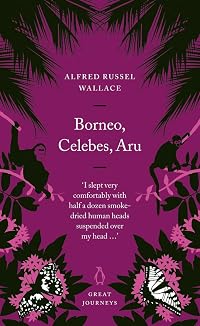













Member Reviews
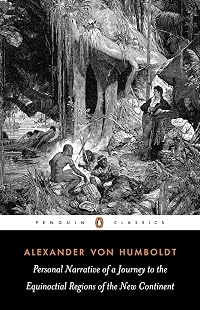
This book completes the quartet of famous nature/travel writings by great scientists of the nineteenth century. It follows in the footsteps of Humboldt's "Personal Narrative", Darwin's "Voyage of the Beagle" and Bates's "The Naturalist on the River Amazons". All four books are thoroughly entertaining, though all are also rather long.
Before he went on the expedition described in this book, Wallace had already travelled to South America (initially with Bates), and the dangers of such expeditions are shown by the fact that Wallace's younger brother died of yellow fever in South America and by the fact that, while he was returning to England, Wallace's ship sank and he lost most of the specimens he had collected, with Wallace and the crew show more being rescued after spending ten days in an open boat.
The travels described in this book form the background to the contribution that Wallace made to the development of the field of biogeography. Berry explains the significance of "Wallace's Line" in his introduction.
But Wallace is best known for coming up with the theory of evolution by natural selection independently from Darwin. In fact the idea occurred to him when he was laid up suffering from fever while on the expedition detailed in this book. (Though Wallace does not actually mention this in "The Malay Archipelago".)
Wallace certainly deserves credit for independently coming up with the same idea as Darwin, but nobody should take seriously the ridiculous conspiracy theory which claims that Darwin stole the theory of natural selection from Wallace.
Wallace himself was always happy to play second fiddle to Darwin. For example, in 1908 Wallace made a speech to the Linnaean Society in which he explicitly defended Darwin's priority, pointing out that "...the idea occurred to Darwin in October 1838, nearly twenty years earlier than to myself (in February 1858); and that during the whole of that twenty years he had been laboriously collecting evidence..."
Darwin's notebooks from the 1830s and his essays of 1842 and 1844 show that Darwin had developed his theory long before he published "On the Origin of Species" and long before Wallace had his brainwave.
Wallace was an admirable character. He did not have the advantages of wealth that Darwin had; he was a socialist (of sorts) who had progressive views on many issues; and his attitude towards native peoples was, as Berry says, "unusually enlightened" for an era when racism was rife.
Wallace also disagreed (later in his life, at least) with Darwin's mistaken decision to allow into his evolutionary theory a subsidiary role for the Lamarckian idea of the inheritance of acquired characteristics. In this, Wallace has been said to be more Darwinian than Darwin himself.
Unfortunately, on the negative side, Wallace also ended up believing in spiritualism and arguing that the human brain/mind could not have evolved. Darwin and Wallace had become good friends, but Darwin was disappointed with Wallace over this issue. Darwin and Wallace also differed over the relative importance of natural selection and sexual selection. But these differences of opinion did not stop Darwin successfully campaigning to get a state pension for Wallace.
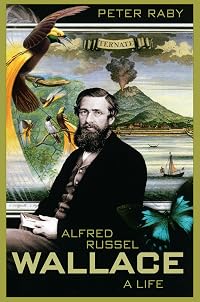
I thoroughly recommend this book, which incidentally was a favourite of David Attenborough's when he was a boy. But if you want to know more about Wallace, I would also recommend "Alfred Russel Wallace: A Life" by Peter Raby, and "Infinite Tropics: An Alfred Russel Wallace Anthology" edited by Andrew Berry. show less
Before he went on the expedition described in this book, Wallace had already travelled to South America (initially with Bates), and the dangers of such expeditions are shown by the fact that Wallace's younger brother died of yellow fever in South America and by the fact that, while he was returning to England, Wallace's ship sank and he lost most of the specimens he had collected, with Wallace and the crew show more being rescued after spending ten days in an open boat.
The travels described in this book form the background to the contribution that Wallace made to the development of the field of biogeography. Berry explains the significance of "Wallace's Line" in his introduction.
But Wallace is best known for coming up with the theory of evolution by natural selection independently from Darwin. In fact the idea occurred to him when he was laid up suffering from fever while on the expedition detailed in this book. (Though Wallace does not actually mention this in "The Malay Archipelago".)
Wallace certainly deserves credit for independently coming up with the same idea as Darwin, but nobody should take seriously the ridiculous conspiracy theory which claims that Darwin stole the theory of natural selection from Wallace.
Wallace himself was always happy to play second fiddle to Darwin. For example, in 1908 Wallace made a speech to the Linnaean Society in which he explicitly defended Darwin's priority, pointing out that "...the idea occurred to Darwin in October 1838, nearly twenty years earlier than to myself (in February 1858); and that during the whole of that twenty years he had been laboriously collecting evidence..."
Darwin's notebooks from the 1830s and his essays of 1842 and 1844 show that Darwin had developed his theory long before he published "On the Origin of Species" and long before Wallace had his brainwave.
Wallace was an admirable character. He did not have the advantages of wealth that Darwin had; he was a socialist (of sorts) who had progressive views on many issues; and his attitude towards native peoples was, as Berry says, "unusually enlightened" for an era when racism was rife.
Wallace also disagreed (later in his life, at least) with Darwin's mistaken decision to allow into his evolutionary theory a subsidiary role for the Lamarckian idea of the inheritance of acquired characteristics. In this, Wallace has been said to be more Darwinian than Darwin himself.
Unfortunately, on the negative side, Wallace also ended up believing in spiritualism and arguing that the human brain/mind could not have evolved. Darwin and Wallace had become good friends, but Darwin was disappointed with Wallace over this issue. Darwin and Wallace also differed over the relative importance of natural selection and sexual selection. But these differences of opinion did not stop Darwin successfully campaigning to get a state pension for Wallace.
I thoroughly recommend this book, which incidentally was a favourite of David Attenborough's when he was a boy. But if you want to know more about Wallace, I would also recommend "Alfred Russel Wallace: A Life" by Peter Raby, and "Infinite Tropics: An Alfred Russel Wallace Anthology" edited by Andrew Berry. show less
This book completes the quartet of famous nature/travel writings by great scientists of the nineteenth century. It follows in the footsteps of Humboldt’s “Personal Narrative”, Darwin’s “Voyage of the Beagle” and Bates’s “The Naturalist on the River Amazons”. All four books are thoroughly entertaining, though all are also rather long.
I thoroughly recommend this beautiful hardback facsimile edition. It is great value.
Before he went on the expedition described in this book, Wallace had already travelled to South America (initially with Bates), and the dangers of such expeditions are shown by the fact that Wallace’s younger brother died of yellow fever in South America and by the fact that, while he was returning to show more England, Wallace’s ship sank and he lost most of the specimens he had collected, with Wallace and the crew being rescued after spending ten days in an open boat.
The travels described in this book form the background to the contribution that Wallace made to the development of the field of biogeography, through what became known as “Wallace’s Line”.
But Wallace is best known for coming up with the theory of evolution by natural selection independently from Darwin. In fact, the idea occurred to him when he was laid up suffering from fever while on the expedition detailed in this book. (Though Wallace does not actually mention this in “The Malay Archipelago”.)
Wallace certainly deserves credit for independently coming up with the same idea as Darwin, but nobody should take seriously the ridiculous conspiracy theory which claims that Darwin stole the theory of natural selection from Wallace.
Wallace himself was always happy to play second fiddle to Darwin. For example, in 1908 Wallace made a speech to the Linnaean Society in which he explicitly defended Darwin’s priority, pointing out that “...the idea occurred to Darwin in October 1838, nearly twenty years earlier than to myself (in February 1858); and that during the whole of that twenty years he had been laboriously collecting evidence...”
Darwin’s notebooks from the 1830s and his essays of 1842 and 1844 show that Darwin had developed his theory long before he published “On the Origin of Species” and long before Wallace had his brainwave.
Wallace was an admirable character. He did not have the advantages of wealth that Darwin had; he was a socialist (of sorts) who had progressive views on many issues; and his attitude towards native peoples was, as one commentator has said, “unusually enlightened” for an era when racism was rife.
Wallace also disagreed (later in his life, at least) with Darwin’s mistaken decision to allow into his evolutionary theory a subsidiary role for the Lamarckian idea of the inheritance of acquired characteristics. In this, Wallace has been said to be more Darwinian than Darwin himself.
Unfortunately, on the negative side, Wallace also ended up believing in spiritualism and arguing that the human brain/mind could not have evolved. Darwin and Wallace had become good friends, but Darwin was disappointed with Wallace over this issue. Darwin and Wallace also differed over the relative importance of natural selection and sexual selection. But these differences of opinion did not stop Darwin successfully campaigning to get a state pension for Wallace.
Incidentally, this book was a favourite of David Attenborough’s when he was a boy. And if you want to know more about Wallace, I would also recommend “Alfred Russel Wallace: A Life” by Peter Raby, and “Infinite Tropics: An Alfred Russel Wallace Anthology” edited by Andrew Berry show less
I thoroughly recommend this beautiful hardback facsimile edition. It is great value.
Before he went on the expedition described in this book, Wallace had already travelled to South America (initially with Bates), and the dangers of such expeditions are shown by the fact that Wallace’s younger brother died of yellow fever in South America and by the fact that, while he was returning to show more England, Wallace’s ship sank and he lost most of the specimens he had collected, with Wallace and the crew being rescued after spending ten days in an open boat.
The travels described in this book form the background to the contribution that Wallace made to the development of the field of biogeography, through what became known as “Wallace’s Line”.
But Wallace is best known for coming up with the theory of evolution by natural selection independently from Darwin. In fact, the idea occurred to him when he was laid up suffering from fever while on the expedition detailed in this book. (Though Wallace does not actually mention this in “The Malay Archipelago”.)
Wallace certainly deserves credit for independently coming up with the same idea as Darwin, but nobody should take seriously the ridiculous conspiracy theory which claims that Darwin stole the theory of natural selection from Wallace.
Wallace himself was always happy to play second fiddle to Darwin. For example, in 1908 Wallace made a speech to the Linnaean Society in which he explicitly defended Darwin’s priority, pointing out that “...the idea occurred to Darwin in October 1838, nearly twenty years earlier than to myself (in February 1858); and that during the whole of that twenty years he had been laboriously collecting evidence...”
Darwin’s notebooks from the 1830s and his essays of 1842 and 1844 show that Darwin had developed his theory long before he published “On the Origin of Species” and long before Wallace had his brainwave.
Wallace was an admirable character. He did not have the advantages of wealth that Darwin had; he was a socialist (of sorts) who had progressive views on many issues; and his attitude towards native peoples was, as one commentator has said, “unusually enlightened” for an era when racism was rife.
Wallace also disagreed (later in his life, at least) with Darwin’s mistaken decision to allow into his evolutionary theory a subsidiary role for the Lamarckian idea of the inheritance of acquired characteristics. In this, Wallace has been said to be more Darwinian than Darwin himself.
Unfortunately, on the negative side, Wallace also ended up believing in spiritualism and arguing that the human brain/mind could not have evolved. Darwin and Wallace had become good friends, but Darwin was disappointed with Wallace over this issue. Darwin and Wallace also differed over the relative importance of natural selection and sexual selection. But these differences of opinion did not stop Darwin successfully campaigning to get a state pension for Wallace.
Incidentally, this book was a favourite of David Attenborough’s when he was a boy. And if you want to know more about Wallace, I would also recommend “Alfred Russel Wallace: A Life” by Peter Raby, and “Infinite Tropics: An Alfred Russel Wallace Anthology” edited by Andrew Berry show less
This is quite an interesting book covering Wallace's many years of residence in Indonesia, in the mid 1800s. Obviously a lot has changed since then, but this is a marvelous snapshot of the historical period and the naturalistic thinking of the time.
I paid 48,300 rupiahs for a hard-cover copy at a book stall in Denpasar, in 1990. (It's actually an "Oxford in Asia Handbook" edition, printed on cheap paper in Singapore for the local southeast Asian market.) I read it cover to cover on the Tokyo subways during my commute sometime in the following months. Once in a while, I long not only for the glory days before everything was McDiscovered™ and McPackaged™ for tourists, when travel was difficult and time-consuming, but also for the days show more when I had two hours per day of nearly uninterrupted reading time on the subway and could devote serious attention to tomes like this... show less
I paid 48,300 rupiahs for a hard-cover copy at a book stall in Denpasar, in 1990. (It's actually an "Oxford in Asia Handbook" edition, printed on cheap paper in Singapore for the local southeast Asian market.) I read it cover to cover on the Tokyo subways during my commute sometime in the following months. Once in a while, I long not only for the glory days before everything was McDiscovered™ and McPackaged™ for tourists, when travel was difficult and time-consuming, but also for the days show more when I had two hours per day of nearly uninterrupted reading time on the subway and could devote serious attention to tomes like this... show less
Alfred Russel Wallace's 1869 account of his travels and observations in what is today Indonesia and that occurred mostly in 1858, the year that he and Darwin published on the Theory of Evolution. Wallace describes his adventures visiting the many islands in the archipelago and his constant search for and preparation of bird and insect specimens that he sent back to England and with which he supported himself. At one point he comments that he is the only white person residing on the thousand-mile-long island of New Guinea, where he is primarily interested in finding new examples of the Bird of Paradise. His description of hunting the Orang-Utan is especially disturbing in light of its recent endangerment. Wallace discusses the show more biogeography of the archipelago at length including the faunal divide that would later be called the Wallace Line. He also discusses the people of the islands at length, frequently comparing the Malay and Papuan "races" and their degrees of civilization or barbarity. This Victorian view of humanity is sometimes trying, although Wallace makes several comments admiring the noble savages around him who live in peace and harmony without any of the oppressive social structures that are necessary at home. (Later in life he became a social activist supporting women's suffrage and opposing eugenics, the destruction of the environment by human activity, and militarism.) The Folio Society edition of this book has beautiful color plates with drawings by the author and some photographs. show less
Alfred Russel Wallace was a co-discoverer with Darwin of evolution through natural selection. This book is his account of his travels collecting specimens of animals, birds and insects in what is now Malaysia, Singapore, and Indonesia.
I have to admit my eyes did glaze over from time to time at the descriptions of the birds and beetles, but his actual travels and his description of the people and societies he met were fascinating.
I have to admit my eyes did glaze over from time to time at the descriptions of the birds and beetles, but his actual travels and his description of the people and societies he met were fascinating.
The great account of travel and exploration in Malaya through a vanished world of jungle, tigers on the island of Singapore, and attacking Oran-utans. Wallace sweated his way through it all writing one of the most important and engaging of all 19th century scientific travel books.
Always fun to return to...
Members
- Recently Added By
Lists

Reading list
170 works; 1 member

The r/AskScience Reading List
159 works; 3 members

In Our Time books
4,934 works; 2 members
Author Information

Born in Usk, Wales, Alfred Wallace had a very limited education, yet he became a noted naturalist and independently developed the theory of evolution, which is most commonly associated with the name of Charles Darwin. Wallace's formal education was completed with his graduation from grammar school at the age of 14. Having developed an interest in show more natural history, he avidly pursued this study during his years as a teacher in Leicester, England. In 1848 Wallace went to Brazil to study animals of the Amazon. Returning to England in 1853, he departed a year later on an expedition to the East Indies, where he remained for nine years. It was during this time that he developed his theory of evolution, essentially the same theory of natural selection and survival of the fittest that Darwin had developed and had been painstakingly perfecting before making his views known. Wallace sent his paper setting forth his theory to Darwin, who recognized that his and Wallace's theories were the same. The theory was presented in a joint paper before the Linnaean Society, an organization of scientists, in London in 1858. With Wallace's agreement, Darwin was given the major credit for developing the theory because of the wide-ranging body of evidence that he had amassed in support of it. (Bowker Author Biography) show less
Some Editions
Series
Belongs to Publisher Series
Work Relationships
Common Knowledge
- Canonical title
- The Malay Archipelago
- Original title
- The Malay Archipelago
- Original publication date
- 1869
- People/Characters
- Alfred Russel Wallace
- Important places
- Malaysia; Borneo; Java, Indonesia; Sumatra, Indonesia; Bali, Indonesia; Lombok, Indonesia (show all 9); Sulawesi, Indonesia; Indonesia; Malay Archipelago
- Dedication
- To Charles Darwin author of 'The origin of species' I dedicate this book not only as a token of personal esteem and friendship but also to express my deep admiration for his genius and his works.
- First words
- My readers will naturally ask why I have delayed writing this book for six years after my return; and I feel bound to give them full satisfaction on this point.
- Quotations
- I thought of the long ages of the past, during which the successive generations of this little creature had run their course — year by year being born, and living and dying amid these dark and gloomy woods, with no intellig... (show all)ent eye to gaze upon their loveliness; to all appearance such a wanton waste of beauty. Such ideas excite a feeling of melancholy. It seems sad that on the one hand such exquisite creatures should live out their lives and exhibit their charms only in these wild inhospitable regions, doomed for ages yet to come to hopeless barbarism; while, on the other hand, should civilized man ever reach these distant lands, and bring moral, intellectual, and physical light into the recesses of these virgin forests, we may be sure that he will so disturb the nicely-balanced relations of organic and inorganic nature as to cause the disappearance, and finally the extinction, of these very beings whose wonderful structure and beauty he alone is fitted to appreciate and enjoy. This consideration must surely tell us that all living things were not made for man. Many of them have no relation to him. The cycle of their existence has gone on independently of his, and is disturbed or broken by every advance in man’s intellectual development; and their happiness and enjoyments, their loves and hates, their struggles for existence, their vigorous life and early death, would seem to be immediately related to their own well-being and perpetuation alone, limited only by the equal well-being and perpetuation of the numberless other organisms with which each is more or less intimately connected.
Classifications
- Genres
- Science & Nature, Nonfiction, Travel, Anthropology, General Nonfiction, Biography & Memoir
- DDC/MDS
- 915.9804 — History & geography Geography & travel Geography of and travel in Asia Southeast Asia; Indochina; Mekong River Indonesia and East Timor
- LCC
- DS601 .W18 — History of Europe, Asia, Africa and Oceania Asia History of Asia Malay Archipelago
- BISAC
Statistics
- Members
- 514
- Popularity
- 58,501
- Reviews
- 9
- Rating
- (4.05)
- Languages
- 6 — Chinese, Dutch, English, French, German, Spanish
- Media
- Paper, Ebook
- ISBNs
- 54
- ASINs
- 18