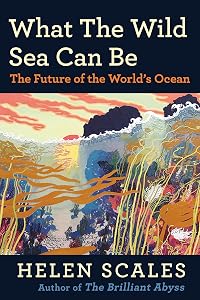
What the Wild Sea Can Be: The Future of the World’s Ocean
by Helen Scales
On This Page
Description
"The acclaimed marine biologist and author of The Brilliant Abyss examines the existential threats the world's ocean will face in the coming decades and offers cautious optimism for much of the abundant life within. No matter where we live, "we are all ocean people," Helen Scales emphatically observes in her bracing yet hopeful exploration of the future of the ocean. Beginning with its fascinating deep history, Scales links past to present to show how the prehistoric ocean ecology was show more already working in ways similar to the ocean of today. In elegant, evocative prose, she takes readers into the realms of animals that epitomize today's increasingly challenging conditions. Ocean life everywhere is on the move as seas warm, and warm waters are an existential threat to emperor penguins, whose mating grounds in Antarctica are collapsing. Shark populations-critical to balanced ecosystems-have shrunk by 71 per cent since the 1970s, largely the result of massive and oft-unregulated industrial fishing. Orcas-the apex predators-have also drastically declined, victims of toxic chemicals and plastics with long half-lives that disrupt the immune system and the ability to breed. Yet despite these threats, many hopeful signs remain. Increasing numbers of no-fish zones around the world are restoring once-diminishing populations. Astonishing giant kelp and sea grass forests, rivaling those on land, are being regenerated and expanded. They may be our best defense against the storm surges caused by global warming, while efforts to reengineer coral reefs for a warmer world are growing. Offering innovative ideas for protecting coastlines and cleaning the toxic seas, Scales insists we need more ethical and sustainable fisheries and must prevent the existential threat of deep-sea mining, which could significantly alter life on Earth. Inspiring us all to maintain a sense of awe and wonder at the majesty beneath the waves, she urges us to fight for the better future that still exists for the Anthropocene ocean"-- show lessTags
Recommendations














Member Reviews
Helen Scales examines the impact of environmental changes caused by global warming on the earth’s oceans. She provides examples of the detrimental effects as well as those where changes have brought back marine species, such as results of international agreements and “no-take” zones. This book contains detailed information about the ocean’s history, vanishing species, destruction of habitats, attempts at restoration, and the outlook for the future. The author outlines the reasons that biodiversity is important. She analyzes critical elements of impact on marine life, such as rising temperatures, rising acidity, harmful bacteria and viruses, plastic contamination. She also spells out plenty of reasons why everyone should care show more about the seas.
I appreciate her “big picture” evaluation of marine ecosystems, including how mass migrations caused by species trying to find a new habitat can upset the ecological balance. Scales cites the latest worry that giant corporations will harm ecosystems and marine life by mining the ocean floor, which, once disturbed by heavy machinery, will take thousands of years (if ever) to regenerate. This would have a domino effect on the cleanliness of the water, harmful sound pollution that could kill or maim or reroute migration paths of many thousands of marine animals and decrease the ability of the ocean to contribute to clean air. The ocean is one of the largest carbon dioxide absorbers and produces oxygen through photosynthesis. There are important reasons to protect our oceans!
The optimism indicated by the title has to do with the many successes that have already occurred when countries have clamped down on trawling, dredging, and other types of commercial harvesting. The author provides many examples of the ways in which individuals can make decisions on a smaller scale that, taken together, can make a large positive difference. She is basically making a case for short-term sacrifices that will yield long-term benefits.
The author’s love for the wonders of the marine world is obvious, and she offers a level of hope not often found in environmental books. “I hope this book will offer an antidote to the rising tide of eco-anxiety and fears for the future of the planet….and turn that fear into commitment and initiative.” Highly recommended. show less
I appreciate her “big picture” evaluation of marine ecosystems, including how mass migrations caused by species trying to find a new habitat can upset the ecological balance. Scales cites the latest worry that giant corporations will harm ecosystems and marine life by mining the ocean floor, which, once disturbed by heavy machinery, will take thousands of years (if ever) to regenerate. This would have a domino effect on the cleanliness of the water, harmful sound pollution that could kill or maim or reroute migration paths of many thousands of marine animals and decrease the ability of the ocean to contribute to clean air. The ocean is one of the largest carbon dioxide absorbers and produces oxygen through photosynthesis. There are important reasons to protect our oceans!
The optimism indicated by the title has to do with the many successes that have already occurred when countries have clamped down on trawling, dredging, and other types of commercial harvesting. The author provides many examples of the ways in which individuals can make decisions on a smaller scale that, taken together, can make a large positive difference. She is basically making a case for short-term sacrifices that will yield long-term benefits.
The author’s love for the wonders of the marine world is obvious, and she offers a level of hope not often found in environmental books. “I hope this book will offer an antidote to the rising tide of eco-anxiety and fears for the future of the planet….and turn that fear into commitment and initiative.” Highly recommended. show less
In WHAT THE WILD SEA CAN BE, Scales explores the broad impact of threats to the ocean, often through a social-justice lens, and offers solutions. I appreciated the dive back into the history of the ocean including discussion of the negative results of colonialism on ocean life, thus providing context as to how we got here and how systemic changes are necessary to protect our oceans. Overall, the analysis felt a little light with some areas being repetitive. The writing was easy to digest and leaned toward a pop-sci style possibly to appeal to a wider audience which is great as this is an extremely important topic, though it left me wanting more. That’s not to say that I didn’t glean new information; I guess I was anticipating a show more deeper read. Nonetheless, I’d still recommend this to anyone interested in ocean health and conservation, global warming, and the human/marine interface. show less
Ratings
Members
- Recently Added By
Lists

Science: Earth
109 works; 1 member
Author Information

19 Works 1,027 Members
Helen Scales, PhD, is a marine biologist, writer, and public broadcaster. She is the author of Spirals in Time and Eye of the Shoal, and the children's book What a Shell Can Tell. She writes for National Geographic, The Guardian, New Scientist, and BBC Wildlife Magazine, among others, She teaches at Cambridge University and advises the marine show more conservation charity Sea Changers. She divides her time between Cambridge, England, and the French coast of Finistre. show less
Awards and Honors
Awards
Distinctions
Classifications
Statistics
- Members
- 70
- Popularity
- 448,155
- Reviews
- 2
- Rating
- (4.20)
- Languages
- English
- Media
- Paper, Audiobook, Ebook
- ISBNs
- 8
- ASINs
- 1