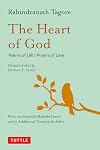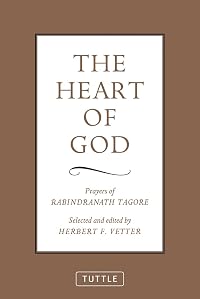
The Heart of God: Prayers of Rabindranath Tagore
by Rabindranath Tagore, Herbert F. Vetter (Editor)
On This Page
Description
Awarded the Noble Prize for Literature in 1913, Rabindranath Tagore (1861- 1941) is considered the most important poet of modern-day India. He was also a distinguished author, educator, social reformer, and philosopher. Today, Tagore along with Mahatma Gandhi are prized as the foremost intellectual and spiritual advocates of India's liberation from imperial rule. This inspiring collection of Tagore's poetry represent his "simple prayers of common life." Each of the seventy-seven prayers is show more an eloquent affirmation of the divine in the face of both joy and sorrow. Like the Psalms of David, they transcend time and speak directly to the human heart. The spirit of this collection may be best symbolized by a single sentence by Sarvepalli Radhakrishnan, the renowned philosopher and statesman who served as president of India: "Rabindranath Tagore was one of the few representatives of the universal person to whom the future of the world belongs. " show lessTags
Recommendations






























Member Reviews
This inspiring collection of the Nobel Prize for Literature winner for 1913 represents his "simple prayers of common life." Each of the 77 prayers is an eloquent affirmation of the divine in the face of both joy and sorrow. Like the Psalms of David, they transcend time and speak directly to the human heart.
Ratings
Members
- Recently Added By
Author Information

1,030+ Works 9,656 Members
Rabindranath Tagore was born on May 7, 1861 in Calcutta, India. He attended University College, at London for one year before being called back to India by his father in 1880. During the first 51 years of his life, he achieved some success in the Calcutta area of India with his many stories, songs, and plays. His short stories were published show more monthly in a friend's magazine and he played the lead role in a few of the public performances of his plays. While returning to England in 1912, he began translating his latest selections of poems, Gitanjali, into English. It was published in September 1912 in a limited edition by the India Society in London. In 1913, he received the Nobel Prize for literature. He was the first non-westerner to receive the honor. In 1915, he was knighted by King George V, but Tagore renounced his knighthood in 1919 following the Amritsar massacre of 400 Indian demonstrators by British troops. He primarily worked in Bengali, but after his success with Gitanjali, he translated many of his other works into English. He wrote over one thousand poems; eight volumes of short stories; almost two dozen plays and play-lets; eight novels; and many books and essays on philosophy, religion, education and social topics. He also composed more than two thousand songs, both the music and lyrics. Two of them became the national anthems of India and Bangladesh. He died on August 7, 1941 at the age of 80. (Bowker Author Biography) show less
Classifications
- Genres
- Fiction and Literature, Religion & Spirituality, Poetry, Literature Studies and Criticism
- DDC/MDS
- 891.4 — Literature & rhetoric Literatures of other languages East Indo-European and Celtic literatures Modern Indic languages
- LCC
- PK1722 .A2 .V48 — Language and Literature Indo-Iranian languages and literatures Indo-Iranian philology and literature Indo-Aryan languages Modern Indo-Aryan languages Particular languages and dialects Bengali
- BISAC
Statistics
- Members
- 69
- Popularity
- 450,369
- Reviews
- 1
- Rating
- (5.00)
- Languages
- English
- Media
- Paper, Ebook
- ISBNs
- 3
- ASINs
- 1