On This Page
Description
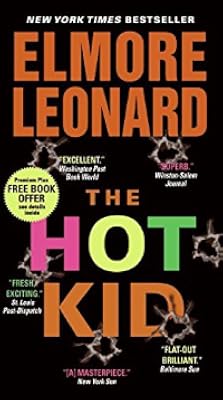
Carlos Webster was fifteen in the fall of 1921 the first time he came face-to-face with a nationally known criminal. A few weeks later, he killed his first man - a cattle thief who was rustling his dad's stock. Now Carlos, called Carl, is the hot kid of the U.S. Marshals Service, one of the elite man hunters currently chasing the likes of Dillinger, Baby Face Nelson, and Pretty Boy Floyd across America's Depression-ravaged heartland. Carl wants to be the country's most famous lawman. Jack show more Belmont, the bent son of an oil millionaire, wants to be public enemy number one. Tony Antonelli of True Detective magazine wants to write about this world of cops and robbers, molls and speakeasies from perilously close up. Then there are the hot dames - Louly and Elodie - hooking their schemes and dreams onto dangerous men. And before the gunsmoke clears, everybody just might end up getting exactly what he or she wished for. show lessTags
Recommendations







Member Reviews
Elmore Leonard explores the phenomena of fame from wrongdoing. Hot Kid is set in the golden era of gangsters, killers, and robbers rising to superstar status in the twenties and thirties. Under all the veneer of these infamous outlaws, are cold murderers unworthy of our adoration.
We follow a lawman not immune to the trappings of fame. How far will he succumb to the glamourous world of the crooks he chases?
While not my favorite from the author, he gives us a rollicking page turner and somehow interiority and complex characters, though it seems each sentence is an action beat.
We follow a lawman not immune to the trappings of fame. How far will he succumb to the glamourous world of the crooks he chases?
While not my favorite from the author, he gives us a rollicking page turner and somehow interiority and complex characters, though it seems each sentence is an action beat.
It is an odd statement, but Elmore Leonard is a breath of fresh air.
Given that the Detroit-based novelist has been writing for more than 50 years, with dozens of books to his name, Leonard might appear to have nothing left to offer. But at a time when lame-brained, dim-witted Dan Brown-esque conspiracy thrillers take up valuable space on the bestseller charts, a writer of popular fiction who understands the important yet forgotten nuances of character and plot is a novelist to be savoured like a fine wine.
Or moonshine, as the case may be. Set in the world of Oklahoma speakeasies and shootouts of the 1920s, The Hot Kid, Leonard's 40th novel, finds the elder statesman of crime fiction in top form, re-imagining the Prohibition Era with his show more signature blend of characters who are "so serious about being stupid," and jagged dialogue that goes down smooth as whisky.
There are really two "hot kids" to contend with. The first is Carl Webster, a young deputy U.S. marshal famous for his catchphrase "If I have to pull my weapon, I'll shoot to kill." He has recently killed Emmet Long, a notorious outlaw who years earlier gracelessly took a bite of Carl's ice cream cone during a hold-up. As Carl's father Virgil puts it, "My Lord, but this boy's got a hard bark on him."
The other hot kid is Jack Belmot, "18 years old in 1925, the time he got the idea of blackmailing his dad." The rotten son of an oilman, Jack is a criminal in classic Leonard form, a sociopath in love with his image yet nowhere near as intellectual as he pretends, a man who "had to let you know, if just by the tone of his voice, he was smarter than you were."
You can practically hear Leonard cackle with glee as Carl and Jack repeatedly cross paths in cathouses and jazz clubs. Never once does he lose touch with what makes these two so special. Carl is always shouting distance away from Carl as the child, glowering with rage as peach ice cream dripped from Emmet Long's moustache, while Jack, the yang to Carl's yin, never rises above his innate ineffectiveness in his quest to become Public Enemy No. 1.
If Leonard missteps, it's with his secondary characters. There are simply too many bartenders, madams and lesser criminal masterminds, all so evocatively presented that their eventual disappearance from the pages leaves the reader perplexed. As a result, Tony Antonellli, a writer for True Detective magazine who follows Carl's exploits, never feels like more than a narrative framing device, while Carl's main squeeze Louly, a former gun moll, remains a cipher.
Leonard's last effort, Mr. Paradise, was almost a cruise-control effort for someone of his talents, a smoothly entertaining yarn that was nevertheless Leonard-lite, lacking a strong central character to revolve the ruckus around.
The Hot Kid, however, is Leonard rejuvenated, a joyful, invigorating romp through what is now thought of as the golden age of crime. show less
Given that the Detroit-based novelist has been writing for more than 50 years, with dozens of books to his name, Leonard might appear to have nothing left to offer. But at a time when lame-brained, dim-witted Dan Brown-esque conspiracy thrillers take up valuable space on the bestseller charts, a writer of popular fiction who understands the important yet forgotten nuances of character and plot is a novelist to be savoured like a fine wine.
Or moonshine, as the case may be. Set in the world of Oklahoma speakeasies and shootouts of the 1920s, The Hot Kid, Leonard's 40th novel, finds the elder statesman of crime fiction in top form, re-imagining the Prohibition Era with his show more signature blend of characters who are "so serious about being stupid," and jagged dialogue that goes down smooth as whisky.
There are really two "hot kids" to contend with. The first is Carl Webster, a young deputy U.S. marshal famous for his catchphrase "If I have to pull my weapon, I'll shoot to kill." He has recently killed Emmet Long, a notorious outlaw who years earlier gracelessly took a bite of Carl's ice cream cone during a hold-up. As Carl's father Virgil puts it, "My Lord, but this boy's got a hard bark on him."
The other hot kid is Jack Belmot, "18 years old in 1925, the time he got the idea of blackmailing his dad." The rotten son of an oilman, Jack is a criminal in classic Leonard form, a sociopath in love with his image yet nowhere near as intellectual as he pretends, a man who "had to let you know, if just by the tone of his voice, he was smarter than you were."
You can practically hear Leonard cackle with glee as Carl and Jack repeatedly cross paths in cathouses and jazz clubs. Never once does he lose touch with what makes these two so special. Carl is always shouting distance away from Carl as the child, glowering with rage as peach ice cream dripped from Emmet Long's moustache, while Jack, the yang to Carl's yin, never rises above his innate ineffectiveness in his quest to become Public Enemy No. 1.
If Leonard missteps, it's with his secondary characters. There are simply too many bartenders, madams and lesser criminal masterminds, all so evocatively presented that their eventual disappearance from the pages leaves the reader perplexed. As a result, Tony Antonellli, a writer for True Detective magazine who follows Carl's exploits, never feels like more than a narrative framing device, while Carl's main squeeze Louly, a former gun moll, remains a cipher.
Leonard's last effort, Mr. Paradise, was almost a cruise-control effort for someone of his talents, a smoothly entertaining yarn that was nevertheless Leonard-lite, lacking a strong central character to revolve the ruckus around.
The Hot Kid, however, is Leonard rejuvenated, a joyful, invigorating romp through what is now thought of as the golden age of crime. show less
Elmore Leonard descends into self-satire.
Let's compare and contrast The Hot Kid with Get Shorty. In GS, we get some biographical background on some characters as needed. In HK, we get biographical background on all characters whether it's needed or not. We might be told, say, that a minor character's family emigrated from Italy four generations ago and lived in New England for a while before moving to Kansas. This isn't necessary for plot or characterization and never comes up again. What the hell? In GS this sort of thing was disciplined and deft, and we never got more than was appropriate for plot or characterization. Here it's included excessively, without purpose.
A similar point is true of the dialogue. One gets the sense that show more someone is satirizing the Elmore Leonard dialogue style. Sure, people in real life don't speak with perfect grammar, but you can push "realism" too far. If veritably every utterance has an elided word or a grammatical error, there's a problem. One might as well include all the "Umm"s and "Er"s and so forth that occur in real-world speech. Fiction has always been a compromise between realism and clarity, and the early Leonard had a great ability to handle that tension. The author of The Hot Kid pushes it way too far in the direction of "realism." Actually, people speak so sloppily here that it seems unrealistic to this reader.
It's as if Leonard sat down to write, forgot what he was doing, and so decided to re-read some of his earlier works to figure out what kind of author he is. He then tried to copy the style he encountered in those earlier novels, like a 17-year-old novice who didn't really understand the purpose of the style's elements. I actually have doubts about whether, if this were entered anonymously in a "Write like Elmore Leonard" contest, it would win. In other words, it doesn't even come across as a particularly good Elmore Leonard imitation.
The story goes nowhere. There are no surprises. There's a boring story that ends as we expect. Overall, there's no point to the thing. show less
Let's compare and contrast The Hot Kid with Get Shorty. In GS, we get some biographical background on some characters as needed. In HK, we get biographical background on all characters whether it's needed or not. We might be told, say, that a minor character's family emigrated from Italy four generations ago and lived in New England for a while before moving to Kansas. This isn't necessary for plot or characterization and never comes up again. What the hell? In GS this sort of thing was disciplined and deft, and we never got more than was appropriate for plot or characterization. Here it's included excessively, without purpose.
A similar point is true of the dialogue. One gets the sense that show more someone is satirizing the Elmore Leonard dialogue style. Sure, people in real life don't speak with perfect grammar, but you can push "realism" too far. If veritably every utterance has an elided word or a grammatical error, there's a problem. One might as well include all the "Umm"s and "Er"s and so forth that occur in real-world speech. Fiction has always been a compromise between realism and clarity, and the early Leonard had a great ability to handle that tension. The author of The Hot Kid pushes it way too far in the direction of "realism." Actually, people speak so sloppily here that it seems unrealistic to this reader.
It's as if Leonard sat down to write, forgot what he was doing, and so decided to re-read some of his earlier works to figure out what kind of author he is. He then tried to copy the style he encountered in those earlier novels, like a 17-year-old novice who didn't really understand the purpose of the style's elements. I actually have doubts about whether, if this were entered anonymously in a "Write like Elmore Leonard" contest, it would win. In other words, it doesn't even come across as a particularly good Elmore Leonard imitation.
The story goes nowhere. There are no surprises. There's a boring story that ends as we expect. Overall, there's no point to the thing. show less
In this Prohibition-era western, Elmore Leonard sets Carl Webster and Jack Belmont, two violence-prone young men, on a collision course. Webster, a young U.S. Marshall known as "The Hot Kid," has chosen to align his aggression on the right side of the law, though at times his vanity, supreme confidence and desire for publicity get in the way of his better judgment. Belmont, son of an oil baron, has matured from a deviant adolescent, to small-time bank robber, and finally to public enemy number one. When Webster has Belmont arrested for gunning down a half-dozen Klansmen, Belmont swears he'll come after the showboating U.S. Marshall at the earliest opportunity.
While plowing through the pages to see which man's tragic flaws will prove show more his undoing, the reader is treated to a series of spicy scenes involving gun molls, bank robberies, and wild-west style gunfights. With a number of memorable secondary characters, including some fast women, an "Unforgiven"-esque journalist seeking true-life crime stories for his magazine, and a lawman who uses his Klan connections to dispense his own brand of perverted justice, Leonard has penned a tale bursting with atmosphere and crackling with his trademark authentic dialogue.
That said, Leonard's distinctively awkward phrasings render the narrative a little ragged at times, his indistinct points of view make it hard to find the voice in some scenes, and his ending is abrupt to say the least. Thus, four stars for what easily could have been five-star material.
-Kevin Joseph, author of "The Champion Maker" show less
While plowing through the pages to see which man's tragic flaws will prove show more his undoing, the reader is treated to a series of spicy scenes involving gun molls, bank robberies, and wild-west style gunfights. With a number of memorable secondary characters, including some fast women, an "Unforgiven"-esque journalist seeking true-life crime stories for his magazine, and a lawman who uses his Klan connections to dispense his own brand of perverted justice, Leonard has penned a tale bursting with atmosphere and crackling with his trademark authentic dialogue.
That said, Leonard's distinctively awkward phrasings render the narrative a little ragged at times, his indistinct points of view make it hard to find the voice in some scenes, and his ending is abrupt to say the least. Thus, four stars for what easily could have been five-star material.
-Kevin Joseph, author of "The Champion Maker" show less
A great story with some facts about the 1930s thrown in that I didn't know. Seemed to drag toward the end, but maybe I was just axious to get finished and head to the next Elmore Leonard book...LOL!
The Hot Kid is classic Elmore Leonard. He winds multiple characters together around one protagonist until the stakes are rocket high. In this case, the driving force is Carl Webster, U.S. Marshal during the prohibition era. Bank robbers, a journalist, a few wanna be gun molls and wealthy oil men surround Webster's life until the final bullet is fired in the last act. Many have written this is not the best Leonard tale told. Perhaps that's true from a plot standpoint, but The Hot Kid is still rich with dialogue gems and vivid characterization on every page. I guarantee that if this book had been released by a debut author, it would have made him/her instantly famous as a result.
I love this book!! It's kind of a guy's read but Mr. Leonard's characters and dialog are so rich they're unforgettable. Depiction of the times--oil booming, lawless Oklahoma and Texas--is to be savored too. Yep, this is one that ranks way up there.
Members
- Recently Added By
Published Reviews
ThingScore 88
In ''The Hot Kid," Leonard merges the Western and the urban crime novel. The result is a rousing tale of desperadoes robbing banks, hiding out in whorehouses, and shooting peace officers during the rat-a-tat-take-that-you-dirty-rat early '30s, when Charles ''Pretty Boy" Floyd supposedly once took his family to town so they could watch him rob a bank, a Harvey Girl waitress would ''get show more recognized on the street like a movie star," and glimpsing Amelia Earhart in a Kansas City hotel was a possibility. show less
added by MikeBriggs
Far from being an exercise in nostalgia, this book reinvigorates what Mr. Leonard might have experienced at his most impressionable: the mythmaking process that turned commonplace crooks into figures of folklore. And he is able to bring a remarkable form of double vision to the events described here without sacrificing the deadpan verve that is his trademark.
added by MikeBriggs
Lists

Books Read in 2013
1,630 works; 51 members
Author Information

181+ Works 40,693 Members
Elmore John Leonard, Jr. 10/11/25 -- 8/20/13 Elmore John Leonard, Jr., popularly known as mystery and western writer Elmore Leonard, was born in New Orleans, Louisiana on October 11, 1925. He served in the United States Naval Reserve from 1943 to 1946. He received a Ph.D. in English from the University of Detroit in 1950. After graduating, he show more wrote short stories and western novels as well as advertising and education film scripts. In 1967, he began to write full-time and received several awards including the 1977 Western Writers of America award and the 1984 Writers of America Edgar Allan Poe award. His other works include Get Shorty, Out of Sight, Hombre, Mr. Majestyk, 3:10 to Yuma, and Rum Punch. Many of his works were adapted into movies. Library of America recently announced plans to publish the first of a three-volume collection of his books beginning in the Fall of 2014. Leonard died on August 20, 2013 from complications of a stroke he had earlier. He was 87 years old. (Bowker Author Biography) show less
Some Editions
Awards and Honors
Awards
Distinctions
Series

Work Relationships
Common Knowledge
- Original publication date
- 2005
- People/Characters
- Carlos "Carl" Webster; Virgil Webster; Robert "Bob" McMahon; Emmett Long; Jack Belmont; Oris Belmont (show all 8); Louise "Louly" Brown; Heidi Winston
- Important places
- Oklahoma, USA; Tulsa, Oklahoma, USA; Okmulgee, Oklahoma, USA; Kansas City, Missouri, USA
- Important events
- Prohibition
- Dedication
- For my two girls, Jane and Katy
- Quotations
- "Honey," Crystal said, "you're not as cute as you think you are. Drink your ice tea and beat it."
- Last words
- (Click to show. Warning: May contain spoilers.)But the piece, "The Death of Jack Belmont" would need dramatic effects, a certain tone and a strong sense of place. Maybe call it "Death on an Oklahoma Oil Lease." That wasn't bad.
Classifications
Statistics
- Members
- 1,086
- Popularity
- 23,498
- Reviews
- 32
- Rating
- (3.60)
- Languages
- 7 — Danish, Dutch, English, French, German, Italian, Spanish
- Media
- Paper, Audiobook, Ebook
- ISBNs
- 38
- ASINs
- 4