On This Page
Description
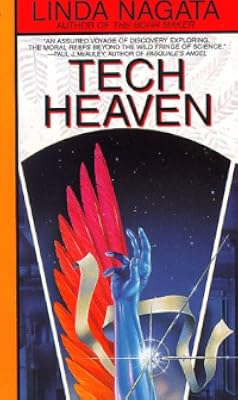
A science fiction novel of the near future exploring cryonics, human life extension, and the rise of nanotechnology. When Katie Kishida's husband Tom is killed in a helicopter crash she has his body cryonically preserved against a time when advancing science can repair his injuries and restore his life. For the next thirty years Katie contends with the social and political upheaval generated by rapid technological change as she fights for the development of the elusive "cure" that would show more enable her husband's resurrection. show lessTags
Recommendations














Member Reviews
Linda Nagata’s second novel is many things: the second installment in her Nanotech Succession series; the story of Katie Kishida, a woman fiercely committed to resurrecting her husband Tom in cryonic suspension; and a near future novel now interestingly dated in some aspects.
While it is a step backwards in time from the first novel in the series, The Bohr Maker, to an indeterminate time in the early 21st Century, this novel is a noticeable improvement in Nagata’s skill. While the nanotechnology is less sophisticated than in the earlier book, the science is actually more detailed, specifically the challenges of maintaining someone in cryonic suspension and then reviving them. While still maintaining a fine sense of pacing, Nagata show more breaks up her viewpoint chapters with Kishida with snippets from popular cable tv and internet based entertainment and “Wedged Time” segments which are the dreams of Kishida’s husband Tom while he is a corpsicle.
Katie’s story is infused with an emotional intensity I seldom come across in science fiction. As fits an epic story which will cover thirty years form the time of Tom’s death and suspension to the book’s climax, the novel opens in media res with a 64 year Katie approaching a hidden crypt in an abandoned copper mine where her husband lies. Then the novel backtracks to show the political struggles of Katie with her sister-in-law, a powerful US senator; the attempts on her life; the bitter falling out with former friends over her decision to freeze rather than bury her husband; and, of course, the efforts to fund – and be allowed to use – a cure to revive her husband. And, with the betrayals of family and friends, comes the betrayal of Katie’s heart – the occasional resentments at the duty Tom’s “presence” requires, his hold on her loyalty when she takes a new husband.
If you are absolutely one of those science fiction readers who can’t stand dated science fiction, it’s possible you might be somewhat annoyed with this novel. This book has dated some in the 16 years since it was first published. That sort of thing doesn’t bother me, but, here, I found the “dated” aspects actually added an additional element of interest by showing a future different but similar to ours. On the somewhat trivial level, Nagata depicts a future with little air travel since terrorists have downed planes with missiles. While virtual reality has not taken off the way that this novel – and many science fiction stories of the 1990s – depicts, here it resembles what we would call social media. That turns out to be a major development in the decay of nation states and the beginnings of a new global order the world undergoes during the story’s timeline. Finally, Tom’s sister, Senator Carlson, fights the notion of cryonic suspension because of its expense and the resources need to find the cure necessary to revive him – a big expenses for a United States with national health care. That certainly is a valid prediction of the crimp in medical research that will be necessitated with the recent lurch toward nationalized health care America has taken.
But, ultimately, it’s Katie that fascinates and carries the reader through the story. She oddly reminded me of a female Odysseus struggling and wandering to regain the home and arms of her mate. show less
While it is a step backwards in time from the first novel in the series, The Bohr Maker, to an indeterminate time in the early 21st Century, this novel is a noticeable improvement in Nagata’s skill. While the nanotechnology is less sophisticated than in the earlier book, the science is actually more detailed, specifically the challenges of maintaining someone in cryonic suspension and then reviving them. While still maintaining a fine sense of pacing, Nagata show more breaks up her viewpoint chapters with Kishida with snippets from popular cable tv and internet based entertainment and “Wedged Time” segments which are the dreams of Kishida’s husband Tom while he is a corpsicle.
Katie’s story is infused with an emotional intensity I seldom come across in science fiction. As fits an epic story which will cover thirty years form the time of Tom’s death and suspension to the book’s climax, the novel opens in media res with a 64 year Katie approaching a hidden crypt in an abandoned copper mine where her husband lies. Then the novel backtracks to show the political struggles of Katie with her sister-in-law, a powerful US senator; the attempts on her life; the bitter falling out with former friends over her decision to freeze rather than bury her husband; and, of course, the efforts to fund – and be allowed to use – a cure to revive her husband. And, with the betrayals of family and friends, comes the betrayal of Katie’s heart – the occasional resentments at the duty Tom’s “presence” requires, his hold on her loyalty when she takes a new husband.
If you are absolutely one of those science fiction readers who can’t stand dated science fiction, it’s possible you might be somewhat annoyed with this novel. This book has dated some in the 16 years since it was first published. That sort of thing doesn’t bother me, but, here, I found the “dated” aspects actually added an additional element of interest by showing a future different but similar to ours. On the somewhat trivial level, Nagata depicts a future with little air travel since terrorists have downed planes with missiles. While virtual reality has not taken off the way that this novel – and many science fiction stories of the 1990s – depicts, here it resembles what we would call social media. That turns out to be a major development in the decay of nation states and the beginnings of a new global order the world undergoes during the story’s timeline. Finally, Tom’s sister, Senator Carlson, fights the notion of cryonic suspension because of its expense and the resources need to find the cure necessary to revive him – a big expenses for a United States with national health care. That certainly is a valid prediction of the crimp in medical research that will be necessitated with the recent lurch toward nationalized health care America has taken.
But, ultimately, it’s Katie that fascinates and carries the reader through the story. She oddly reminded me of a female Odysseus struggling and wandering to regain the home and arms of her mate. show less
Excellant. Technically this is a prequel to the main series, but it works very well as an introduction. A well crafted near future look at the social consequences of nano-tech. What will it actually mean for a society to cure ageing? What if the cryo-suspension people are right, and you be healed of all your current bodily ills some time in the future? Will the future want to?
Follows Katie and her husband throughout their life, from Katies 30s when her beloved husband is very seriously injured. She invokes cryo-suspension for him and devotes herself to funding an nano-tech Cure. But the world isn't easy in the mid 21st, and many people object to the 'Greedy Geezers' spending more of the world's resources - unless they have he chance show more too. Meanwhile her hubsand Tom drifts in a slow motion dream trapped on a frozen mountain.
The mystical scenes are a bit odd, and unsupported, and the frequent references to ozone layer problems date the book slightly - of all the global problems we do and will face, this one has receded slightly. The rest is great. There are some well imagined scenes of how the world could progress, and what powers will arise to challenge the current national and corporate boundaries. Very surprisingly for a book of this type the climbing scenes are also accurate and well described, capturing the essence of body/mind and rock - and the requirements for getting away from a virtual world.
Just what SF should be - an intelligent plot with likeable capable characters, but also an insight into some of the cultural and societal issues facing us in the near future.
........................................
Re-read. I Skipped a lot of Thomas' dream sequences this time around. They add nothing to the plot and it's never clear whether they are 'real' or just flash memories from the freeze and or thaw cycle. show less
Follows Katie and her husband throughout their life, from Katies 30s when her beloved husband is very seriously injured. She invokes cryo-suspension for him and devotes herself to funding an nano-tech Cure. But the world isn't easy in the mid 21st, and many people object to the 'Greedy Geezers' spending more of the world's resources - unless they have he chance show more too. Meanwhile her hubsand Tom drifts in a slow motion dream trapped on a frozen mountain.
The mystical scenes are a bit odd, and unsupported, and the frequent references to ozone layer problems date the book slightly - of all the global problems we do and will face, this one has receded slightly. The rest is great. There are some well imagined scenes of how the world could progress, and what powers will arise to challenge the current national and corporate boundaries. Very surprisingly for a book of this type the climbing scenes are also accurate and well described, capturing the essence of body/mind and rock - and the requirements for getting away from a virtual world.
Just what SF should be - an intelligent plot with likeable capable characters, but also an insight into some of the cultural and societal issues facing us in the near future.
........................................
Re-read. I Skipped a lot of Thomas' dream sequences this time around. They add nothing to the plot and it's never clear whether they are 'real' or just flash memories from the freeze and or thaw cycle. show less
A friend recommended me Nagata's SF series - I believe this first one was actually written as a pre-quel. The pacing and science are interesting and thrilling, but the characters and plot are a bit Ayn Randish - flat and overblown - but definitely fun enough to read more... (March 28, 2006)
Ratings
Members
- Recently Added By
Lists

Favorite Science Fiction by Women Authors
737 works; 202 members
Recommended Speculative Fiction by Women and People of Color
298 works; 45 members

Books Read in 2015
3,299 works; 129 members
Author Information

43+ Works 3,279 Members

Linda Nagata is a LibraryThing Author, an author who lists their personal library on LibraryThing.
Series

Common Knowledge
- Canonical title
- Tech-Heaven
- Original publication date
- 1995-12
- Dedication
- For Dallas
Who Likes to Speculate
Classifications
Statistics
- Members
- 182
- Popularity
- 179,548
- Reviews
- 3
- Rating
- (3.92)
- Languages
- English
- Media
- Paper, Ebook
- ISBNs
- 3
- ASINs
- 1