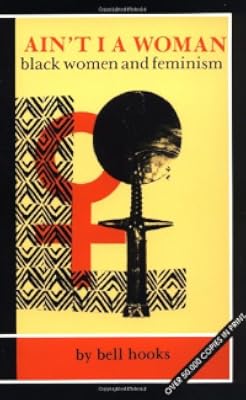
Ain't I a Woman: Black Women and Feminism
by bell hooks
On This Page
Description
A classic work of feminist scholarship, Ain't I a Woman has become a must-read for all those interested in the nature of black womanhood. Examining the impact of sexism on black women during slavery, the devaluation of black womanhood, black male sexism, racism among feminists, and the black woman's involvement with feminism, Hooks attempts to move us beyond racist and sexist assumptions. The result is nothing short of groundbreaking, giving this book a critical place on every feminist show more scholar's bookshelf. show lessTags
Recommendations

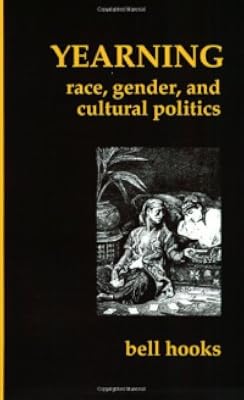
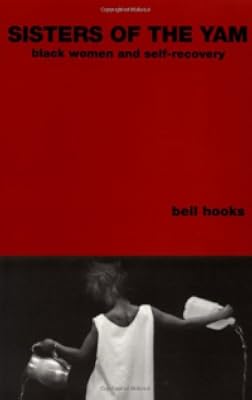
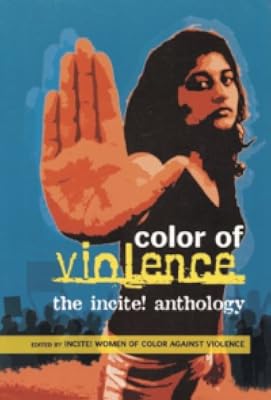

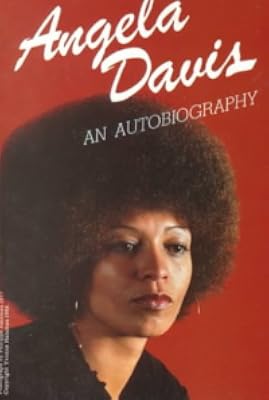

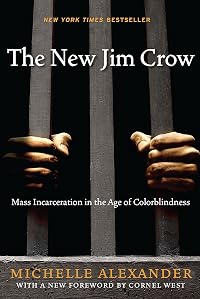
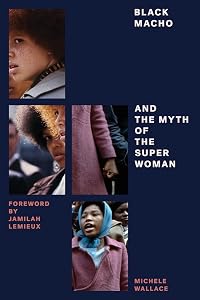
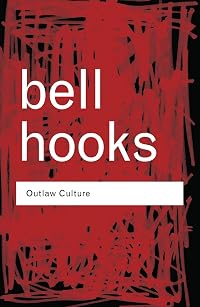
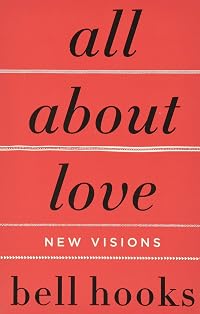
Member Recommendations
Member Reviews
White male scholars who examined the black family by attempting to see in what ways it resembled the white family structure were confident that their data was not biased by their own personal prejudices against women assuming an active role in family decision-making. But it must be remembered that these white males were educated in an elite institutional world that excluded both black people and many white women, institutions that were both racist and sexist.
Calling myself racist accomplishes nothing. Calling society racist accomplishes nothing. Calling the world racist accomplishes nothing, and in fact solipsistically applies the framework of United States oppression theory to a vast spectra of bigotry, each impacting the other but show more never, ever, the same. In a word, calling out an observation does nothing. Appropriating the patriarchal scientific method for a moment, one hypothesizes, experiments, hypothesizes, experiments, ad infinitum. Call out your observations, wonder why, go forth, call out, wonder, go forth. Never, ever, stop.
Historically, white patriarchs rarely referred to the racial identity of white women because they believed that the subject of race was political and therefore would contaminate the sanctified domain of “white” women’s reality. By verbally denying white women racial identity, that is by simply referring to them as women when what they really meant was white women, their status was reduced to that of non-person.
White feminists did not challenge the racist-sexist tendency to use the word “woman” to refer solely to white women; they supported it. For them it served two purposes. First, it allowed them to proclaim white men world oppressors while making it appear linguistically that no alliance existed between white women and white men based on shared racial imperialism. Second, it made it possible for white women to act as if alliances did exist between themselves and non-white women in our society, and by doing so they could deflect attention away from their classism and racism.
hooks called out both feminists I've read and feminists I'm planning to read, and yet I will continue to use the information I have learned and will seek out more of the same. An answer to the wherefore lies in my inherently valuing the critical process far more than the perfection of the accumulated tidbits, a holistic rejection of the freeze frame, the weighing, the hierarchy of the patriarchy implying white imperialism and androcentrism and so much else. It is far easier to hate everything else than it is to incorporate that everything else into a deconstruction of that hate, but if you proclaim yourself an agent of justice, that is what you must do.
We cannot form an accurate picture of woman’s status by simply calling attention to the role assigned females under patriarchy. More specifically, we cannot form an accurate picture of the status of black women by simply focusing on racial hierarchies.
Scholars have argued further that by not allowing black men to assume their traditional patriarchal status, white men effectively emasculated them, reducing them to an effeminate state. Implicit in this assertion is the assumption that the worst that can happen to a man is that he be made to assume the social status of woman.
I'll rest when a black trans lesbian, a recovering addict who grew up in poverty and was once a sex worker, is the President of the United States. Inconceivable enough to almost everyone as of now, but that list of characteristics will only grow longer during my lifetime of reading, writing, and thinking, for the lack of academic discourse on that particular combination of bigotry does not prevent me from being aware of the existence of individuals who, by sheer coincidence of birth, fit the bill. That coincidence should not choke aspirations of leadership in the highest echelons from the get go. What must change is not the aspirations, but the choking.
“I know of more than one colored woman who was openly importuned by white women to become the mistresses of their white husbands, on the grounds that they, the white wives, were afraid that, if their husbands did not associate with colored women, they would certainly do so with outside white women, and the white wives, for reasons which ought to be perfectly obvious, preferred to have their husbands do wrong with the colored women in order to keep their husbands straight.”
I interviewed a black woman usually employed as a clerk who was living in near poverty, yet she continually emphasized the fact that black woman was matriarchal, powerful, in control of her life; in fact she was nearly having a nervous breakdown trying to make ends meet.
hooks did not touch on queer theory. She did not call out the disrespectful and dehumanizing view of China and its culture in one of her used quotes. She did not cite her sources as explicitly as most, although the very concept of citations evolves from the quick and easy rhetoric of the patriarchy that engulfs its oppression in seeming ethos while in reality making the rules so as to have something to mewl and puke about when the institution is threatened, as if the rules themselves as with racism were anything but conjured out of thin air and as such can be treated accordingly (similar to how Goodreads keeps capitalizing her name aka disrespecting her autonomy in the effort to preserve the fragile sanctity of its holy search function). However, her holistic breakdown of white, black, male, female, without ever playing one off the other, is a lesson of criticizing the complex web of indoctrination oppression that can be applied to any intersectional social justice. The patriarchy is a bloated blight, spanning from its emphasis on capitalism to its compromised inheritance, all in the effort to reduce humanity to ciphers of privilege for this or that or any old reason of difference, difference, difference. Life is politics is life is a multifarious thing, and will not limit its splintered evolution for the sake of your self-help book view of life.
Feminism as a political ideology advocating social equality for all women was and is acceptable to many black women. They rejected the women’s movement when it became apparent that middle and upper class college-educated white women who were its majority participants were determined to shape the movement so that it would serve their own opportunistic ends.
To those who saw feminism solely as a way to demand entrance into the white male power structure, it simplified matters to make all men oppressors and all women victims.
Any idea can be abused. What matters is the willingness to pay heed to the consequences and the neverending effort to push that idea to its ultimate limits of inclusiveness of every being deserving of life, liberty, and the pursuit of happiness. And then some.
Racism is the barrier that prevents positive communication and it is not eliminated or challenged by separation. White women supported the formation of separate groups because it confirmed their preconceived racist-sexist notion that no connection existed between their experiences and those of black women.
It in no way diminishes our concern about racist oppression for us to acknowledge that our human experience is so complex that we cannot understand it if we only understand racism.
The Internet enables me to say these words without fear of physical retribution. Words words words, of course, but I am a writer, and once upon a time my words were not so good. Once upon a time, everything I stood for and how I stood for it was not so good. The memory of that, if nothing else, is what keeps me going.
A feminism so rooted in envy, fear, and idealization of male power cannot expose the de-humanizing effect of sexism on men and women in American society.
Our willingness to assume responsibility for the elimination of racism need not be engendered by feelings of guilt, moral responsibility, victimization, or rage. It can spring from a heartfelt desire for sisterhood and the personal, intellectual realization that racism among women undermines the potential radicalism of feminism.
That sisterhood cannot be forged by the mere saying of words. It is the outcome of continued growth and change. It is a goal to be reached, a process of becoming. The process begins with action, with the individual woman’s refusal to accept any set of myths, stereotypes, and false assumptions that deny the shared commonness of her human experience; that deny her capacity to experience the Unity of all life, that deny her capacity to bridge gaps created by racism, sexism, or classism; that deny her ability to change. The process begins the the individual woman’s acceptance that American women, without exception, are socialized to be racist, classist, and sexist, in varying degrees, and that labeling ourselves feminists does not change the fact that we must consciously work to rid ourselves of the legacy of negative socialization.
She wrote this at nineteen. Imagine that. Now go forth. show less
In this critical examination of feminism, the author deconstructs the historical roots of racism and feminism in America. She lays bare the subtle (and not so subtle) ways that black women have been systematically excluded from both the fight for civil rights and the fight for equality between the sexes. She discusses the way language has been weaponized to dehumanize black women rendering them neither "black" nor "women" and barring them from meaningful engagement in collective action unless they are willing to take a subservient role.
This book was truly enlightening for me. This type of discourse is not something I've encountered in my education at any level. It has given me insight into the language used and made me aware of racist show more structures in my own language and thinking. There was truly so much to absorb that I should probably revisit several times a year to refresh myself. The pervasive and systematic contamination of racism and sexism in our society is astonishing. This book shines a light on the evil that would prefer to go unnoticed. show less
This book was truly enlightening for me. This type of discourse is not something I've encountered in my education at any level. It has given me insight into the language used and made me aware of racist show more structures in my own language and thinking. There was truly so much to absorb that I should probably revisit several times a year to refresh myself. The pervasive and systematic contamination of racism and sexism in our society is astonishing. This book shines a light on the evil that would prefer to go unnoticed. show less
I first read Ain't I a Woman in college in the 80's, and it was life changing. It was the first thing I can remember reading that made me realize that there were lenses not my own through which I needed to look at the world in order to understand it, and hopefully to improve it for all people, not just educated white girls from the suburbs. Reading this was also the first time I started to understand how paternalistic had been my view of my role in the quest for racial equality. I was raised with a healthy dose of white savior complex. I have not read the book again since, but lately I have been reading a lot of pieces by this new class of black feminists, most of them also anti-capitalist, and that inspired me to go back to some show more foundational works in intersectional feminism. For the last few months I have been dipping into Audre Lord essays (not in book form so not reviewed here) including an essential piece where she interviews James Baldwin for Essence that is a must read http://theculture.forharriet.com/2014/03/revolutionary-hope-conversation-between.... A couple weeks back I spent some time with the founders of the Combahee River Collective, and this week I decided to revisit bell hooks. All of this has been time very well spent.
With the context afforded by living another 35 years since my first read, I see holes in hooks' commentary that were not obvious to me. This is especially true in her depiction of the ways in which white feminists had acted against the interests of black women, and intentionally created a divide because they were afraid of the sexual power black women had over "their" white men. As troubling is her eager embrace of the opinion that women who enjoy their sexuality are less than. Of course women's sexuality has always been policed by men, and that an instrument of that policing has been to castigate women who did not follow the rules men set. It was absolutely true that white people falsely painted black women as promiscuous and therefore something to be feared and rejected. It was true that in the early part of the 20th century that myth-making was an effective way to lower the societal standing of black women. The issue is that hooks seems to suggest that if a woman is sexually active outside of the bonds of marriage that she really is something to be scorned. That view is very regressive. I know mores have changed, but this was written in the 1970's when free love was a valid choice for men and women. Women owning their sexuality is something I wish hooks had embraced.
Back to the main narrative which suggests that white feminists consciously worked to reject and diminish black women. First off, I think history is pretty clear that many of the mothers of feminism were not fighters for the rights of black people and that some were appallingly violently racist (Elizabeth Cady Stanton, I am looking at you.) I know those women did not fight for black women (objectively true), but hooks goes an extra step to allege that those early feminists actively erased black women and worked to bar black women from benefiting from the advances in rights for women, I think history shows that is not fully or even mostly true. They accepted a narrative of race distinction as normal. I will go a step further and say that I suspect, but don't know, that many of those women who did see that it was wrong to not bring black women into the fold still chose not to because it was clear that it would hinder the cause of white women's suffrage in a world where ALL the power was in the hands of white men. So yes, these women were pragmatic assimilationists, but there is no evidence at all that those women were consciously working to add to the pile of "reasons" for oppression. I like to think that for some of those women the thought was "one step at a time." When we have the power to change anything rather than just begging for scraps from the men, we will do something about our black sisters. I like to think that, but I realize its probably not true. My point here is that the feminist cause has traditionally been led by white women who did not stop for a moment to think about how the double curse of racism and sexism left black women powerless in the marketplace and in the home. That does not mean that the feminist movement and its accomplishments over the past 100+ years are irrelevant to black women, and it doesn't mean that there cannot be shifts. We do not have to tear down what we have because part of the root system was diseased. We can cut out that rot, use the healthy growth, and make it better. We can make feminism more universally relevant, more universally salubrious. The sins of the mothers do not have to continue to define the daughters and the accomplishments of the mothers do not need to be thrown out like so much bath water.
A side note: I also reject hooks insistence that intersectional feminism must embrace socialism. Distinction by economic class is not based on discrete characteristics like distinctions based on gender, race, disability, sexual orientation or gender expression (though certainly those devalued due to discrete characteristics are often held back from having economic power.). Economic distinction is only a problem if class becomes inescapable caste. If economic advancement is possible it is incentivizing. We have a problem now because economic advancement has been made rare as hen's teeth for those not already part of the 5% and we need to fix the concentration of wealth is the hands of a few (almost uniformly white) people, but socialism is not the only answer.
I may have other thoughts later, but I want to mention that hooks wrote most of this as an UNDERGRAD, and I recognize that she is smarter and more effective than I by a factor of about a million. At the same age I was mostly focused on sleeping with musicians and getting out of taking math classes. Changing the world was something I read a lot about, but i am ashamed to say that outside of my work in building an early diversion program for youthful offenders, I was not doing a whole lot to actually make the world better. hooks' work over the years has been transformative and has inspired the important work of many women who came after her, She is amazing and important, and understanding her work is essential to understanding an embracing the work of great minds working now like Tressie McMillan Cottom, Brittney Cooper, Reni Eddo-Lodge and others. show less
With the context afforded by living another 35 years since my first read, I see holes in hooks' commentary that were not obvious to me. This is especially true in her depiction of the ways in which white feminists had acted against the interests of black women, and intentionally created a divide because they were afraid of the sexual power black women had over "their" white men. As troubling is her eager embrace of the opinion that women who enjoy their sexuality are less than. Of course women's sexuality has always been policed by men, and that an instrument of that policing has been to castigate women who did not follow the rules men set. It was absolutely true that white people falsely painted black women as promiscuous and therefore something to be feared and rejected. It was true that in the early part of the 20th century that myth-making was an effective way to lower the societal standing of black women. The issue is that hooks seems to suggest that if a woman is sexually active outside of the bonds of marriage that she really is something to be scorned. That view is very regressive. I know mores have changed, but this was written in the 1970's when free love was a valid choice for men and women. Women owning their sexuality is something I wish hooks had embraced.
Back to the main narrative which suggests that white feminists consciously worked to reject and diminish black women. First off, I think history is pretty clear that many of the mothers of feminism were not fighters for the rights of black people and that some were appallingly violently racist (Elizabeth Cady Stanton, I am looking at you.) I know those women did not fight for black women (objectively true), but hooks goes an extra step to allege that those early feminists actively erased black women and worked to bar black women from benefiting from the advances in rights for women, I think history shows that is not fully or even mostly true. They accepted a narrative of race distinction as normal. I will go a step further and say that I suspect, but don't know, that many of those women who did see that it was wrong to not bring black women into the fold still chose not to because it was clear that it would hinder the cause of white women's suffrage in a world where ALL the power was in the hands of white men. So yes, these women were pragmatic assimilationists, but there is no evidence at all that those women were consciously working to add to the pile of "reasons" for oppression. I like to think that for some of those women the thought was "one step at a time." When we have the power to change anything rather than just begging for scraps from the men, we will do something about our black sisters. I like to think that, but I realize its probably not true. My point here is that the feminist cause has traditionally been led by white women who did not stop for a moment to think about how the double curse of racism and sexism left black women powerless in the marketplace and in the home. That does not mean that the feminist movement and its accomplishments over the past 100+ years are irrelevant to black women, and it doesn't mean that there cannot be shifts. We do not have to tear down what we have because part of the root system was diseased. We can cut out that rot, use the healthy growth, and make it better. We can make feminism more universally relevant, more universally salubrious. The sins of the mothers do not have to continue to define the daughters and the accomplishments of the mothers do not need to be thrown out like so much bath water.
A side note: I also reject hooks insistence that intersectional feminism must embrace socialism. Distinction by economic class is not based on discrete characteristics like distinctions based on gender, race, disability, sexual orientation or gender expression (though certainly those devalued due to discrete characteristics are often held back from having economic power.). Economic distinction is only a problem if class becomes inescapable caste. If economic advancement is possible it is incentivizing. We have a problem now because economic advancement has been made rare as hen's teeth for those not already part of the 5% and we need to fix the concentration of wealth is the hands of a few (almost uniformly white) people, but socialism is not the only answer.
I may have other thoughts later, but I want to mention that hooks wrote most of this as an UNDERGRAD, and I recognize that she is smarter and more effective than I by a factor of about a million. At the same age I was mostly focused on sleeping with musicians and getting out of taking math classes. Changing the world was something I read a lot about, but i am ashamed to say that outside of my work in building an early diversion program for youthful offenders, I was not doing a whole lot to actually make the world better. hooks' work over the years has been transformative and has inspired the important work of many women who came after her, She is amazing and important, and understanding her work is essential to understanding an embracing the work of great minds working now like Tressie McMillan Cottom, Brittney Cooper, Reni Eddo-Lodge and others. show less
Ain’t I a Woman is fantastic. I hope it is already, but if it’s not, this book needs to be part of every conversation about feminism, every Women’s Studies class. In Ain’t I a Woman, hooks discusses the history of Black women in America. From objectification to dehumanization to cultural and gender divisions… hooks shares a side of history that gets buried beneath racism, sexism, and self-interest.
This book is not written for white women. Ain’t I a Woman can be enlightening for white women, but it is a call for Black women to keep fighting for what they believe in and keep their hope. The ending paragraphs say it best – those who are racist, sexist, or elitist aren’t truly feminist. Much of the feminist agenda has been show more driven in selfishness rather than the desire to dismantle the system and rebuild something new and better. Ain’t I a Woman was first published in 1981 – but 40 years later, it is still disappointingly relevant.
This book is an absolute must read for anyone who wants to call themself a feminist. It challenges the movement as it has been known and calls for true solidarity, welcoming, discourse, and definitive change. These days, we call it “intersectional feminism” but even that is not enough. Conversations about sexism need to include conversations about racism, elitism, ableism, antisemitism, ageism... all of it. Every prejudice, ever seed of hate. Between intricately crafted essays about Black women’s experience during slavery to the constant betrayals of both Black men and white women of Black women.
I can’t say it better than bell hooks. She doesn’t care about hurting anyone’s feelings because change is too important for that. I hope folks read this one, and after they read it, they analyze their own activism and motivation. It’s a powerful work, well-researched and well-spoken. show less
This book is not written for white women. Ain’t I a Woman can be enlightening for white women, but it is a call for Black women to keep fighting for what they believe in and keep their hope. The ending paragraphs say it best – those who are racist, sexist, or elitist aren’t truly feminist. Much of the feminist agenda has been show more driven in selfishness rather than the desire to dismantle the system and rebuild something new and better. Ain’t I a Woman was first published in 1981 – but 40 years later, it is still disappointingly relevant.
This book is an absolute must read for anyone who wants to call themself a feminist. It challenges the movement as it has been known and calls for true solidarity, welcoming, discourse, and definitive change. These days, we call it “intersectional feminism” but even that is not enough. Conversations about sexism need to include conversations about racism, elitism, ableism, antisemitism, ageism... all of it. Every prejudice, ever seed of hate. Between intricately crafted essays about Black women’s experience during slavery to the constant betrayals of both Black men and white women of Black women.
I can’t say it better than bell hooks. She doesn’t care about hurting anyone’s feelings because change is too important for that. I hope folks read this one, and after they read it, they analyze their own activism and motivation. It’s a powerful work, well-researched and well-spoken. show less
Best for: Those interested in exploring how feminism has failed at inclusivity, and how U.S. society has failed Black women.
In a nutshell: bell hooks provides a history of how racism, sexism and classism have impacted Black women in the U.S.
Line that sticks with me: “The process begins with the individual woman’s acceptance that American women, without exception, are socialized to be racist, classist, and sexist, in varying degrees, and that labeling ourselves feminists does not change the fact that we must consciously work to rid ourselves of the legacy of negative socialization.”
Why I chose it: I picked this for my office’s equity and social justice book club because I don’t think my feminist reading has included nearly show more enough of the Black woman’s perspective, and I wanted to be able to discuss this with others.
Review: I’ve somehow managed to never read any bell hooks even though I’m familiar with her importance to feminism. With this great book (which is frustratingly hard to track down in bookstores - I had to resort to ordering online) I feel like I got a more in-depth education on issues that I’ve been trying to learn more about this year.
Starting with slavery, Dr. hooks examines how racism, sexism and classism work together in impacting the experience of Black women in the U.S. For example, she explores how women who were slaves were forced to perform “masculine” tasks, but men who were slaves were not compelled to perform “feminine” tasks, and how society has spent a lot of time examining how slavery impacted the Black male psyche but has spent far less time examining how it impacted — and continues to impact — Black women.
She also looks at how the patriarchy — when combined with racism — has influenced the experience of Black women in society, eschewing the idea that Black women exist in a matriarchy simply because some households are run by women.
In the sections that might be challenging to read for white women who consider themselves feminists, Dr. hooks examines the ways in which white women have pushed black women out of discussions of sexism, seeking to maintain their status within the patriarchy as at least above Black people. She also spends time looking at how society seems to default ‘women’ to mean white women and ‘Black’ to mean Black men, leaving Black women out completely, and what the implications of that are.
I appreciated Dr. hooks's examination of how so much of feminism (as practices by white feminists) seeks not to overturn the system, but to make gains with the patriarchal, capitalist system that exists in this country. This isn’t particularly imaginative or revolutionary, and can mean that instead of fighting for true freedom, we just end up fighting with each other for material gains. I also appreciate that despite all of this, she doesn’t argue that feminism is only for white women; she sees the real benefits of it, but only when we can really fight for the freedom that feminism should bring about. I’m looking forward to discussing it at work this week.
This is a dense read (at under 200 pages it still took longer than I expected) but definitely worth it. show less
In a nutshell: bell hooks provides a history of how racism, sexism and classism have impacted Black women in the U.S.
Line that sticks with me: “The process begins with the individual woman’s acceptance that American women, without exception, are socialized to be racist, classist, and sexist, in varying degrees, and that labeling ourselves feminists does not change the fact that we must consciously work to rid ourselves of the legacy of negative socialization.”
Why I chose it: I picked this for my office’s equity and social justice book club because I don’t think my feminist reading has included nearly show more enough of the Black woman’s perspective, and I wanted to be able to discuss this with others.
Review: I’ve somehow managed to never read any bell hooks even though I’m familiar with her importance to feminism. With this great book (which is frustratingly hard to track down in bookstores - I had to resort to ordering online) I feel like I got a more in-depth education on issues that I’ve been trying to learn more about this year.
Starting with slavery, Dr. hooks examines how racism, sexism and classism work together in impacting the experience of Black women in the U.S. For example, she explores how women who were slaves were forced to perform “masculine” tasks, but men who were slaves were not compelled to perform “feminine” tasks, and how society has spent a lot of time examining how slavery impacted the Black male psyche but has spent far less time examining how it impacted — and continues to impact — Black women.
She also looks at how the patriarchy — when combined with racism — has influenced the experience of Black women in society, eschewing the idea that Black women exist in a matriarchy simply because some households are run by women.
In the sections that might be challenging to read for white women who consider themselves feminists, Dr. hooks examines the ways in which white women have pushed black women out of discussions of sexism, seeking to maintain their status within the patriarchy as at least above Black people. She also spends time looking at how society seems to default ‘women’ to mean white women and ‘Black’ to mean Black men, leaving Black women out completely, and what the implications of that are.
I appreciated Dr. hooks's examination of how so much of feminism (as practices by white feminists) seeks not to overturn the system, but to make gains with the patriarchal, capitalist system that exists in this country. This isn’t particularly imaginative or revolutionary, and can mean that instead of fighting for true freedom, we just end up fighting with each other for material gains. I also appreciate that despite all of this, she doesn’t argue that feminism is only for white women; she sees the real benefits of it, but only when we can really fight for the freedom that feminism should bring about. I’m looking forward to discussing it at work this week.
This is a dense read (at under 200 pages it still took longer than I expected) but definitely worth it. show less
This book should be required reading for all feminists, especially white feminists. It brings up the racist aspects of first and second wave feminism and how that has led to upholding the patriarchal ideals of white men. I really like bell hook's critique that feminism is useless if it doesn't topple the capitalist/dominance underpinnings of society.
"Ain't I A Woman" was a phenomenal and enlightening read! If you aren't familiar with bell hook's work, this is a great place to start. Although it is a dense read, and I suggest reading it in small chunks as opposed to devouring it in a night, it is well worth it. bell hooks deconstructs black women and feminism's long and complicated relationship while debunking common misconceptions that exist regarding the two. The topics discussed in this book are very complex and can be a bit overwhelming, but if taken in small doses, the knowledge gained is immeasurable. Not only do you learn about black women and feminism, but the various intersecting politics, like racism and colonialism, at play that either foster or hinder a healthy merging show more of the two groups. There is more in this book than the title implies, and I was very pleased to find that I learned about so much more than I initially assumed I would. I recommend this book for anyone seeking to learn more about the complexities present at the intersection of black woman and feminist. ~Ryan W. show less
Members
- Recently Added By
Lists

South End Press Favorites
26 works; 2 members

The Black Archives: All Power To the People! Reading List
79 works; 10 members

Read These Too
458 works; 9 members

Read
293 works; 4 members

South End Press
35 works; 1 member
Zora Canon
100 works; 6 members

The Zora Canon
98 works; 4 members

Books Read in 2022
5,166 works; 112 members

3rd wave feminism
8 works; 1 member

Biblioteca de não ficção
41 works; 1 member

Sociology
18 works; 1 member

Books in the Bibliography of Humans: A Monstrous History by Surekha Davies
346 works; 1 member
Author Information

80+ Works 23,050 Members
A cultural critic, an intellectual, and a feminist writer, bell hooks best known for classic books including Ain't I a Woman, Bone Black, All About Love, Rock My Soul, Belonging, We Real Cool, Where We Stand, Teaching to Transgress, Teaching Community, Outlaw Culture, and Reel to Real, hooks is Distinguished Professor in Residence in Appalachian show more Studies at Berea College, and resides in her home state of Kentucky. show less
Some Editions
Awards and Honors
Common Knowledge
- Original publication date
- 1981
- Dedication
- For Rosa Bell, my mother --
who told me when I was a child that she had once written poems -- that I had inherited my love of reading and my longing to write from her. - First words
- [Introduction] At a time in American history when black women in every area of the country might have joined together to demand social equality for women and a recognition of the impact of sexism on our social status, we were... (show all) by and large silent.
In a retrospective examination of the black female slave experience, sexism looms as large as racism as an oppressive force in the lives of black women. - Last words
- (Click to show. Warning: May contain spoilers.)We hope that as they see us reach our goal -- no longer victimized, no longer unrecognized, no longer afraid -- they will take courage and follow.
(Click to show. Warning: May contain spoilers.)[Introduction] Although the focus is on the black female, our struggle for liberation has significance only if it takes place within a feminist movement that has as its fundamental goal the liberation of all people. - Original language
- English US
Classifications
- Genres
- Sexuality and Gender Studies, Nonfiction, General Nonfiction, Sociology, History
- DDC/MDS
- 305.48 — Society, government, & culture Social sciences, sociology & anthropology Social group - Age, Gender, Ethnicity Women Specific groups of women
- LCC
- E185.86 .H73 — History of the United States United States Elements in the population Afro-Americans Status and development since emancipation
- BISAC
Statistics
- Members
- 1,546
- Popularity
- 14,826
- Reviews
- 15
- Rating
- (4.34)
- Languages
- 5 — English, French, Japanese, Portuguese, Spanish
- Media
- Paper, Audiobook, Ebook
- ISBNs
- 24
- ASINs
- 8