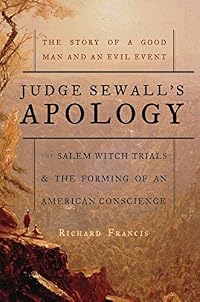
Judge Sewall's Apology: The Salem Witch Trials and the Forming of an American Conscience
by Richard Francis
On This Page
Description
Biographer and novelist Francis looks at the Salem witch hunt of 1692 with fresh eyes, through the story of Samuel Sewall, New England Puritan, Salem trial judge, antislavery agitator, defender of Native American rights, utopian theorist, family man. The second-generation colonists were pitted against the pagan Native Americans and a hostile mother country intent on imposing control. Out of the struggle to maintain unity emerged the forces that drove the Salem tragedy. Five guilt-wracked show more years after pronouncing judgment, Sewall recanted the guilty verdicts, praying for forgiveness. This marked the moment when modern American values came into being--the shift from an almost medieval view of good and evil to a respect for the mysteries of the human heart. Drawing on Sewall's diaries, Francis shows us the early colonists as flesh and blood idealists, striving for a new society while coming to terms with the imperfections of ordinary life.--From publisher description. show lessTags
Recommendations











Member Recommendations

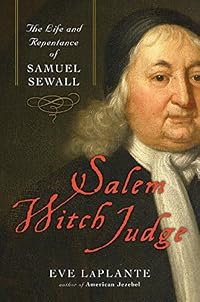
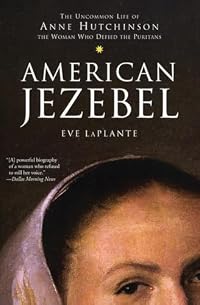
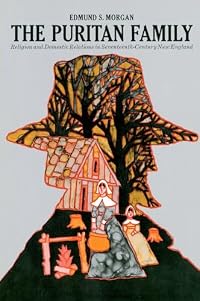
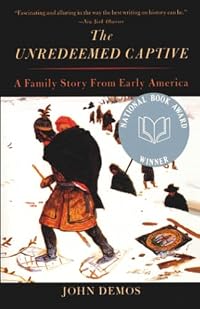
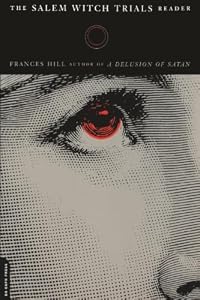
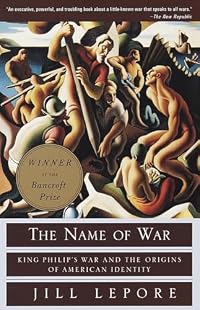
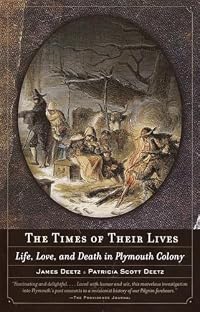
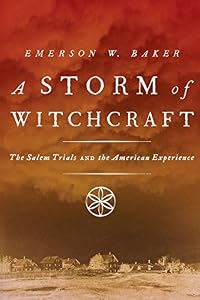
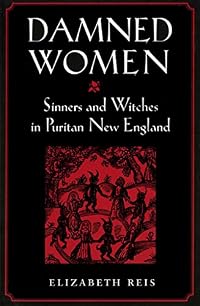
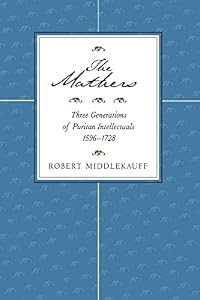
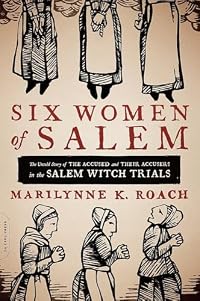
AnnaClaire A pair of biographies about one of the judges at the Salem witchcraft trials. Francis's book is more generally a biography; LaPlante's focuses a bit more on the trials and other religious/spiritual issues Sewall faced.
Member Reviews
Judge Sewall's Apology is an interesting book, based on extensive research and Sewall's own very detailed diaries. The Salem witch trials of 1692 form a key part of the narrative, but the scope of the book is much broader in its dealing with the "growth of the social infrastructure of colonial New England and the increasing secularization of its culture–with a shift from rural to urban values, in fact, and from traditional, almost medieval, ways of thinking to characteristically modern ones."
The description of the witch trials is painful to read given the dire consequences (hanging) for those found guilty on what was not just flimsy, but fantastical "evidence". As Francis says, "It's appropriate that the germ of the tragedy should be show more lost in obscurity, because the whole point is that an enormous malevolent threat came out of an insignificant context". Francis does delve much deeper, into the social/historical context and repercussions of the trials; they were, as he says, about "a deliberate and explicit repudiation of class structure and hierarchy; of prevailing concepts of decorum and decency; of religious principles, social taboos, and conventions; of the very fabric of the communal values of the time". Francis argues that the trials reflected the "birth pangs of the modern world" in the struggle between superstition and empiricism, and between external agency and psychological motivation, between "landscape" as the arena of moral struggle and landscape as a projection of inner turmoil. Above all, he argues, there was a persistent theme of social egalitarianism that ran through the events of the summer of 1692. Much of this would not have been evident to the participants, but Francis makes a compelling case about the implications that followed.
Sewall was one of the judges in the witch trials, and he agreed with the death sentences, but 1697, he publicly apologized for his actions in a written statement read out in his church as he stood to hear it. Some other participants had apologized for their roles, but Sewall was the only judge (which did not endear him to his colleagues) and he was the only one to take on personal responsibility instead of claiming to having been swept along by uncontrollable forces. This was a very difficult thing for Sewall to do, both personally and socially, but it spoke to the strength of his convictions and his guilt before his God, that he felt he had to do it.
The book continues well past the witch trials and Sewall's apology to describe his family life, his activities in the anti-slavery issue, his fulminations against wigs (!), and the myriad complexities of relations within and outside of the Puritan society. In fact, the book is a very good description of life in the late 1600s-early 1700s in what was a pioneer society, beset by constant physical dangers, the uncertainty of life (half of Sewall's fourteen children did not survive childhood), complicated social mores and tensions, the founding and growth of Boston, the extreme importance of faith and belief in the word or the hand of God in every aspect of life, and the nascent growth of political awareness and chafing against the government in England. show less
The description of the witch trials is painful to read given the dire consequences (hanging) for those found guilty on what was not just flimsy, but fantastical "evidence". As Francis says, "It's appropriate that the germ of the tragedy should be show more lost in obscurity, because the whole point is that an enormous malevolent threat came out of an insignificant context". Francis does delve much deeper, into the social/historical context and repercussions of the trials; they were, as he says, about "a deliberate and explicit repudiation of class structure and hierarchy; of prevailing concepts of decorum and decency; of religious principles, social taboos, and conventions; of the very fabric of the communal values of the time". Francis argues that the trials reflected the "birth pangs of the modern world" in the struggle between superstition and empiricism, and between external agency and psychological motivation, between "landscape" as the arena of moral struggle and landscape as a projection of inner turmoil. Above all, he argues, there was a persistent theme of social egalitarianism that ran through the events of the summer of 1692. Much of this would not have been evident to the participants, but Francis makes a compelling case about the implications that followed.
Sewall was one of the judges in the witch trials, and he agreed with the death sentences, but 1697, he publicly apologized for his actions in a written statement read out in his church as he stood to hear it. Some other participants had apologized for their roles, but Sewall was the only judge (which did not endear him to his colleagues) and he was the only one to take on personal responsibility instead of claiming to having been swept along by uncontrollable forces. This was a very difficult thing for Sewall to do, both personally and socially, but it spoke to the strength of his convictions and his guilt before his God, that he felt he had to do it.
The book continues well past the witch trials and Sewall's apology to describe his family life, his activities in the anti-slavery issue, his fulminations against wigs (!), and the myriad complexities of relations within and outside of the Puritan society. In fact, the book is a very good description of life in the late 1600s-early 1700s in what was a pioneer society, beset by constant physical dangers, the uncertainty of life (half of Sewall's fourteen children did not survive childhood), complicated social mores and tensions, the founding and growth of Boston, the extreme importance of faith and belief in the word or the hand of God in every aspect of life, and the nascent growth of political awareness and chafing against the government in England. show less
This is a good book to read because it takes a different view of the Salem Witchcraft trials. The author uses Judge Sewall's diary and other documentation to tell the story of the witchcraze and the story of the judges. Judge Sewall was only one of the judges but he is particularly noteworthy because a few years after the trials, he apologized, which the other judges did not do.
The author did a good deal of research for this book and made good use of Judge Sewall's diary. Mr. Francis is a great writer but I did find the book a little difficult to get into. That is mainly because there was a substaintial amount of background of Judge Sewall prior to the trials and I was mainly just interested in the time period of the trials.
I would show more recommend this to people who are interested in the Salem Witchcraft trials, and specifically interested in the judges. show less
The author did a good deal of research for this book and made good use of Judge Sewall's diary. Mr. Francis is a great writer but I did find the book a little difficult to get into. That is mainly because there was a substaintial amount of background of Judge Sewall prior to the trials and I was mainly just interested in the time period of the trials.
I would show more recommend this to people who are interested in the Salem Witchcraft trials, and specifically interested in the judges. show less
Samuel Sewall was a prominent member of New England Puritan society at the time of the Salem witch trials, and a prolific journal writer throughout his life. The emphasis that the title places on the witch trials is disappointingly sensational and misleading, particularly considering that the second half of the book concerns the thirty-eight years of Sewall’s life which followed his public apology for his role in the trial. Otherwise, this is a fascinating depiction of everyday life in colonial New England, and one man’s attempts to reconcile his innate kindness and good sense with the harshness of colonial life and the implacable demands of his religion. The prose is good (though not outstanding), but most of the interest of the show more book comes from Sewall’s own words. I would contest Francis’ claim that Sewall’s apology has been overlooked until now—it is in the Norton Anthology of American Literature, and is covered by most reasonably comprehensive undergraduate survey courses. show less
Samuel Sewall was a prominent member of New England Puritan society at the time of the Salem witch trials, and a prolific journal writer throughout his life. The emphasis that the title places on the witch trials is disappointingly sensational and misleading, particularly considering that the second half of the book concerns the thirty-eight years of Sewall’s life which followed his public apology for his role in the trial. Otherwise, this is a fascinating depiction of everyday life in colonial New England, and one man’s attempts to reconcile his innate kindness and good sense with the harshness of colonial life and the implacable demands of his religion. The prose is good (though not outstanding), but most of the interest of the show more book comes from Sewall’s own words. I would contest Francis’ claim that Sewall’s apology has been overlooked until now—it is in the Norton Anthology of American Literature, and is covered by most reasonably comprehensive undergraduate survey courses. show less
Quite well done; a good biography sure to become the standard life of Sewall.
Ratings
Members
- Recently Added By
Lists

New England Witch Trials -- nonfiction
9 works; 1 member
Author Information
14+ Works 620 Members
Common Knowledge
- People/Characters
- Samuel Sewall; John Winthrop; Henry Sewall; Jane Dummer; Thomas Parker; Leonard Hoar (show all 56); John Sassamon; Benjamin Church; Awashonks; Seth Shrove; Increase Mather; Goody Glover; Thomas Pound; Thomas Hawkins; George Burroughs; Deodat Lawson; Samuel Parris; Betty Parris; Mary Sibley; Tituba; John Indian; Sarah Good; Sarah Osborne; Sir William Phips; John Hathorne; Jonathan Corwin; Abigail Williams; Ann Putnam, Jr.; Rebecca Nurse; Elizabeth Proctor; Sarah Cloyse; James Russell; Isaac Addington; Samuel Appleton; George Jacobs; Margaret Jacobs; Eliazbeth Cary; Mary Walcott; Mercy Lewis; John Alden; Nicholas Noyes; John Willard; Martha Carrier; Samuel Wardwell; Giles Corey; Michael Perry; Ezekiel Cheever; William Stoughton; Hannah Dustin; Mary Neff; Samuel Lennardson; Sarah Threeneedles; Mary Dyer; Joseph Dudley; Grove Hirst; Cotton Mather
- Important places
- Boston, Massachusetts, USA; Bishopstoke, Southampton, England, UK; Salem, Massachusetts, USA; Newburyport, Massachusetts, USA; Andover, Massachusetts, USA
- Important events
- Pequot War (1636 | 1637); King Philip's War (1675 | 1678); King William's War (1688 | 1697); Salem witch trials (1692 | 1693); Darien Scheme (1698 | 1700); Queen Anne's War (1702 | 1713)
- Epigraph
- And I looked, and behold a pale horse and his name that sat on him was Death, and Hell followed with him... - Revelation 6:8
There is no other Verse in the Bible that doth so pathetically, and with so much amplitude & Variety, foretell the Destruction of Mankind. And yet nothing less would have made an Adequat Representation of the Blood & Slaugh... (show all)ter of America. - Samuel Sewall, Marginal Comment on Revelation 6:8 in Annotations Upon All the Books of the Old and New testament, by Meric Casaubon et al. - Dedication
- To Jo
- First words
- During his adult life, Samuel Sewall would be haunted by an image in the book of Revelation: an angel, with a rainbow on his head, is standing with an open book in his hand.
- Last words
- (Click to show. Warning: May contain spoilers.)Despite his years administering probate, despite his bookkeeping habits and all those courtship discussions of postmortem arrangements, he didn't leave a will.
- Blurbers
- Grant, James; Winterson, Jeanette
Classifications
- Genres
- History, Nonfiction, Religion & Spirituality, General Nonfiction, Biography & Memoir
- DDC/MDS
- 974.4 — History & geography History of North America Northeastern United States (New England and Middle Atlantic states) Massachusetts
- LCC
- F67 .S525 — Local History of the United States, Canada and Latin America United States local history Massachusetts
- BISAC
Statistics
- Members
- 226
- Popularity
- 142,935
- Reviews
- 5
- Rating
- (3.69)
- Languages
- English
- Media
- Paper
- ISBNs
- 5
- ASINs
- 3