
The Artificial River: The Erie Canal and the Paradox of Progress, 1817-1862
by Carol Sheriff
On This Page
Description
The story of the Erie Canal - the 363-mile "artificial river" built to connect the Atlantic seaboard to the Great Lakes - offers a rich perspective on the tumultuous era between the War of 1812 and the Civil War. Completed in 1825 as part of the nation's larger transportation revolution, the Canal opened the Midwest to commerce and settlement, helped make New York City the nation's greatest port, and accelerated the pace of American industrial and economic change. The history of the Canal's show more impact on the nation's economy has been told skillfully by other historians, and Carol Sheriff considers instead the human dimension of the revolutionary changes that the Canal helped set off: widespread geographic mobility; rapid environmental change; government intervention in economic development; market expansion; the reorganization of work; and moral reform. Among the middle classes, these changes would be grouped together as signs of progress or improvement. With innovative archival research, Sheriff documents the social and cultural responses of men, women, and children - farmers, businessmen, government officials, tourists, workers - to the Erie Canal and the progress it represented. For them, progress meant taking an active role in realizing a divinely sanctioned movement toward the perfectability of the natural and human worlds. This conception of progress would play a central role in defining Northern sectional identity in the decades leading to the Civil War. show lessTags
Recommendations













Member Recommendations

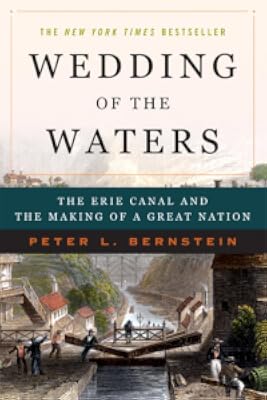
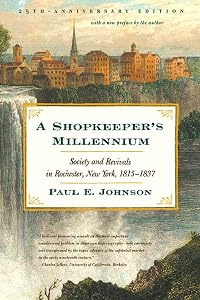
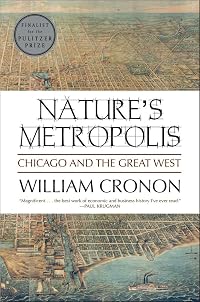
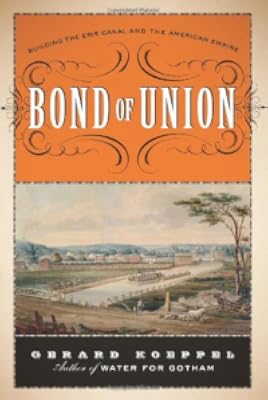
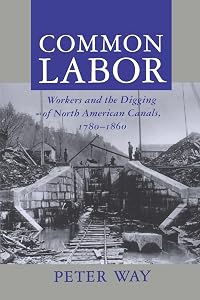
joeldinda Two excellent studies of early 19C canal projects.
Member Reviews
More than just a local interest account of a famous public works project, the building of the Erie Canal is examined in light of its impact on and testimony to the commercial, political, and social growth of the American republic in the Antebellum Northeast. Taken with other in-depth histories of this period, it highlights the antecedents of our present day conflicts among the divergent ideas of what it means to be an American and what our dreams and aspirations can and should be.
While interesting in itself as the story of a stunning engineering, economic, and political achievement, Sheriff's account reminds us vividly that no history is ever as tidy and simplistic as any classroom may contend. And while we tend to think of history in show more terms of grand philosophies and sweeping vistas, our present days have been built by and on the experiences of countless individuals with passions, beliefs, strengths, and weaknesses all their own, and that all "progress" and "accomplishment" on a large scale must come with struggle, compromise, gain, and loss. In this day we are not much different than those who lived through the painful but exhilarating process that was the Erie Canal and the opening up of America's interior. If we learn nothing else from the reading of histories like this one, that is an imperative lesson indeed. show less
While interesting in itself as the story of a stunning engineering, economic, and political achievement, Sheriff's account reminds us vividly that no history is ever as tidy and simplistic as any classroom may contend. And while we tend to think of history in show more terms of grand philosophies and sweeping vistas, our present days have been built by and on the experiences of countless individuals with passions, beliefs, strengths, and weaknesses all their own, and that all "progress" and "accomplishment" on a large scale must come with struggle, compromise, gain, and loss. In this day we are not much different than those who lived through the painful but exhilarating process that was the Erie Canal and the opening up of America's interior. If we learn nothing else from the reading of histories like this one, that is an imperative lesson indeed. show less
An easy reading account of the history the Erie Canal from its formative stages in the early 1800s through its various improvements over the next half century. The author provides insight into the Canal's tremendous economic and social impact on Western New York State and further west, initially little more than untamed frontier prior to the canal. Interesting discussions include how the canal effected (for better and sometimes worse) the lives of local property owners bordering the canal, state and private employees working on the canal, etc.
An excellent overview and a recommended read.
An excellent overview and a recommended read.
In The Artificial River: The Erie Canal and the Paradox of Progress, 1817-1862, Carol Sheriff argues, “Part of the transportation revolution, the Erie Canal played a major role in the transformation of the young Republic’s geography and economy and helped to set off the industrial and marketing revolutions that swept across the northern United States early in the nineteenth century” (pg. 4). Sheriff uses the canal as a window into these various developments, drawing upon the work of William Cronon, John Demos, and Paul Johnson. Her sources include letters, official records of the Canal Board, and various publications.
Sheriff argues that canal promoters linked the waterway’s construction and success to notions of republicanism in show more the early republic. She counters this notion, writing, “Very few of the thousands of men who worked on the deep cut or the combined locks would have qualified as republican citizens – in either their own or other minds” (pg. 45). She continues, “New Yorkers did not agree on what made that artificial river materialize in the first place. While the Canal sponsors praised politicians and government officials, artisans paid honor to themselves and their workmanship. Laborers, meanwhile, gave a quick hurrah before moving on to another public works project” (pg. 51).
Sheriff writes, “For reasons they did not anticipate, though, their artificial river would evoke feelings of ambivalence among many of the same people who celebrated the efficiency with which the Canal moved people and goods” (pg. 55). In this way, New Yorkers “viewed economic progress with at least a touch of ambivalence: although they looked forward to loading their wheat and apples on the eastbound boats that docked in front of their doors, they feared that the state’s attempts to encourage the building of commercial mills and warehouses would jeopardize yeoman’s economic investments and legal standing. This tension posed vexing problems for progress-minded landowners throughout the United States” (pg. 80). On the other hand, “Perhaps remembering that the Canal corridor had been touted as a sort of middle landscape between the extremes of civilization and savagery, New Yorkers sometimes argued that the state should use its regulatory powers to shield the public from some of the potentially harmful forces of the expanding commercial world” (pg. 91).
Plans to enlarge the canal “brought a rash of petitions appealing to the state’s moral obligation to protect as well as promote its citizens’ commercial investments” (pg. 121). Sheriff writes, “Because the Erie Canal was the literal conduit of commercial exchange, New York State’s businessmen argued that the state should use the Canal to enhance market growth while limiting the potential for busts” (pg. 127). Later, “From a middle-class perspective, the Canal had become a haven for vice and immorality, the towpaths attracted workers who drank, swore, whored, and gambled. And unlike canal diggers, who moved on, boat workers remained” (pg. 138). Invoking the mindset of the Second Great Awakening, Sheriff writes, “Canal workers, simply by their daily presence, threatened both Jacksonian and Whig visions of progress. Reformers warned that the consequences of neglecting the spiritual welfare of boatmen would be far-reaching” (pg. 150).
Looking forward in time, Sheriff concludes, “By helping to make possible this busy commercial setting, the Erie Canal had guaranteed its own obsolescence. Railroads, not canals, would ultimately meet the middle classes’ raised expectations” (pg. 173). She continues, “If the Erie Canal compressed distance and time, the railroads annihilated them, or so it appeared to the amazed observer in the mid-nineteenth century” (pg. 173). show less
Sheriff argues that canal promoters linked the waterway’s construction and success to notions of republicanism in show more the early republic. She counters this notion, writing, “Very few of the thousands of men who worked on the deep cut or the combined locks would have qualified as republican citizens – in either their own or other minds” (pg. 45). She continues, “New Yorkers did not agree on what made that artificial river materialize in the first place. While the Canal sponsors praised politicians and government officials, artisans paid honor to themselves and their workmanship. Laborers, meanwhile, gave a quick hurrah before moving on to another public works project” (pg. 51).
Sheriff writes, “For reasons they did not anticipate, though, their artificial river would evoke feelings of ambivalence among many of the same people who celebrated the efficiency with which the Canal moved people and goods” (pg. 55). In this way, New Yorkers “viewed economic progress with at least a touch of ambivalence: although they looked forward to loading their wheat and apples on the eastbound boats that docked in front of their doors, they feared that the state’s attempts to encourage the building of commercial mills and warehouses would jeopardize yeoman’s economic investments and legal standing. This tension posed vexing problems for progress-minded landowners throughout the United States” (pg. 80). On the other hand, “Perhaps remembering that the Canal corridor had been touted as a sort of middle landscape between the extremes of civilization and savagery, New Yorkers sometimes argued that the state should use its regulatory powers to shield the public from some of the potentially harmful forces of the expanding commercial world” (pg. 91).
Plans to enlarge the canal “brought a rash of petitions appealing to the state’s moral obligation to protect as well as promote its citizens’ commercial investments” (pg. 121). Sheriff writes, “Because the Erie Canal was the literal conduit of commercial exchange, New York State’s businessmen argued that the state should use the Canal to enhance market growth while limiting the potential for busts” (pg. 127). Later, “From a middle-class perspective, the Canal had become a haven for vice and immorality, the towpaths attracted workers who drank, swore, whored, and gambled. And unlike canal diggers, who moved on, boat workers remained” (pg. 138). Invoking the mindset of the Second Great Awakening, Sheriff writes, “Canal workers, simply by their daily presence, threatened both Jacksonian and Whig visions of progress. Reformers warned that the consequences of neglecting the spiritual welfare of boatmen would be far-reaching” (pg. 150).
Looking forward in time, Sheriff concludes, “By helping to make possible this busy commercial setting, the Erie Canal had guaranteed its own obsolescence. Railroads, not canals, would ultimately meet the middle classes’ raised expectations” (pg. 173). She continues, “If the Erie Canal compressed distance and time, the railroads annihilated them, or so it appeared to the amazed observer in the mid-nineteenth century” (pg. 173). show less
Eriie Canal (Subjec t)
Ratings
Members
- Recently Added By
Lists

Chelsea Manning's "contraband"
22 works; 2 members
Author Information
3 Works 305 Members
Common Knowledge
- People/Characters
- DeWitt Clinton
- Important places
- Erie Canal, New York, USA
Classifications
- Genres
- History, Nonfiction, General Nonfiction, Technology
- DDC/MDS
- 974.7 — History & geography History of North America Northeastern United States (New England and Middle Atlantic states) New York
- LCC
- F127 .E5 .S54 — Local History of the United States, Canada and Latin America United States local history New York
- BISAC
Statistics
- Members
- 208
- Popularity
- 157,246
- Reviews
- 4
- Rating
- (3.86)
- Languages
- English
- Media
- Paper, Ebook
- ISBNs
- 2
- ASINs
- 1