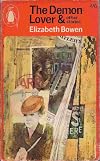
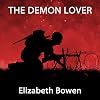
The Demon Lover
by Elizabeth Bowen
On This Page
Tags
Recommendations



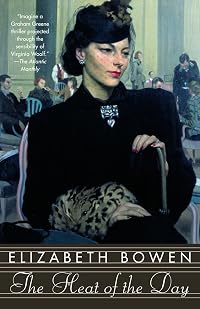

















Member Recommendations
Member Reviews
These stories weren't scary in the way that I expected. The ghosts here are of the more nuanced variety, memories and patterns of behavior that haunt the characters as they try to live something like normal lives in England during World War II. It took me a while to figure out how to read these. So many of them just seem to stop without actually ending. But reading the book as a whole, even though it was not written as such but rather assembled from individual, previously published stories, revealed a broader significance. These stories don't include any of the war itself, just those lives lived on the periphery of the bloodshed, in a kind of suspended time between air raids. As Bowen writes, this is a world that has become precarious, show more prone to being uncreated in a moment. How does one live in a world like this?
In the postscript, Bowen suggests that these stories could in future make up a kind of emotional history of the war. I believe that they do indeed constitute this kind of history, and I expect that the stories' ghosts will continue to haunt me. show less
In the postscript, Bowen suggests that these stories could in future make up a kind of emotional history of the war. I believe that they do indeed constitute this kind of history, and I expect that the stories' ghosts will continue to haunt me. show less
These stories were written in London during the war (from 1941 to 1944) and WWII is the backdrop to some but not all of them. Some have supernatural or horror elements, but they are more psychological. They are good stories, all quite short and all atmospheric.
Low impact stories with a subtle atmosphere set in the hoe Front, World War II, UK.Mostly among faded upper classes, with properties in London or countryside all either requisitioned or bombed out or otherwise abandoned, Only the title story has an actual ghost but really all are haunted in a 20th century secular way. Some are a bit inconclusive and her style is sometimes a bit convoluted or awkward, in a way that recalls Henry James.
Ratings
Members
- Recently Added By
Lists

Jones & Newman: Best Horror Books Further Recommended Reading
577 works; 4 members
Author Information

74+ Works 9,059 Members
Elizabeth Bowen, distinguished Anglo-Irish novelist, was born in Dublin in 1899, traveled extensively, lived in London, and inherited the family estate-Bowen's Court, in County Cork. Her account of the house, Bowen's Court (1942), with a detailed fictionalized history of the family in Ireland through three centuries, has charm, warmth, and show more insight. Seven Winters is a fragment of autobiography published in England in 1942. The "Afterthoughts" of the original edition are critical essays in which she discusses and analyzes, among others, such literary figures as Virginia Woolf, E. M. Forster, Katherine Mansfield, Anthony Trollope, and Eudora Welty. Bowen's stories, mostly about people of the British upper middle class, portray relationships that are never simple, except, perhaps, on the surface. Her concern with time and memory is a major theme. Beautifully and delicately written, her stories, with their oblique psychological revelations, are symbolic, subtle, and terrifying. A Time in Rome (1960) is her brilliant evocation of that city and its layered past. In 1948, Bowen was made a Commander of the British Empire. Bowen died in 1973. (Bowker Author Biography) show less
Some Editions
Work Relationships
Contains
Common Knowledge
- Original publication date
- 1943
Classifications
Statistics
- Members
- 74
- Popularity
- 427,671
- Reviews
- 3
- Rating
- (3.86)
- Languages
- English, German, Swedish
- Media
- Paper, Audiobook
- ISBNs
- 4
- ASINs
- 7