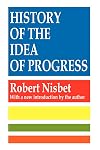
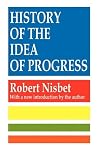
History of the Idea of Progress
by Robert Nisbet
On This Page
Description
The idea of progress from the Enlightenment to postmodernism is still very much with us. In intellectual discourse, journals, popular magazines, and radio and talk shows, the debate between those who are "progressivists" and those who are "declinists" is as spirited as it was in the late seventeenth century. In History of the Idea of Progress, Robert Nisbet traces the idea of progress from its origins in Greek, Roman, and medieval civilizations to modern times. It is a masterful frame of show more reference for understanding the present world. Nisbet asserts there are two fundamental building blocks necessary to Western doctrines of human advancement: the idea of growth, and the idea of necessity. He sees Christianity as a key element in both secular and spiritual evolution, for it conveys all the ingredients of the modern idea of progress: the advancement of the human race in time, a single time frame for all the peoples and epochs of the past and present, the conception of time as linear, and the envisagement of the future as having a Utopian end. In his new introduction, Nisbet shows why the idea of progress remains of critical importance to studies of social evolution and natural history. He provides a contemporary basis for many disciplines, including sociology, economics, philosophy, religion, politics, and science. History of the Idea of Progress continues to be a major resource for scholars in all these areas. show lessTags
Recommendations


























Member Reviews
HBB-1
Apr 12, 2021Catalan
Ratings
Members
- Recently Added By
Lists

Books cited in Progress by Samuel McDonald
160 works; 1 member
Author Information

14+ Works 1,000 Members
Awards and Honors
Notable Lists
Common Knowledge
- Original publication date
- 1980
- Epigraph
- It is Almost the Year Two Thousand
To start with the world of old
We had one age of gold
Not labored out of mines,
And some say there are signs,
The second such has come,
The t... (show all)rue Milennium
The final golden glow
To end it. And if so
(and science ought to know)
We may well raise your heads
From weeding garden beds
And annotating books
To watch this end de luxe.
—Robert Frost - Dedication
- To my wife
- First words
- As the year 2000 comes closer, there is certain to be a widening and quickening of interest—scientific, scholarly, intellectual, and popular—not only in the year itself, given its chiliastic overtone, but also in the whol... (show all)e question of human progress.
Classifications
Statistics
- Members
- 209
- Popularity
- 156,980
- Reviews
- 2
- Rating
- (3.78)
- Languages
- English, Portuguese, Spanish
- Media
- Paper, Ebook
- ISBNs
- 10
- ASINs
- 4