On This Page
Description
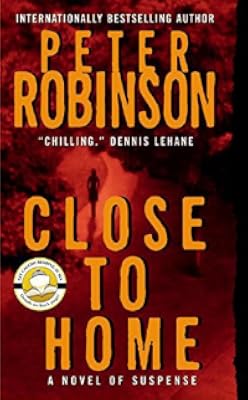
Peter Robinson is the critically acclaimed New York Times, LA Times, and London Sunday Times best-selling author of the Inspector Alan Banks series, as well as a winner of the 2001 Anthony and 2001 Ellis Awards, and Le Grand Prix de LittErature PoliciEre. Close to Home traverses the difficult landscapes of a painful past-and an uncertain future for Inspector Banks. Two 15-year-old boys are lost, and the circumstances of their disappearances seem oddly parallel save one detail. The first boy show more disappeared and was presumed dead 35 years ago. show lessTags
Recommendations






Member Reviews
One of my favorite authors and favorite characters. This story is composed of parallel cases that have a three decade time lapse between them. The police are trying to figure out why boys, as a whole... and these two in particular...one in the past and one in the present...have run away or become easy prey to abductors. Alan Banks finds that the reasons have changed very little in the 35 years since his friend, Graham...whose bones have just been unearthed... disappeared. It mattered very little that Graham was cool and popular where the current boy, Luke...was lonely, talented, and precocious. Banks must also reveal one of his own most closely guarded secrets...the evidence he withheld as a boy during the initial police investigation show more into Graham’s disappearance. Robinson creates a complex and intriguing story while bringing into question if we can really know anyone...even those closest to us. show less
I've been an Inspector Banks fan since Gallows View and have known about Graham Marshall for some time. But I can only be amazed at the skill with which Peter Robinson creates a parallel incident which mirrors the discovery of a thirty year old skeleton and concludes by solving both enigmas in a satisfying and dovetailed finish.
D I Banks has to go back to his teenage years, when the remains of his childhood friend are found not ten miles from his home, where they have been buried since the late sixties. The case, however emotional for Banks, seems straightforward but, as the investigation goes on, Banks find himself remembering things about his friend.
Banks is holidaying in Greece (recuperating from his last, affecting case) when he show more reads of the discovery of his old friend's remains in a newspaper, and promptly decides that it's time to return to see if he can lend a hand. He makes a promise to his old time friend's parents that he will find out the truth. Being forced to go back to his old town, living with his parents (his ever so nice mother and his father who hates cops) he discovers unsettling clues to his friend’s life. When attacked outside the pub, he understands that he is uncomfortably close to the killer.
While all this is going on, another young boy disappears in Yorkshire. While the dual cases are entirely unconnected, for Banks they still hold eerie similarities, as they echo each other across the gap of years. Then, curious memories begin to surface about his old friend. Memories which may have a bearing upon what happened, giving us insight into Bank's childhood, at the same time as being both moving and haunting..
Brilliant book, full of old memories, guilt and misunderstandings. The writing is clean and sharp, the plot is good and structured well; he develops his characters adequately and they are very interesting. I would like to have got to know Michelle Hart a bit better. But then, I expect he's storing that up for the next one. The police procedural aspects are handled with the skill and knowledge of a seasoned professional. Robinson's books are among the best British crime fiction works today. show less
D I Banks has to go back to his teenage years, when the remains of his childhood friend are found not ten miles from his home, where they have been buried since the late sixties. The case, however emotional for Banks, seems straightforward but, as the investigation goes on, Banks find himself remembering things about his friend.
Banks is holidaying in Greece (recuperating from his last, affecting case) when he show more reads of the discovery of his old friend's remains in a newspaper, and promptly decides that it's time to return to see if he can lend a hand. He makes a promise to his old time friend's parents that he will find out the truth. Being forced to go back to his old town, living with his parents (his ever so nice mother and his father who hates cops) he discovers unsettling clues to his friend’s life. When attacked outside the pub, he understands that he is uncomfortably close to the killer.
While all this is going on, another young boy disappears in Yorkshire. While the dual cases are entirely unconnected, for Banks they still hold eerie similarities, as they echo each other across the gap of years. Then, curious memories begin to surface about his old friend. Memories which may have a bearing upon what happened, giving us insight into Bank's childhood, at the same time as being both moving and haunting..
Brilliant book, full of old memories, guilt and misunderstandings. The writing is clean and sharp, the plot is good and structured well; he develops his characters adequately and they are very interesting. I would like to have got to know Michelle Hart a bit better. But then, I expect he's storing that up for the next one. The police procedural aspects are handled with the skill and knowledge of a seasoned professional. Robinson's books are among the best British crime fiction works today. show less
Robinson's mysteries are replete with critiques of modern-day culture and also contain the best descriptions of getting turned on to music that I've ever read. I actually sent him fan mail when I read a passage describing how he had discovered Dylan; his character's experience matched my real life experience so closely that I felt an instant kinship to the author. The Peter Robinson series are seriously addictive. He is an excellent writer, and a wonderfully astute observer of life in North Central Britain: the "who done it" aspect is almost unimportant in light of the book's other pleasures.
You've got to love a DI Banks book.
I took a break from reading this series because I didn't want to gorge all the goodies in one sitting. The lure has become too much and I returned to the fold with The Summer... I bought it as an omnibus with Cold is the Grave, interestingly, the book presents them in reverse order (CitG being the earlier book, but the second presented). It is surprising, as there are certain spoilers in the Summer...
As one would expect, the story, whilst not true to life, presents a credible landscape for Banks to inhabit. Robinson always does a fine job of balancing the detective's private and work lives. Some knowledge of Banks, the man, is needed to understand the way he works but some detectives are too show more 'interesting'; their back story subsumes the crime tale. Not Banks.
In this tome, Banks and side kick, Annie Cabbot, operate separately on two tales of child death. Banks on that of his childhood friend, whose bones have been discovered many years after his disappearance and Annie on a recent death, seemingly part of a failed kidnap.
I shall say little more about the plot because it might spoil it for any reader - including myself, should I return to re-read. Suffice it to say, that it was a hugely entertaining read and I shall go on a binge of DI Banks for a while. show less
I took a break from reading this series because I didn't want to gorge all the goodies in one sitting. The lure has become too much and I returned to the fold with The Summer... I bought it as an omnibus with Cold is the Grave, interestingly, the book presents them in reverse order (CitG being the earlier book, but the second presented). It is surprising, as there are certain spoilers in the Summer...
As one would expect, the story, whilst not true to life, presents a credible landscape for Banks to inhabit. Robinson always does a fine job of balancing the detective's private and work lives. Some knowledge of Banks, the man, is needed to understand the way he works but some detectives are too show more 'interesting'; their back story subsumes the crime tale. Not Banks.
In this tome, Banks and side kick, Annie Cabbot, operate separately on two tales of child death. Banks on that of his childhood friend, whose bones have been discovered many years after his disappearance and Annie on a recent death, seemingly part of a failed kidnap.
I shall say little more about the plot because it might spoil it for any reader - including myself, should I return to re-read. Suffice it to say, that it was a hugely entertaining read and I shall go on a binge of DI Banks for a while. show less
Banks is enjoying the joys of a Greek island getaway to recover from his last case when he reads about the body of a young man uncovered at a building site. When he discovers the body is an old friend who disappeared while doing his paper route in 1965, Banks rushes off to give whatever aid is needed. Meanwhile in Yorkshire, Annie is investigating a missing 15 year old boy. These parallel cases made for an intriguing mystery novel with a clear, uncomplicated presentation. As Banks has plenty of of reason to look back to 1965 and his youth the reader is treated to a reminiscence of the politics and music of the era. This is one of my favourites from Robinson.
Banks must come to grips with his past when the remains of a childhood friend, Graham Marshall, who disappeared forty years ago suddenly resurface. In the present, a young boy of about Graham's age disappears. The boy, Luke, has a lot to live up to in his parents -- he is the son of a model and a music legend who committed suicide, and his stepfather is a famous soccer player. It appears to have been a kidnapping, but was it really?
This was a very good book. The cases were being solved in parallel, and in both cases the circumstances surrounding these two boys showed just how little one can really know about one's friends or family members. Banks discovers much was amiss in those heady days of youth that he never noticed, and the show more fallout from those days is hitting hard in the present, having a particularly great impact on DI Michelle Hart, who is in charge of the case. DI Hart also has her own past to contend with; the revelation of what exactly she is haunted by hits the reader like a punch in the gut.
To talk about the book as a whole, music as usual played a key role, not least because Luke Armitage was the son of a musician. I commented in a previous review that there was an awful lot of music-centric discussion in these books, but apparently I'd just been away from Banks for a while. This is a habitual thing. A particularly nice touch was including a song by the music legend Neil Byrd, Luke's biological father. This song also happens to be the title of the book. Plot-wise, this was a strong outing, and the characters had some good motivations behind them, in particular DI Hart. I did think Shaw was a bit exaggerated in his anger with Hart pursuing the Marshall case, but that was before the true extent of his motivation was revealed. So overall a very good book. show less
This was a very good book. The cases were being solved in parallel, and in both cases the circumstances surrounding these two boys showed just how little one can really know about one's friends or family members. Banks discovers much was amiss in those heady days of youth that he never noticed, and the show more fallout from those days is hitting hard in the present, having a particularly great impact on DI Michelle Hart, who is in charge of the case. DI Hart also has her own past to contend with; the revelation of what exactly she is haunted by hits the reader like a punch in the gut.
To talk about the book as a whole, music as usual played a key role, not least because Luke Armitage was the son of a musician. I commented in a previous review that there was an awful lot of music-centric discussion in these books, but apparently I'd just been away from Banks for a while. This is a habitual thing. A particularly nice touch was including a song by the music legend Neil Byrd, Luke's biological father. This song also happens to be the title of the book. Plot-wise, this was a strong outing, and the characters had some good motivations behind them, in particular DI Hart. I did think Shaw was a bit exaggerated in his anger with Hart pursuing the Marshall case, but that was before the true extent of his motivation was revealed. So overall a very good book. show less
One of Inspector Banks' friends disappeared in 1965 and when the friend's bones are unearthed several decades later, Banks cannot help but take part in the investigation at the same time as Annie Cabbot deals with a new disappearance case that starts to closely resemble Banks' old one. You know when you start reading a book in this series that you'll get a solid mystery with solid characters in a solid environment and this installment is no different. Not riveting, but very much a what-the-doctor-ordered kind of read. I only wish that the two story lines would have had more to do with each other as that's more the norm in mystery fiction, but it was still a good read. Reading Banks is like wearing comfortable slippers and I will show more continue to put said slippers on when the mood strikes. show less
Members
- Recently Added By
Lists

Crime and Mysteries to Read
746 works; 31 members

Detective Stories
343 works; 5 members

Books Read in 2017
4,249 works; 130 members

Books With Time Words in the Title
160 works; 4 members

Books Read in 2021
5,361 works; 113 members
Author Information

82+ Works 30,052 Members
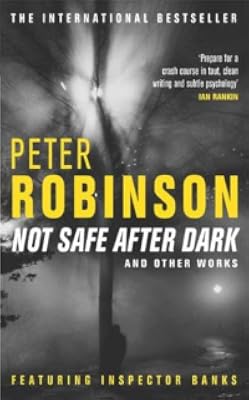
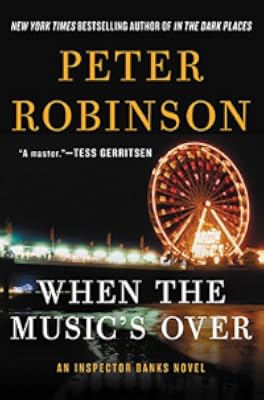
Peter Robinson was born in Castleford, Yorkshire, in 1950. He received a B.A. Honours Degree in English literature from the University of Leeds, moved to Canada, and went on to earn a M.A. in English and creative writing from the University of Windsor and a Ph.D. in English from York University. His first novel, Gallows View, was published in 1987 show more and became the first book in the Inspector Banks Mystery series. His other works include Caedmon's Song, No Cure for Love, Not Safe after Dark and Other Stories, Before the Poison, and When the Music's Over. He has received several awards including the Crime Writers of Canada's Arthur Ellis Award for Best Novel in 1992 for Past Reason Hated and the Author's Award from the Foundation for the Advancement of Canadian Letters in 1994 for Final Account. He has also published many short stories in anthologies and in Ellery Queen's Mystery Magazine, including Innocence, which won the CWC Best Short Story Award, and The Two Ladies of Rose Cottage, which won a Macavity Award. He has taught at a number of Toronto colleges and served as Writer-in-Residence at the University of Windsor, Ontario, 1992-93. (Bowker Author Biography) show less
Some Editions
Awards and Honors
Awards
Series

Work Relationships
Is contained in
Common Knowledge
- Canonical title
- The Summer that Never Was
- Original title
- The Summer that Never Was (UK, Canada) (UK, Canada)
- Alternate titles
- Close to Home (US) (US)
- Original publication date
- 2003
- People/Characters
- Alan Banks; Annie Cabbot; Michelle Hart
- Important places
- Peterborough, Cambridgeshire, England, UK; Eastvale, Yorkshire, England, UK
- Epigraph
- The glory dropped from their youth and love,
And both perceived they had dreamed a dream;
Which hovered as dreams do, still above:
But who can take a dream for truth?
Robert Browning, "The Statue and the B... (show all)ust" - Dedication
- For Sheila
- First words
- Trevor Dickinson was hung-over and bad-tempered when he turned up for work on Monday morning.
- Original language*
- Engels
- Disambiguation notice
- This is the UK title. The US title for this book is Close to Home.
*Some information comes from Common Knowledge in other languages. Click "Edit" for more information.
Classifications
Statistics
- Members
- 1,264
- Popularity
- 19,410
- Reviews
- 34
- Rating
- (3.79)
- Languages
- 11 — Danish, Dutch, English, Finnish, French, German, Italian, Polish, Portuguese, Spanish, Swedish
- Media
- Paper, Audiobook, Ebook
- ISBNs
- 61
- ASINs
- 13