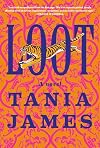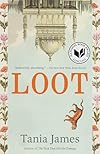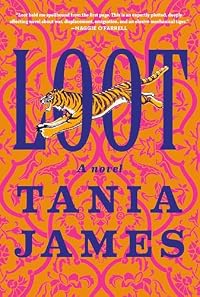
Loot
by Tania James
On This Page
Description
A MOST ANTICIPATED BOOK OF THE SUMMER * A spellbinding historical novel set in the eighteenth century: a hero's quest, a love story, the story of a young artist coming of age, and an exuberant heist adventure that traces the bloody legacy of colonialism across two continents and fifty years. "Addictively absorbing." --The New York Times Book Review This wildly inventive, irresistible feat of storytelling from a writer at the height of her powers is "an expertly-plotted, deeply affecting show more novel about war, displacement, emigration, and an elusive mechanical tiger" (Maggie O'Farrell, best-selling author of Hamnet and The Marriage Portrait). Abbas is just seventeen years old when his gifts as a woodcarver come to the attention of Tipu Sultan, and he is drawn into service at the palace in order to build a giant tiger automaton for Tipu's sons, a gift to commemorate their return from British captivity. His fate--and the fate of the wooden tiger he helps create--will mirror the vicissitudes of nations and dynasties ravaged by war across India and Europe. Working alongside the legendary French clockmaker Lucien du Leze, Abbas hones his craft, learns French, and meets Jehanne, the daughter of a French expatriate. When Du Leze is finally permitted to return home to Rouen, he invites Abbas to come along as his apprentice. But by the time Abbas travels to Europe, Tipu's palace has been looted by British forces, and the tiger automaton has disappeared. To prove himself, Abbas must retrieve the tiger from an estate in the English countryside, where it is displayed in a collection of plundered art. show lessTags
Recommendations
































Member Recommendations

novelcommentary Similar narrative of young, poor prodigy discovering other worlds
Member Reviews
I swear, there’s no high like happening upon a story so absorbing, writing so assured, settings so lush, and characters so compelling that you already know before the first chapter is over that you’re in the hands of a skilled storyteller at the height of their power.
This is, ostensibly, the story of Abbas, a Muslim lad with a passion for woodworking, requisitioned by Tipu Sultan to create a gloriously gory tiger automaton. But it is equally the story of the dissipated French clockmaker who mentors him, a man severed from his country not just by revolution but by sexual predilection. And Jehanna, the mixed race ward thrust upon him by circumstance. And Tipu Sultan, the fascinatingly complex monarch torn between the brutal show more imperatives of kingship and a passion for modernity, cursed with the wit to appreciate the ironic tragedy of his fate. And Abdul Khaliq, the Sultan’s eldest son, struggling to reconcile his birthright with years spent as a captive in the luxurious household of his British captors. And Thomas Beddicker, the guileless British sailor driven to the edge of human endurance on a doomed voyage. And Lady Selwyn, the eccentric, voracious wife of the English PM. And Middle John, a rural English peasant trapped in feudal poverty. And Rum, Lady Selwyn’s personal secretary/lover, but before that, her husband’s sepoy during the horrific sacking of Srirangapatna, a battle that pitted Tipu Sultan against the relentless forces of the British Empire and the East India Company.
This novel has everything I look for in a satisfying read: drama, romance, suspense, action, intrigue, tragedy … all relayed in James’ cunning prose, which somehow manages to be lyric and sensual without ever getting in the way of the plot, and is informed by a sly and subtle wit. Both a sprawling historical novel and an intimate exploration of self-invention and resiliency, my only complaint is that this novel had to end. show less
This is, ostensibly, the story of Abbas, a Muslim lad with a passion for woodworking, requisitioned by Tipu Sultan to create a gloriously gory tiger automaton. But it is equally the story of the dissipated French clockmaker who mentors him, a man severed from his country not just by revolution but by sexual predilection. And Jehanna, the mixed race ward thrust upon him by circumstance. And Tipu Sultan, the fascinatingly complex monarch torn between the brutal show more imperatives of kingship and a passion for modernity, cursed with the wit to appreciate the ironic tragedy of his fate. And Abdul Khaliq, the Sultan’s eldest son, struggling to reconcile his birthright with years spent as a captive in the luxurious household of his British captors. And Thomas Beddicker, the guileless British sailor driven to the edge of human endurance on a doomed voyage. And Lady Selwyn, the eccentric, voracious wife of the English PM. And Middle John, a rural English peasant trapped in feudal poverty. And Rum, Lady Selwyn’s personal secretary/lover, but before that, her husband’s sepoy during the horrific sacking of Srirangapatna, a battle that pitted Tipu Sultan against the relentless forces of the British Empire and the East India Company.
This novel has everything I look for in a satisfying read: drama, romance, suspense, action, intrigue, tragedy … all relayed in James’ cunning prose, which somehow manages to be lyric and sensual without ever getting in the way of the plot, and is informed by a sly and subtle wit. Both a sprawling historical novel and an intimate exploration of self-invention and resiliency, my only complaint is that this novel had to end. show less
Loot is a beautifully written historical fiction novel set in the late 18th C. Beginning in India, Abbas, at 17, is summoned to the Tipu Sultan's palace to work for a master carpenter, Lucien Du Leze, carving an automaton of a tiger, the Sultan's symbol. Together, they create a masterpiece, with an organ inside the large tiger. Lucien wants to return to France, asks Abbas to come. Jehanna, daughter of Martine, is on journey, and was enthralled by Abbas' toy making.
Abbas stays to serve in Tipu's army, but English soldiers capture and destroy city. Abbas survives and takes a journey to France. He finds Jehanna, and they concoct a plan to get the automaton from Lady Selwyn in England. Once again, they journey, but their plan has problems. show more
Loosely based on historical events, the author weaves a vivid picture of the hardships of the times, the long journeys, and the consequences of war. There are also multiple love stories in the book, between lovers and parents and children. I was caught up in the story of Abbas and his quest to leave his mark on the world. show less
Abbas stays to serve in Tipu's army, but English soldiers capture and destroy city. Abbas survives and takes a journey to France. He finds Jehanna, and they concoct a plan to get the automaton from Lady Selwyn in England. Once again, they journey, but their plan has problems. show more
Loosely based on historical events, the author weaves a vivid picture of the hardships of the times, the long journeys, and the consequences of war. There are also multiple love stories in the book, between lovers and parents and children. I was caught up in the story of Abbas and his quest to leave his mark on the world. show less
A historical novel, a displacement novel, a novel of family and finding oneself, of imperialism and immigration, luck and looting, all tied together with prose that alternately cuts you down or provokes snort-laughter. I loved the author's voice, so dryly funny yet fully attuned to the alternate-reality-speak of colonialism, never descending into complete absurdity but always hitting the mark. The entire novel centers around an automaton of a tiger mauling a British soldier (which I've seen IRL at the Victoria & Albert Museum in London) including its inception, creation, and fate as it changes hands. The book reads like the wind, covering years and oceans and continents, benefitting from alternating perspectives and swift jumps forward show more in time. But the novel's heart is Abbas, prodigy woodcarver with the insatiable ambition of an artist who yearns to leave his mark and fully plumb the depths of his talent. As much as I turned the pages to follow that tiger, I was ultimately invested in following Abbas and the rest of the book's flesh-and-blood cast. A wonderful story. show less
I spotted this book on the long-list for the 2023 U.S. National Book Awards, and it looked intriguing so I got it from the library.
It's a piece of historical fiction, and it's about historical events in India which I knew nothing about. Though there are admittedly some violent and distressing incidents in it, overall the story has a warm, engaging feel as the life-journey of the main character draws you in.
We start in the city of Srirangapatna, part of the Kingdom of Mysore in India, in the year 1794, when it was under the rule of Tipu Sultan Fath Ali Khan, who was at that time loosely allied to France.
The protagonist of the story is a young boy called Abbas, who works as a woodcarver for his father Yusuf Muhammad. As well as his rather show more boring everyday work, Abbas also loves to make little wooden toys, some of which come to the attention of the wife of Tipu Sultan, and he begins to make some of his toys specifically at her request. In this way he comes to the notice of Tipu Sultan himself.
Tipu Sultan orders Abbas to come to him, and Abbas is terrified, particularly after he discovers that Tipu's wife has betrayed him. But the king doesn't want to have Abbas killed, but rather to work as an assistant to a French inventor, Lucien Du Leze. Du Leze has been living in Mysore for some time, after fleeing his home in Rouen in France after the French Revolution and has found a patron in Tipu Sultan. The king wants Du Leze to build a life-size automaton of a tiger attacking a British soldier.
One doesn't say "no" to an absolute ruler like Tipu Sultan, particularly if you are so lowly a person as Abbas, and so he starts work with Du Leze to build the contraption, learning a great deal as he does, but always aware of how much there is left to learn.
In the background of all of this, however, is the war with the British—well, the British and the East India Company—which eventually leads to the siege of Srirangapatna. Tipu Sultan dies in the attack, and young Abbas only barely survives himself. Du Leze also escapes the violence and offers to take Abbas back home with him to Rouen and teach him the trade of clockmaking, but Abbas needs to tend to his dying father and reluctantly refuses. Abbas is very talented and ambitious, yearning to shake the world with his abilities. But his situation in life is such that this seems impossible without the aid of a teacher and mentor like Lucien Du Leze.
In the aftermath of the siege, the victorious British divide up the spoils. Among these is the mechanical tiger automaton, which is awarded as a prize to a Colonel Selwyn, who takes it back home to England as a gift to his wife.
Abbas stows away aboard a British merchant ship, on which he is forced to serve for several years before finally reaching Rouen, only to find that Lucien Du Leze has recently died, leaving his shop to his adopted daughter Jehanne, the mixed-race child of a friend of his in India. She is struggling to make ends meet, and Abbas doesn't have sufficient skills to continue the clockmaking business.
So between them they come up with an audacious plan to get back the mechanical tiger from Colonel Selwyn's widow. How this plan works out occupies the remainder of the book and introduces us to two more very interesting characters in Lady Selwyn and her man of business, "Rum", another ex-patriot Indian like Abbas.
The point of view in the book smoothly shifts as needed: from Abbas, to Thomas (a midshipman who serves with him aboard the merchantman), to Jehanne, to Lady Selwyn, to Rum. All of this makes a harmonious whole rather than a disjointed narrative.
I thoroughly enjoyed this book, it was very educational—it's based solidly on true historical events—and also highly entertaining and at times very moving. There's a tender, slowly-developing love story; and it also has quite a lot of things to say about how non-white people like Abbas and Rum were treated by white society at the time (and of course even still today).
Highly recommended. show less
It's a piece of historical fiction, and it's about historical events in India which I knew nothing about. Though there are admittedly some violent and distressing incidents in it, overall the story has a warm, engaging feel as the life-journey of the main character draws you in.
We start in the city of Srirangapatna, part of the Kingdom of Mysore in India, in the year 1794, when it was under the rule of Tipu Sultan Fath Ali Khan, who was at that time loosely allied to France.
The protagonist of the story is a young boy called Abbas, who works as a woodcarver for his father Yusuf Muhammad. As well as his rather show more boring everyday work, Abbas also loves to make little wooden toys, some of which come to the attention of the wife of Tipu Sultan, and he begins to make some of his toys specifically at her request. In this way he comes to the notice of Tipu Sultan himself.
Tipu Sultan orders Abbas to come to him, and Abbas is terrified, particularly after he discovers that Tipu's wife has betrayed him. But the king doesn't want to have Abbas killed, but rather to work as an assistant to a French inventor, Lucien Du Leze. Du Leze has been living in Mysore for some time, after fleeing his home in Rouen in France after the French Revolution and has found a patron in Tipu Sultan. The king wants Du Leze to build a life-size automaton of a tiger attacking a British soldier.
One doesn't say "no" to an absolute ruler like Tipu Sultan, particularly if you are so lowly a person as Abbas, and so he starts work with Du Leze to build the contraption, learning a great deal as he does, but always aware of how much there is left to learn.
In the background of all of this, however, is the war with the British—well, the British and the East India Company—which eventually leads to the siege of Srirangapatna. Tipu Sultan dies in the attack, and young Abbas only barely survives himself. Du Leze also escapes the violence and offers to take Abbas back home with him to Rouen and teach him the trade of clockmaking, but Abbas needs to tend to his dying father and reluctantly refuses. Abbas is very talented and ambitious, yearning to shake the world with his abilities. But his situation in life is such that this seems impossible without the aid of a teacher and mentor like Lucien Du Leze.
In the aftermath of the siege, the victorious British divide up the spoils. Among these is the mechanical tiger automaton, which is awarded as a prize to a Colonel Selwyn, who takes it back home to England as a gift to his wife.
Abbas stows away aboard a British merchant ship, on which he is forced to serve for several years before finally reaching Rouen, only to find that Lucien Du Leze has recently died, leaving his shop to his adopted daughter Jehanne, the mixed-race child of a friend of his in India. She is struggling to make ends meet, and Abbas doesn't have sufficient skills to continue the clockmaking business.
So between them they come up with an audacious plan to get back the mechanical tiger from Colonel Selwyn's widow. How this plan works out occupies the remainder of the book and introduces us to two more very interesting characters in Lady Selwyn and her man of business, "Rum", another ex-patriot Indian like Abbas.
The point of view in the book smoothly shifts as needed: from Abbas, to Thomas (a midshipman who serves with him aboard the merchantman), to Jehanne, to Lady Selwyn, to Rum. All of this makes a harmonious whole rather than a disjointed narrative.
I thoroughly enjoyed this book, it was very educational—it's based solidly on true historical events—and also highly entertaining and at times very moving. There's a tender, slowly-developing love story; and it also has quite a lot of things to say about how non-white people like Abbas and Rum were treated by white society at the time (and of course even still today).
Highly recommended. show less
In 1799 the British siege of Seringapatam in India took place, significant as Tipu Sultan, an intelligent and resourceful leader was killed, eliminating one of the enduring obstacles to domination of the southern portion of India. Not long before he had commissioned a large automaton of a tiger killing a British soldier and James's story is an imaginative rendering of the life of Abbas, the woodcarver who helped create this original item (you can see it on-line -- Tipu's tiger, Victoria and Albert Museum). The story moves through the creation of the Tiger to the war, and then beyond to France as Abbas seeks out the man, Lucien du Leze, with whom he worked on the Tiger so he can apprentice and then later, with du Leze's daughter, show more Jehanne, to England, seeking the Tiger. Along the way James enters the minds of a few of the other characters in a close or more distant 3rd point of view, deftly done and full of interest.
Loot is excellent although I did find two egregious errors. When Rum, one of the side-characters, moves from England to France to work with Abbas and Jehanne it is well after both Bourbon Restorations. When Rum lands in France, he sees a plaque that he can only read a little of as his French isn't very good: Here is the quote: "He squints at the brass plaque on the cay,* the French words illegible to him, except for Roi...Louis XVIII...pied...1792. ** Napoleon left to rot in Corsica.***" The book is otherwise very very well researched, but this is so awful I may have to change my rating. I let it slip by earlier because I so enjoyed the book and felt I had to go back and read carefully but now I am sure.
*that also is a nunh-unh, should be quay.
**1792 is the beginning of the Terror. Louis XVIII left France (for England) in 1791. James and the editors both failed to catch the problem: Restoration #1 of Louis XVIII was in 1814 when N. abdicated and was sent to Elba and #2 1815 after Waterloo when N was exiled to St. H.)
*** In 1792 Napoleon was 22, just getting going, in fact. He wasn't rotting anywhere.
We all make mistakes and historical fiction is hard hard hard -- no one gets everything right, but this compound error is unusually bad. It does not spoil the book, but in this new world in which we live where sloppiness at every level is allowed--even encouraged by some--I must protest.
Does an error like this cause a half star to be removed? Reluctantly, I expect so, so I am dropping to a ****. show less
Loot is excellent although I did find two egregious errors. When Rum, one of the side-characters, moves from England to France to work with Abbas and Jehanne it is well after both Bourbon Restorations. When Rum lands in France, he sees a plaque that he can only read a little of as his French isn't very good: Here is the quote: "He squints at the brass plaque on the cay,* the French words illegible to him, except for Roi...Louis XVIII...pied...1792. ** Napoleon left to rot in Corsica.***" The book is otherwise very very well researched, but this is so awful I may have to change my rating. I let it slip by earlier because I so enjoyed the book and felt I had to go back and read carefully but now I am sure.
*that also is a nunh-unh, should be quay.
**1792 is the beginning of the Terror. Louis XVIII left France (for England) in 1791. James and the editors both failed to catch the problem: Restoration #1 of Louis XVIII was in 1814 when N. abdicated and was sent to Elba and #2 1815 after Waterloo when N was exiled to St. H.)
*** In 1792 Napoleon was 22, just getting going, in fact. He wasn't rotting anywhere.
We all make mistakes and historical fiction is hard hard hard -- no one gets everything right, but this compound error is unusually bad. It does not spoil the book, but in this new world in which we live where sloppiness at every level is allowed--even encouraged by some--I must protest.
Does an error like this cause a half star to be removed? Reluctantly, I expect so, so I am dropping to a ****. show less
I like historical fiction that grounds itself in a real person or thing, and Tania James really hits that mark with Loot. At the center of Loot lies Tipu’s Tiger, a life-sized 18th-century carved wooden sculpture of a tiger eating an Englishman endowed with mechanisms that move and make noises owned by Indian Sultan Tipu. James imagines the carver of the tiger in the form of a young toy maker named Abbas, and follows him through his life. James does not just focus on Abbas though, as she writes chapters about Tipu, the clock-maker who tutors Abbas, a sailor aboard the ship that carries Abbas to Europe, and others who influence Abbas’ life. This technique gives the novel a broad scope of colonialism and life in both India and Europe show more in the late 18th/early 19th centuries, but not deep character development. Readers who enjoy historical fiction and books with different POVs will enjoy this novel very much. show less
I think this was a fairly mediocre but reasonably entertaining read, but honestly, I can't really judge the book itself because I listened to the audiobook and the narrator was so laughably bad that he ruined my perception of the book. He used the same tone of voice no matter what was happening in the book: the exact same tone and inflection for sad scenes, romantic scenes, and funny scenes. He sometimes mispronounced words in hilarious ways: when talking about "a sow and her piglets", he pronounced "sow" like "sew." Later in the book when we meet an aging aristocratic woman, the narrator gives her this high-pitched voice that is exactly like a Monty Python character in drag, which turned a character who I think was supposed to be show more sympathetic into a total laughingstock. I confess that I wasn't really enjoying the story, but kept listening out of a morbid fascination with how terrible the narrator was. show less
Members
- Recently Added By
Lists

Top Five Books of 2024
795 works; 264 members
Author Information

5+ Works 866 Members
Awards and Honors
Common Knowledge
- Canonical title
- Loot
- Original publication date
- 2023-06-23
- People/Characters
- Tipu Sultan; Abbas; Lucien Du Leze; Jehanne Du Leze; Thomas Beddicker; Isabelle (show all 8); Rum; Lady Selwyn
- Important places
- Mysore, Karnataka, India; Rouen, France
- Dedication
- For Luka and Sajan
- First words
- On the day he is taken from his family, Abbas is carving a peacock into a cabinet door.
- Last words
- (Click to show. Warning: May contain spoilers.)But as he passes through the dark room and out the double doors, the light comes as relief to his eyes.
- Blurbers
- Gill, Nikita; Fuller, Claire; Alameddine, Rabih; Majumdar, Megha; Makkai, Rebecca; O'Farrell, Maggie (show all 8); Shamsie, Kamila; Groff, Lauren
Classifications
Statistics
- Members
- 378
- Popularity
- 82,408
- Reviews
- 19
- Rating
- (3.97)
- Languages
- English
- Media
- Paper, Audiobook, Ebook
- ISBNs
- 11
- ASINs
- 5