On This Page
Description
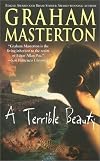
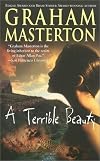
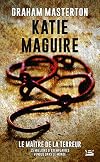
There are things I need to know... On a farm in southern Ireland, the dismembered bones of eleven women are found in a common grave, buried eight decades ago. Detective Superintendent Katie Maguire is used to bloodshed, but this ivory litter of human remains is unimaginable butchery. Of other worlds apart from this... In isolated darkness not far away, an American tourist is at the mercy of a serial killer. His tools are a boning knife, twine, and a doll fashioned from nails and fishhooks. show more The murder of his victims is second only to the pleasure of their pain. Darker places inhabited by evil monstrosities... As an eighty-year-old mystery unfolds, so does a modern-day ritual that's marked Katie Maguire as its next victim. For what happened once in this small picturesque village is happening again. It's more than a series of horrifying crimes. It's tradition. Take me there. show lessTags
Recommendations









Member Reviews
I liked "a terrible beauty" for several reasons. It takes place in Ireland, and my ancestry is irish. Its protagonist is a woman detective sergeant, and while I don't like cops, I like having a woman protagonist in a traditionally men's role. And also because it centers around Celtic pagan Legends, a fascinating subject for me.
In this case the murderer must kill 13 women in a very specific manner, and afterwards, arrange their bones in a certain place and in a certain way, and only then will he be able to raise mor-rioghain, the Irish counterpart to Morgana, the English witch. When this happens, he will be able to ask her for whatever his heart desires.
Some readers may be put off by the violence to the human victims, but I have watched show more so many slaughterhouse videos and read so many books, ie "Every Twelve Seconds: Industrialized Slaughter and the Politics of Sight"
Book by Timothy Pachirat, that I no longer feel such dread when I read about violence against humans. It's not that I don't have sympathy towards human victims, but the disinterest I observe by carnists towards the violence and cruelty that the animals they eat suffer, has changed my own outlook significantly.
Katie the protagonist is married to a loser. They had a baby together years ago that they lost to sudden infant death syndrome. She's only trying to keep her marriage together, so that she doesn't have to sell the house and lose the nursery room where her baby lived, and she also doesn't want to split up their CD collection.
A glossary of Gaelic terms and slang is provided in the front of the book, but I only used it a couple of times. The meaning was easy to understand within the context. I will be reading more of this author, because I loved it. I wonder if they have the same problem with racist cops in Ireland as we do here under the Imperial power?
I liked how the murderer compared pagan gods to the Christian God.
Mr and Mrs Kelly have come from California to identify their daughter Fiona Kelly's remains (her flesh was scraped from her bones). Lucy, a professor from UC Berkeley who specializes in ancient religions, is lending her talents to Katie's investigation.
Lucy:
2003, Hardcover, Simon & Schuster
P.236:
" ...'you need to relax more, Mr kelly. You should open your mind to other realities. If you believe in heaven and hell, why can't you believe in The invisible kingdom?'
Mrs Kelly looked anxious, and took hold of her husband's hand.
Lucy said, 'the answer to your daughter's death lies right here. She was sacrificed to the witch mor-rioghain by somebody who thought that they could summon the witch from the land of the fairies and ask her for anything their heart desired. Somebody who truly believed that it was possible.'
'whoever it was -- they must have been out of their mind.'
'do you think you're out of your mind, because you get down on your knees every Sunday and pray to a Divine being that you've never heard, and never seen and for whose existence you have absolutely no proof whatsoever?' "
P.243:
"Lucy said, 'if I'm really excited about this case, I hope you don't think that I'm being ghoulish. This is only the second time I've come across a contemporary ritual sacrifice.'
'what was the first?'
'the first?'
'the first ritual sacrifice. Before this one.'
'that -- oh, that. A farmer in Minnesota sacrificed his whole family to the wendigo. That's a kind of weird creature that's supposed to live in the woods. It's similar to the Irish Banshee because it only appears when people are about to die.'
'What did the farmer do?'
'you really want to know? He threw his wife and their three children one by one into the grinding machine that he used for pig food. Alive. The coroner reckoned that they were still conscious even when they were minced right up to their waist. His defense tried to plead insanity but I was brought in as an expert witness, and I showed that everything he had done was in strict accordance with native American stories about the wendigo. You're insane when you kill people for no reason whatsoever. but you're not insane if you're scrupulously observing some specific mythological ritual with the express intention of gaining some advantage out of it. In this case, the farmer was almost bankrupt and he believed that the wendigo would kill his creditors for him. Wacky? For sure. Disturbed, yes. But not clinically insane. He was convicted on murder 2 and given life imprisonment.' " show less
In this case the murderer must kill 13 women in a very specific manner, and afterwards, arrange their bones in a certain place and in a certain way, and only then will he be able to raise mor-rioghain, the Irish counterpart to Morgana, the English witch. When this happens, he will be able to ask her for whatever his heart desires.
Some readers may be put off by the violence to the human victims, but I have watched show more so many slaughterhouse videos and read so many books, ie "Every Twelve Seconds: Industrialized Slaughter and the Politics of Sight"
Book by Timothy Pachirat, that I no longer feel such dread when I read about violence against humans. It's not that I don't have sympathy towards human victims, but the disinterest I observe by carnists towards the violence and cruelty that the animals they eat suffer, has changed my own outlook significantly.
Katie the protagonist is married to a loser. They had a baby together years ago that they lost to sudden infant death syndrome. She's only trying to keep her marriage together, so that she doesn't have to sell the house and lose the nursery room where her baby lived, and she also doesn't want to split up their CD collection.
A glossary of Gaelic terms and slang is provided in the front of the book, but I only used it a couple of times. The meaning was easy to understand within the context. I will be reading more of this author, because I loved it. I wonder if they have the same problem with racist cops in Ireland as we do here under the Imperial power?
I liked how the murderer compared pagan gods to the Christian God.
Mr and Mrs Kelly have come from California to identify their daughter Fiona Kelly's remains (her flesh was scraped from her bones). Lucy, a professor from UC Berkeley who specializes in ancient religions, is lending her talents to Katie's investigation.
Lucy:
2003, Hardcover, Simon & Schuster
P.236:
" ...'you need to relax more, Mr kelly. You should open your mind to other realities. If you believe in heaven and hell, why can't you believe in The invisible kingdom?'
Mrs Kelly looked anxious, and took hold of her husband's hand.
Lucy said, 'the answer to your daughter's death lies right here. She was sacrificed to the witch mor-rioghain by somebody who thought that they could summon the witch from the land of the fairies and ask her for anything their heart desired. Somebody who truly believed that it was possible.'
'whoever it was -- they must have been out of their mind.'
'do you think you're out of your mind, because you get down on your knees every Sunday and pray to a Divine being that you've never heard, and never seen and for whose existence you have absolutely no proof whatsoever?' "
P.243:
"Lucy said, 'if I'm really excited about this case, I hope you don't think that I'm being ghoulish. This is only the second time I've come across a contemporary ritual sacrifice.'
'what was the first?'
'the first?'
'the first ritual sacrifice. Before this one.'
'that -- oh, that. A farmer in Minnesota sacrificed his whole family to the wendigo. That's a kind of weird creature that's supposed to live in the woods. It's similar to the Irish Banshee because it only appears when people are about to die.'
'What did the farmer do?'
'you really want to know? He threw his wife and their three children one by one into the grinding machine that he used for pig food. Alive. The coroner reckoned that they were still conscious even when they were minced right up to their waist. His defense tried to plead insanity but I was brought in as an expert witness, and I showed that everything he had done was in strict accordance with native American stories about the wendigo. You're insane when you kill people for no reason whatsoever. but you're not insane if you're scrupulously observing some specific mythological ritual with the express intention of gaining some advantage out of it. In this case, the farmer was almost bankrupt and he believed that the wendigo would kill his creditors for him. Wacky? For sure. Disturbed, yes. But not clinically insane. He was convicted on murder 2 and given life imprisonment.' " show less
I really wanted to like this, and there were some interesting aspects in the first part, but it just got worse the longer it went on, and it went on entirely too long. It is grisly, which could be a plus or minus depending on personal taste. And it is somewhat creative I guess. But events were increasingly over the top and beyond believability. By the final climactic scene, which should have been gripping, I just felt like rolling my eyes. *Even beyond the supernatural elements, it beggared belief!* Very disappointing.
Particular issue of preposterousness, major spoilers-
We're told straight out that a witch must be involved in the summoning, and honestly there's really only one other female character that gets any page time at all show more besides the lead character and the victims. And she just happened to show up out of the blue and knows everything there is to know about the ritual! (And she even told the detective to her face that there's only one thing she wants in the world and she would do anything to get it, (even emphasizing *anything* by repeating that part lol, yet the detective didn't bother to ask what that might be. [facepalm])). So when the detective suddenly became best buddies with this stranger, and is sexually seduced by her, I figured the witch had some sort of enchantment abilities. I didn't love it, but I was willing to go along with it. But actually, somehow, all of that happening *without* a spell is somehow even less believable! It makes the lead character look like a complete nitwit. There were a bunch of other aspects that had only the thinest tie to believability, (the farmer who says he only assisted the killer in laying out the corpse in order to save his mother's life- but then just continues to do her bidding, to the point of basically offering up another live victim, as well as his own life anyway, even after he knows she killed his mother regardless?? wth? Or the police who made a big deal of withholding a secret detail about the discovered bones, but also apparently held the TV interview right in front of the scene with the bones visible in the background? Seriously?!?) but the total obliviousness to the obvious villain and the strange seduction, especially irritated me.
Several things seemed kind of queerphobic to me as well, which felt icky.
The author entirely unnecessarily added that homoerotic woman on woman bathing scene to titillate, but also seemed to tie villainy to queerness. Having a previous iteration of the villain escape capture through crossdressing, and having the current villain weaponize her sexual appeal seducing the detective, be aroused by the thought of torturing and killing women, and seemingly she became a serial torturer/murderer to begin with entirely because she was born intersex and apparently lacked all understanding and identity. Also the reveal of her genitals seemed like it was supposed to shock readers more than the supremely evil supernatural entity currently being summoned! And after her death the cops went through a whole dance of 'She, *HE*?'. It just felt long-tired and gross. show less
Particular issue of preposterousness, major spoilers-
Several things seemed kind of queerphobic to me as well, which felt icky.
Slightly schizophrenic novel that can't seem to decide if it's crime or horror. I suspect this is very much down to the waning of popularity for the genre making old hand Masterton try his hand at crime instead. It's entertaining enough but neither nasty enough to be an enjoyable pulpy horror read or mysterious enough to be a decent detective novel.
Another good horror novel from the author I consider to be one of the most original and scary storytellers there is.
Back Cover Blurb:
On a farm in southern Ireland, the dismembered bones of eleven women are found in a common grave, buried eight decades ago. Detective Superintendent Katie Maguire is used to bloodshed, but this ivory litter of human remains is unimaginable butchery.
In isolated darkness not far away, an American tourist is at the mercy of a serial killer. His tools are a boning knife, twine, and a doll fashioned from nails and fishhooks. The murder of his victims is second only to the pleasure of their pain.
As an eighty-year-old mystery unfolds, so does a modern-day ritual that's marked Katie Maguire as its next victim. For show more what happened once in this small picturesque village is happening again. It's more than a series of horrifying crimes. It's tradition. show less
Back Cover Blurb:
On a farm in southern Ireland, the dismembered bones of eleven women are found in a common grave, buried eight decades ago. Detective Superintendent Katie Maguire is used to bloodshed, but this ivory litter of human remains is unimaginable butchery.
In isolated darkness not far away, an American tourist is at the mercy of a serial killer. His tools are a boning knife, twine, and a doll fashioned from nails and fishhooks. The murder of his victims is second only to the pleasure of their pain.
As an eighty-year-old mystery unfolds, so does a modern-day ritual that's marked Katie Maguire as its next victim. For show more what happened once in this small picturesque village is happening again. It's more than a series of horrifying crimes. It's tradition. show less
Pretty good police procedural involving serial murders based in Irish folklore. The main plot reveal is not as much a surprise as it should have been, due to a particular character being suspicious upon introduction. This book would probably appeal to readers of Thomas Harris or Jeffery Deaver.
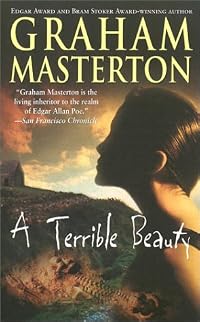
A Terrible Beauty
5 Stars
A well-written and relentlessly gripping plot with an intelligent, strong and likeable heroine.
That said, the descriptions are quite graphic and disturbing so the book is definitely NOT for the squeamish or faint of heart.
5 Stars
A well-written and relentlessly gripping plot with an intelligent, strong and likeable heroine.
That said, the descriptions are quite graphic and disturbing so the book is definitely NOT for the squeamish or faint of heart.
I really enjoyed this book. The characters are interesting, and there are a couple of twists throughout the book you don't see coming, and I like that. The one at the end will really blow your mind. It's a mixture of a crime novel with a little bit of Irish Folklore.
Members
- Recently Added By
Author Information

226+ Works 9,447 Members
Writer Graham Masterton was born in Edinburgh, Scotland on January 16, 1946. He received training as a newspaper reporter and edited the British men's magazine Mayfair. At the age of 24, he was the executive editor of Penthouse and Penthouse Forum. During this time, he started writing sex how-to books. In 1976, he published is first horror novel show more The Manitou and has written over thirty-five more over the years. He has received numerous awards including a Special Edgar by the Mystery Writers of America for Charnel House, a Silver Medal by the West Coast Review of Books for Mirror, and the Prix Julia Verlanger for Family Portrait. He has also written four collections of short stories and is the author of the Rook series. He currently lives with his wife in Cork, Ireland. (Bowker Author Biography) show less
Series

Work Relationships
Is expanded in
Common Knowledge
- Canonical title
- A Terrible Beauty
- Alternate titles
- White Bones
- Original publication date
- 2013-03-01
- People/Characters
- Katie Maguire; Paul Maguire; John Meagher; Dermot O'Driscoll; Fiona Kelly; Siobhan Buckley
- Important places
- Cork, County Cork, Ireland
- Disambiguation notice
- Published in the U.K. as A Terrible Beauty
Republished in 2013 as White Bones
Previously released as A Terrible Beauty
This version has been revised, do not combine with A Terrible Beauty
Classifications
Statistics
- Members
- 156
- Popularity
- 209,259
- Reviews
- 8
- Rating
- (3.52)
- Languages
- English, French, Greek, Polish
- Media
- Paper, Ebook
- ISBNs
- 6
- ASINs
- 3