On This Page
Description
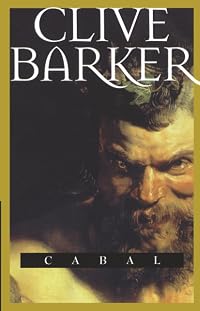
Cabal is the story of Boone, a tortured soul haunted by the conviction that he has committed atrocious crimes. In a necropolis in the wilds of Canada, he seeks refuge and finds the last great creatures of the world - the shape-shifters known as the Nightbreed. They are possessed of unearthly powers-and so is Boone. In the hunt for Boone, they too will be hunted. Now only the courage of this strange human can save them from extinction. And only the undying passion of a woman can save Boone show more from his own corrupting hell...This novella is the basis for the Major Motion Picture - Nightbreed.
. show less
Tags
Recommendations











Member Recommendations
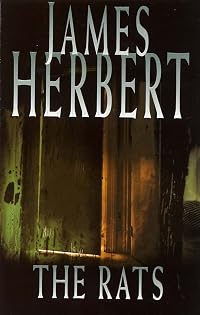
jseger9000 In Silent Graves and Cabal have many plot points in common, though the stories are executed in very different ways.
20
by anonymous user
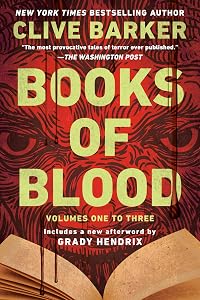
Hanike You simply can't read Clive Barker without going through his Books of Blood: they are the synthesis of this world covered on blood, tragedy & darkness he showed us!
Member Reviews
Clive Barker's writing style impresses: His words are strong, raw, and blunt, while managing to still keep a literary feel to them, (although they're overdone at times, seemingly to exasperate disgust). In Cabal, (the entire work), particularly, he uses the technique of brutal wording to seduce the reader into dark, imaginative worlds bordering between the dredges of reality and the dredges of hell -- an admirable feat he is able to accomplish. Sewn together, he pulls you into the void with him.
His plots are intricately and creatively woven along with his language, creating an atmosphere apropos to the theme largely at hand in this book: Death in many perspectives. Barker did well to tie up loose ends while still leaving them quite show more loose at the end of every story. I was expecting all stories to coincide with one another, and yet I closed the book satisfied.
Good book -- creative, unnerving, and well-written. show less
His plots are intricately and creatively woven along with his language, creating an atmosphere apropos to the theme largely at hand in this book: Death in many perspectives. Barker did well to tie up loose ends while still leaving them quite show more loose at the end of every story. I was expecting all stories to coincide with one another, and yet I closed the book satisfied.
Good book -- creative, unnerving, and well-written. show less
Cabal is a metaphor for the place Clive Barker takes the reader. Is it an imaginary place for the overactive imagination or does it bring us somewhere very real? Where is this place of monsters. This may not be Barker's best story, but it might just be his most important one. By writing this so early in his career, Mr. Barker makes it clear that the place called Midian is not just this book but will be all of his books to come and Midian will be unique to every individual on every journey imaginable. It may be pleasant but might just be fractured, violent and dark. But in CABAL you will be sure to know that you will have a guide into whatever realm it is you are going. But how do you get back from CABAL? Easy answer...you don't. Each show more CABAL is yours and yours alone, although it may not seem that way...it is. Of course you will share it with a multitude of Demons, and other wondrously warped personalities, it is still yours. You can ask the writer and question your own intuition while reading this but please be warned and remind yourself just whose work you are dealing with. You will find your answers, either in the dark or etched upon your bloody skin. When you commit to a Clive Barker novel certain elements must first be understood. A mood is going to be set and chances are it will be in a room much darker than you might be used to. So before opening this book take a moment, strip yourself bare, emotionally, physically...it matters not because what is in your inner self is what will allow you to be molded, shaped and recreated into whatever lies upon your heart. Welcome to the world of Mr. Barker. The gates to Midian are open, but don't forget to notice who is closing them behind you. The downside to this book is the second half. It seemed rushed, once the magic of Midian wears off and the extremely overt sexual descriptions show up, the book becomes pornographic. This should not surprise anyone familiar with Barker's work, but it is distracting. I don't think he has ever or will ever realize that he is a good enough writer to stand on his own without the graphic sex. show less
Nightbreed, the Clive Barker-directed adaptation of his own novella Cabal, was on one of the streaming services, and after finding it more that casually dull, I decided to reread the novella instead.
The book remains a lot of fun. Barker was still in the closet at the time, but there's a queer aesthetic to the descriptive prose that distinguishes the author's work from the rest of the sub-King cohort that dominated horror in the '90s. As with the best novellas Cabal has few extraneous characters, and those left are interesting and individuated.
It's interesting to recall how scandalizing Barker's tight link between sex and horror was at the time. Now that link is just assumed in most of literary horror, and in this, our time of Rule 34, show more old-timey cultural prudishness feels quaint. show less
The book remains a lot of fun. Barker was still in the closet at the time, but there's a queer aesthetic to the descriptive prose that distinguishes the author's work from the rest of the sub-King cohort that dominated horror in the '90s. As with the best novellas Cabal has few extraneous characters, and those left are interesting and individuated.
It's interesting to recall how scandalizing Barker's tight link between sex and horror was at the time. Now that link is just assumed in most of literary horror, and in this, our time of Rule 34, show more old-timey cultural prudishness feels quaint. show less
A decent tale, but this was not up to the usual standard that I expected from Clive Barker. The lead story feels rushed and I feel that it could have been expanded upon and taken more slowly to allow it to resonate with the reader. This detracted from the overall impression and momentum, scope, and effect that the story had. The short stories were passable, but barely.
Not what expected, but still worth reading: 3 stars.
Not what expected, but still worth reading: 3 stars.
Monsters have always played a large part in our collective subconscious. They lurk in shadows, under beds, at the ends of dark alleys. Monsters are always with us, in one form or another. Clive Barker realizes this. And Barker also realizes that sometimes, the monster we don't know is far more preferable than the ones we do.
CABAL is Barker's ode to the monster, not as a fearsome predator that only lives to destroy, but as a misunderstood creature that is alternatively loathed and envied. We despise the monster, because we wish to be one ourselves.
Boone is a young man who is teetering on the brink of insanity. While he has been getting treatment under the watchful guise of Dr. Decker, he is still far from unsure that he is well. And when show more Decker declaims Boone as a subconscious serial killer, with eleven confirmed victims under his belt, Boone decides that his only option is to find Midian, the place where the monsters play. What Boone discovers is an underworld of loneliness and despair, as the monsters of the world attempt to live their lives in peace, uninterrupted by the insanity of humankind.
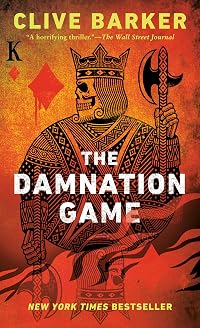
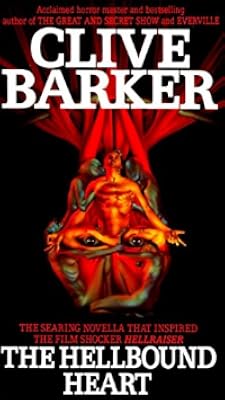
Barker has always had a, shall we say, fondness for the darker impulses of man. In his BOOKS OF BLOOD series, and his novels THE HELLBOUND HEART and THE DAMNATION GAME, he presents the readers with individuals who truly live their lives on the edge, daring life, limb, and soul to satisfy their primal yearnings. In Boone, Barker has created another unsatisfied loner who craves acceptance, believing he cannot function in normal society. Barker understands the human heart, and isn't afraid to admit that not all desires are the same. But just because one person's desires may differ from another's, does not necessarily make that person wrong. It's all a matter of persepctive.
Barker plays this need of Boone for a family off his other two main characters, Lori and Decker. Lori, like Boone, also cries out for her desires to be sated. She desires Boone. And in a very touching love story, Lori proceeds to travel the paths of Hell in order to be with him.
Dr. Decker's needs are also front and centre, but his needs are admittedly not of the same vein as Boone and Lori's. Without giving too much away, Decker's needs are far more primal than Boone's, and more insidious in their rationality. Boone wants a family. Decker wants no more families, ever. Decker, rather than the monster-lover Boone, is the real evil, the calm that masks the storm.
But monsters are monsters, first and foremost. Barker is one of the more unusually vivid purveyors of the human condition, and his tale leaps from one grotesque to the next. CABAL contains some truly stomach-turning scenes, which is to Barker's credit. While he sympathizes with the monster, he knows that the monster must be true to itself in order to be complete. Like humankind, a monster must accept what it is in order to survive. And what a monster is, is a monster. And Barker does not shy away from the blood, gore, and vivisections that invariably follow such a creature.
Part of what has always made Barker such an interesting writer is his mixing of the profane with the sacred, his ability to juxtapose the horrible with the holy. In his stories, men find redemption as monsters. The evil are rarely punished, and the innocent cannot be allowed to survive. And somtimes, love can cross the boundary between life and death. CABAL is possibly the closest Barker could ever get to writing a flat-out romance novel. Boone and Lori go through the pits of Hell to be with each other. They travel the battlefield of the final confrontation between man and his demons. In the end, it doesn't matter who the monsters are; we are all monsters. How we come to accept it is what makes us human. show less
CABAL is Barker's ode to the monster, not as a fearsome predator that only lives to destroy, but as a misunderstood creature that is alternatively loathed and envied. We despise the monster, because we wish to be one ourselves.
Boone is a young man who is teetering on the brink of insanity. While he has been getting treatment under the watchful guise of Dr. Decker, he is still far from unsure that he is well. And when show more Decker declaims Boone as a subconscious serial killer, with eleven confirmed victims under his belt, Boone decides that his only option is to find Midian, the place where the monsters play. What Boone discovers is an underworld of loneliness and despair, as the monsters of the world attempt to live their lives in peace, uninterrupted by the insanity of humankind.
Barker has always had a, shall we say, fondness for the darker impulses of man. In his BOOKS OF BLOOD series, and his novels THE HELLBOUND HEART and THE DAMNATION GAME, he presents the readers with individuals who truly live their lives on the edge, daring life, limb, and soul to satisfy their primal yearnings. In Boone, Barker has created another unsatisfied loner who craves acceptance, believing he cannot function in normal society. Barker understands the human heart, and isn't afraid to admit that not all desires are the same. But just because one person's desires may differ from another's, does not necessarily make that person wrong. It's all a matter of persepctive.
Barker plays this need of Boone for a family off his other two main characters, Lori and Decker. Lori, like Boone, also cries out for her desires to be sated. She desires Boone. And in a very touching love story, Lori proceeds to travel the paths of Hell in order to be with him.
Dr. Decker's needs are also front and centre, but his needs are admittedly not of the same vein as Boone and Lori's. Without giving too much away, Decker's needs are far more primal than Boone's, and more insidious in their rationality. Boone wants a family. Decker wants no more families, ever. Decker, rather than the monster-lover Boone, is the real evil, the calm that masks the storm.
But monsters are monsters, first and foremost. Barker is one of the more unusually vivid purveyors of the human condition, and his tale leaps from one grotesque to the next. CABAL contains some truly stomach-turning scenes, which is to Barker's credit. While he sympathizes with the monster, he knows that the monster must be true to itself in order to be complete. Like humankind, a monster must accept what it is in order to survive. And what a monster is, is a monster. And Barker does not shy away from the blood, gore, and vivisections that invariably follow such a creature.
Part of what has always made Barker such an interesting writer is his mixing of the profane with the sacred, his ability to juxtapose the horrible with the holy. In his stories, men find redemption as monsters. The evil are rarely punished, and the innocent cannot be allowed to survive. And somtimes, love can cross the boundary between life and death. CABAL is possibly the closest Barker could ever get to writing a flat-out romance novel. Boone and Lori go through the pits of Hell to be with each other. They travel the battlefield of the final confrontation between man and his demons. In the end, it doesn't matter who the monsters are; we are all monsters. How we come to accept it is what makes us human. show less
Nightbreed, Clive Barker's own film adaptation of this novel, is one of my favorite horror movies. But it leaves the viewer with a whet appetite, tantalized, and wanting more. I was hoping the novel would fill in the gaps in the film, but it actually hews pretty closely to it, and doesn't answer any questions. So maybe my disappointed was colored by my expectations. A lot of the plot focuses on Boone's girlfriend Lori, and while written in third person, often takes third person limited perspective with her. She's just not as interesting a character as the others, and it feels like we're away from the real meat of the story. But Barker can write. There are some intense and lyrical passages here, and his depictions of the Nightbreed are show more evocative. Before this I'd only read Barker's short story "The Midnight Meat Train" which both impressed and sickened me, so I never continued with the Books of Blood. I feel a similar fatigue after reading Cabal, but I'm more inclined now to finish the Books of Blood (the second half of Cabal comprises their last volume). show less
Aaron Boone está sufriendo espantosas pesadillas que le llevan a visitar al psiquiatra Decker. Y es que Boone está convencido de que es un asesino. En una de sus sesiones, Decker le muestra a Boone unas horribles fotografías de crímenes que le convencen definitivamente de ser el autor de dichos asesinatos. A raíz de estos problemas mentales, entrará en conocimiento de Midian, un lugar en el que los monstruos pueden encontrar su hogar.
‘Cabal: Razas de noche’ (Cabal, 1988), del británico Clive Barker, empieza como un thriller para pasar a convertirse en una novela de terror. Si bien hay escenas sangrientas, Barker no se centra tanto en ellas, como en otro tipo de descripciones y sentimientos. El libro empieza muy bien, y show more engancha desde un principio, con el misterio que plantea sobre Midian. En mi opinión, la historia va de más a menos, y toda la parte de Midian no termina de convencerme. show less
‘Cabal: Razas de noche’ (Cabal, 1988), del británico Clive Barker, empieza como un thriller para pasar a convertirse en una novela de terror. Si bien hay escenas sangrientas, Barker no se centra tanto en ellas, como en otro tipo de descripciones y sentimientos. El libro empieza muy bien, y show more engancha desde un principio, con el misterio que plantea sobre Midian. En mi opinión, la historia va de más a menos, y toda la parte de Midian no termina de convencerme. show less
Members
- Recently Added By
Lists

Read the book and saw the movie
1,170 works; 192 members

75 Books Challenge Halloween Read "Official" Selections
71 works; 7 members

1980s
356 works; 23 members

BlackDog's Complete Paperbacks From Hell List
639 works; 3 members
Author Information

381+ Works 57,041 Members
Critics of the horror story have frequently called Clive Barker the "British Stephen King". Born in Liverpool in 1952, Barker attended the University of Liverpool but moved to London in 1977, where he worked as a commercial artist and became involved with the avant-garde theatrical community. Primarily a playwright during this period, he also show more produced short fiction that he would eventually publish as part of his six-volume collection titled Books of Blood (1984-85). More than any other author of contemporary horror fiction, Barker has had a major impact on the direction of the genre. He has introduced strong elements of sex and graphic violence into his fiction, but these elements are employed with an artistic objective. Barker underscores his work with complex subtextual metaphors and artistic allusions. Preoccupied with the craft of writing and with its effect on the reader, Barker is an innovator of formula and genre, often parodying the former in order to change the philosophical contour of the latter. Barker has achieved commercial success not only with his short fiction but also with his novels, which tend to be epic in scope and to blend elements of horror with those of high fantasy. Barker is one of the more influential voices in horror cinema, having written and directed a number of films. His printed works include The Candle in the Cloud, Absolute Midnight, The Scarlet Gospels, and Black is the Devil's Rainbow: Tales of a Journeyman. His films include Dread, Tortured Souls: Animae Damanatae, and Hellraiser. (Bowker Author Biography) Clive Barker was born in October, 1952, in Liverpool, England, and graduated from Liverpool University. While a student, the resourceful Barker formed a theater company as an outlet for his career as a budding playwright. After minor success with several plays such as "Frankenstein in Love," Barker vaulted onto the horror fiction scene with the publication of his short stories, "The Books of Blood." Later books such as "The Damnation Game," "Imajica," and "Everville" have further established his reputation as a Master of Horror. Barker gained further popularity with several motion picture projects. Unhappy with previous film versions of his works, he chose to direct the successful movie "Hellraiser," which generated a string of sequels. In addition to writing and directing, Barker has produced several of the movies in both the "Hellraiser" and "Candyman" series. Besides his writing and film activities, the multitalented Barker is an actor and illustrator, with several published volumes of his artwork. Barker is a recipient of British Fantasy awards and a World Fantasy award, and resides in Los Angeles. (Bowker Author Biography) show less
Series

Belongs to Publisher Series
Valdemar Gótica (127)
Heyne Allgemeine Reihe (8464)
Work Relationships
Is contained in
Has the adaptation
Common Knowledge
- Canonical title
- Cabal
- Alternate titles
- Cabal
- Original publication date
- 1988-09-13
- People/Characters
- Aaron Boone/Cabal; Dr. Philip Decker/Buttonface; Lori Desinger; Narcisse; Baphomet; Peloquin (show all 13); Babette [Nightbreed]; Irwin Eigerman; Sheryl Clark; Rachel [Nightbreed]; Mr. Lylesburg; Jackie; Father Ashbery
- Important places
- Midian; Midian, Alberta, Canada; Calgary, Alberta, Canada; Shere Neck, Alberta, Canada
- Related movies
- Nightbreed (1990 | IMDb)
- Epigraph
- We are all imaginary animals...
-Domingo d'Ybarrondo, A Bestiary of the Soul - Dedication
- For Annie
To Annie - First words
- Of all the rash and midnight promises made in the name of love, none, Boone now knew, was more certain to be broken than "I'll never leave you."
Of all the rash and midnight promises made in the name of love none, Boone now knew, was more certain to be broken then: 'I'll never leave you'. - Last words
- (Click to show. Warning: May contain spoilers.)It was a life.
- Disambiguation notice
- The U.K./Canadian editions of Cabal: The Nightbreed published by Fontana, Collins or Harper/Collins contain only the novella and do not include the additional 4 stories & epilogue of the original U.K. "Books of Blood VI" ... (show all)which were added to the U.S. editions of Cabal published by Poseidon, Doubleday or Pocket Books. The U.K./Canadian and U.S. editions of "Cabal" should not be combined due to this different content.
This is the novella.
Classifications
Statistics
- Members
- 1,886
- Popularity
- 11,451
- Reviews
- 21
- Rating
- (3.69)
- Languages
- 13 — Czech, Dutch, English, Finnish, French, German, Greek, Hungarian, Italian, Polish, Romanian, Spanish, Turkish
- Media
- Paper, Audiobook, Ebook
- ISBNs
- 38
- ASINs
- 19