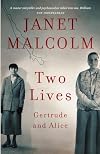
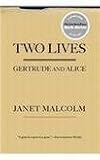
Two Lives: Gertrude and Alice
by Janet Malcolm
On This Page
Description
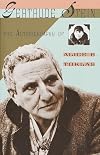
'How had the pair of elderly Jewish lesbians survived the Nazis?' Janet Malcolm asks at the beginning of this extraordinary work of literary biography and investigative journalism. The pair, of course, is Gertrude Stein, the modernist master 'whose charm was as conspicuous as her fatness' and 'thin, plain, tense, sour' Alice B. Toklas, the 'worker bee' who ministered to Stein's needs throughout their forty-year expatriate 'marriage'. As Malcolm pursues the truth of the couple's charmed life show more in a village in Vichy France, her subject becomes the larger question of biographical truth. 'The instability of human knowledge is one of our few certainties', she writes. The portrait of the legendary couple that emerges from this work is unexpectedly charged. The two world wars Stein and Toklas lived through together are paralleled by the private war that went on between them. This war, as Malcolm learned, sometimes flared into bitter combat."Two Lives" is also a work of literary criticism. 'Even the most hermetic of Stein's writings are works of submerged autobiography', Malcolm writes. 'The key of "I" will not unlock the door to their meaning - you need a crowbar for that - but will sometimes admit you to a kind of anteroom of suggestion'. Whether unpacking the accessible "Autobiography of Alice B. Toklas", in which Stein 'solves the koan of autobiography', or wrestling with "The Making of Americans", a masterwork of 'magisterial disorder', Malcolm is stunningly perceptive. show lessTags
Recommendations
















Member Recommendations
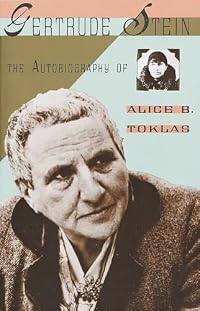
cransell Sort of an obvious recommendation for this title, but definitely worth reading (perhaps even before this book).
Member Reviews
Gertrude Stein wrote monstrously unreadable prose on the theory, in vogue circa 1905, that she could bypass her conscious mind and write directly from the subconscious. Her great love, Alice B. Toklas, was a cookbook author prone to instructions such as: "First, catch your goose."
Through careful readings of Stein's writing, Malcolm makes the case, quoting English professor Ulla Dydo, that Stein's lifting words from the lockstep of standard usage was indeed, the work of a (granted, self-described) genius. Malcolm gets into more controversial territory in exploring Stein and Toklas's stormy and complicated relationship--fraught with sadomasochistic emotional undercurrents--and their energetic sex life. But her real discovery is that Stein show more and Toklas--two elderly Jewish women--survived the German occupation of France because of their close friendship with the wealthy, anti-Semitic Frenchman Bernard Faÿ, a collaborator responsible for the deaths of hundreds of Freemasons. Faÿ continually intervened with the authorities on the pair's behalf. This friendship was so deep that after the war Toklas helped the imprisoned Faÿ escape show less
Through careful readings of Stein's writing, Malcolm makes the case, quoting English professor Ulla Dydo, that Stein's lifting words from the lockstep of standard usage was indeed, the work of a (granted, self-described) genius. Malcolm gets into more controversial territory in exploring Stein and Toklas's stormy and complicated relationship--fraught with sadomasochistic emotional undercurrents--and their energetic sex life. But her real discovery is that Stein show more and Toklas--two elderly Jewish women--survived the German occupation of France because of their close friendship with the wealthy, anti-Semitic Frenchman Bernard Faÿ, a collaborator responsible for the deaths of hundreds of Freemasons. Faÿ continually intervened with the authorities on the pair's behalf. This friendship was so deep that after the war Toklas helped the imprisoned Faÿ escape show less
Janet Malcolm begins with this question: How did two elderly Jewish lesbians survive the Nazis? and then takes us on her journey of investigative journalism that leads her, and us, to ever more unexpected places. The book never really answers the question with which it begins. Instead the book becomes a loving meditation on the nature of how we remember other people. Malcolm explores how our understanding of even those we love most, and know best, is distorted by the limitations of language itself. indeed this perspective on language--on the bleak hope that language has of breaking through to some sort of truth--is what drives much of Stein's writing. Malcolm demonstrates, through passages quoted from Stein's works as well as Toklas's show more and many other people who knew them both, how the words we use to describe our experiences frequently obscure as much as they enlighten--as do the words we leave out. And yet by the end of this small book I did feel enlightened and hopeful and closer to the human-ness of these two women. I understood much more about the persona each created for the public--that it was a persona. I had more of a feeling about the hiddenness and complexity of who they really were--and an appreciation of the complexity of each of us.
A tantalizing read that gives me even more respect for Janet Malcolm. show less
A tantalizing read that gives me even more respect for Janet Malcolm. show less
Janet Malcolm is a very smart writer and has managed, in a very accessible manner, to shine a big light into the too often inaccessible lives of Gertrude Stein and Alice B. Toklas. This is well researched, commandingly written a wonderful mix of a literary biography, investigative journalism and, yes, even some good old fashioned around the table gossip.
One of Malcolm's interviewees, a Stein scholar herself, has asked, "Is Stein worth the effort to figure her out?" Malcolm hasn't necessarily convinced me that she is, but she has definitely made the case for further perusal. She's painted a picture of 2 fascinating lives and left enough open questions that my curiosity has been piqued.
One of Malcolm's interviewees, a Stein scholar herself, has asked, "Is Stein worth the effort to figure her out?" Malcolm hasn't necessarily convinced me that she is, but she has definitely made the case for further perusal. She's painted a picture of 2 fascinating lives and left enough open questions that my curiosity has been piqued.
I was really enjoying this when I started: I was hungover, I wanted to learn about Stein, and Malcolm can write sentences that sometimes rise above (or fall below, either way) the usual New York journalism. It was exactly what I wanted: three essays, one about Stein and Toklas in occupied France, one about Stein's work and academic criticism of it, and then one about Toklas' life. Also: super short, and really nicely designed.
Having finished it, though, I see that had I not been hung over, I would have been pretty annoyed. Malcolm writes about as much about Stein and Toklas as she does about some literary critics she met. She gets all meta with the "these people don't like this person and maybe this person is exploiting Stein but then show more aren't I just exploiting him too?" And slowly but surely we learn more about Janet Malcolm and the literary types she knows than we learn about Stein or Toklas. And what we learn about Janet Malcolm is that she just can't believe that there are some people in the world who don't care about their ethnic roots! Imagine the temerity! Your name is freaking Stein, how come you don't continuously write about being Jewish??
Because not post-Reagan America, that's why.
Anyway, I appreciate that Malcolm has encouraged me to read a couple more of Stein books (Everybody's Biography and Wars I Have Seen), and reminded me that this kind of meandering, vaguely Sebald-esque thing (complete with grainy photos!) really, really, really isn't for me, unless my brain is otherwise non-functional and the lack of connection between paragraphs won't bother me (slash my inability to get with the innovativeness of not caring about those connections has been suspended for some reason). show less
Having finished it, though, I see that had I not been hung over, I would have been pretty annoyed. Malcolm writes about as much about Stein and Toklas as she does about some literary critics she met. She gets all meta with the "these people don't like this person and maybe this person is exploiting Stein but then show more aren't I just exploiting him too?" And slowly but surely we learn more about Janet Malcolm and the literary types she knows than we learn about Stein or Toklas. And what we learn about Janet Malcolm is that she just can't believe that there are some people in the world who don't care about their ethnic roots! Imagine the temerity! Your name is freaking Stein, how come you don't continuously write about being Jewish??
Because not post-Reagan America, that's why.
Anyway, I appreciate that Malcolm has encouraged me to read a couple more of Stein books (Everybody's Biography and Wars I Have Seen), and reminded me that this kind of meandering, vaguely Sebald-esque thing (complete with grainy photos!) really, really, really isn't for me, unless my brain is otherwise non-functional and the lack of connection between paragraphs won't bother me (slash my inability to get with the innovativeness of not caring about those connections has been suspended for some reason). show less
A literary biography of Gertrude Stein and Alice B. Tolklas by New Yorker writer Janet Malcolm. This is not a chronology of their lives but rather explorations of particular questions like "How did two Jewish lesbians survive WWII in France?" and "What is the biographer/critic's role when writing about a subject?" It is, of course, very, very well written and quite interesting if you have a basic knowledge of their lives. If you don't, you should probably start with The Autobiography of Alice B. Tolklas by Stein herself.
Interesting [true] story of how Gertrude and Alice managed to live/survive Vichy France during WW2 despite being Jewish and lesbianic types. Fascinating reading for anyone truly interested in Stein and Toklas, but probably a bit boring for anyone else. Always nice to learn more about Stein/Toklas (and get the real dirt). Anyone who has read _The Making of Americans_ certainly deserves our admiration - Malcolm has done her homework (!)
My Great Books Reading Group will read Autobiography of Alice B. Toklas -- and I vaguely remembered a review of this longish essay on Stein & Toklas... So I picked it up. SO far -- not particularly gripping.
Members
- Recently Added By
Lists

Left Bank Lit - Paris in the Interwar Decades
20 works; 2 members
Author Information

20+ Works 4,204 Members
Janet Malcolm is the acclaimed author of many books, including In the Freud Archives; Two Lives: Gertrude and Alice; and Burdock, a volume of her photographs of a "rank weed." She is a frequent contributor to The New Yorker and The New York Review of Books.
Awards and Honors
Awards
Common Knowledge
- People/Characters
- Gertrude Stein; Alice B. Toklas; Ernest Hemingway; Carl Van Vechten; Bernard Faÿ
- Important places
- Paris, France; Belley, Auvergne-Rhône-Alpes, France; Bilignin, Auvergne-Rhône-Alpes, France
- Epigraph
- The endearing elegance of female friendship
- SAMUEL JOHNSON
Rasselas, chapter 46 - Dedication
- To Anne Arensberg
- First words
- When I read The Alice B. Toklas Cook Book for the first time, Eisenhower was in the White House and Liz Taylor has taken Eddie Fisher away from Debbie Reynolds.
- Last words
- (Click to show. Warning: May contain spoilers.)As Gertrude Stein said, Life is funny that way.
- Blurbers
- Lehman, David; Benfey, Christopher; Rosen, Jeffrey; Talbot, Margaret
Classifications
- Genres
- Literature Studies and Criticism, Biography & Memoir, LGBTQ+
- DDC/MDS
- 818.5209 — Literature & rhetoric American literature in English American miscellaneous writings in English 20th Century 1900-1945 Biography
- LCC
- PS3537 .T323 .Z7137 — Language and Literature American literature American literature Individual authors 1900-1960
- BISAC
Statistics
- Members
- 438
- Popularity
- 69,823
- Reviews
- 10
- Rating
- (3.60)
- Languages
- English, German, Spanish
- Media
- Paper, Ebook
- ISBNs
- 8
- ASINs
- 2