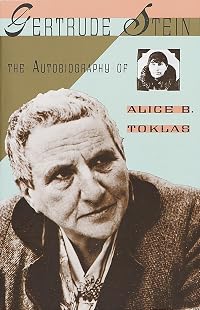
The Autobiography of Alice B. Toklas
by Gertrude Stein  , Alice B. Toklas (Contributor)
On This Page
Description
A witty and beautifully written account of the lives of Gertrude Stein and her wife Alice B. Toklas and a fascinating look into early 20th century Paris and the development of modernist culture. Written in the voice of her life partner, The Autobiography of Alice B. Toklas is a remarkable literary achievement. By turns experimental, insightful and bitingly satirical, Stein's great biography is both deeply personal and wide-ranging in its ambition. As she recounts her life from the fin de show more siecle up to the 1930s, she tells the story of the Parisian art scene, including modernist masters like Cézanne, Matisse and Picasso, the impact of World War I on contemporary France, and her encounters with brilliant literary figures like Ernest Hemingway and Sherwood Anderson. show lessTags
Recommendations


















Member Reviews
Oh boy, this book and I had some kind of love / hate relationship going on (or rather like / hate - love is far too strong).
For those unfamiliar with this piece of work, Alice B. Toklas was Gertrude Stein's life partner, and Stein used the writing of Toklas' autobiography as a device for really writing her own memoir, starting briefly with her life in America prior to moving to Paris, but mostly concentrating on the period in Paris from 1903 to 1932.
Why not just write her own memoir? Oh I'm very clear on that point having now read the book - she couldn't possibly have been anywhere near as boastful about herself if she'd written a straightforward autobiography compared to how much she could when adopting the voice of Toklas writing show more about her. I don't think I've ever read such a display of egotism in all my life's reading, and when you consider that Gertrude Stein really didn't make it into mainstream popularity until the publication of this very book, her unwavering self-belief and self-promotion is really quite something.
Stein was certainly an interesting character and undoubtedly an instrumental figure in the Paris arts scene in the early twentieth century, an early champion and friend of artists such as Picasso and Juan Gris and influential in the literary scene of that period. The Saturday salon sessions she held became renowned in Paris for the art collection she owned and displayed with her brother and the arts discussions that took place there. However, given how interesting this period in Paris was for art and literature, Gertrude Stein is so caught up in the orbiting of others around her own self-importance that despite this book being only 272 pages long, it's a dull and boring slog for large swathes of it. Page after page of supposed comments of others on Gertrude Stein's brilliance and importance became utterly tedious no matter how famous the name-dropping. And despite certainly many famous names popping up regularly, you also have to wade through pages about visits from and to people whose names have been largely eroded from popular history with the passage of time, where nothing more interesting happened than someone commenting on how fascinating Gertrude Stein's work was.
The second half of the book interested me much more than the first. The First World War broke out, and as Stein and Toklas took on volunteer roles with the American Fund for the French Wounded, the focus of the autobiography expanded beyond the circle of the group in Paris and became more interesting. Given how much I lapped up Hemingway's description of the Paris literary scene of this era in The Sun Also Rises, it's incredible that Stein managed to make this so tedious with excessive detail and odd punctuation thrown in every now and then. I found it telling that in this book she writes at length about the Parisian artists, yet Hemingway only gets a few pages (and in those any compliments are matched with twice as many put-downs), Fitzgerald is only mentioned in two or three paragraphs and the likes of James Joyce doesn't get a mention at all. Stein tells it that she was a great mentor to Hemingway and that his writing needed so much work, yet consider that he had great success with The Sun Also Rises in 1926 and that Stein had yet to have wide commercial success until The Autobiography of Alice B. Toklas was published in 1933. I suspect that Stein's ego around the publication of her own work up to that point couldn't allow her to dwell on these literary success of others during this time for too long.
3 stars - this should have been such an interesting memoir to read, but Gertrude Stein's ego far surpassed the quality of her writing. show less
For those unfamiliar with this piece of work, Alice B. Toklas was Gertrude Stein's life partner, and Stein used the writing of Toklas' autobiography as a device for really writing her own memoir, starting briefly with her life in America prior to moving to Paris, but mostly concentrating on the period in Paris from 1903 to 1932.
Why not just write her own memoir? Oh I'm very clear on that point having now read the book - she couldn't possibly have been anywhere near as boastful about herself if she'd written a straightforward autobiography compared to how much she could when adopting the voice of Toklas writing show more about her. I don't think I've ever read such a display of egotism in all my life's reading, and when you consider that Gertrude Stein really didn't make it into mainstream popularity until the publication of this very book, her unwavering self-belief and self-promotion is really quite something.
Stein was certainly an interesting character and undoubtedly an instrumental figure in the Paris arts scene in the early twentieth century, an early champion and friend of artists such as Picasso and Juan Gris and influential in the literary scene of that period. The Saturday salon sessions she held became renowned in Paris for the art collection she owned and displayed with her brother and the arts discussions that took place there. However, given how interesting this period in Paris was for art and literature, Gertrude Stein is so caught up in the orbiting of others around her own self-importance that despite this book being only 272 pages long, it's a dull and boring slog for large swathes of it. Page after page of supposed comments of others on Gertrude Stein's brilliance and importance became utterly tedious no matter how famous the name-dropping. And despite certainly many famous names popping up regularly, you also have to wade through pages about visits from and to people whose names have been largely eroded from popular history with the passage of time, where nothing more interesting happened than someone commenting on how fascinating Gertrude Stein's work was.
The second half of the book interested me much more than the first. The First World War broke out, and as Stein and Toklas took on volunteer roles with the American Fund for the French Wounded, the focus of the autobiography expanded beyond the circle of the group in Paris and became more interesting. Given how much I lapped up Hemingway's description of the Paris literary scene of this era in The Sun Also Rises, it's incredible that Stein managed to make this so tedious with excessive detail and odd punctuation thrown in every now and then. I found it telling that in this book she writes at length about the Parisian artists, yet Hemingway only gets a few pages (and in those any compliments are matched with twice as many put-downs), Fitzgerald is only mentioned in two or three paragraphs and the likes of James Joyce doesn't get a mention at all. Stein tells it that she was a great mentor to Hemingway and that his writing needed so much work, yet consider that he had great success with The Sun Also Rises in 1926 and that Stein had yet to have wide commercial success until The Autobiography of Alice B. Toklas was published in 1933. I suspect that Stein's ego around the publication of her own work up to that point couldn't allow her to dwell on these literary success of others during this time for too long.
3 stars - this should have been such an interesting memoir to read, but Gertrude Stein's ego far surpassed the quality of her writing. show less
Before I started reading The Autobiography of Alice B. Toklas, I looked at reviews online. Many, many of them mention how conceited Stein is. They complain that she thinks herself a genius and that her writing is fantastic and groundbreaking and to the writing world what Picasso’s paintings are to the art world.
After reading the book, I would contend that she’s not nearly as much of a braggart as people say she is. The book itself is something of a joke, and throughout, she intersperses self-deprecating remarks with self-aggrandizing ones (which she often makes in an off-hand, tongue-in-cheek manner, anyway).
But even if she were outright conceited in calling herself a genius and placing herself at the forefront of twentieth-century show more literature, so what?
One thing that always irritated me about modernist authors—even the ones I loved from the beginning, like Hemingway—is that their writing is all so self-consciously genius. “Look at me!” they seem to scream from the page like my four-year-old when I’ve spent too long on the computer. “Look how clever I am!”
Hemingway does this. James Joyce does this. Pablo Picasso does this (I know he’s not an author, but he’s from the same time period, and he never shied away from proclaiming his own genius). But people don’t seem to complain so loudly about the fact that these fellows know they’re geniuses. And I have to think that’s because they’re fellows.
Stein’s writing bridges the gap between nineteenth-century and twentieth-century literature. She made it possible for the amazing writers who came after her—Hemingway, Fitzgerald, Joyce—to be amazing writers and to have an audience for their amazing writing. She broke the ground, and she toiled for years and years with little recognition to do so. If she believes that she’s a genius, then what’s wrong with that?
The only thing I can see wrong with it is that she said it out loud and she said it unapologetically and she said it as a woman rather than as a man.
I really enjoyed The Autobiography of Alice B. Toklas. The first chapter was absolutely brilliant, and I laughed and nodded with understanding many times in just the scant three pages that make up that shortest chapter.
There’s the opening sentences, with which I could completely relate: “I was born in San Francisco, California. I have in consequence always preferred living in a temperate climate but it is difficult, on the continent of Europe or even in America, to find a temperate climate and live in it.”
Then there was the anecdote about Toklas’s father’s response when his son and a friend had gone horseback riding and one of the horses returned riderless. The mother of the friend became hysterical. “Be calm madam, said my father, perhaps it is my son who has been killed.” I laughed out loud at this and made my spouse listen while I read it to him so he could laugh out loud, too.
It is also in this chapter that Stein, through Toklas as narrator, first refers to herself as a genius. Toklas says that she has only met three “first class geniuses,” Gertrude Stein, Pablo Picasso, and Alfred Whitehead. And while this seems a little egotistical on Stein’s part, Toklas throughout the book refers casually to the geniuses in their circle.
At times, it was a little tedious to read so much detail about the lives of all of the many, many friends Stein and Toklas had among the literary and artistic luminaries of their time, but the writing carried me through.
Punctuating these long, detailed passages were gems of writing. Stein clearly had an incredible gift for constructing phrases in which every word packs a punch.
Take a very simple passage: “The geniuses came and talked to Gertrude Stein and the wives sat with me.”
This passage does so much. It shows that Toklas actually believes that they were essentially surrounded by geniuses in Paris, and that there weren’t only three geniuses in the world. It shows that all of the geniuses that came to visit were men. It shows that Toklas does not consider herself one of the geniuses. It shows that she considers herself one of wives of geniuses, which is even more significant because she is the wife of the only female genius in the crowd.
And because it’s actually Stein writing this, it shows that Stein realizes just how marginalized her partner is in the crowds that filled their Paris home on Saturday nights. While the geniuses were crafting twentieth-century art, she was left talking about hats with the sidelined wives. The fact that Stein realizes this and indicates it in writing I find profoundly poignant.
The other thing that drew me through the story is the way the anecdotes are constructed. The chapter titles suggest a linear progression through time, but while the book follows a generally straight path from past to present, it meanders through time all the way through in the style of someone having a conversation, losing her thread, and then picking it back up again. Toklas as narrator will start talking about one subject, get sidetracked, and then pick up the subject again, using nearly identical words to pick up the subject again as she did to introduce it in the first place. There is a very pronounced example of this in Chapter 2, almost as though Stein is trying to get her readers used to the device, but she uses it throughout.
One example towards the end of the book: In Chapter 7, Stein writes about the way that Elliot Paul drifted into their lives and then drifted out again. She introduces the idea by writing, “…actually little by little he appeared and then as slowly he disappeared, and Eugene Jolas and Maria Jolas appeared.”
There follows an interlude in which Stein explains that American soldiers loved the book The Trail of the Lonesome Pine and about Elliot becoming editor of a Paris magazine, until four pages later she picks up the thread and essentially repeats the words she used to introduce the idea: “Elliot Paul slowly disappeared and Eugene and Maria Jolas appeared.” Now we know more about the history and the words mean something a little different now. With the repetition, they also take on a mantra-like quality that brings them even more meaning.
My favorite section was in Chapter 7 when Stein writes about post-war Paris and the young writers that came to visit them, including Hemingway and Fitzgerald. Stein has some very prescient things to say about both. Hemingway she describes as “fragile” and having “been worn by the war.” She suggests a more introspective approach for Hemingway. “But what a book…would be the real story of Hemingway, not those he writes but the confessions of the real Ernest Hemingway…one he should tell himself but alas he never will.” As someone who loves Hemingway’s writing and feels so strongly the tragedy of the inner torment that eventually ended his life, I find Stein’s assessment as haunting as it is loving. And this she wrote in 1932.
Of Fitzgerald, she writes (as Toklas, and so referring to herself, Stein, as “she”), “that it was this book [This Side of Paradise] that really created for the public the new generation…She thinks this equally true of The Great Gatsby. She thinks Fitzgerald will be read when many of his well-known contemporaries are forgotten.” This prediction is less dire but no less accurate than the one she made for Hemingway.
With all of the writing about how egotistical Stein was and this idea of her as a pull-no-punches hardass, I was surprised to find this image of Gertrude Stein and Alice Toklas as mother hens, both to young writers and artists and to young soldiers during the war. There are few examples of authors who have successfully melded the maternal with literary genius. We hear more about those who were unable to do so, like Virginia Woolf and Sylvia Plath. Although a lot has changed in nearly a hundred years, a lot has also stayed the same; I find this portrait of balance very encouraging.
I began reading classics with a general idea that I would become a better, more rounded thinker, and that I would enhance my experience of reading modern literature by improving my understanding of the literature that came before. Reading The Autobiography of Alice B. Toklas, I also began to recognize the potential for improving my writing and for—and this seems a little corny to write, but I’m going to do it anyway—creating for myself a community of great writers from among those whose classics I’m reading.
Reading about Stein and Toklas’s social circle and all of the move-and-shaker writers and artists in their midst, I felt jealous. I told my spouse that maybe we should think about starting a Saturday salon, inviting people to come to our home every Saturday night (or, knowing our habit of nodding off by 10pm, maybe Saturday afternoon) to discuss art, literature, politics, and other intellectual topics and just in general share a love of language and of placing disparate elements together and seeing the beauty in the result. My spouse was incredulous and suggested that central Massachusetts in the 2010s is pretty dissimilar from Paris in the 1910s. He has a good point.
But even if a Saturday salon isn’t practical, I can still hang out with Stein, Joyce, Hemingway, and Fitzgerald, as well as Dickens, Woolf, Kafka, Austen, Plath, Lewis, and St. Augustine any time I want to. Using the Internet, I can even invite writers, artists, and other thinkers from the present to join the conversation.
And I don’t have to make hors d’oeuvres or even change out of my pajamas. show less
After reading the book, I would contend that she’s not nearly as much of a braggart as people say she is. The book itself is something of a joke, and throughout, she intersperses self-deprecating remarks with self-aggrandizing ones (which she often makes in an off-hand, tongue-in-cheek manner, anyway).
But even if she were outright conceited in calling herself a genius and placing herself at the forefront of twentieth-century show more literature, so what?
One thing that always irritated me about modernist authors—even the ones I loved from the beginning, like Hemingway—is that their writing is all so self-consciously genius. “Look at me!” they seem to scream from the page like my four-year-old when I’ve spent too long on the computer. “Look how clever I am!”
Hemingway does this. James Joyce does this. Pablo Picasso does this (I know he’s not an author, but he’s from the same time period, and he never shied away from proclaiming his own genius). But people don’t seem to complain so loudly about the fact that these fellows know they’re geniuses. And I have to think that’s because they’re fellows.
Stein’s writing bridges the gap between nineteenth-century and twentieth-century literature. She made it possible for the amazing writers who came after her—Hemingway, Fitzgerald, Joyce—to be amazing writers and to have an audience for their amazing writing. She broke the ground, and she toiled for years and years with little recognition to do so. If she believes that she’s a genius, then what’s wrong with that?
The only thing I can see wrong with it is that she said it out loud and she said it unapologetically and she said it as a woman rather than as a man.
I really enjoyed The Autobiography of Alice B. Toklas. The first chapter was absolutely brilliant, and I laughed and nodded with understanding many times in just the scant three pages that make up that shortest chapter.
There’s the opening sentences, with which I could completely relate: “I was born in San Francisco, California. I have in consequence always preferred living in a temperate climate but it is difficult, on the continent of Europe or even in America, to find a temperate climate and live in it.”
Then there was the anecdote about Toklas’s father’s response when his son and a friend had gone horseback riding and one of the horses returned riderless. The mother of the friend became hysterical. “Be calm madam, said my father, perhaps it is my son who has been killed.” I laughed out loud at this and made my spouse listen while I read it to him so he could laugh out loud, too.
It is also in this chapter that Stein, through Toklas as narrator, first refers to herself as a genius. Toklas says that she has only met three “first class geniuses,” Gertrude Stein, Pablo Picasso, and Alfred Whitehead. And while this seems a little egotistical on Stein’s part, Toklas throughout the book refers casually to the geniuses in their circle.
At times, it was a little tedious to read so much detail about the lives of all of the many, many friends Stein and Toklas had among the literary and artistic luminaries of their time, but the writing carried me through.
Punctuating these long, detailed passages were gems of writing. Stein clearly had an incredible gift for constructing phrases in which every word packs a punch.
Take a very simple passage: “The geniuses came and talked to Gertrude Stein and the wives sat with me.”
This passage does so much. It shows that Toklas actually believes that they were essentially surrounded by geniuses in Paris, and that there weren’t only three geniuses in the world. It shows that all of the geniuses that came to visit were men. It shows that Toklas does not consider herself one of the geniuses. It shows that she considers herself one of wives of geniuses, which is even more significant because she is the wife of the only female genius in the crowd.
And because it’s actually Stein writing this, it shows that Stein realizes just how marginalized her partner is in the crowds that filled their Paris home on Saturday nights. While the geniuses were crafting twentieth-century art, she was left talking about hats with the sidelined wives. The fact that Stein realizes this and indicates it in writing I find profoundly poignant.
The other thing that drew me through the story is the way the anecdotes are constructed. The chapter titles suggest a linear progression through time, but while the book follows a generally straight path from past to present, it meanders through time all the way through in the style of someone having a conversation, losing her thread, and then picking it back up again. Toklas as narrator will start talking about one subject, get sidetracked, and then pick up the subject again, using nearly identical words to pick up the subject again as she did to introduce it in the first place. There is a very pronounced example of this in Chapter 2, almost as though Stein is trying to get her readers used to the device, but she uses it throughout.
One example towards the end of the book: In Chapter 7, Stein writes about the way that Elliot Paul drifted into their lives and then drifted out again. She introduces the idea by writing, “…actually little by little he appeared and then as slowly he disappeared, and Eugene Jolas and Maria Jolas appeared.”
There follows an interlude in which Stein explains that American soldiers loved the book The Trail of the Lonesome Pine and about Elliot becoming editor of a Paris magazine, until four pages later she picks up the thread and essentially repeats the words she used to introduce the idea: “Elliot Paul slowly disappeared and Eugene and Maria Jolas appeared.” Now we know more about the history and the words mean something a little different now. With the repetition, they also take on a mantra-like quality that brings them even more meaning.
My favorite section was in Chapter 7 when Stein writes about post-war Paris and the young writers that came to visit them, including Hemingway and Fitzgerald. Stein has some very prescient things to say about both. Hemingway she describes as “fragile” and having “been worn by the war.” She suggests a more introspective approach for Hemingway. “But what a book…would be the real story of Hemingway, not those he writes but the confessions of the real Ernest Hemingway…one he should tell himself but alas he never will.” As someone who loves Hemingway’s writing and feels so strongly the tragedy of the inner torment that eventually ended his life, I find Stein’s assessment as haunting as it is loving. And this she wrote in 1932.
Of Fitzgerald, she writes (as Toklas, and so referring to herself, Stein, as “she”), “that it was this book [This Side of Paradise] that really created for the public the new generation…She thinks this equally true of The Great Gatsby. She thinks Fitzgerald will be read when many of his well-known contemporaries are forgotten.” This prediction is less dire but no less accurate than the one she made for Hemingway.
With all of the writing about how egotistical Stein was and this idea of her as a pull-no-punches hardass, I was surprised to find this image of Gertrude Stein and Alice Toklas as mother hens, both to young writers and artists and to young soldiers during the war. There are few examples of authors who have successfully melded the maternal with literary genius. We hear more about those who were unable to do so, like Virginia Woolf and Sylvia Plath. Although a lot has changed in nearly a hundred years, a lot has also stayed the same; I find this portrait of balance very encouraging.
I began reading classics with a general idea that I would become a better, more rounded thinker, and that I would enhance my experience of reading modern literature by improving my understanding of the literature that came before. Reading The Autobiography of Alice B. Toklas, I also began to recognize the potential for improving my writing and for—and this seems a little corny to write, but I’m going to do it anyway—creating for myself a community of great writers from among those whose classics I’m reading.
Reading about Stein and Toklas’s social circle and all of the move-and-shaker writers and artists in their midst, I felt jealous. I told my spouse that maybe we should think about starting a Saturday salon, inviting people to come to our home every Saturday night (or, knowing our habit of nodding off by 10pm, maybe Saturday afternoon) to discuss art, literature, politics, and other intellectual topics and just in general share a love of language and of placing disparate elements together and seeing the beauty in the result. My spouse was incredulous and suggested that central Massachusetts in the 2010s is pretty dissimilar from Paris in the 1910s. He has a good point.
But even if a Saturday salon isn’t practical, I can still hang out with Stein, Joyce, Hemingway, and Fitzgerald, as well as Dickens, Woolf, Kafka, Austen, Plath, Lewis, and St. Augustine any time I want to. Using the Internet, I can even invite writers, artists, and other thinkers from the present to join the conversation.
And I don’t have to make hors d’oeuvres or even change out of my pajamas. show less
It was hard to read this book with a straight face. Gertrude Stein wrote her beloved lifelong companion’s autobiography for her. But guess what? It is not about Alice B. Toklas’s life at all. It is all about Gertrude, how smart and clever Gertrude was, how Gertrude gave great advice to everyone, how gracious a hostess Gertrude was, what an adventurous traveler Gertrude was, and what a successful writer Gertrude was. In fact, life theoretically didn’t even start for Alice until she met Gertrude!
And no matter how many times Gertrude mentions her own name - sometimes as many as three or four times in one paragraph - she make it clear that her full name is Gertrude Stein.
This so-called autobiography covers approximately 20 years, show more mostly taking place in Paris, France with short trips to Spain, Great Britain, and Italy.
Gertrude was a spoiled well-to-do Jewish American adventurist. She just happened to settle at the right place at the right time. She was intelligent and had a good eye for art. She became a patron for upcoming artists and bought their work, often taking in and feeding the starving artists food and encouragement. Picasso, literally unknown at the time, was a Spanish expatriate and Gertrude provided a comfortable refuge. At best she was a muse. At worst - a self-glorified groupie. In the forward (written by an anonymous writer) it says, “There she sat like a great Jewish Buddha surrounded by the paintings of Matisse, Picasso, and Braque while the artists themselves settled at her feet.”
Eventually Gertrude included writers in her clique, among them Sherwood Anderson and Ernest Hemingway. But after only a few years of friendship, she had a falling out with Hemingway which isn’t surprising because she had a falling out with many of her earlier acquaintances. She has some scathing remarks about Hemingway. In stark contrast to Gertrude always referring to herself as Gertrude Stein, she refers to Ernest as “Hem”. And she takes credit for his success as an author. The one valuable piece of advise she gave “Hem” was to quit his journalist job so he could concentrate on writing full time.
Gertrude talks a lot about her own writing, and was constantly trying to get published. She finally succeeded though this was the only book that achieved significant fame. At the height of her writing career Gertrude spoke at Oxford and Cambridge where she was heckled, and later did a series of lectures at various colleges. She is vague about this in the autobiography, but it was often reported that she was impossible to understand. Psychologists tossed around the idea that perhaps she had a speech disorder called palilalia which causes a person to repetitively repeat words and phrases... again and again, beyond their control. Thus, came out phrases like “a rose is a rose is a rose.”
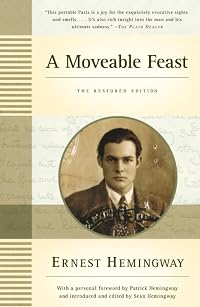
Coincidently, out of curiosity, I just also read Ernest Hemingway’s "A Moveable Feast" - which also takes place in Paris in the 1920s. He discusses his relationship with Gertrude Stein. In his words she was an opportunist and a frustrated artist. He says, “I cannot remember Gertrude Stein ever speaking well of any writer who had not written favorably about her work or done something to advance her career....” She thought James Joyce - also in Paris at the time - was a loser, and she said Aldous Huxley’s work was “dead”, scolding Hemingway for his taste in authors.
But lets get back to Alice B. Toklas. Alice herself is still a woman of mystery. She remained the silent partner throughout Gertrude’s life, and throughout the autobiography. She was relegated to sitting with the women (as opposed to the artists and writers) making small talk and quietly doing needlepoint.
The book is worth reading if you love the arts and have a curiosity about life in Paris in the 1920s. At times it gets tiresome having Gertrude continuously pat herself on the back, but there are some amusing observations, and witty remarks. In Gertrude’s opening introduction to who Alice is, describing her interests and likes, she quotes Alice saying “I like a view but I like to sit with my back turned to it.” Now that’s funny! show less
And no matter how many times Gertrude mentions her own name - sometimes as many as three or four times in one paragraph - she make it clear that her full name is Gertrude Stein.
This so-called autobiography covers approximately 20 years, show more mostly taking place in Paris, France with short trips to Spain, Great Britain, and Italy.
Gertrude was a spoiled well-to-do Jewish American adventurist. She just happened to settle at the right place at the right time. She was intelligent and had a good eye for art. She became a patron for upcoming artists and bought their work, often taking in and feeding the starving artists food and encouragement. Picasso, literally unknown at the time, was a Spanish expatriate and Gertrude provided a comfortable refuge. At best she was a muse. At worst - a self-glorified groupie. In the forward (written by an anonymous writer) it says, “There she sat like a great Jewish Buddha surrounded by the paintings of Matisse, Picasso, and Braque while the artists themselves settled at her feet.”
Eventually Gertrude included writers in her clique, among them Sherwood Anderson and Ernest Hemingway. But after only a few years of friendship, she had a falling out with Hemingway which isn’t surprising because she had a falling out with many of her earlier acquaintances. She has some scathing remarks about Hemingway. In stark contrast to Gertrude always referring to herself as Gertrude Stein, she refers to Ernest as “Hem”. And she takes credit for his success as an author. The one valuable piece of advise she gave “Hem” was to quit his journalist job so he could concentrate on writing full time.
Gertrude talks a lot about her own writing, and was constantly trying to get published. She finally succeeded though this was the only book that achieved significant fame. At the height of her writing career Gertrude spoke at Oxford and Cambridge where she was heckled, and later did a series of lectures at various colleges. She is vague about this in the autobiography, but it was often reported that she was impossible to understand. Psychologists tossed around the idea that perhaps she had a speech disorder called palilalia which causes a person to repetitively repeat words and phrases... again and again, beyond their control. Thus, came out phrases like “a rose is a rose is a rose.”
Coincidently, out of curiosity, I just also read Ernest Hemingway’s "A Moveable Feast" - which also takes place in Paris in the 1920s. He discusses his relationship with Gertrude Stein. In his words she was an opportunist and a frustrated artist. He says, “I cannot remember Gertrude Stein ever speaking well of any writer who had not written favorably about her work or done something to advance her career....” She thought James Joyce - also in Paris at the time - was a loser, and she said Aldous Huxley’s work was “dead”, scolding Hemingway for his taste in authors.
But lets get back to Alice B. Toklas. Alice herself is still a woman of mystery. She remained the silent partner throughout Gertrude’s life, and throughout the autobiography. She was relegated to sitting with the women (as opposed to the artists and writers) making small talk and quietly doing needlepoint.
The book is worth reading if you love the arts and have a curiosity about life in Paris in the 1920s. At times it gets tiresome having Gertrude continuously pat herself on the back, but there are some amusing observations, and witty remarks. In Gertrude’s opening introduction to who Alice is, describing her interests and likes, she quotes Alice saying “I like a view but I like to sit with my back turned to it.” Now that’s funny! show less
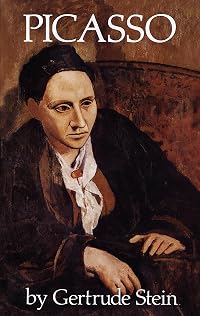
While I loved the feeling and flow of the descriptions in the early chapters, and the flurry of great painters coming in and out of Gertrude Stein's "atelier" as I read along, the book has a level of self-absorption and self-importance that just doesn't work for me. I greatly prefer a lesser known work of Stein's, "Picasso," which covers the same era, more or less, but focuses on Picasso at its core rather than Stein herself as the main character. The feminist in me wants to champion Stein and to think her a genius as much as she herself did, and I do love her prose in smaller portions, but reading this particular book rankled me rather than drew me in. There is a coldness to it. It makes me feel closer to understanding how Stein could show more have allied herself with Vichy France in the years following those chronicled here. show less
While this is a historically important read, it is not a particularly enjoyable one. It was vital in the history of women writers and of course lesbian relationships. Perhaps if you are an especial fan of this time period or group of artists, you'll find the anecdotes presented here more stimulating than I did; while I liked some, I did find the stories to drag on over time as they seemed rather repetitive.
(There's also something off putting about the way that Stein has written a hagiography of herself while pretending not to. It doesn't always bother me, not every single chapter, but some descriptions of her genius are just cringe worthy. And taken at face value, coming from Alice, not encouraging about their relationship.)
(There's also something off putting about the way that Stein has written a hagiography of herself while pretending not to. It doesn't always bother me, not every single chapter, but some descriptions of her genius are just cringe worthy. And taken at face value, coming from Alice, not encouraging about their relationship.)
This book, though nominally an autobiography of Alice B. Toklas, is actually more of an autobiography of Gertrude Stein, told in the voice of Toklas. As a Stein book, it is filled with oddball phrasing, strange punctuation, erratic capitalization, and games with the English language, all of which makes it fun to read. It also gives the reader a glimpse into the life of artists in Paris in the early 20th century. Pablo Picasso is probably the most mentioned of the artists, but Matisse also makes frequent appearances. The rise of cubism is a key component of this book, along with the intellectual and social life of the artsy crowd. You get treated to who was feuding with whom, who was coming over to dinner, and who was starting to sell show more their work. It also includes a look at the early years of Stein's work, and the struggles to get published in a world that had a standard format she was refusing to follow. It's art history, social gossip, and literary achievement in one. show less
This is a must-read for anyone interested in artists and writers in Paris in the early part of the 20th century, because every writer and artist of any note who was in Paris at that time encountered Gertrude Stein at some point. Picasso, Braque, Matisse and Magritte, Apollinaire, Gide, Pound and Hemingway: all of them and many others attended Stein's celebrated Saturday evening salon.
Stein wrote this work in the conversational style of Toklas, who was her life partner. Ostensibly Toklas' autobiography, it is in reality Stein's memoir written as if Stein were Toklas. Whether the voice which emerges is authentically that of Toklas I don't know, but the conversational style is very convincing and comes complete with non sequiturs and show more digressions. It's an interesting device, but it doesn't make the book - a relatively short one - easy to read. At least, I didn't find it so. If Stein accurately reproduced the rhythm and content of Toklas' conversation, then Toklas was probably best taken in small doses.
Writing about herself as if her partner were the one doing the writing allowed Stein to blow her own trumpet more than would have been seemly in a straight memoir. There was nothing shy and retiring about Stein and her high opinion of herself never faltered. Here's what she wrote - in Toklas' voice - at the end of the first chapter:
I may say that only three times in my life have I met a genius and each time a bell within me rang and I was not mistaken, and I may say in each case it was before there was any general recognition of the quality of genius in them. The three geniuses of whom I wish to speak are Gertrude Stein, Pablo Picasso and Alfred Whitehead*. I have met many important people, I have met several great people but I have only known three first class geniuses and in each case on sight within me something rang. In no one of the three cases have I been mistaken.
I initially suspected that the not infrequent references in the text to Stein's genius were meant ironically, but I was rapidly persuaded that Stein was serious. She was convinced that her writing had great merit and could not understand why her literary genius went so long unrecoginsed.
One of the reasons I wanted to read this book was for Stein's impressions of Ernest Hemingway, who held Stein up to ridicule in [b:A Moveable Feast|4631|A Moveable Feast|Ernest Hemingway|http://d.gr-assets.com/books/1356407015s/4631.jpg|2459084]. They had initially been good friends, but fell out when Hemingway disparaged [a:Sherwood Anderson|45645|Sherwood Anderson|http://d.gr-assets.com/authors/1206470009p2/45645.jpg], whom Stein considered had been a great influence on Hemingway's writing. Reading what Stein had to say about Hemingway in this book - almost all of it extremely unflattering - made me realise that Hemingway's portrait of Stein in A Moveable Feast was effectively his revenge.
This is unlikely to be enjoyed by anyone not interested in the writers and artists with whom Stein was acquainted and in that particular period in the history of Paris. Stein, of course, would have wanted the book read for the pleasure of reading the work of a literary genius. Sadly, I think I would prefer to read more about Stein than more of her writing. As it is, this is worth in the region of 3-1/2 stars.
*Not being of a mathematical or scientific bent, I'd never heard of Whitehead before. This is what Wikipedia says about him. show less
Members
- Recently Added By
Lists

Best Autobiographies and Memoirs
370 works; 67 members

Pre-1969 LGBTQ Literature
182 works; 69 members

Best Lesbian Fiction (And Narrative Non-Fiction)
155 works; 35 members

1001 Books You Must Read Before You Die
1,448 works; 1,134 members
100 Biographies and Memoirs to Read in a (Single) Lifetime
98 works; 12 members

Best Biographies
216 works; 26 members

Publishing Triangle 100 Best Lesbian and Gay Novels
97 works; 6 members

The Well-Educated Mind Reading Challenge
75 works; 7 members

Modern Library 100 Best Nonfiction Books
100 works; 8 members

Sexuality & Gender
160 works; 3 members

500 Great Books by Women
507 works; 60 members

The Well-Educated Mind, Susan Wise Bauer, 2016
179 works; 3 members

Club Read's Recommended Nonfiction Written by Women
618 works; 30 members

A Grand Waste Of Time
20 works; 1 member

Mustich's 1000 Books to Read Before You Die: A Life Changing List
1,001 works; 19 members

Well-Educated Mind
150 works; 3 members

Western World's Greatest Books - Project Gutenberg
295 works; 15 members

1930s
262 works; 5 members

Experimental Literature
141 works; 18 members

Literary Witches
86 works; 4 members

Left Bank Lit - Paris in the Interwar Decades
20 works; 2 members

Women's Stories
88 works; 13 members
1,001 BYMRBYD Concensus
723 works; 27 members

Paris, City of Lights
103 works; 17 members

Books Read in 2019
4,052 works; 108 members
Radcliffe's 100 Best Novel of the 20th Century
100 works; 32 members

Penguin Random House
458 works; 4 members

Modernism
140 works; 8 members

Best Books of 1926-1935
403 works; 10 members

le donne raccontano
116 works; 1 member

Nobel non-laureates, non-male
30 works; 10 members

20th Century Literature
1,161 works; 54 members
French Books
102 works; 15 members

Books Read in 2025
4,091 works; 97 members

You Couldn't Pay Me to Read That (Take 2)
203 works; 82 members
Author Information

184+ Works 13,757 Members
Famous writer Gertrude Stein was born on February 3, 1874 in Allegheny, PA and was educated at Radcliffe College and Johns Hopkins medical school. Stein wrote Three Lives, The Making of Americans, and Tender Buttons, all of which were considered difficult for the average reader. She is most famous for her opera Four Saints in Three Acts and The show more Autobiography of Alice B. Toklas, which was actually an autobiography of Stein herself. With her companion Alice B. Toklas, Stein received the French government's Medaille de la Reconnaissance Francaise for theory work with the American fund for French Wounded in World War I. Gertrude Stein died in Neuilly-ser-Seine, France on July 27, 1946. (Bowker Author Biography) show less
Gertrude Stein has a Legacy Library. Legacy libraries are the personal libraries of famous readers, entered by LibraryThing members from the Legacy Libraries group.

Alice B. Toklas was Gertrude Stein's partner and "secretary-companion." They lived together for many years in France, Toklas cooking while Stein was writing. Alice is memorialized in Stein's most famous book, The Autobiography of Alice B. Toklas.
Some Editions
Awards and Honors
Distinctions
Notable Lists
Series
Belongs to Publisher Series
Work Relationships
Is contained in
Is abridged in
Has as a student's study guide
Common Knowledge
- Canonical title*
- Alice B. Toklasin omaelämäkerta
- Original title
- The autobiography of Alice B. Toklas
- Original publication date
- 1933
- People/Characters
- Alice B. Toklas; Gertrude Stein; Salvador Dalí; Gala Dalí; Pablo Picasso; Guillaume Apollinaire (show all 7); Henri Matisse
- Important places
- Paris, Île-de-France, France
- Important events
- World War I (1914 | 1918)
- First words
- I was born in San Francisco, California.
- Last words
- (Click to show. Warning: May contain spoilers.)About six weeks ago Gertrude Stein said, it does not look to me as if you were ever going to write that autobiography. You know what I am going to do. I am going to write it for you. I am going to write it as simply as Defoe did the autobiography of Robinson Crusoe. And she has and this is it.
- Original language
- English
*Some information comes from Common Knowledge in other languages. Click "Edit" for more information.
Classifications
Statistics
- Members
- 3,067
- Popularity
- 5,744
- Reviews
- 46
- Rating
- (3.59)
- Languages
- 19 — Catalan, Czech, Danish, Dutch, English, Estonian, Finnish, French, German, Greek, Italian, Norwegian (Bokmål), Polish, Romanian, Russian, Spanish, Swedish, Turkish, Portuguese (Portugal)
- Media
- Paper, Audiobook, Ebook
- ISBNs
- 68
- ASINs
- 44