On This Page
Description
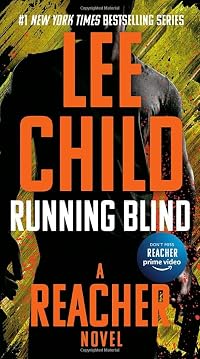
Jack Reacher races to solve the perfect crime in the fourth novel in Lee Child’s New York Times bestselling series.Across the country, women are being murdered, victims of a disciplined and clever killer who leaves no trace evidence, no fatal wounds, no signs of struggle, and no clues to an apparent motive. They are, truly, perfect crimes. In fact, there’s only one thing that links the victims. Each one of the women knew Jack Reacher—and it’s got him running blind.
Tags
Recommendations



Member Reviews
When this book first came out, in the UK, it was called "The Visitor", which makes a whole lot of sense to me: it links to the plot, it's ambiguous about the nature and identity of the visitor and it's easy to remember. Then some editor in the US decided that it sounded too much like Science Fiction and came up with "Running Blind". I can't see any relevance to the plot and it's instantly forgettable but perhaps that's why editors don't get to write novels.
Four things dominated this novel for me: a well thought through puzzle-plot, skilfully revealed, piece by grim piece; the malicious misogyny of the killings, Child's contempt for the FBI and the satisfaction I felt when the increasingly eccentric Reacher finally gets a show more reality-check.
The Reacher reality-check comes at the beginning of the novel when Reacher's impromptu vigilante intervention in a protection racket gets him entangled with the local police and the FBI. In any sane world, Reacher would have finished this encounter either in prison or in a psych ward or both. Reacher sees himself as outside the law. He feels entitled to do violence in whatever he sees as a good cause. He only seems fully engaged with the people around him when he is causing mayhem. This is what makes him such a compelling character in a thriller. It's also what would get put locked up in real life. Of course, in the novel, Reacher is rescued by his lawyer girl-friend and cuts a deal that sets up the rest of the novel.
Still, I don't read Reacher for insights into real life. I read him because the plots are ingenious, because I enjoy his amoral aggression in the cause of right (usually one or more women who need to be rescued or revenged) and because, at least some of the time, I wish there really was a Reacher or two out there making things right.
In this novel, the FBI are depicted as sleazy (a female agent displaying herself to keep Reacher "in hand"), incompetent (profiling techniques that are fundamentally flawed) and more interested in taking care of their own than in getting the job done. As usual, it's lucky for them that Reacher is along to do their job for them.
The puzzle-plot in this one is truly ingenious. No, I'm not going to tell you what it is. I've seldom read a serial killer book where it was so hard to figure out HOW the killing was done. Even when Reacher helps the FBI put most of the pieces together, the answer still isn't clear. For me, this is a real strength in a thriller.
The women being killed in this book have all already been betrayed and abused by men in positions of power while they served in the Army. I was surprised and pleased to see that Child took the time to make at least some of these women real and help see the damage that had been done to them and the lives they were rebuilding. Of course this makes their deaths more poignant but it makes the manner of their deaths truly monstrous.
The prose in this novel isn't go to win any prizes. It often reads more like directions to an actor in a TV script: "He did this. Then he did that. Then he moved to the right. Then he sat down." but somehow the sparse style, written in the third-person, keeps Reacher an enigma.
By the end of the novel, Reacher has nothing left but his folding toothbrush and a desire to be somewhere else. This makes him the perfect catalyst for the next novel where a smart, violent, emotionally unavailable man is needed to thwart evil-doers. I wonder if it also makes him an archetype for a male hunger for a particular type of freedom, based on detached competency and uncompromised integrity? show less
Four things dominated this novel for me: a well thought through puzzle-plot, skilfully revealed, piece by grim piece; the malicious misogyny of the killings, Child's contempt for the FBI and the satisfaction I felt when the increasingly eccentric Reacher finally gets a show more reality-check.
The Reacher reality-check comes at the beginning of the novel when Reacher's impromptu vigilante intervention in a protection racket gets him entangled with the local police and the FBI. In any sane world, Reacher would have finished this encounter either in prison or in a psych ward or both. Reacher sees himself as outside the law. He feels entitled to do violence in whatever he sees as a good cause. He only seems fully engaged with the people around him when he is causing mayhem. This is what makes him such a compelling character in a thriller. It's also what would get put locked up in real life. Of course, in the novel, Reacher is rescued by his lawyer girl-friend and cuts a deal that sets up the rest of the novel.
Still, I don't read Reacher for insights into real life. I read him because the plots are ingenious, because I enjoy his amoral aggression in the cause of right (usually one or more women who need to be rescued or revenged) and because, at least some of the time, I wish there really was a Reacher or two out there making things right.
In this novel, the FBI are depicted as sleazy (a female agent displaying herself to keep Reacher "in hand"), incompetent (profiling techniques that are fundamentally flawed) and more interested in taking care of their own than in getting the job done. As usual, it's lucky for them that Reacher is along to do their job for them.
The puzzle-plot in this one is truly ingenious. No, I'm not going to tell you what it is. I've seldom read a serial killer book where it was so hard to figure out HOW the killing was done. Even when Reacher helps the FBI put most of the pieces together, the answer still isn't clear. For me, this is a real strength in a thriller.
The women being killed in this book have all already been betrayed and abused by men in positions of power while they served in the Army. I was surprised and pleased to see that Child took the time to make at least some of these women real and help see the damage that had been done to them and the lives they were rebuilding. Of course this makes their deaths more poignant but it makes the manner of their deaths truly monstrous.
The prose in this novel isn't go to win any prizes. It often reads more like directions to an actor in a TV script: "He did this. Then he did that. Then he moved to the right. Then he sat down." but somehow the sparse style, written in the third-person, keeps Reacher an enigma.
By the end of the novel, Reacher has nothing left but his folding toothbrush and a desire to be somewhere else. This makes him the perfect catalyst for the next novel where a smart, violent, emotionally unavailable man is needed to thwart evil-doers. I wonder if it also makes him an archetype for a male hunger for a particular type of freedom, based on detached competency and uncompromised integrity? show less
From the premise to the murder weapon, Child doesn't even pretend to try to tell a plausible story. But just as with the entire fantasy genre, realism is hardly the point. Because if the reader is able to suspend disbelief it's a good story, and very satisfying despite the numerous flaws that would bury most books.
What saves it is the man himself, Jack Reacher. Despite his prodigious strength and skillset, he's presented as a deeply flawed individual. Impulsive, selfish, and self-destructive, attentive to every detail yet so afraid of being trapped that his damaged brain can't retain his own zip code or bear the baggage to even travel with a spare pair of underpants. From a serial killer, Chinese gangsters, Syrian mobsters, hardened show more criminals, the FBI, the US Army, to a white shoe law firm, no one can stop him from doing whatever the fuck he wants. He's obviously extremely unhealthy, yet we can't help but feel fascinated and even somewhat jealous of his utter disdain for conventional desires to be comfortable or secure, let alone rich or powerful. He's like an impecunious hermit living in a cave, but without even the cave, the quintessential peripatetic drifter skirting societal norms as he roves from place to place, ever seeking but never finding. show less
What saves it is the man himself, Jack Reacher. Despite his prodigious strength and skillset, he's presented as a deeply flawed individual. Impulsive, selfish, and self-destructive, attentive to every detail yet so afraid of being trapped that his damaged brain can't retain his own zip code or bear the baggage to even travel with a spare pair of underpants. From a serial killer, Chinese gangsters, Syrian mobsters, hardened show more criminals, the FBI, the US Army, to a white shoe law firm, no one can stop him from doing whatever the fuck he wants. He's obviously extremely unhealthy, yet we can't help but feel fascinated and even somewhat jealous of his utter disdain for conventional desires to be comfortable or secure, let alone rich or powerful. He's like an impecunious hermit living in a cave, but without even the cave, the quintessential peripatetic drifter skirting societal norms as he roves from place to place, ever seeking but never finding. show less
Running Blind is substantially better than the last two novels which I found to be a considerable dip in quality when reading the series chronologically. I might even go as far as to say so far it's been the best one so far in terms of substance, mystery of who the responsible party is and generally how gripping the narrative was.
In this installment we also see Reacher facing some level of repercussions for his use of violence according to his own moral code which in earlier novels wasn't so apparent, that I recall anyway.
Where last book we saw the lonely drifter personality trait become tied down with the acquisition of a car and inheritance of a house, in this installment we see Reacher struggling to come to terms with the anchors show more that they are, and for once he isn't sleeping with the main female character of the story.
The only real problem with the plot is the idea that Reacher is being pressured by the FBI, essentially blackmailed, which to my mind contradicts the events of Die Trying in which the FBI is grateful for his cooperation. To my mind he could have called on his earlier contacts to solve his issues without all the hoopla, but then that wouldn't be a particularly interesting novel.
Overall, an excellent addition to the series that expanding the character further and stepped away from the rather formulaic style of the last novels. show less
In this installment we also see Reacher facing some level of repercussions for his use of violence according to his own moral code which in earlier novels wasn't so apparent, that I recall anyway.
Where last book we saw the lonely drifter personality trait become tied down with the acquisition of a car and inheritance of a house, in this installment we see Reacher struggling to come to terms with the anchors show more that they are, and for once he isn't sleeping with the main female character of the story.
The only real problem with the plot is the idea that Reacher is being pressured by the FBI, essentially blackmailed, which to my mind contradicts the events of Die Trying in which the FBI is grateful for his cooperation. To my mind he could have called on his earlier contacts to solve his issues without all the hoopla, but then that wouldn't be a particularly interesting novel.
Overall, an excellent addition to the series that expanding the character further and stepped away from the rather formulaic style of the last novels. show less
Why this was also published as The Visitor is beyond me. Jack has been targeted by the FBI's behavioral science unit – I love several of Jack's comments regarding this speculative agency and its worth, its best profiler has a degree in andscape gardening -- as being a likely serial killer. It seems severeal women from his past have been murdered. All of them had filed sexual harassment charges against a superior and Jack had been an investigating office while in the army. Using his investigative skills and knowledge of the army, Jack establishes his alibi, and then reluctantly agrees to help investigate the murders.
The killer is supremely clever. All the victims are found in their bathtubs, naked, and completely submerged in army show more camouflage paint. They didn't drown, weren't stabbed or shot, and bore no marks or bruises There is no forensic evidence to determine how the women were killed and the only link seems to be that they are ex-army and had filed sexual harassment charges against a superior officer. This is a very good who-done-it that focuses on physical evidence and hard investigative work to determine the identity of the killer.
The ex-9/11 FBI of this book is not that of Efram Zimbalist, Jr. They will stop at nothing, blackmail, threats of torture, illegal activities, and just plain stupid stuff to get their way. I hope the author doesn't know something we don't know, although clearly Ashcroft would love this amoral, the-ends-justfies-the-means agency. Reacher is fleshed out much more as a viable character, a good investigator who has no time for silly psychological profiling (remember how wrong the FBI profiles were of the sniper in Maryland.) show less
The killer is supremely clever. All the victims are found in their bathtubs, naked, and completely submerged in army show more camouflage paint. They didn't drown, weren't stabbed or shot, and bore no marks or bruises There is no forensic evidence to determine how the women were killed and the only link seems to be that they are ex-army and had filed sexual harassment charges against a superior officer. This is a very good who-done-it that focuses on physical evidence and hard investigative work to determine the identity of the killer.
The ex-9/11 FBI of this book is not that of Efram Zimbalist, Jr. They will stop at nothing, blackmail, threats of torture, illegal activities, and just plain stupid stuff to get their way. I hope the author doesn't know something we don't know, although clearly Ashcroft would love this amoral, the-ends-justfies-the-means agency. Reacher is fleshed out much more as a viable character, a good investigator who has no time for silly psychological profiling (remember how wrong the FBI profiles were of the sniper in Maryland.) show less
When we left Reacher at the end of the previous novel, he had a house and a girlfriend and his nomadic days seemed to be behind him. We find him in the same spot here - except as expected, he is not really adapting well to his new life. The girlfriend is not a problem, the "stay in one place and have a home" is.
So when he sees a small business owner being hassled for protection, he decides to help - handing FBI enough ammunition to blackmail him into helping them (and even that would not have been enough if they had not gone after Jodie as well). And why do they need him? Because someone is killing women - all of them ex-military, all of them connected to his past as an MP. He was really a suspect for awhile - until someone died while show more he was talking to the police and that became an impossibility.
Child adds a second narrator - the killer's - which is slowly revealed to be a psychopath. Between that and the third person narrative the story start twisting and turning and throwing all kinds of red herrings. Reacher does not take the blackmail kindly, even if he complies, and adds his own agenda into the whole story.
By the time the solution comes it almost feels like the last possible option. And yet, it is not - working back from the solution you can see the hints and foreshadowing, the assumptions which go unchecked for a very long time - and the string of women that could have been still alive if they had been. The other story - the protection rackets also gets its closure - its development is weaved into the bigger one. And the personal story of Reacher gets to a new place - Jodie is off to London, he is preparing to sell the house - and the play at domestication is done.
Another solid story from an author who knows his craft. It works as a standalone but the backstory adds a richness into the characters.
PS: This novel ended up with two titles - the original one for UK (The Visitor), the other for USA (Running Blind). Both fit in different ways although I prefer the UK one. Why the US market needed a new title is almost cute - apparently it was seen by Putnam (the original US publisher) as sounding too much like a science-fiction novel so they had to change it. show less
So when he sees a small business owner being hassled for protection, he decides to help - handing FBI enough ammunition to blackmail him into helping them (and even that would not have been enough if they had not gone after Jodie as well). And why do they need him? Because someone is killing women - all of them ex-military, all of them connected to his past as an MP. He was really a suspect for awhile - until someone died while show more he was talking to the police and that became an impossibility.
Child adds a second narrator - the killer's - which is slowly revealed to be a psychopath. Between that and the third person narrative the story start twisting and turning and throwing all kinds of red herrings. Reacher does not take the blackmail kindly, even if he complies, and adds his own agenda into the whole story.
By the time the solution comes it almost feels like the last possible option. And yet, it is not - working back from the solution you can see the hints and foreshadowing, the assumptions which go unchecked for a very long time - and the string of women that could have been still alive if they had been. The other story - the protection rackets also gets its closure - its development is weaved into the bigger one. And the personal story of Reacher gets to a new place - Jodie is off to London, he is preparing to sell the house - and the play at domestication is done.
Another solid story from an author who knows his craft. It works as a standalone but the backstory adds a richness into the characters.
PS: This novel ended up with two titles - the original one for UK (The Visitor), the other for USA (Running Blind). Both fit in different ways although I prefer the UK one. Why the US market needed a new title is almost cute - apparently it was seen by Putnam (the original US publisher) as sounding too much like a science-fiction novel so they had to change it. show less
In "De bezoeker" is Lee Child weer in topvorm. Jack Reacher, de iconische loner met een onweerstaanbare charme, wordt deze keer naar een klein stadje in Nebraska gelokt. Daar raakt hij verwikkeld in een mysterieus moordonderzoek.
Wat volgt is een typische Reacher-thriller: snelle dialogen, onverwachte wendingen en een held die altijd een stap voor is op zijn tegenstanders. Child weet de spanning moeiteloos op te bouwen en houdt je als lezer geboeid tot de laatste pagina.
Hoewel het verhaal deels vertrouwd aanvoelt voor fans van de serie, weet Child toch te verrassen met nieuwe elementen en intrigerende personages. De beschrijvingen van de Amerikaanse landschappen zijn levendig en dragen bij aan de sfeer van het verhaal.
Kortom, "De show more bezoeker" is een uitstekende toevoeging aan de Jack Reacher-serie. Een aanrader voor iedereen die houdt van spannende thrillers met een vleugje humor. show less
Wat volgt is een typische Reacher-thriller: snelle dialogen, onverwachte wendingen en een held die altijd een stap voor is op zijn tegenstanders. Child weet de spanning moeiteloos op te bouwen en houdt je als lezer geboeid tot de laatste pagina.
Hoewel het verhaal deels vertrouwd aanvoelt voor fans van de serie, weet Child toch te verrassen met nieuwe elementen en intrigerende personages. De beschrijvingen van de Amerikaanse landschappen zijn levendig en dragen bij aan de sfeer van het verhaal.
Kortom, "De show more bezoeker" is een uitstekende toevoeging aan de Jack Reacher-serie. Een aanrader voor iedereen die houdt van spannende thrillers met een vleugje humor. show less
The reviewer reached the last word of the book and threw it across the room. It was a large room with two windows looking out on a quiet city street. In front of the windows was a couch facing inward. It was a red antique couch, its color matching the red in the oriental rugs on the floor. There was a large oak desk in the room on which sat a flatscreen monitor. The monitor displayed a web browser open to goodreads.com, the text on the page asked "What did you think?"
The reviewer didn't know what to think. He'd wanted to rate the book even lower than the last of its series but he'd rated that one one star, the lowest rating possible. He could go back and change it to two stars, since that rating was partially in reaction to the sadism show more he was forced to read in it. Otherwise, it was clearly better than the one he'd just thrown.
Throwing a book was something he'd just read about before and never imagined himself doing it. He was a rational person, a smart person, not prone to impulsive acts, but this book demanded some kind of physical response. Burning it would suggest censorship, tearing the pages out would leave him with too much to clean up afterwards. So throwing it would be. He was careful not to let it hit anything breakable.
In flight, bullets are affected by three separate forces: gravity, air resistance and wind. Gravity pulls down on the bullet, causing it to drop below the line of sight. Air resistance (or “drag”) slows the bullet with a force proportional to the square of the velocity. Bullets from most rifles travel at super sonic speeds. At these speeds, the mathematics needed to determine the drag is so complex that tables of coefficients are required to do the ballistics calculations.
A book, even one with a hard cover, has too much air resistance to cover much distance and even so, this was a small room. The book hit the wall and fell straight down, landing open to page 53, which was a prime number.
This book did not totally follow the formula established by the three which preceded it. In certain respects it remained the same. It had the endless detail, not really relevant to the story but used to maintain the suspense over time. The villain, though not deformed, was ugly and unlikable. There were women in danger. Law enforcement was crippled by rules which Reacher was able to ignore. There were the observations about military culture and criminal culture and masculine culture and feminine culture. Reacher understood them all while those around him were mainly oblivious. And there was a deadline that needed to be met, just in time.
The reviewer had believed that formulas were a bad thing, making books too predictable and cliche ridden. After reading this book, he'd discovered he was wrong about that. He learned that certain aspects of the formula were necessary to keep the reader involved. Reacher needs to be better trained and stronger and smarter than anyone else but in this story, he was often wrong and his strength and training less important except in a few scenes. The reader needs to identify with him and feel good doing so. He needs to follow a code of behavior which is superior but in this book, he tongue-kisses another woman while still paired up with his girlfriend.
The story needs to be plausible and the false leads need to be satisfying. This story was consistently implausible and the false leads way too false. A padre who is also a colonel showing up just at the "right" time? Another colonel with a list hidden in his drawer? The ending was too hokey to be believed and made the red herrings look like the deliberate manipulations they were.
Even throwing the book was unsatisfying. At least the addiction is broken. I need not read the next book in the series. I no longer care what happens next.
At several points in this book, Reacher felt trapped. He wanted to be a drifter and a loner but instead owned a house and was in a relationship.
I, too, felt trapped reading the series because of its addicting formula, but I have now broken free. In some ways, I will miss the addiction. The books are easy reading and flow over you while being undemanding. Reading them is like having the TV on in the background to feel less lonely, even though you aren't really watching.
But the TV show has to follow the correct conventions to fulfill its role as a safe companion in an otherwise scary world. show less
The reviewer didn't know what to think. He'd wanted to rate the book even lower than the last of its series but he'd rated that one one star, the lowest rating possible. He could go back and change it to two stars, since that rating was partially in reaction to the sadism show more he was forced to read in it. Otherwise, it was clearly better than the one he'd just thrown.
Throwing a book was something he'd just read about before and never imagined himself doing it. He was a rational person, a smart person, not prone to impulsive acts, but this book demanded some kind of physical response. Burning it would suggest censorship, tearing the pages out would leave him with too much to clean up afterwards. So throwing it would be. He was careful not to let it hit anything breakable.
In flight, bullets are affected by three separate forces: gravity, air resistance and wind. Gravity pulls down on the bullet, causing it to drop below the line of sight. Air resistance (or “drag”) slows the bullet with a force proportional to the square of the velocity. Bullets from most rifles travel at super sonic speeds. At these speeds, the mathematics needed to determine the drag is so complex that tables of coefficients are required to do the ballistics calculations.
A book, even one with a hard cover, has too much air resistance to cover much distance and even so, this was a small room. The book hit the wall and fell straight down, landing open to page 53, which was a prime number.
This book did not totally follow the formula established by the three which preceded it. In certain respects it remained the same. It had the endless detail, not really relevant to the story but used to maintain the suspense over time. The villain, though not deformed, was ugly and unlikable. There were women in danger. Law enforcement was crippled by rules which Reacher was able to ignore. There were the observations about military culture and criminal culture and masculine culture and feminine culture. Reacher understood them all while those around him were mainly oblivious. And there was a deadline that needed to be met, just in time.
The reviewer had believed that formulas were a bad thing, making books too predictable and cliche ridden. After reading this book, he'd discovered he was wrong about that. He learned that certain aspects of the formula were necessary to keep the reader involved. Reacher needs to be better trained and stronger and smarter than anyone else but in this story, he was often wrong and his strength and training less important except in a few scenes. The reader needs to identify with him and feel good doing so. He needs to follow a code of behavior which is superior but in this book, he tongue-kisses another woman while still paired up with his girlfriend.
The story needs to be plausible and the false leads need to be satisfying. This story was consistently implausible and the false leads way too false. A padre who is also a colonel showing up just at the "right" time? Another colonel with a list hidden in his drawer? The ending was too hokey to be believed and made the red herrings look like the deliberate manipulations they were.
Even throwing the book was unsatisfying. At least the addiction is broken. I need not read the next book in the series. I no longer care what happens next.
At several points in this book, Reacher felt trapped. He wanted to be a drifter and a loner but instead owned a house and was in a relationship.
I, too, felt trapped reading the series because of its addicting formula, but I have now broken free. In some ways, I will miss the addiction. The books are easy reading and flow over you while being undemanding. Reading them is like having the TV on in the background to feel less lonely, even though you aren't really watching.
But the TV show has to follow the correct conventions to fulfill its role as a safe companion in an otherwise scary world. show less
Members
- Recently Added By
Lists

Top Five Books of 2013
1,562 works; 721 members

Jack Reacher
7 works; 1 member

Jack Reacher - Lee Child
28 works; 1 member

Books Read in 2024
4,727 works; 128 members
Author Information

182+ Works 143,518 Members
Lee Child is the pen name of Jim Grant, who was born in Coventry, England on October 29, 1954. He attended law school at Sheffield University, worked in the theater, and finally worked as a presentation director for Granada Television. After being laid off in 1995 because of corporate restructuring, he decided to write a book. The Killing Floor show more won the Anthony Award for Best First Novel and became the first book in the Jack Reacher series. In 2012, the first Jack Reacher film was released starring Tom Cruise. His book's, Worth Dying For and Past Tense, made the bestseller list in 2018. (Bowker Author Biography) show less

Lee Child is a LibraryThing Author, an author who lists their personal library on LibraryThing.
Some Editions
Awards and Honors
Awards
Series

Work Relationships
Is contained in
Is abridged in
Reader's Digest Select Editions 2001 v02 #254: Running Blind / Dream Country / Shattered / A Certain Slant of Light by Reader's Digest
Australian Reader's Digest Select Editions: The Visitor • Winter Solstice • The White House Connection • Follow the Stars Home by Reader's Digest
Det Bästas Bokval (2004) vol 232: Besökaren; Det sista löftet; Ord mot ord; Förr när vi var vuxna by Reader's Digest
Livros Condensados: A Visita | Nora, Nora | A Sombra nas Areias | Mais Cedo ou Mais Tarde by Reader's Digest
Common Knowledge
- Canonical title
- Running Blind
- Original title
- The Visitor
- Alternate titles
- Running Blind
- Original publication date
- 2000-07-17
- People/Characters
- Jack Reacher; Jodie Garber; Julia Lamarr; Rita Scimecca; Tony Poulton; Alan Deerfield (show all 8); Nelson Blake; Lisa Harper
- Important places
- New York, New York, USA
- Dedication
- For my parents, Audrey and John, who taught me how to read, and why
- First words
- People say that knowledge is power.
- Last words
- (Click to show. Warning: May contain spoilers.)Everybody watched them to the door, and then they turned back to their quiet speculations.
- Original language
- English
- Disambiguation notice
- Running Blind (USA) is a.k.a. The Visitor in the UK and Australia.
Classifications
Statistics
- Members
- 5,946
- Popularity
- 2,175
- Reviews
- 119
- Rating
- (3.84)
- Languages
- 16 — Czech, Dutch, English, Estonian, Finnish, French, German, Greek, Hungarian, Italian, Korean, Norwegian (Bokmål), Polish, Swedish, Turkish, Portuguese (Brazil)
- Media
- Paper, Audiobook, Ebook
- ISBNs
- 108
- ASINs
- 35