On This Page
Tags
Recommendations














Member Reviews
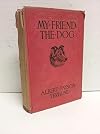
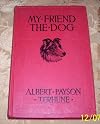
My Friend the Dog, originally published in 1922, is I believe my 8th book of Albert Payson Terhune’s books that I have read. I believe I have all but 2 of his 27 books. I agree with what Stanley Coren, another favorite author of dog books of mine says about Terhune when asked in an interview:
‘However things took an unexpected turn when, out of the blue, the host of the radio show asked me who I would consider to be the best dog fiction writer ever. I don't think I have ever been asked that question before, nor can I remember thinking about it seriously, however I knew what my answer would be immediately—Albert Payson Terhune.’ – Stanley Coren, ‘The Best Dog Fiction Writer Ever? – Psychology Today online article.
Terhune’s show more books are the best as long as you don’t mind a little melodrama and a little brutality. I will give you some of his quotes in the context of this review so you can get a taste of his drama, and by brutality means the drama often comes from brutal challenges.
The book is composed of 13 chapters, and unlike some of his books almost all are stories involving different dogs. In them the dogs face many different foes. Now, before I go further, for fun you may want to think of all the dangerous animals in North America so you can guess what foes the dogs might have to face. One thing that Terhune and a lot of authors of dog books of in the early 20th century often did was take dangerous critters and then have a dog that has to protect his master from. Maybe because there was more wild still left then. So, consider stopping now and making a list that you can check off later. Actually, I will tell you some of them, but will leave out some so you can check them off after the read the book.
For those of you who have read some of Terhune’s books already, you will know there are some common themes. I will try to list some of those.
One is he often writes about collies. As I recall, all or most of the stories are about collies. Often he writes of collies in ways that indicate he feels they are better than other breeds. Statements to that affect are common in his stories in this book including this one:
‘But a collie is like no other dog. Back in his brain ever lurks the queerly wise instinct, though never incurable savagery, of the olden wolves he sprang from.’
Two is he likes to have his dogs be the hero and then turn around and win the championship. So, dog showing is a common theme to his writing. In one of the stories, he has:
‘The dog-show virus is as insidious and as potent as a Borgian poison. Once let man or woman fall under its spell, and the winning of a blue ribbon seems more important than the winning of a college degree. The purple Winner Rosette is worth a fortune. The annexation of the mystic prefix, “Champion,” to a loved dog’s name is an honor comparable to the Presidency.’
Third of course is about the chumship of dogs. Terhune seems to use that word often when talking about dogs, like this this passage:
‘The dog’s plumed tail was smiting the dusty floor of the baggage car with happily resounding thumps as Abner talked to him. The man’s voice and intonation were such as an animal likes. The collie licked the calloused hand that stroked his silken head. Mutely, a bond of chumship was established between the dog-lonely man and the ill-treated dog.’
I will now list the chapters and try to give you some of what the story is about while trying not to spoil things. Although if you guess that the dog saves the day, you will probably be right. Oh yah, for those worried about needing Kleenex at the end of the book, or story, you don’t need to in the stories in this book. (But that don’t mean there ain’t need for Kleenex in the beginning or middle of the stories.)
The Gorgeous Pink Puppy:
“You say you want the puppy for a chum for your boy. Well, these pups are fine for chums, and every on of ‘em is a grand show-prospect, besides.’
Later the dog helps raise a foundling wolf. They get a grim warning about raising a wolf:
“It may think it’s a dog, for a while. But some day it’s dead sure to find out it’s a wolf. When it does, look out!
Runaway:
I liked all the stories in the book, but this one makes reading the whole book worth it. 10 year old girl is entrusted with the dog before they take him to his final dog show to make him a champion. She is told not to let the dog in the garden or in the lake where he can get dirty an hour before the dog is supposed to be at the dog show. She gets bored and takes him on a gravel path, but when the dog sees a rabbit… Then the story takes a nasty turn-
‘Fay calling weepingly to the dog. Toiling up the slope, she plunged forward under a low-hanging bough to grasp him. Her eyes were blurred with tears. Ronny’s were not. Thus it was that the collie, turning around at her call, saw what she missed seeing. He saw, and collie-like, he went into immediate action.
As she ran below the bough the top of her head brushed glancingly against something soft and yielding. It was a hornet nest as large as a derby hat—the abode of several hundred giant black hornets with white-barred tails.’
This is a Terhune book so you can probably guess how the dog does in the dog show.
The Feud:
Five dogs go missing in The Feud, but you will need to read it to see what danger befalls the dogs and then the main dog in the story. I will give you a hint and say it is from an animal but one I don’t think anyone would guess.
The Destroyer from Nowhere:
Animals of all sorts are being killed in farms around. They think it may be the big throw-back collie dog Vulcan. Whatever is killing them could get into this:
‘Bran noted the awkward but highly efficient way in which the four-foot paddock fence had been transformed into a seven-foot stockade. As he approached he studied the wooden wall carefully. It offered no slope or foothold whereby a dog could take a preliminary run and then scramble up the sides of it. Here was a perpendicular wall, seven feet in height, and with a strand of barbed wire running some six inches above it.’
A couple of Miracles:
In this story, a man comes upon someone whipping their dog outside of a dog show, so he releases the dog so it would at least be a fairer fight. The man whipping him says:
“I paid one hundred dollars for this cur!” he stormed. ‘Bought him, last week, from a dealer who told me the mutt couldn’t help but win everything in the collie classes at this show to-day. If he did that, I figured I could sell him, before I left the building, for one hundred and fifty dollars. Maybe more. Well, he didn’t win anything but a couple of measly second prizes, the swine! So, of course, I never got an offer for him. I was stung good and plenty. And some one is due to pay for stinging me.’
The dog of course becomes the chum of the man who rescues him, but later the bad guy comes back. And of course the best way to get at an enemy of the dog, is for the dog to rescue him from some big dangerous farm animal.
Parsifal, Unlimited:
In this story a poor man who can quit his job he hates because he gets a legacy:
“it’s from Aaron Coyle,” said Maskell, “and it’s nine hundred dollars a year. That’s seventy-five dollars a month. It’s an annuity. I will get paid it by the month.”
Our man Maskell had saved the dog of rich Mr. Coyle.
‘Then Mr. Coyle up and dies. And what do you suppose one of the codicils of his will says? Says that there never was anybody but me who showed kindness to his dear dog Parsifal, and that there isn’t anybody but me that he’d be willing to trust him to, in case Mr. Coyle should die first. So, he’s fixed it that I’m to have seventy-five dollars a month for taking the best care of him, so long as he lives.’
Hopefully you caught the part ‘as long as he lives.’ The story spins around different ways with someone who is responsible paying out the seventy-five dollars who would rather not. Not my favorite story in the book, but I liked the clever ending.
Ginger!:
The story starts with:
‘Down the Closser hill bumped and squeaked Abel Shunk’s rattletrap pound wagon. On the front seat of the sinister vehicle slouched Abel Shunk himself, the Hoytsburg pound master.’
Mr. Shunk gets paid for picking up dogs, and also gets paid for killing strays. He founds a lost collie puppie and scoops him up and puts him in the wagon. Fortunately, a boy is around to save him. Later he saves a fox pup who he raises up as he has a knack for animals. Turns out the owner of the lost pup is the fox hunter in the owner of the lost puppy. Terhune finds a clever way of having things work out.
Foster Brethern:
In this story, the same boy as the last story raises up a bear cub same time he raises a puppy. The villains in this story is the same as in old Yeller, hogs:
‘A hog is neither a safe nor an easy animal for a dog to manage. A drove of pigs, such as Colonel Theron kept in his east orchard and low bog lot, cannot be turned and controlled as can even the most recalcitrant cattle. A collie can learn with ease to avoid flying heels or tossing horns of a cow, and to nip or bark her into line. A hog is different.
There is something latently murderous about an unpenned hog, especially a hog that is accustomed to root for a living and to roam at will. The tough hide is hard to hurt by even the sharpest nip. The teeth are rendingly terrible. There is a vicious devil lurking behind the red-rimmed little pale eyes.’
And as a boy, you of course you would try to round up the hogs and take them back through a gap in the fence they broke out of…
Love Me, Love My Dog:
In this one the guy loves a lady who doesn’t like his collie. But she does like his deer that he had raised up though, even though his father had warned him:
“If you had had to live in the backwoods as I did – in the days when backwoods were really backwoods,” answered his father. “you’d know that a deer is the deadliest and most dangerous brute anywhere in this part of the country. They’ve got soft eyes and they’re nice to look at. But they’re devils, at heart, every one of them. I’d rather take my chances with a wounded bear than with a wounded deer. Any expert hunter would.”
You may be able to imagine how things get reconciled. But I imagine a deer wasn’t one of the dangerous animals you thought Terhune would use in his story in the way he does.
A Glass of Milk:
A man is paralyzed but fortunately has his dog for a chum. He must have someone he doesn’t like help take care of the farm who has it in for the dog.
The Hero-Coward:
Nice story. Dog is afraid of something, but has to overcome it:
Laund was oblivious to the fivefold punishment the very hint of which had hitherto been enough to send him ki-yi-ing under Danny’s bed. He was not fighting for himself, but for the child who was at once his ward and his deity.
On himself he was taking the torture that otherwise must have been inflicted on Danny. For perhaps the millionth time in the history of mankind and of dog, the Scriptural adage was fulfilled, and perfect love was casting out fear.'
Collie!:
In this story, Glamis finds a cabin he can hide out in as:
‘The oil-lands swindle, which he had fathered, was exposed. It was a matter for federal prison, not for mere state penitentiary. And Uncle Sam has a bothersome way of sticking to the trail of federal criminals. Wherefore, Glamis hit on the one hiding-place likely to outwit his trailers.
Then he takes on a wolf pup he names ‘Collie’.
Afterward—The dogs of Sunnybank:
Terhunes seems to include these in the end of his books where he talks about his real dogs. What was surprising was this little bit in light of his love of collies and show dogs:
‘It is the custom to sneer at mongrels and to feel shame in confessing the ownership of one of them. And there could not be a worse mistake. The mongrel has more cleverness, more stamina, and sometimes more beauty than any thoroughbred. The best type of mongrel is often the very best dog alive.
Instead of being ashamed of owning one, be ashamed that you have not brought out his million fine traits of smartness and stanchness and general worth-whileness. Those traits are all there if you’ll both to look for them.’
So very good stories, especially the ‘Runaway’ story. show less
‘However things took an unexpected turn when, out of the blue, the host of the radio show asked me who I would consider to be the best dog fiction writer ever. I don't think I have ever been asked that question before, nor can I remember thinking about it seriously, however I knew what my answer would be immediately—Albert Payson Terhune.’ – Stanley Coren, ‘The Best Dog Fiction Writer Ever? – Psychology Today online article.
Terhune’s show more books are the best as long as you don’t mind a little melodrama and a little brutality. I will give you some of his quotes in the context of this review so you can get a taste of his drama, and by brutality means the drama often comes from brutal challenges.
The book is composed of 13 chapters, and unlike some of his books almost all are stories involving different dogs. In them the dogs face many different foes. Now, before I go further, for fun you may want to think of all the dangerous animals in North America so you can guess what foes the dogs might have to face. One thing that Terhune and a lot of authors of dog books of in the early 20th century often did was take dangerous critters and then have a dog that has to protect his master from. Maybe because there was more wild still left then. So, consider stopping now and making a list that you can check off later. Actually, I will tell you some of them, but will leave out some so you can check them off after the read the book.
For those of you who have read some of Terhune’s books already, you will know there are some common themes. I will try to list some of those.
One is he often writes about collies. As I recall, all or most of the stories are about collies. Often he writes of collies in ways that indicate he feels they are better than other breeds. Statements to that affect are common in his stories in this book including this one:
‘But a collie is like no other dog. Back in his brain ever lurks the queerly wise instinct, though never incurable savagery, of the olden wolves he sprang from.’
Two is he likes to have his dogs be the hero and then turn around and win the championship. So, dog showing is a common theme to his writing. In one of the stories, he has:
‘The dog-show virus is as insidious and as potent as a Borgian poison. Once let man or woman fall under its spell, and the winning of a blue ribbon seems more important than the winning of a college degree. The purple Winner Rosette is worth a fortune. The annexation of the mystic prefix, “Champion,” to a loved dog’s name is an honor comparable to the Presidency.’
Third of course is about the chumship of dogs. Terhune seems to use that word often when talking about dogs, like this this passage:
‘The dog’s plumed tail was smiting the dusty floor of the baggage car with happily resounding thumps as Abner talked to him. The man’s voice and intonation were such as an animal likes. The collie licked the calloused hand that stroked his silken head. Mutely, a bond of chumship was established between the dog-lonely man and the ill-treated dog.’
I will now list the chapters and try to give you some of what the story is about while trying not to spoil things. Although if you guess that the dog saves the day, you will probably be right. Oh yah, for those worried about needing Kleenex at the end of the book, or story, you don’t need to in the stories in this book. (But that don’t mean there ain’t need for Kleenex in the beginning or middle of the stories.)
The Gorgeous Pink Puppy:
“You say you want the puppy for a chum for your boy. Well, these pups are fine for chums, and every on of ‘em is a grand show-prospect, besides.’
Later the dog helps raise a foundling wolf. They get a grim warning about raising a wolf:
“It may think it’s a dog, for a while. But some day it’s dead sure to find out it’s a wolf. When it does, look out!
Runaway:
I liked all the stories in the book, but this one makes reading the whole book worth it. 10 year old girl is entrusted with the dog before they take him to his final dog show to make him a champion. She is told not to let the dog in the garden or in the lake where he can get dirty an hour before the dog is supposed to be at the dog show. She gets bored and takes him on a gravel path, but when the dog sees a rabbit… Then the story takes a nasty turn-
‘Fay calling weepingly to the dog. Toiling up the slope, she plunged forward under a low-hanging bough to grasp him. Her eyes were blurred with tears. Ronny’s were not. Thus it was that the collie, turning around at her call, saw what she missed seeing. He saw, and collie-like, he went into immediate action.
As she ran below the bough the top of her head brushed glancingly against something soft and yielding. It was a hornet nest as large as a derby hat—the abode of several hundred giant black hornets with white-barred tails.’
This is a Terhune book so you can probably guess how the dog does in the dog show.
The Feud:
Five dogs go missing in The Feud, but you will need to read it to see what danger befalls the dogs and then the main dog in the story. I will give you a hint and say it is from an animal but one I don’t think anyone would guess.
The Destroyer from Nowhere:
Animals of all sorts are being killed in farms around. They think it may be the big throw-back collie dog Vulcan. Whatever is killing them could get into this:
‘Bran noted the awkward but highly efficient way in which the four-foot paddock fence had been transformed into a seven-foot stockade. As he approached he studied the wooden wall carefully. It offered no slope or foothold whereby a dog could take a preliminary run and then scramble up the sides of it. Here was a perpendicular wall, seven feet in height, and with a strand of barbed wire running some six inches above it.’
A couple of Miracles:
In this story, a man comes upon someone whipping their dog outside of a dog show, so he releases the dog so it would at least be a fairer fight. The man whipping him says:
“I paid one hundred dollars for this cur!” he stormed. ‘Bought him, last week, from a dealer who told me the mutt couldn’t help but win everything in the collie classes at this show to-day. If he did that, I figured I could sell him, before I left the building, for one hundred and fifty dollars. Maybe more. Well, he didn’t win anything but a couple of measly second prizes, the swine! So, of course, I never got an offer for him. I was stung good and plenty. And some one is due to pay for stinging me.’
The dog of course becomes the chum of the man who rescues him, but later the bad guy comes back. And of course the best way to get at an enemy of the dog, is for the dog to rescue him from some big dangerous farm animal.
Parsifal, Unlimited:
In this story a poor man who can quit his job he hates because he gets a legacy:
“it’s from Aaron Coyle,” said Maskell, “and it’s nine hundred dollars a year. That’s seventy-five dollars a month. It’s an annuity. I will get paid it by the month.”
Our man Maskell had saved the dog of rich Mr. Coyle.
‘Then Mr. Coyle up and dies. And what do you suppose one of the codicils of his will says? Says that there never was anybody but me who showed kindness to his dear dog Parsifal, and that there isn’t anybody but me that he’d be willing to trust him to, in case Mr. Coyle should die first. So, he’s fixed it that I’m to have seventy-five dollars a month for taking the best care of him, so long as he lives.’
Hopefully you caught the part ‘as long as he lives.’ The story spins around different ways with someone who is responsible paying out the seventy-five dollars who would rather not. Not my favorite story in the book, but I liked the clever ending.
Ginger!:
The story starts with:
‘Down the Closser hill bumped and squeaked Abel Shunk’s rattletrap pound wagon. On the front seat of the sinister vehicle slouched Abel Shunk himself, the Hoytsburg pound master.’
Mr. Shunk gets paid for picking up dogs, and also gets paid for killing strays. He founds a lost collie puppie and scoops him up and puts him in the wagon. Fortunately, a boy is around to save him. Later he saves a fox pup who he raises up as he has a knack for animals. Turns out the owner of the lost pup is the fox hunter in the owner of the lost puppy. Terhune finds a clever way of having things work out.
Foster Brethern:
In this story, the same boy as the last story raises up a bear cub same time he raises a puppy. The villains in this story is the same as in old Yeller, hogs:
‘A hog is neither a safe nor an easy animal for a dog to manage. A drove of pigs, such as Colonel Theron kept in his east orchard and low bog lot, cannot be turned and controlled as can even the most recalcitrant cattle. A collie can learn with ease to avoid flying heels or tossing horns of a cow, and to nip or bark her into line. A hog is different.
There is something latently murderous about an unpenned hog, especially a hog that is accustomed to root for a living and to roam at will. The tough hide is hard to hurt by even the sharpest nip. The teeth are rendingly terrible. There is a vicious devil lurking behind the red-rimmed little pale eyes.’
And as a boy, you of course you would try to round up the hogs and take them back through a gap in the fence they broke out of…
Love Me, Love My Dog:
In this one the guy loves a lady who doesn’t like his collie. But she does like his deer that he had raised up though, even though his father had warned him:
“If you had had to live in the backwoods as I did – in the days when backwoods were really backwoods,” answered his father. “you’d know that a deer is the deadliest and most dangerous brute anywhere in this part of the country. They’ve got soft eyes and they’re nice to look at. But they’re devils, at heart, every one of them. I’d rather take my chances with a wounded bear than with a wounded deer. Any expert hunter would.”
You may be able to imagine how things get reconciled. But I imagine a deer wasn’t one of the dangerous animals you thought Terhune would use in his story in the way he does.
A Glass of Milk:
A man is paralyzed but fortunately has his dog for a chum. He must have someone he doesn’t like help take care of the farm who has it in for the dog.
The Hero-Coward:
Nice story. Dog is afraid of something, but has to overcome it:
Laund was oblivious to the fivefold punishment the very hint of which had hitherto been enough to send him ki-yi-ing under Danny’s bed. He was not fighting for himself, but for the child who was at once his ward and his deity.
On himself he was taking the torture that otherwise must have been inflicted on Danny. For perhaps the millionth time in the history of mankind and of dog, the Scriptural adage was fulfilled, and perfect love was casting out fear.'
Collie!:
In this story, Glamis finds a cabin he can hide out in as:
‘The oil-lands swindle, which he had fathered, was exposed. It was a matter for federal prison, not for mere state penitentiary. And Uncle Sam has a bothersome way of sticking to the trail of federal criminals. Wherefore, Glamis hit on the one hiding-place likely to outwit his trailers.
Then he takes on a wolf pup he names ‘Collie’.
Afterward—The dogs of Sunnybank:
Terhunes seems to include these in the end of his books where he talks about his real dogs. What was surprising was this little bit in light of his love of collies and show dogs:
‘It is the custom to sneer at mongrels and to feel shame in confessing the ownership of one of them. And there could not be a worse mistake. The mongrel has more cleverness, more stamina, and sometimes more beauty than any thoroughbred. The best type of mongrel is often the very best dog alive.
Instead of being ashamed of owning one, be ashamed that you have not brought out his million fine traits of smartness and stanchness and general worth-whileness. Those traits are all there if you’ll both to look for them.’
So very good stories, especially the ‘Runaway’ story. show less
My Friend the Dog, originally published in 1922, is I believe my 8th book of Albert Payson Terhune’s books that I have read. I believe I have all but 2 of his 27 books. I agree with what Stanley Coren, another favorite author of dog books of mine says about Terhune when asked in an interview:
‘However things took an unexpected turn when, out of the blue, the host of the radio show asked me who I would consider to be the best dog fiction writer ever. I don't think I have ever been asked that question before, nor can I remember thinking about it seriously, however I knew what my answer would be immediately—Albert Payson Terhune.’ – Stanley Coren, ‘The Best Dog Fiction Writer Ever? – Psychology Today online article.
Terhune’s show more books are the best as long as you don’t mind a little melodrama and a little brutality. I will give you some of his quotes in the context of this review so you can get a taste of his drama, and by brutality means the drama often comes from brutal challenges.
The book is composed of 13 chapters, and unlike some of his books almost all are stories involving different dogs. In them the dogs face many different foes. Now, before I go further, for fun you may want to think of all the dangerous animals in North America so you can guess what foes the dogs might have to face. One thing that Terhune and a lot of authors of dog books of in the early 20th century often did was take dangerous critters and then have a dog that has to protect his master from. Maybe because there was more wild still left then. So, consider stopping now and making a list that you can check off later. Actually, I will tell you some of them, but will leave out some so you can check them off after the read the book.
For those of you who have read some of Terhune’s books already, you will know there are some common themes. I will try to list some of those.
One is he often writes about collies. As I recall, all or most of the stories are about collies. Often he writes of collies in ways that indicate he feels they are better than other breeds. Statements to that affect are common in his stories in this book including this one:
‘But a collie is like no other dog. Back in his brain ever lurks the queerly wise instinct, though never incurable savagery, of the olden wolves he sprang from.’
Two is he likes to have his dogs be the hero and then turn around and win the championship. So, dog showing is a common theme to his writing. In one of the stories, he has:
‘The dog-show virus is as insidious and as potent as a Borgian poison. Once let man or woman fall under its spell, and the winning of a blue ribbon seems more important than the winning of a college degree. The purple Winner Rosette is worth a fortune. The annexation of the mystic prefix, “Champion,” to a loved dog’s name is an honor comparable to the Presidency.’
Third of course is about the chumship of dogs. Terhune seems to use that word often when talking about dogs, like this this passage:
‘The dog’s plumed tail was smiting the dusty floor of the baggage car with happily resounding thumps as Abner talked to him. The man’s voice and intonation were such as an animal likes. The collie licked the calloused hand that stroked his silken head. Mutely, a bond of chumship was established between the dog-lonely man and the ill-treated dog.’
I will now list the chapters and try to give you some of what the story is about while trying not to spoil things. Although if you guess that the dog saves the day, you will probably be right. Oh yah, for those worried about needing Kleenex at the end of the book, or story, you don’t need to in the stories in this book. (But that don’t mean there ain’t need for Kleenex in the beginning or middle of the stories.)
The Gorgeous Pink Puppy:
“You say you want the puppy for a chum for your boy. Well, these pups are fine for chums, and every on of ‘em is a grand show-prospect, besides.’
Later the dog helps raise a foundling wolf. They get a grim warning about raising a wolf:
“It may think it’s a dog, for a while. But some day it’s dead sure to find out it’s a wolf. When it does, look out!
Runaway:
I liked all the stories in the book, but this one makes reading the whole book worth it. 10 year old girl is entrusted with the dog before they take him to his final dog show to make him a champion. She is told not to let the dog in the garden or in the lake where he can get dirty an hour before the dog is supposed to be at the dog show. She gets bored and takes him on a gravel path, but when the dog sees a rabbit… Then the story takes a nasty turn-
‘Fay calling weepingly to the dog. Toiling up the slope, she plunged forward under a low-hanging bough to grasp him. Her eyes were blurred with tears. Ronny’s were not. Thus it was that the collie, turning around at her call, saw what she missed seeing. He saw, and collie-like, he went into immediate action.
As she ran below the bough the top of her head brushed glancingly against something soft and yielding. It was a hornet nest as large as a derby hat—the abode of several hundred giant black hornets with white-barred tails.’
This is a Terhune book so you can probably guess how the dog does in the dog show.
The Feud:
Five dogs go missing in The Feud, but you will need to read it to see what danger befalls the dogs and then the main dog in the story. I will give you a hint and say it is from an animal but one I don’t think anyone would guess.
The Destroyer from Nowhere:
Animals of all sorts are being killed in farms around. They think it may be the big throw-back collie dog Vulcan. Whatever is killing them could get into this:
‘Bran noted the awkward but highly efficient way in which the four-foot paddock fence had been transformed into a seven-foot stockade. As he approached he studied the wooden wall carefully. It offered no slope or foothold whereby a dog could take a preliminary run and then scramble up the sides of it. Here was a perpendicular wall, seven feet in height, and with a strand of barbed wire running some six inches above it.’
A couple of Miracles:
In this story, a man comes upon someone whipping their dog outside of a dog show, so he releases the dog so it would at least be a fairer fight. The man whipping him says:
“I paid one hundred dollars for this cur!” he stormed. ‘Bought him, last week, from a dealer who told me the mutt couldn’t help but win everything in the collie classes at this show to-day. If he did that, I figured I could sell him, before I left the building, for one hundred and fifty dollars. Maybe more. Well, he didn’t win anything but a couple of measly second prizes, the swine! So, of course, I never got an offer for him. I was stung good and plenty. And some one is due to pay for stinging me.’
The dog of course becomes the chum of the man who rescues him, but later the bad guy comes back. And of course the best way to get at an enemy of the dog, is for the dog to rescue him from some big dangerous farm animal.
Parsifal, Unlimited:
In this story a poor man who can quit his job he hates because he gets a legacy:
“it’s from Aaron Coyle,” said Maskell, “and it’s nine hundred dollars a year. That’s seventy-five dollars a month. It’s an annuity. I will get paid it by the month.”
Our man Maskell had saved the dog of rich Mr. Coyle.
‘Then Mr. Coyle up and dies. And what do you suppose one of the codicils of his will says? Says that there never was anybody but me who showed kindness to his dear dog Parsifal, and that there isn’t anybody but me that he’d be willing to trust him to, in case Mr. Coyle should die first. So, he’s fixed it that I’m to have seventy-five dollars a month for taking the best care of him, so long as he lives.’
Hopefully you caught the part ‘as long as he lives.’ The story spins around different ways with someone who is responsible paying out the seventy-five dollars who would rather not. Not my favorite story in the book, but I liked the clever ending.
Ginger!:
The story starts with:
‘Down the Closser hill bumped and squeaked Abel Shunk’s rattletrap pound wagon. On the front seat of the sinister vehicle slouched Abel Shunk himself, the Hoytsburg pound master.’
Mr. Shunk gets paid for picking up dogs, and also gets paid for killing strays. He founds a lost collie puppie and scoops him up and puts him in the wagon. Fortunately, a boy is around to save him. Later he saves a fox pup who he raises up as he has a knack for animals. Turns out the owner of the lost pup is the fox hunter in the owner of the lost puppy. Terhune finds a clever way of having things work out.
Foster Brethern:
In this story, the same boy as the last story raises up a bear cub same time he raises a puppy. The villains in this story is the same as in old Yeller, hogs:
‘A hog is neither a safe nor an easy animal for a dog to manage. A drove of pigs, such as Colonel Theron kept in his east orchard and low bog lot, cannot be turned and controlled as can even the most recalcitrant cattle. A collie can learn with ease to avoid flying heels or tossing horns of a cow, and to nip or bark her into line. A hog is different.
There is something latently murderous about an unpenned hog, especially a hog that is accustomed to root for a living and to roam at will. The tough hide is hard to hurt by even the sharpest nip. The teeth are rendingly terrible. There is a vicious devil lurking behind the red-rimmed little pale eyes.’
And as a boy, you of course you would try to round up the hogs and take them back through a gap in the fence they broke out of…
Love Me, Love My Dog:
In this one the guy loves a lady who doesn’t like his collie. But she does like his deer that he had raised up though, even though his father had warned him:
“If you had had to live in the backwoods as I did – in the days when backwoods were really backwoods,” answered his father. “you’d know that a deer is the deadliest and most dangerous brute anywhere in this part of the country. They’ve got soft eyes and they’re nice to look at. But they’re devils, at heart, every one of them. I’d rather take my chances with a wounded bear than with a wounded deer. Any expert hunter would.”
You may be able to imagine how things get reconciled. But I imagine a deer wasn’t one of the dangerous animals you thought Terhune would use in his story in the way he does.
A Glass of Milk:
A man is paralyzed but fortunately has his dog for a chum. He must have someone he doesn’t like help take care of the farm who has it in for the dog.
The Hero-Coward:
Nice story. Dog is afraid of something, but has to overcome it:
Laund was oblivious to the fivefold punishment the very hint of which had hitherto been enough to send him ki-yi-ing under Danny’s bed. He was not fighting for himself, but for the child who was at once his ward and his deity.
On himself he was taking the torture that otherwise must have been inflicted on Danny. For perhaps the millionth time in the history of mankind and of dog, the Scriptural adage was fulfilled, and perfect love was casting out fear.'
Collie!:
In this story, Glamis finds a cabin he can hide out in as:
‘The oil-lands swindle, which he had fathered, was exposed. It was a matter for federal prison, not for mere state penitentiary. And Uncle Sam has a bothersome way of sticking to the trail of federal criminals. Wherefore, Glamis hit on the one hiding-place likely to outwit his trailers.
Then he takes on a wolf pup he names ‘Collie’.
Afterward—The dogs of Sunnybank:
Terhunes seems to include these in the end of his books where he talks about his real dogs. What was surprising was this little bit in light of his love of collies and show dogs:
‘It is the custom to sneer at mongrels and to feel shame in confessing the ownership of one of them. And there could not be a worse mistake. The mongrel has more cleverness, more stamina, and sometimes more beauty than any thoroughbred. The best type of mongrel is often the very best dog alive.
Instead of being ashamed of owning one, be ashamed that you have not brought out his million fine traits of smartness and stanchness and general worth-whileness. Those traits are all there if you’ll both to look for them.’
So very good stories, especially the ‘Runaway’ story. show less
‘However things took an unexpected turn when, out of the blue, the host of the radio show asked me who I would consider to be the best dog fiction writer ever. I don't think I have ever been asked that question before, nor can I remember thinking about it seriously, however I knew what my answer would be immediately—Albert Payson Terhune.’ – Stanley Coren, ‘The Best Dog Fiction Writer Ever? – Psychology Today online article.
Terhune’s show more books are the best as long as you don’t mind a little melodrama and a little brutality. I will give you some of his quotes in the context of this review so you can get a taste of his drama, and by brutality means the drama often comes from brutal challenges.
The book is composed of 13 chapters, and unlike some of his books almost all are stories involving different dogs. In them the dogs face many different foes. Now, before I go further, for fun you may want to think of all the dangerous animals in North America so you can guess what foes the dogs might have to face. One thing that Terhune and a lot of authors of dog books of in the early 20th century often did was take dangerous critters and then have a dog that has to protect his master from. Maybe because there was more wild still left then. So, consider stopping now and making a list that you can check off later. Actually, I will tell you some of them, but will leave out some so you can check them off after the read the book.
For those of you who have read some of Terhune’s books already, you will know there are some common themes. I will try to list some of those.
One is he often writes about collies. As I recall, all or most of the stories are about collies. Often he writes of collies in ways that indicate he feels they are better than other breeds. Statements to that affect are common in his stories in this book including this one:
‘But a collie is like no other dog. Back in his brain ever lurks the queerly wise instinct, though never incurable savagery, of the olden wolves he sprang from.’
Two is he likes to have his dogs be the hero and then turn around and win the championship. So, dog showing is a common theme to his writing. In one of the stories, he has:
‘The dog-show virus is as insidious and as potent as a Borgian poison. Once let man or woman fall under its spell, and the winning of a blue ribbon seems more important than the winning of a college degree. The purple Winner Rosette is worth a fortune. The annexation of the mystic prefix, “Champion,” to a loved dog’s name is an honor comparable to the Presidency.’
Third of course is about the chumship of dogs. Terhune seems to use that word often when talking about dogs, like this this passage:
‘The dog’s plumed tail was smiting the dusty floor of the baggage car with happily resounding thumps as Abner talked to him. The man’s voice and intonation were such as an animal likes. The collie licked the calloused hand that stroked his silken head. Mutely, a bond of chumship was established between the dog-lonely man and the ill-treated dog.’
I will now list the chapters and try to give you some of what the story is about while trying not to spoil things. Although if you guess that the dog saves the day, you will probably be right. Oh yah, for those worried about needing Kleenex at the end of the book, or story, you don’t need to in the stories in this book. (But that don’t mean there ain’t need for Kleenex in the beginning or middle of the stories.)
The Gorgeous Pink Puppy:
“You say you want the puppy for a chum for your boy. Well, these pups are fine for chums, and every on of ‘em is a grand show-prospect, besides.’
Later the dog helps raise a foundling wolf. They get a grim warning about raising a wolf:
“It may think it’s a dog, for a while. But some day it’s dead sure to find out it’s a wolf. When it does, look out!
Runaway:
I liked all the stories in the book, but this one makes reading the whole book worth it. 10 year old girl is entrusted with the dog before they take him to his final dog show to make him a champion. She is told not to let the dog in the garden or in the lake where he can get dirty an hour before the dog is supposed to be at the dog show. She gets bored and takes him on a gravel path, but when the dog sees a rabbit… Then the story takes a nasty turn-
‘Fay calling weepingly to the dog. Toiling up the slope, she plunged forward under a low-hanging bough to grasp him. Her eyes were blurred with tears. Ronny’s were not. Thus it was that the collie, turning around at her call, saw what she missed seeing. He saw, and collie-like, he went into immediate action.
As she ran below the bough the top of her head brushed glancingly against something soft and yielding. It was a hornet nest as large as a derby hat—the abode of several hundred giant black hornets with white-barred tails.’
This is a Terhune book so you can probably guess how the dog does in the dog show.
The Feud:
Five dogs go missing in The Feud, but you will need to read it to see what danger befalls the dogs and then the main dog in the story. I will give you a hint and say it is from an animal but one I don’t think anyone would guess.
The Destroyer from Nowhere:
Animals of all sorts are being killed in farms around. They think it may be the big throw-back collie dog Vulcan. Whatever is killing them could get into this:
‘Bran noted the awkward but highly efficient way in which the four-foot paddock fence had been transformed into a seven-foot stockade. As he approached he studied the wooden wall carefully. It offered no slope or foothold whereby a dog could take a preliminary run and then scramble up the sides of it. Here was a perpendicular wall, seven feet in height, and with a strand of barbed wire running some six inches above it.’
A couple of Miracles:
In this story, a man comes upon someone whipping their dog outside of a dog show, so he releases the dog so it would at least be a fairer fight. The man whipping him says:
“I paid one hundred dollars for this cur!” he stormed. ‘Bought him, last week, from a dealer who told me the mutt couldn’t help but win everything in the collie classes at this show to-day. If he did that, I figured I could sell him, before I left the building, for one hundred and fifty dollars. Maybe more. Well, he didn’t win anything but a couple of measly second prizes, the swine! So, of course, I never got an offer for him. I was stung good and plenty. And some one is due to pay for stinging me.’
The dog of course becomes the chum of the man who rescues him, but later the bad guy comes back. And of course the best way to get at an enemy of the dog, is for the dog to rescue him from some big dangerous farm animal.
Parsifal, Unlimited:
In this story a poor man who can quit his job he hates because he gets a legacy:
“it’s from Aaron Coyle,” said Maskell, “and it’s nine hundred dollars a year. That’s seventy-five dollars a month. It’s an annuity. I will get paid it by the month.”
Our man Maskell had saved the dog of rich Mr. Coyle.
‘Then Mr. Coyle up and dies. And what do you suppose one of the codicils of his will says? Says that there never was anybody but me who showed kindness to his dear dog Parsifal, and that there isn’t anybody but me that he’d be willing to trust him to, in case Mr. Coyle should die first. So, he’s fixed it that I’m to have seventy-five dollars a month for taking the best care of him, so long as he lives.’
Hopefully you caught the part ‘as long as he lives.’ The story spins around different ways with someone who is responsible paying out the seventy-five dollars who would rather not. Not my favorite story in the book, but I liked the clever ending.
Ginger!:
The story starts with:
‘Down the Closser hill bumped and squeaked Abel Shunk’s rattletrap pound wagon. On the front seat of the sinister vehicle slouched Abel Shunk himself, the Hoytsburg pound master.’
Mr. Shunk gets paid for picking up dogs, and also gets paid for killing strays. He founds a lost collie puppie and scoops him up and puts him in the wagon. Fortunately, a boy is around to save him. Later he saves a fox pup who he raises up as he has a knack for animals. Turns out the owner of the lost pup is the fox hunter in the owner of the lost puppy. Terhune finds a clever way of having things work out.
Foster Brethern:
In this story, the same boy as the last story raises up a bear cub same time he raises a puppy. The villains in this story is the same as in old Yeller, hogs:
‘A hog is neither a safe nor an easy animal for a dog to manage. A drove of pigs, such as Colonel Theron kept in his east orchard and low bog lot, cannot be turned and controlled as can even the most recalcitrant cattle. A collie can learn with ease to avoid flying heels or tossing horns of a cow, and to nip or bark her into line. A hog is different.
There is something latently murderous about an unpenned hog, especially a hog that is accustomed to root for a living and to roam at will. The tough hide is hard to hurt by even the sharpest nip. The teeth are rendingly terrible. There is a vicious devil lurking behind the red-rimmed little pale eyes.’
And as a boy, you of course you would try to round up the hogs and take them back through a gap in the fence they broke out of…
Love Me, Love My Dog:
In this one the guy loves a lady who doesn’t like his collie. But she does like his deer that he had raised up though, even though his father had warned him:
“If you had had to live in the backwoods as I did – in the days when backwoods were really backwoods,” answered his father. “you’d know that a deer is the deadliest and most dangerous brute anywhere in this part of the country. They’ve got soft eyes and they’re nice to look at. But they’re devils, at heart, every one of them. I’d rather take my chances with a wounded bear than with a wounded deer. Any expert hunter would.”
You may be able to imagine how things get reconciled. But I imagine a deer wasn’t one of the dangerous animals you thought Terhune would use in his story in the way he does.
A Glass of Milk:
A man is paralyzed but fortunately has his dog for a chum. He must have someone he doesn’t like help take care of the farm who has it in for the dog.
The Hero-Coward:
Nice story. Dog is afraid of something, but has to overcome it:
Laund was oblivious to the fivefold punishment the very hint of which had hitherto been enough to send him ki-yi-ing under Danny’s bed. He was not fighting for himself, but for the child who was at once his ward and his deity.
On himself he was taking the torture that otherwise must have been inflicted on Danny. For perhaps the millionth time in the history of mankind and of dog, the Scriptural adage was fulfilled, and perfect love was casting out fear.'
Collie!:
In this story, Glamis finds a cabin he can hide out in as:
‘The oil-lands swindle, which he had fathered, was exposed. It was a matter for federal prison, not for mere state penitentiary. And Uncle Sam has a bothersome way of sticking to the trail of federal criminals. Wherefore, Glamis hit on the one hiding-place likely to outwit his trailers.
Then he takes on a wolf pup he names ‘Collie’.
Afterward—The dogs of Sunnybank:
Terhunes seems to include these in the end of his books where he talks about his real dogs. What was surprising was this little bit in light of his love of collies and show dogs:
‘It is the custom to sneer at mongrels and to feel shame in confessing the ownership of one of them. And there could not be a worse mistake. The mongrel has more cleverness, more stamina, and sometimes more beauty than any thoroughbred. The best type of mongrel is often the very best dog alive.
Instead of being ashamed of owning one, be ashamed that you have not brought out his million fine traits of smartness and stanchness and general worth-whileness. Those traits are all there if you’ll both to look for them.’
So very good stories, especially the ‘Runaway’ story. show less
A collection of dog stories, mostly about collies. It can get a bit violent.
13 stories back when writers often used hard-to-read dialects but otherwise keen stories about the powers of love betwixt collie and man, and also the mistreatment of colies by man in days of yore
Ratings
Members
- Recently Added By
Lists

Rough collies -- children's/young adult fiction
155 works; 1 member

Dogs -- children's/young adult fiction
1,317 works; 9 members
Author Information

83+ Works 3,656 Members
Series

Work Relationships
Is abridged in
Common Knowledge
- Original publication date
- 1926
- First words
- Breck strolled toward the big puppy yard of the Kerwin Collie Kennels, his eyes on the distant masses of leaf-brown fluff sprawling asleep in the shade.
Classifications
- Genres
- Children's Books, Fiction and Literature, Tween
- DDC/MDS
- 813.52 — Literature & rhetoric American literature in English American fiction in English 1900-1999 1900-1945
- LCC
- PZ10.3 .T273 .M — Language and Literature Fiction and juvenile belles lettres Fiction and juvenile belles lettres Juvenile belles lettres
Statistics
- Members
- 111
- Popularity
- 293,852
- Reviews
- 4
- Rating
- (4.33)
- Languages
- English
- Media
- Paper, Ebook
- ISBNs
- 2
- ASINs
- 11