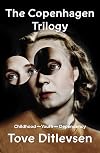
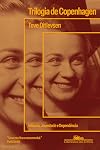
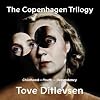
The Copenhagen Trilogy: Childhood; Youth; Dependency
by Tove Ditlevsen
The Copenhagen Trilogy (Collections and Selections — 1-3)
On This Page
Description
"Tove Ditlevsen's autobiographical trilogy about her troubled life in Copenhagen"--Tags
Recommendations






Member Reviews
This is a memoir told from a familiar angle, growing up, becoming yourself, and trying to understand your family, but the voice feels like a unique perspective. And boy, it is bleak. I started Childhood in August and kept moving the book around with me. I’d return to it, but it felt too heavy every time I picked it up. It’s so real, and there isn’t much relief. The writing reflects experience so well, her mother’s love and distance, her self-awareness, and the slow formation of her identity. There are bits of hope, but mostly it’s neglect, poverty, abuse, addiction, loss, and generational trauma. The focus on addiction is devastating because it’s written with such clarity that the cycles feel inevitable. My heart hurt for show more the children, raised without the tenderness they needed. It’s beautifully written, and it refuses to flinch, but I’m flinching. It made me feel awful nearly the whole time. It’s powerful, and honest, and I understand why it’s endured. Read it, take care of yourself while you do. show less
A well known author in her native Denmark, Tove Ditlevsen has only become well known outside of Denmark in recent years as the trend in autofiction has developed.
A work of 3 novellas, in The Copenhagen Trilogy Ditlevsen writes with brutal candour about three key phases in her life. In Childhood we observe the child Ditlevsen in 1920s Copenhagen as the burgeoning writer within her struggles to identify with the narrow horizons of her working class neighbourhood of blue collared workers. As her poetry career begins to take off, in Youth we begin to see how an upbringing filled with insecurity about being loved has shaped the young adult Ditlevsen, as she tumbles into the security blanket of a bizarre chaste marriage to a short and show more overweight much older bachelor who publishes her first poem and whom she later quickly leaves without a backward glance when she meets a young student who sets her pulse racing.
Whilst Childhood didn't overly work for me (it read as an intelligised adult's observation of childhood rather than childhood seen through the eyes of a child), once the trilogy moved into Youth I was hooked. A classic stereotype of a tortured and deeply self-absorbed writer, Ditlevsen spares no punches in her depiction of herself as someone who is only truly happy when writing about life and relationships yet remains largely unsentimental and emotionally detached when it comes to her own love affairs. When, in Dependency, she reluctantly returns to a medical student she had a one-night stand with to abort the child she's unsure is his or her husband's, an utterly bizarre sequence of events marks the abrupt end of her second marriage and the beginning of a car crash marriage to a psychotic doctor who nurtures her addiction to prescription opiates, an addiction which plagues the rest of her adult life along with deeply depressive episodes (which no doubt contributed to her suicide at age 58).
Ditlevsen is her own worst enemy throughout her life, truly at the mercy of her erratic artistic temperament and need for self-gratification without care or interest in the consequences. I'd be highly surprised if her writing didn't influence a young Karl Ove Knausgaard, for this trilogy feels like the birthplace of nordic autofiction. Despite its setting in the 1930s and 40s, this work reads as fresh as if it had been written yesterday, as Ditlevsen conforms to the expectations of no one and follows only her own impetuous desires.
4.5 stars - After a disappointing first volume, this ended up a compelling page-turner which I was sad to reach the end of. show less
A work of 3 novellas, in The Copenhagen Trilogy Ditlevsen writes with brutal candour about three key phases in her life. In Childhood we observe the child Ditlevsen in 1920s Copenhagen as the burgeoning writer within her struggles to identify with the narrow horizons of her working class neighbourhood of blue collared workers. As her poetry career begins to take off, in Youth we begin to see how an upbringing filled with insecurity about being loved has shaped the young adult Ditlevsen, as she tumbles into the security blanket of a bizarre chaste marriage to a short and show more overweight much older bachelor who publishes her first poem and whom she later quickly leaves without a backward glance when she meets a young student who sets her pulse racing.
Whilst Childhood didn't overly work for me (it read as an intelligised adult's observation of childhood rather than childhood seen through the eyes of a child), once the trilogy moved into Youth I was hooked. A classic stereotype of a tortured and deeply self-absorbed writer, Ditlevsen spares no punches in her depiction of herself as someone who is only truly happy when writing about life and relationships yet remains largely unsentimental and emotionally detached when it comes to her own love affairs. When, in Dependency, she reluctantly returns to a medical student she had a one-night stand with to abort the child she's unsure is his or her husband's, an utterly bizarre sequence of events marks the abrupt end of her second marriage and the beginning of a car crash marriage to a psychotic doctor who nurtures her addiction to prescription opiates, an addiction which plagues the rest of her adult life along with deeply depressive episodes (which no doubt contributed to her suicide at age 58).
Ditlevsen is her own worst enemy throughout her life, truly at the mercy of her erratic artistic temperament and need for self-gratification without care or interest in the consequences. I'd be highly surprised if her writing didn't influence a young Karl Ove Knausgaard, for this trilogy feels like the birthplace of nordic autofiction. Despite its setting in the 1930s and 40s, this work reads as fresh as if it had been written yesterday, as Ditlevsen conforms to the expectations of no one and follows only her own impetuous desires.
4.5 stars - After a disappointing first volume, this ended up a compelling page-turner which I was sad to reach the end of. show less
I lollygagged through the initial book ([b:Childhood|53317525|Childhood (The Copenhagen Trilogy, #1)|Tove Ditlevsen|https://i.gr-assets.com/images/S/compressed.photo.goodreads.com/books/1594618325l/53317525._SY75_.jpg|2547020]), then gave up on this dense memoir. Recently, I tried again by going straight to [b:Youth|53317526|Youth (The Copenhagen Trilogy #2)|Tove Ditlevsen|https://i.gr-assets.com/images/S/compressed.photo.goodreads.com/books/1594617942l/53317526._SY75_.jpg|21575256] and goose-stepped to the end through the German occupation of Copenhagen, [a:Tove Ditlevsen|176095|Tove Ditlevsen|https://images.gr-assets.com/authors/1392936294p2/176095.jpg]'s four marriages, three kids, her intense devotion to writing numerous poems and show more novels, her appallingly realistic descriptions of addiction to Demerol, the cravings and trials of getting clean. Her craving never stops as she describes in [b:Dependency|53317527|Dependency (The Copenhagen Trilogy #3)|Tove Ditlevsen|https://i.gr-assets.com/images/S/compressed.photo.goodreads.com/books/1594618059l/53317527._SY75_.jpg|2547028]while she's at the mercy of her mentally ill medical researcher husband for her injections: "Hell on earth. I'm freezing, I'm shaking, I'm sweating, I'm crying and yelling his name into the empty room." I was continually aware of how much better the Danish medical system is than ours (doctors actually came to the house and answered calls at unlikely hours), she spent months in a rehab facility at state expense under a caring doctor). Her specificity is part of her writing skill. A very good book. show less
"I read in my poetry album while the night wanders past the window---and, unawares, my childhood falls silently to the bottom of my memory, that library of the soul from which I will draw knowledge and experience for the rest of my life."
Tove Ditlevsen was one of Denmark's most well-known authors by the time of her death in 1976 by overdose at the age of 58. This trilogy is the memoir she wrote of her life and divided into three parts. And it's both devastating and beautiful. She grew up in the working class part of Copenhagen where there was never enough money for anything. She wrote her first poem at the age of ten and had her first poetry collection published when she was twenty, even though her parents wouldn't send her to high show more school.
She was brilliant, without question, and her writing in this memoir just knocked my socks off. Passage after beautiful passage until I thought I was underlining the whole book. At the end of the Childhood section, she realizes she is going to lose her best friend:
"Ruth with the fine, heart-shaped mouth and the strong, clear eyes. My little lost friend with the sharp tongue and the loving heart. Our friendship is over just as my childhood is. Now the last remnants fall away from me like flakes of sun-scorched skin, and beneath looms an awkward, an impossible adult."
The second section about her Youth, finds her floating from one job to another, trying to connect with anyone who could get her poetry published. She realizes she needs a room of her own where she can write in quiet solitude, interestingly, at about the same time that Virginia Woolf was saying the same thing.
The last section, Dependency, illustrates how one of her four husbands, manages to get her addicted to painkillers and the devastating effects on her life and children. And still, she manages to write.
This was an unforgettable memoir about an author I had never really heard of. She died way too young and probably would've gone on writing for many more years. Our loss. show less
Tove Ditlevsen was one of Denmark's most well-known authors by the time of her death in 1976 by overdose at the age of 58. This trilogy is the memoir she wrote of her life and divided into three parts. And it's both devastating and beautiful. She grew up in the working class part of Copenhagen where there was never enough money for anything. She wrote her first poem at the age of ten and had her first poetry collection published when she was twenty, even though her parents wouldn't send her to high show more school.
She was brilliant, without question, and her writing in this memoir just knocked my socks off. Passage after beautiful passage until I thought I was underlining the whole book. At the end of the Childhood section, she realizes she is going to lose her best friend:
"Ruth with the fine, heart-shaped mouth and the strong, clear eyes. My little lost friend with the sharp tongue and the loving heart. Our friendship is over just as my childhood is. Now the last remnants fall away from me like flakes of sun-scorched skin, and beneath looms an awkward, an impossible adult."
The second section about her Youth, finds her floating from one job to another, trying to connect with anyone who could get her poetry published. She realizes she needs a room of her own where she can write in quiet solitude, interestingly, at about the same time that Virginia Woolf was saying the same thing.
The last section, Dependency, illustrates how one of her four husbands, manages to get her addicted to painkillers and the devastating effects on her life and children. And still, she manages to write.
This was an unforgettable memoir about an author I had never really heard of. She died way too young and probably would've gone on writing for many more years. Our loss. show less
I lollygagged through the initial book ([b:Childhood|53317525|Childhood (The Copenhagen Trilogy, #1)|Tove Ditlevsen|https://i.gr-assets.com/images/S/compressed.photo.goodreads.com/books/1594618325l/53317525._SY75_.jpg|2547020]), then gave up on this dense memoir. Recently, I tried again by going straight to [b:Youth|53317526|Youth (The Copenhagen Trilogy #2)|Tove Ditlevsen|https://i.gr-assets.com/images/S/compressed.photo.goodreads.com/books/1594617942l/53317526._SY75_.jpg|21575256] and goose-stepped to the end through the German occupation of Copenhagen, [a:Tove Ditlevsen|176095|Tove Ditlevsen|https://images.gr-assets.com/authors/1392936294p2/176095.jpg]'s four marriages, three kids, her intense devotion to writing numerous poems and show more novels, her appallingly realistic descriptions of addiction to Demerol, the cravings and trials of getting clean. Her craving never stops as she describes in [b:Dependency|53317527|Dependency (The Copenhagen Trilogy #3)|Tove Ditlevsen|https://i.gr-assets.com/images/S/compressed.photo.goodreads.com/books/1594618059l/53317527._SY75_.jpg|2547028]while she's at the mercy of her mentally ill medical researcher husband for her injections: "Hell on earth. I'm freezing, I'm shaking, I'm sweating, I'm crying and yelling his name into the empty room." I was continually aware of how much better the Danish medical system is than ours (doctors actually came to the house and answered calls at unlikely hours), she spent months in a rehab facility at state expense under a caring doctor). Her specificity is part of her writing skill. A very good book. show less
NY Times 10 Best Books of the Year 2021
Raw, powerful, and mesmerizing are the words that come to mind when I reflect upon Danish poet and novelist Tove Ditlevensen's memoir, The Copenhagen Trilogy. Originally published in Denmark as three separate books, Childhood (1967), Youth (1967), and Dependency (1971), this work of autofiction was reissued as a trilogy in English in 2021.
As the original titles imply, Ditlevenson, born in 1917, chronicles her childhood in a struggling working-class Copenhagen neighborhood, where she began writing poetry, despite her parents' discouragement. While her childhood abruptly ended when circumstances forced her to leave school at 14, she continued writing throughout a youth peppered with mediocre jobs show more during the Depression and the Nazi occupation.
Like most working-class women, she lacked entry into the Danish literary world, and her insecurity and ambition led her to marry the editor of the 1st journal to accept her poems, who was thirty years her senior. Although she succeeded as a poet and a novelist, her personal life and marriages were unhappy, and she descended into drug addiction.
Ditlevsen's work is a precursor to feminist writers like Elena Ferrante. There is revelatory honesty and much ironic humor in the first two books. Her third book, Dependancy, was more monochromatic, an undulating grey. Her depiction of her marriages, addiction, and recovery was gut-wrenching and raw yet, written with a poet's eye. Unfortunately, while I admired her honesty and her prose, I found the third book riveting but painful to read at times. Despite the darkness, the three books mesh together well. Highly recommend! show less
Raw, powerful, and mesmerizing are the words that come to mind when I reflect upon Danish poet and novelist Tove Ditlevensen's memoir, The Copenhagen Trilogy. Originally published in Denmark as three separate books, Childhood (1967), Youth (1967), and Dependency (1971), this work of autofiction was reissued as a trilogy in English in 2021.
As the original titles imply, Ditlevenson, born in 1917, chronicles her childhood in a struggling working-class Copenhagen neighborhood, where she began writing poetry, despite her parents' discouragement. While her childhood abruptly ended when circumstances forced her to leave school at 14, she continued writing throughout a youth peppered with mediocre jobs show more during the Depression and the Nazi occupation.
Like most working-class women, she lacked entry into the Danish literary world, and her insecurity and ambition led her to marry the editor of the 1st journal to accept her poems, who was thirty years her senior. Although she succeeded as a poet and a novelist, her personal life and marriages were unhappy, and she descended into drug addiction.
Ditlevsen's work is a precursor to feminist writers like Elena Ferrante. There is revelatory honesty and much ironic humor in the first two books. Her third book, Dependancy, was more monochromatic, an undulating grey. Her depiction of her marriages, addiction, and recovery was gut-wrenching and raw yet, written with a poet's eye. Unfortunately, while I admired her honesty and her prose, I found the third book riveting but painful to read at times. Despite the darkness, the three books mesh together well. Highly recommend! show less
I really enjoy reading Scandinavian fiction and I've been curious about the hyper-personal narrative autobiographies that are around (like [[Knausgaard]]) so I was intrigued right away by this book, especially since it is by a woman. [The Copenhagen Trilogy] is writer Tove Ditlevsen's memoir told in three parts, her childhood, her youth, and her adulthood where she becomes addicted to painkillers. Ditlevsen wrote this in the 1970s after she had established herself as a well-respected author.
In the Childhood section, we get to know Tove's family and her relationship with her mother, father, and brother. We also learn about the poverty her family grows up in and how it affects her ability to have the confidence and support to become a show more writer. In the Youth section, Ditlevsen begins to come in to her own - publishing some of her writing, moving out into her own apartment, working, and meeting men. The third section, Dependency, is probably the most compelling section as Tove becomes addicted to demerol supplied by a mentally unstable man who marries her and abuses her for years. I always have a hard time reading about addiction, which is a topic that just terrifies me.
This autobiography reads like a novel and is very personal and revealing. While I enjoyed it and appreciated it for stretching the boundaries of personal narrative, I can't say I loved it. I guess, being a private person myself, I'm not that excited about knowing the details and confessions of a real person. I would rather lose myself in fiction or read nonfiction that is at a bit more of a remove. Even so, I would recommend this, especially if you are interested in the inner thoughts of writers, the struggles of female writers, or the time period in general (spans about 1925-1960?). show less
In the Childhood section, we get to know Tove's family and her relationship with her mother, father, and brother. We also learn about the poverty her family grows up in and how it affects her ability to have the confidence and support to become a show more writer. In the Youth section, Ditlevsen begins to come in to her own - publishing some of her writing, moving out into her own apartment, working, and meeting men. The third section, Dependency, is probably the most compelling section as Tove becomes addicted to demerol supplied by a mentally unstable man who marries her and abuses her for years. I always have a hard time reading about addiction, which is a topic that just terrifies me.
This autobiography reads like a novel and is very personal and revealing. While I enjoyed it and appreciated it for stretching the boundaries of personal narrative, I can't say I loved it. I guess, being a private person myself, I'm not that excited about knowing the details and confessions of a real person. I would rather lose myself in fiction or read nonfiction that is at a bit more of a remove. Even so, I would recommend this, especially if you are interested in the inner thoughts of writers, the struggles of female writers, or the time period in general (spans about 1925-1960?). show less
Members
- Recently Added By
Lists

Best Biographies, Autobiographies and Memoirs
464 works; 156 members

Anticipated 2021 Reads
231 works; 7 members

Top Five Books of 2021
604 works; 181 members

NYT 100 best books of 21st C
100 works; 31 members

Ten Before The End
10 works; 1 member

Reading LIst
648 works; 1 member
Author Information

74+ Works 2,700 Members
Ditlevsen grew up in a working-class environment in Copenhagen, an experience that has left a clear stamp on much of her writing. Her novels, generally realistic, revolve around the themes of sexuality, children, and the lives of the poor, and her relentlessly honest depictions have won her a steady following in Denmark. (Bowker Author Biography)
Some Editions
Awards and Honors
Distinctions
Series

Belongs to Publisher Series
Work Relationships
Contains
Common Knowledge
- Canonical title*
- Trilogia de Copenhagen
- Important places*
- Copenhague, Dinamarca
- First words*
- Al matí hi havia esperança.
- Last words*
- (Click to show. Warning: May contain spoilers.)No morirà mai del tot mentre jo sigui viva.
- Publisher's editor*
- L'Altra Editorial
- Blurbers*
- Jensen, Liz; Preston, Alex; Self, John
- Original language*
- Danès
*Some information comes from Common Knowledge in other languages. Click "Edit" for more information.
Classifications
- Genre
- Biography & Memoir
- DDC/MDS
- 839.813 — Literature & rhetoric German & related literatures Other Germanic literatures Danish and Norwegian literatures Danish Danish fiction
- LCC
- PT8175 .D5 .Z46 — Language and Literature German, Dutch and Scandinavian literatures Danish literature Individual authors or works 1900-1960
- BISAC
Statistics
- Members
- 741
- Popularity
- 37,725
- Reviews
- 21
- Rating
- (4.14)
- Languages
- 12 — Catalan, Chinese, Czech, Danish, English, French, German, Norwegian (Bokmål), Polish, Portuguese, Spanish, Swedish
- Media
- Paper, Audiobook, Ebook
- ISBNs
- 27
- ASINs
- 7