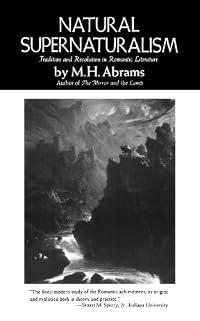
Natural Supernaturalism: Tradition and Revolution in Romantic Literature
by M. H. Abrams
Alexander Lectures (1963-1964)
On This Page
Description
"In this remarkable new book, M. H. Abrams definitively studies the Romantic Age (1789-1835)--the age in which Shelley claimed that "the literature of England has arisen as it were from a new birth." Abrams shows that the major poets of the age had in common important themes, modes of expression, and ways of feeling and imagining; that the writings of these poets were an integral part of a comprehensive intellectual tendency which manifested itself in philosophy as well as poetry, in England show more and in Germany; and that this tendency was causally related to drastic political and social changes of the age. But Abrams offers more than a work of scholarship, for he ranges before and after, to place the age in Western culture. he reveals what is traditional and what is revolutionary in the period, providing insights into those same two forces in the ideas of today. He shows that central Romantic ideas and forms of imagination were secularized versions of traditional theological concepts, imagery, and design, and that modern literature participates in the same process. Our comprehension of this age and of our own time is deepened by a work astonishing in its learning, vision, and humane understanding." -- Provided by publisher. show lessTags
Recommendations







Member Reviews
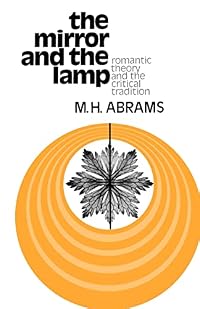
After reading Abrams’s The Mirror and the Lamp, I was eager to read more works by him. As our library had Natural Supernaturalism available, I borrowed the book a few months ago, but only got around to reading it last month. This book is just as good as The Mirror and the Lamp, if not better. It displays Abrams’s tremendous erudition, but it seems more original than The Mirror and the Lamp, as Abrams does not quote quite as extensively in this book as in the previous one. Although this is definitely an academic book, it refrains from unnecessary jargon – yes, there are some complicated terms, but Abrams always explains things that could be difficult to grasp. The book covers most of the English Romantic poets (with the exception show more of Byron), with whom I am fairly familiar. Abrams also deals with Romanticism as it was constellated in the German states, an aspect of the book with which I was much less familiar. Abrams also pulls his argument through to modern times (well, the 1970’s) and looks at the influence of Romanticism on some modern writers.
It would be difficult to go through everything this book covers, but I will attempt to explicate the main points of the book (as I remember them from one reading). As an overarching structure for his argument, Abrams refers constantly to Wordsworth’s program for poetry, as set out in the ‘Prospectus’ part of the preface to his The Excursion. As Abrams says in his preface, the ‘title, Natural Supernaturalism, indicates that his recurrent, but far from exclusive, concern will be with the secularization of inherited theological ideas and ways of thinking.’ Abrams’s argument is that the Romantics in both England and Germany – strongly Protestant states – adopted and reworked Biblical exegesis and theodicy into a secular understanding of humanity and Nature. This, although a sudden break with tradition, had a long period of fruition, as Abrams proves by going back to the Biblical text, and then following this development through time. On the way, Abrams discusses Christian psycho-biography (e.g. Augustine’s Confessions), the influence of pagan and Christian neoplatonism, and the Western esoteric tradition. All of these traditions lead, according to Abrams, to the new conception of man and nature found in the writings of the Romantics.
I enjoyed all of these excursions into Western intellectual history. I did, however, find the section on German Romanticism hard-going. This is mostly because I have not read any of the poets even in translation – these include Schiller, Hölderlin, Goethe, and Novalis. I am going to read Goethe’s Faust next year, but for now, these poets are an undiscovered country to me. I have, however, read some Hegel before – unfortunately. He is obviously a very original philosopher, but the obscurity of his style would give James Joyce in finest fettle a run for his money. Even Abrams cannot make him seem worthwhile to me: it still seems like a lot of philoso-babble to me, and I did not enjoy this part of the book.
I was on firmer ground with the next part of the book, which deals with the changing Romantic movement in English literature, starting with William Blake and ending with D.H. Lawrence. Abrams focuses on what he calls ‘The Circuitous Journey’ in these writers’ works – the idea that a journey has to be made in order to return to where one started, but with greater insight and on a higher level. This is often represented by the Ouroboros: a snake with its tail in its mouth. Obviously, I am simplifying Abrams’s argument greatly – he has three sections of the book dedicated to this topic. It was very interesting to see how Abrams traces his argument from Blake’s mystical writings to Eliot’s recurring moments in the Four Quartets. These moments are further examined in section on Wordsworth’s so-called ‘spots of time’, where Abrams moves from the Romantics all the way to the Modernists, including Joyce, and even further, up to the Beatniks.
This book, although not written specifically to inspire, did engender feelings of hope and optimism in me. Despite Abrams’s pessimism concerning modern culture, he seems to say something hopeful concerning culture and art: in his last chapter, titled ‘The Eagle and the Abyss’, he relates how many writers come to a seeming abyss, which seems impossible to cross. However, there is always the hope of spotting an eagle soaring across this divide. This is the triumph of epiphany and sublime vision, which only art can achieve. As Abrams quotes Wallace Stevens as saying:
The astral and Shelleyan lights are not going to alter the structure of nature. Apples will always be apples, and whoever is a ploughman hereafter will be what the ploughman has always been. For all that, the astral and Shelleyan will have transformed the world.
Nothing can better explain the true usefulness of art in its use-lessness. show less
It would be difficult to go through everything this book covers, but I will attempt to explicate the main points of the book (as I remember them from one reading). As an overarching structure for his argument, Abrams refers constantly to Wordsworth’s program for poetry, as set out in the ‘Prospectus’ part of the preface to his The Excursion. As Abrams says in his preface, the ‘title, Natural Supernaturalism, indicates that his recurrent, but far from exclusive, concern will be with the secularization of inherited theological ideas and ways of thinking.’ Abrams’s argument is that the Romantics in both England and Germany – strongly Protestant states – adopted and reworked Biblical exegesis and theodicy into a secular understanding of humanity and Nature. This, although a sudden break with tradition, had a long period of fruition, as Abrams proves by going back to the Biblical text, and then following this development through time. On the way, Abrams discusses Christian psycho-biography (e.g. Augustine’s Confessions), the influence of pagan and Christian neoplatonism, and the Western esoteric tradition. All of these traditions lead, according to Abrams, to the new conception of man and nature found in the writings of the Romantics.
I enjoyed all of these excursions into Western intellectual history. I did, however, find the section on German Romanticism hard-going. This is mostly because I have not read any of the poets even in translation – these include Schiller, Hölderlin, Goethe, and Novalis. I am going to read Goethe’s Faust next year, but for now, these poets are an undiscovered country to me. I have, however, read some Hegel before – unfortunately. He is obviously a very original philosopher, but the obscurity of his style would give James Joyce in finest fettle a run for his money. Even Abrams cannot make him seem worthwhile to me: it still seems like a lot of philoso-babble to me, and I did not enjoy this part of the book.
I was on firmer ground with the next part of the book, which deals with the changing Romantic movement in English literature, starting with William Blake and ending with D.H. Lawrence. Abrams focuses on what he calls ‘The Circuitous Journey’ in these writers’ works – the idea that a journey has to be made in order to return to where one started, but with greater insight and on a higher level. This is often represented by the Ouroboros: a snake with its tail in its mouth. Obviously, I am simplifying Abrams’s argument greatly – he has three sections of the book dedicated to this topic. It was very interesting to see how Abrams traces his argument from Blake’s mystical writings to Eliot’s recurring moments in the Four Quartets. These moments are further examined in section on Wordsworth’s so-called ‘spots of time’, where Abrams moves from the Romantics all the way to the Modernists, including Joyce, and even further, up to the Beatniks.
This book, although not written specifically to inspire, did engender feelings of hope and optimism in me. Despite Abrams’s pessimism concerning modern culture, he seems to say something hopeful concerning culture and art: in his last chapter, titled ‘The Eagle and the Abyss’, he relates how many writers come to a seeming abyss, which seems impossible to cross. However, there is always the hope of spotting an eagle soaring across this divide. This is the triumph of epiphany and sublime vision, which only art can achieve. As Abrams quotes Wallace Stevens as saying:
The astral and Shelleyan lights are not going to alter the structure of nature. Apples will always be apples, and whoever is a ploughman hereafter will be what the ploughman has always been. For all that, the astral and Shelleyan will have transformed the world.
Nothing can better explain the true usefulness of art in its use-lessness. show less
Ratings
Members
- Recently Added By
Lists

Books in the Bibliography of The History of Hell by Alice K. Turner
155 works; 1 member
Author Information

139+ Works 12,693 Members
M. H. Abrams, 1912 - 2015 Meyer Howard Abrams was born in Long Branch, New Jersey on July 23, 1912. He received a B.A. in English from Harvard University in 1934. He won a Henry fellowship to Cambridge University in 1935. He returned to Harvard University, where he received a Masters' degree in 1937 and a Ph. D. in 1940. He joined the Cornell show more University faculty in 1945 and taught a popular introductory survey class. While at Cornell in the 1950s, he was asked by publisher W. W. Norton to lead a team of editors compiling excerpts of vital English works. The first edition of the Norton Anthology came out in 1962. Abrams stayed on through seven editions. He was also the author of a popular Glossary of Literary Terms, The Mirror and the Lamp: Romantic Theory and the Critical Tradition, Natural Supernaturalism, The Milk of Paradise, and the essay collection The Fourth Dimension of a Poem. In 2014, he received a National Arts Medal for "expanding our perceptions of the Romantic tradition and broadening the study of literature." He died on April 21, 2015 at the age of 102. (Bowker Author Biography) show less
Awards and Honors
Awards
Series

Classifications
- Genres
- Literature Studies and Criticism, Nonfiction, Fiction and Literature
- DDC/MDS
- 809.9 — Literature & rhetoric Literature, rhetoric & criticism History, description, critical appraisal of more than two literatures Literature displaying specific features, miscellaneous writings
- LCC
- PN603 .A3 — Language and Literature Literature (General) Literature (General) Literary history Special relations, movements, and
- BISAC
Statistics
- Members
- 283
- Popularity
- 113,484
- Reviews
- 1
- Rating
- (3.86)
- Languages
- English
- Media
- Paper
- ISBNs
- 3
- ASINs
- 4