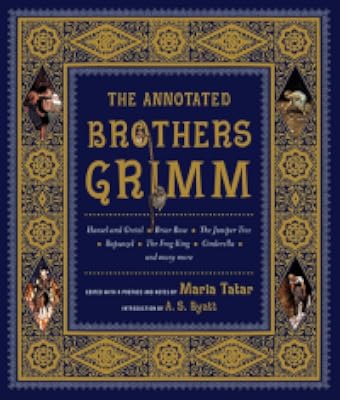
The Annotated Brothers Grimm
by Jacob Grimm, Wilhelm Grimm, Maria M. Tatar (Editor)
On This Page
Description
Containing 40 stories in new translations by Tatar this celebration of the richness and dramatic power of the legendary fables also features 150 illustrations, many of them in color, by legendary painters.Tags
Recommendations

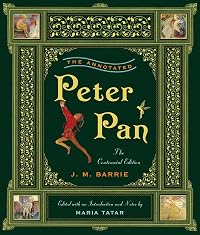
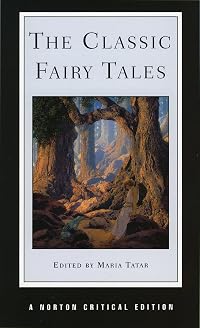
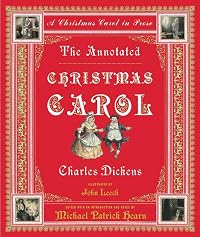
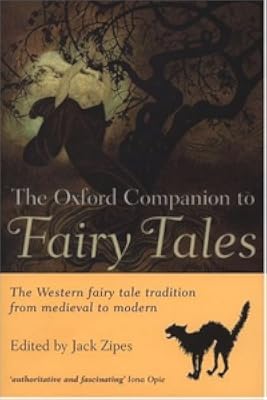

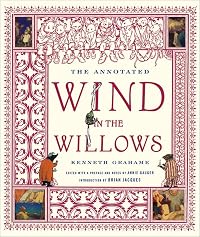
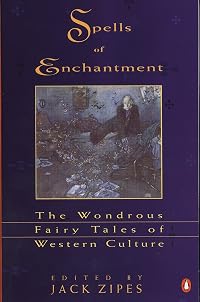
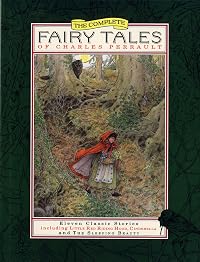


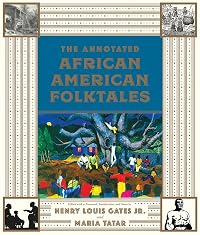
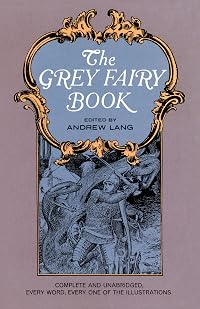

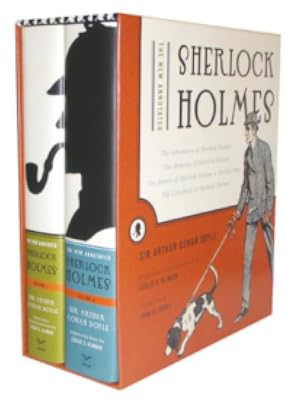
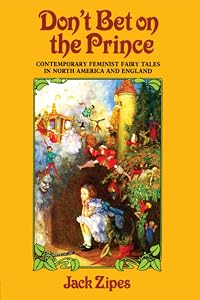
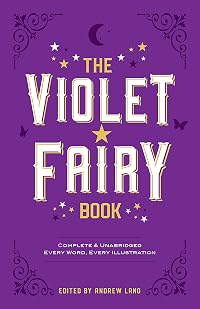
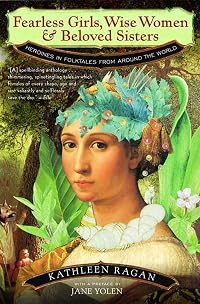
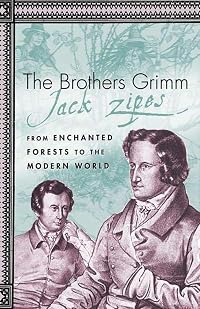
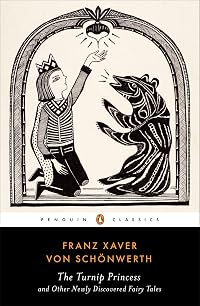
Member Recommendations

fundevogel Includes the sort of meaty history and analysis that was so lacking in this one.
20
Member Reviews
Honestly I found this book disappointing. It isn't my first time reading Maria Tatar or the Annotated Books series and expected more based on my past experience with each. I read Tatar's The Hard Facts of the Grimms' Fairy Tales and The Annotated Alice several years ago and found both terribly interesting and informative, The Annotated Brothers Grimm doesn't compare to either. The pictures are pretty good, but the footnotes are on the slim side for the series. They aren't particularly insightful and often repeat themselves.
To make matters worse Tatar's translation was underwhelming. To be fair this is hardly the first time I've been frustrated by an artless Grimm translation, but it's always disappointing. One of the things I love best show more in a good Grimm translation is the poetic repetition. There is a lot of variety in how the verse in Grimm stories in translated, but the versions here lack the grace and focus of more artful translations.
Compare the exchange between the princess and the horse head from Grimm's Fairy Tales: Twenty Stories with Tatar's rendering of the exchange.
'Alas! dear Falada, there thou hangest.'
And the Head answered--
'Alas! Queen's daughter, there thou gangest.
If thy mother only knew thy fate,
Her heart would break with grief so great.'
Tatar's:
'Alas, poor Falada, hanging up there.'
And the horse's head would reply:
'Princess, princess, down and out,
If your mother found this out,
There's no doubt--her heart would break.'
I might not know what 'gangest' means but it's a hell of a lot better than a verse that hinges on rhyming 'out' with 'out'.
And then there's the dire warning in the Robber Bridegroom:
'Turn back, turn back, thou bonnie bride,
Nor in this house of death abide.'
Tatar's:
'Turn back, turn back, my pretty young bride,
In a house of murders you've arrived.'
Yes she's managed areal rhyme half rhyme here, but the rhythm lacks the musicality of better versions. It isn't exactly hard to versify dire warnings either. The story Mr. Fox (not printed in this collection) does just fine with its variant.
Mr. Fox's warning:
'Be bold, be bold, but not too bold,
Lest that your heart's blood should run cold.'
Tatar's translations may owe their flatness to accuracy at the expense of art, but clearly I favor flash and rhythm over strict accuracy.
As if this wasn't enough all of the stories except the ones 'for adults' were taken from the Grimm's last edition after the stories had been heavily edited to be more suitable for Christian children. This means that all hints of sexuality were purged (Rapunzel's pregnancy), gratuitous mentions of prayer and piety were inserted (though the stories were of pagan origins) and blame was shifted off of fathers to mothers (Furrypelts) and off of mothers to stepmothers (an awful lot of them) to maintain the sanctity of parenthood. The only reason the 'stories for adults' escaped unedited was because after the first edition they were deemed inappropriate for printing and were purged from the collection. Actually that's not completely true. One of the stories, "Jew in the Brambles" was only deemed inappropriate by later editors. Jacob and Wilhelm printed the anti-Semitic tale in several of their books.
I guess Grimm's Fairy Tales: Twenty Stories is still my favorite. show less
To make matters worse Tatar's translation was underwhelming. To be fair this is hardly the first time I've been frustrated by an artless Grimm translation, but it's always disappointing. One of the things I love best show more in a good Grimm translation is the poetic repetition. There is a lot of variety in how the verse in Grimm stories in translated, but the versions here lack the grace and focus of more artful translations.
Compare the exchange between the princess and the horse head from Grimm's Fairy Tales: Twenty Stories with Tatar's rendering of the exchange.
'Alas! dear Falada, there thou hangest.'
And the Head answered--
'Alas! Queen's daughter, there thou gangest.
If thy mother only knew thy fate,
Her heart would break with grief so great.'
Tatar's:
'Alas, poor Falada, hanging up there.'
And the horse's head would reply:
'Princess, princess, down and out,
If your mother found this out,
There's no doubt--her heart would break.'
I might not know what 'gangest' means but it's a hell of a lot better than a verse that hinges on rhyming 'out' with 'out'.
And then there's the dire warning in the Robber Bridegroom:
'Turn back, turn back, thou bonnie bride,
Nor in this house of death abide.'
Tatar's:
'Turn back, turn back, my pretty young bride,
In a house of murders you've arrived.'
Yes she's managed a
Mr. Fox's warning:
'Be bold, be bold, but not too bold,
Lest that your heart's blood should run cold.'
Tatar's translations may owe their flatness to accuracy at the expense of art, but clearly I favor flash and rhythm over strict accuracy.
As if this wasn't enough all of the stories except the ones 'for adults' were taken from the Grimm's last edition after the stories had been heavily edited to be more suitable for Christian children. This means that all hints of sexuality were purged (Rapunzel's pregnancy), gratuitous mentions of prayer and piety were inserted (though the stories were of pagan origins) and blame was shifted off of fathers to mothers (Furrypelts) and off of mothers to stepmothers (an awful lot of them) to maintain the sanctity of parenthood. The only reason the 'stories for adults' escaped unedited was because after the first edition they were deemed inappropriate for printing and were purged from the collection. Actually that's not completely true. One of the stories, "Jew in the Brambles" was only deemed inappropriate by later editors. Jacob and Wilhelm printed the anti-Semitic tale in several of their books.
I guess Grimm's Fairy Tales: Twenty Stories is still my favorite. show less
This is our current bedtime read. I keep forgetting that my son is having a different childhood than I had, and that he didn't spend asthmatic afternoons stuck in bed with books. So he's not as fairy-tale literate as I was at his age. Also, he's old enough to be interested in the origin story of these stories as well as the stories themselves. So we're enjoying this collection and its introduction and footnotes.
--Just finished. This is a fine selection. The most famous tales rub shoulders with more obscure offerings. Maria Tatar included my favorite story, the clunkily titled "A Fairy Tale about a Boy Who Left Home to Learn about Fear;" but I loved reading grim stories that were new to me like "Godfather Death," "The Hand With The show more Knife," "How Children Played Butcher With Each Other," and the single-paragraph "The Stubborn Child" (hint: he does *not* come to a good end).
Speaking of grim stories: Was anyone else confused as a child by the coincidence of grim and Grimm? I remember starting a collection of the stories when I was young, and having to close it unfinished -- too much cannibalism, too many chopped-off heads. I looked at the name on the cover and wasn't sure if it meant that these stories were grim (which they certainly were) or if that was the name of the authors (which seemed like a scary coincidence). show less
--Just finished. This is a fine selection. The most famous tales rub shoulders with more obscure offerings. Maria Tatar included my favorite story, the clunkily titled "A Fairy Tale about a Boy Who Left Home to Learn about Fear;" but I loved reading grim stories that were new to me like "Godfather Death," "The Hand With The show more Knife," "How Children Played Butcher With Each Other," and the single-paragraph "The Stubborn Child" (hint: he does *not* come to a good end).
Speaking of grim stories: Was anyone else confused as a child by the coincidence of grim and Grimm? I remember starting a collection of the stories when I was young, and having to close it unfinished -- too much cannibalism, too many chopped-off heads. I looked at the name on the cover and wasn't sure if it meant that these stories were grim (which they certainly were) or if that was the name of the authors (which seemed like a scary coincidence). show less
Pro: Stories I was unfamiliar with -- not just the "adults only" ones at the end -- beautiful illustrations, well-designed layout.
Con: translations are flat, annotations are often pedestrian and uninsightful, and sometimes just repeat matter in the introductions to the individual stories..
Con: translations are flat, annotations are often pedestrian and uninsightful, and sometimes just repeat matter in the introductions to the individual stories..
I'm a huge fan of these annotated books, but this one seems to contain a lot less in the way of annotations compared to, say, the Hans Christian Anderson volume. Its not that there isn't information here, as there is. But it feels like the author may be less invested in the Grimms' work and life than she was in Anderson's. Not bad, but a little underwhelming having read the Anderson volume first.
This is a fascinating book. I have plenty of books about fairy tales, but every page in this book has notes in the margins, and the introductions have excerpts from the original Brothers Grimm's stories, and show how the stories evolved from oral tellings to the stories we know today.
I have always been a huge fan of fantasy, fairy tales and folklore and this collection of tales certainly did not disappoint. I'm sure that part of my love for the Grimm's tales in particular comes from being raised by my German mother and interacting with her family in Germany. We always had several fairy tale books as children and my mother also incorporated scenes from fairy tales into several pieces of her artwork.
What made this book especially interesting to me was the analysis provided in the introductions and footnotes throughout the book. These really gave me a broader look at the meaning and history of these tales than I had ever really thought of before. I wish that I had read this earlier, as a lot of the information show more presented would have been very useful to me in my literature classes in my undergraduate schooling.
The tales themselves, with a few exceptions, were just as enjoyable and magical as I remembered them and there were even a few tales that I hadn't heard (or even heard of) before! show less
What made this book especially interesting to me was the analysis provided in the introductions and footnotes throughout the book. These really gave me a broader look at the meaning and history of these tales than I had ever really thought of before. I wish that I had read this earlier, as a lot of the information show more presented would have been very useful to me in my literature classes in my undergraduate schooling.
The tales themselves, with a few exceptions, were just as enjoyable and magical as I remembered them and there were even a few tales that I hadn't heard (or even heard of) before! show less
Brothers Grimm published in total about 220 tales during the 19th C, the first volume in 1812 and the last in the 1850s. This collection represents 46 of the most well known and enjoyable of the bunch - Hansel and Gretel, Cinderella, etc.. It also includes over 150 paintings and drawings as well as annotations by scholar Maria Tatar. The translation is newly done by Tatar from the original German. It is a beautiful book - part of the Norton Annotated series - and of first rate production quality. It includes a lengthy introduction, a good biography of the Grimm brothers, extensive bibliography. Even though I know stories from Disney and elsewhere, almost 2/3rds were new to me, and the ones I knew were a little different.
My only show more complaint is that the annotations are not as fulfilling as I would have hoped. As a history buff I was looking forward to seeing how the Middle Ages are revealed through the stories - there are a few mentions - her analogy of folk takes as magnets which pick up the dust of history is beautiful - but Tatar focuses more on psychological aspects of the tales. In addition she will often point something out and offer no explanation, leaving the reader to guess and wonder (which I suppose also retains some element of mystery). This is not an encyclopedic work, but it is one of the most enjoyable ways to read the tales with guidance from an expert. show less
My only show more complaint is that the annotations are not as fulfilling as I would have hoped. As a history buff I was looking forward to seeing how the Middle Ages are revealed through the stories - there are a few mentions - her analogy of folk takes as magnets which pick up the dust of history is beautiful - but Tatar focuses more on psychological aspects of the tales. In addition she will often point something out and offer no explanation, leaving the reader to guess and wonder (which I suppose also retains some element of mystery). This is not an encyclopedic work, but it is one of the most enjoyable ways to read the tales with guidance from an expert. show less
Members
- Recently Added By
Lists

19th Century
190 works; 16 members

Books Read in 2015
3,299 works; 129 members
Author Information

1,896+ Works 49,792 Members
Jacob W. Grimm (1785-1863) and his brother Wilhelm K. Grimm (1786-1859) pioneered the study of German philosophy, law, mythology and folklore, but they are best known for their collection of fairy tales. These include such popular stories as Red Riding Hood, Sleeping Beauty and The Frog Prince. Commonly referred to now as Grimm's Fairy Tales, show more their collection was published as Kinder-und-Hausmarchen (Children's and Household Tales, 1812-15). The brothers were born thirteen months apart in the German province of Hesse, and were inseparable from childhood. Throughout their lives they showed a marked lack of sibling rivalry. Most of their works were written together, a practice begun in childhood when they shared a desk and sustained throughout their adult lives. Since their lives and work were so collaborative, it is difficult now to differentiate between them, but of course there were differences.- Jacob, who studied for a time in Paris, was fascinated with variant spellings of older words. He articulated "Grimm's Law," the rules of which are still used today to determine correspondences between the consonants of German and languages in the Indo-European family. Jacob was bolder and more experimental than Wilhelm, and was rumored to be a lively dancer. Throughout his life, Jacob kept rigidly to schedule and could be extremely focused on work that demanded close attention to detail. He never married, but was a loving uncle to Wilhelm's children. Jacob and Wilhelm Grimm are buried side by side in Berlin. (Bowker Author Biography) show less

393+ Works 42,286 Members
Some Editions
Awards and Honors
Awards
Series
Belongs to Publisher Series
Common Knowledge
- Canonical title
- The Annotated Brothers Grimm
- Original title
- Kinder- und Hausmärchen
- Original publication date
- 2004
- People/Characters
- Cinderella; Snow White; Rumpelstiltskin; Sleeping Beauty (Briar Rose); Rapunzel; Little Red Riding Hood
- Dedication
- For my parents,
who introduced me
to the magic of
fairy tales - First words
- PREFACE
The fairy tales collected in Germany almost two centuries ago by the Brothers Grimm continue to have a powerful hold on our culture.
Classifications
- Genre
- Fiction and Literature
- DDC/MDS
- 398.20943 — Society, government, & culture Customs, etiquette & folklore Folklore & Folktales Folk literature History, geographic treatment, biography European folktales Folklore from Germany & Central Europe
- LCC
- PT921 .K5613 — Language and Literature German, Dutch and Scandinavian literatures German literature Folk literature
- BISAC
Statistics
- Members
- 1,232
- Popularity
- 20,065
- Reviews
- 17
- Rating
- (4.31)
- Languages
- English, Spanish
- Media
- Paper
- ISBNs
- 6
- ASINs
- 3