On This Page
Description
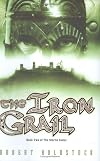
"The first is a man who needs you and will use you. He will weaken you dangerously. The second is a man you betrayed, though you believe otherwise. He wishes to kill you and can do so easily. The third is a ship that is more than a ship. She grieves and broods. She will carry you to your grave."These three warnings greet Merlin on his return to Alba, the future England, to the deserted fortress of Taurovinda---the Hill of the White Bull. He is not the only one making the journey: Urtha, High show more King of the Cornovidi, is coming home to reclaim his stronghold, and Jason is sailing in on the Argo to seek his younger son, hiding somewhere in the kingdom.But Urtha's fortress has been taken by warriors from Ghostland; they claim it as their own. There will be war against the Otherworld.In this sequel to Celtika, Robert Holdstock weaves myth and history into a fabulous tale of honor, death, and magic. At its center, moving along his never-ending path, is Merlin himself, an enchanter in the prime of his life, reckless, curious, powerful, yet a stranger to his own past---a past that is catching up with him.At the Publisher's request, this title is being sold without Digital Rights Management Software (DRM) applied. show lessTags
Recommendations














Member Reviews
The second volume in the Merlin Codex trilogy is a lesser work than the first. Merlin has decided to stay in Taurovinda with Urtha, being drawn to both the place and the man for reasons he is not entirely clear about. Jason is using Argo to get to Alba in search of his lost younger son, having survived the serious wound dealt him by the older son. On the ship is Niiv, searching for Merlin and a motley assortment of Argonauts, dead, alive, older, newer, mortal, immortal, Legendary and supernatural. Medea is in Ghostland (a Mythago wood) which is seperated from Urtha's Kingdom by a river that can't be crossed without magical assistance.
An occupying force of dead and unborn heroes from Ghostland is evicted from the hill-fort but a much show more bigger force returns to lay siege to Urtha's much depleted tribe, re-inforced by some mercenaries. Then Jason and Argo arrive, the siege is broken in a flash and Urtha's daughter is kidnapped and taken back to Ghostland...all the magical/Legendary folk and Urtha under the protection of Argo go on a joint mission to find Urtha's daughter and Jason's son in Ghostland.
The story is not paced well and is anti-climactic in regard to the lifting of the siege. It also suffers some lack of verve whilst Jason is out of the picture; Jason has a very clear objective and the first volume focused well enough on his attempt to acheive it. The second volume focuses much more on Urtha, but he has no clear-cut quest. He wants to regain his kingdom, then later, protect it from the supernatural invaders and later still, regain his daughter but these are all circumstances incidental to the plotting of Medea with regard to Jason and his family and are only resolved by the actions of Jason. Urtha is, in fact, a minor player, not quite a Rosencrantz or Guildenstern elevated to central protagonist in Tom Stoppard fashion, but certainly in that vein. Urtha's only real function seems to be to father children by two mothers whose descendants will go on to cause trouble for each other and the island of Alba generations in to the future.
The writing is typical Holdstock, in that he portrays pre-historic cultures as if he used to live in them and shows characters who accept the supernatural as natural and causally influential and fortunately, this volume doesn't suffer from the huge number of horrid typographical errors seen in the first volume, but overall it is weaker. Can the final volume redeem the series?
An aside: Ghostland is unmistakably a Mythago Wood, but in 272 B.C. it contains spirits of unborn heroes as well as dead ones. None such feature in the Mythago Wood books set in 20th century England - does Holdstock believe that there are "no more Heroes, anymore"? show less
An occupying force of dead and unborn heroes from Ghostland is evicted from the hill-fort but a much show more bigger force returns to lay siege to Urtha's much depleted tribe, re-inforced by some mercenaries. Then Jason and Argo arrive, the siege is broken in a flash and Urtha's daughter is kidnapped and taken back to Ghostland...all the magical/Legendary folk and Urtha under the protection of Argo go on a joint mission to find Urtha's daughter and Jason's son in Ghostland.
The story is not paced well and is anti-climactic in regard to the lifting of the siege. It also suffers some lack of verve whilst Jason is out of the picture; Jason has a very clear objective and the first volume focused well enough on his attempt to acheive it. The second volume focuses much more on Urtha, but he has no clear-cut quest. He wants to regain his kingdom, then later, protect it from the supernatural invaders and later still, regain his daughter but these are all circumstances incidental to the plotting of Medea with regard to Jason and his family and are only resolved by the actions of Jason. Urtha is, in fact, a minor player, not quite a Rosencrantz or Guildenstern elevated to central protagonist in Tom Stoppard fashion, but certainly in that vein. Urtha's only real function seems to be to father children by two mothers whose descendants will go on to cause trouble for each other and the island of Alba generations in to the future.
The writing is typical Holdstock, in that he portrays pre-historic cultures as if he used to live in them and shows characters who accept the supernatural as natural and causally influential and fortunately, this volume doesn't suffer from the huge number of horrid typographical errors seen in the first volume, but overall it is weaker. Can the final volume redeem the series?
An aside: Ghostland is unmistakably a Mythago Wood, but in 272 B.C. it contains spirits of unborn heroes as well as dead ones. None such feature in the Mythago Wood books set in 20th century England - does Holdstock believe that there are "no more Heroes, anymore"? show less
This the second book in the Merlin Codex (Celtika being the first). The series is loosely based on characters in Greek mythology, and Arthurian legends. In this installment, Merlin is again helping Jason (the Jason from the Jason and the Argonauts stories) find one of his sons, as well as helping to defend Urtha’s kingdom from ghostly (read: the Dead and the Unborn) invaders. (Urtha had been sailing with Merlin and Jason on Argo in the first book, and is one of King Arthur’s ancestors.)
Urtha’s kingdom (what will become what is known as Britain) is alongside the Otherworld, and apparently used to be a part of the Otherworld - a place inhabited by the Dead and Unborn. While Merlin, Urtha and Jason have been away on their adventures, show more the Dead and Unborn have been trying to reclaim Urtha’s kingdom.
Although Jason is still rather angry at Merlin for actions in the previous book, he still needs his help in the search for one of his sons - the sons Medea had fooled them into believing she had killed. He has been told that his son is “between sea-swept walls,” and has come to the belief that his son is hidden somewhere in Urtha’s land. It turns out that his son isn’t exactly in what-will-be-Britain, but is in the Otherworld, and he has a rather large role to play in the attacks on Urtha’s kingdom.
I found that this book was more difficult to get into than the first book - it’s been almost 6 months since I read the first book, and a fair bit of the story seems to have faded from my mind. So trying to remember what part each character played in the previous book was a little difficult, especially when there were many characters and some only showed up for a couple of pages and then disappeared again for the majority of the book. Other figures from Greek mythology and Arthurian legends also made small appearances in this book - Uther Pendragon as well as Hylas and a few others who were the original Argonauts. I think it was these small appearances by these characters that I really enjoyed about the book, because I had a hard time liking any of the original characters in this installment, save Urtha and Merlin themselves.
A good portion of the book took place in the Otherworld, and what did take place there was the most exciting parts of the book, in my opinion. I think I would have liked to explored itd a little bit more - especially why Merlin wasn’t able to use his magic in the Otherworld. Also, time didn’t flow in the same way that it flows in the real world, which was cool. You could be in the Otherworld for what felt like days or weeks, but what turns out to be a season.
I didn’t like the Iron Grail quite as much as Celtika, and I think I will have to set this universe aside for a little bit before I decide whether to continue on with the series or not. show less
Urtha’s kingdom (what will become what is known as Britain) is alongside the Otherworld, and apparently used to be a part of the Otherworld - a place inhabited by the Dead and Unborn. While Merlin, Urtha and Jason have been away on their adventures, show more the Dead and Unborn have been trying to reclaim Urtha’s kingdom.
Although Jason is still rather angry at Merlin for actions in the previous book, he still needs his help in the search for one of his sons - the sons Medea had fooled them into believing she had killed. He has been told that his son is “between sea-swept walls,” and has come to the belief that his son is hidden somewhere in Urtha’s land. It turns out that his son isn’t exactly in what-will-be-Britain, but is in the Otherworld, and he has a rather large role to play in the attacks on Urtha’s kingdom.
I found that this book was more difficult to get into than the first book - it’s been almost 6 months since I read the first book, and a fair bit of the story seems to have faded from my mind. So trying to remember what part each character played in the previous book was a little difficult, especially when there were many characters and some only showed up for a couple of pages and then disappeared again for the majority of the book. Other figures from Greek mythology and Arthurian legends also made small appearances in this book - Uther Pendragon as well as Hylas and a few others who were the original Argonauts. I think it was these small appearances by these characters that I really enjoyed about the book, because I had a hard time liking any of the original characters in this installment, save Urtha and Merlin themselves.
A good portion of the book took place in the Otherworld, and what did take place there was the most exciting parts of the book, in my opinion. I think I would have liked to explored itd a little bit more - especially why Merlin wasn’t able to use his magic in the Otherworld. Also, time didn’t flow in the same way that it flows in the real world, which was cool. You could be in the Otherworld for what felt like days or weeks, but what turns out to be a season.
I didn’t like the Iron Grail quite as much as Celtika, and I think I will have to set this universe aside for a little bit before I decide whether to continue on with the series or not. show less
OK .Well written and vg for those deep into Celtic myth and legend.Inventive and imaginative.Merlin central figure but pre Arthur.Not really for me
The second book of the Merlin Codex is just as good as the first (Celtika). Brilliant author, great story and characters.
Ratings
Members
- Recently Added By
Author Information

Some Editions
Awards and Honors
Distinctions
Series

Work Relationships
Is contained in
Common Knowledge
- Canonical title
- The Iron Grail
- Original title
- The Iron Grail
- Original publication date
- 2002
- People/Characters
- Merlin; Urtha; Jason
- Important places
- Alba; Taurovinda
- Dedication
- For the Sisters Three: Sarah, Nancy and Rachel
Classifications
Statistics
- Members
- 279
- Popularity
- 115,128
- Reviews
- 4
- Rating
- (3.53)
- Languages
- Czech, English, Finnish, French
- Media
- Paper, Ebook
- ISBNs
- 11
- ASINs
- 4