
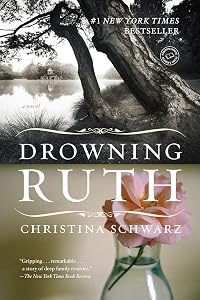
Drowning Ruth
by Christina Schwarz
On This Page
Description
Fiction. Literature. Historical Fiction. HTML:Deftly written and emotionally powerful, Drowning Ruth is a stunning portrait of the ties that bind sisters together and the forces that tear them apart, of the dangers of keeping secrets and the explosive repercussions when they are exposed. A mesmerizing and achingly beautiful debut.Winter, 1919. Amanda Starkey spends her days nursing soldiers wounded in the Great War. Finding herself suddenly overwhelmed, she flees Milwaukee and retreats to show more her family's farm on Nagawaukee Lake, seeking comfort with her younger sister, Mathilda, and three-year-old niece, Ruth. But very soon, Amanda comes to see that her old home is no refuge—she has carried her troubles with her. On one terrible night almost a year later, Amanda loses nearly everything that is dearest to her when her sister mysteriously disappears and is later found drowned beneath the ice that covers the lake. When Mathilda's husband comes home from the war, wounded and troubled himself, he finds that Amanda has taken charge of Ruth and the farm, assuming her responsibility with a frightening intensity. Wry and guarded, Amanda tells the story of her family in careful doses, as anxious to hide from herself as from us the secrets of her own past and of that night.
Ruth, haunted by her own memory of that fateful night, grows up under the watchful eye of her prickly and possessive aunt and gradually becomes aware of the odd events of her childhood. As she tells her own story with increasing clarity, she reveals the mounting toll that her aunt's secrets exact from her family and everyone around her, until the heartrending truth is uncovered.
Guiding us through the lives of the Starkey women, Christina Schwarz's first novel shows her compassion and a unique understanding of the American landscape and the people who live on it. show less
Tags
Recommendations






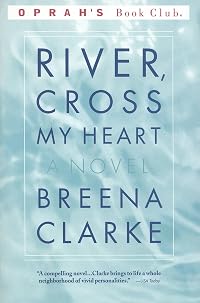
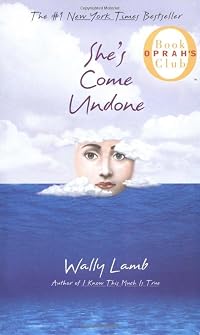
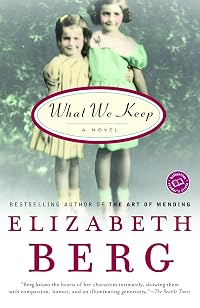

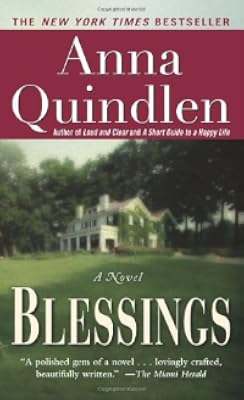










Member Recommendations
Member Reviews
This story about tragic events in the life of a small family is engrossing and well written. Christina Schwartz immediately snags the reader with the character of Amanda, a very complex woman, shrouded in sorrow and mystery. I wasn’t sure whether I ever ended up liking her, but I certainly was interested in her life and her feelings.
For a woman whose very life is so tied up in her sister and her parents, whose feelings completely overtake her at times, she has a unique ability to shut down all emotion, and close off the truth even to herself.
After one of the most horrible (yet mysterious) events of her life, she very methodically examines her wounds. “My hand wasn’t as bad as I’d feared. Most of the blood had dried and the show more punctures were small in circumference. Many of them were deep, however. There would be scars, a ring in the meat at the base of my thumb. Who could have imagined such a little thing would have such strength? Who would have thought she would struggle so fiercely? I found my father’s whiskey and dabbed a little on my wounds. Then I drank a glass. People said it made you forget.”
That’s all the reader gets – that’s all Amanda allows herself to think. We don’t yet know who “she” is – or what the fierce struggle was about. While I wouldn’t say that mystery was the only reason I kept reading, the bits of information that are gradually revealed by the author are rationed very well.
Schwartz slips artfully from one character to another, and from first person to third person. She creates believable voices for tragic young women, shell shocked men, and young children.
“Arthur, six, came to full wakefulness as the water splashed into the washstand that stood against one wall of the room he shared with his brother. He stayed still with his eyes closed, listening to the hangers scraping along the rod and the dresser drawers sliding open and not being banged shut. When Maynard left the room, Arthur got out of bed and went in his pajamas to squat beside his city of blocks. He did his best work in the morning, while the bolt on the bathroom door slide open and shut, the water rushed through the pipes, feet galloped down and up and down the stairs, china clinked in the kitchen, and finally the front door slammed and slammed and slammed.”
And as with the last book I read, “The Falls” by Joyce Carol Oates, a body of water plays a major roll in the book and is in fact, one of the main characters.
“Released from their ice prison, the waves tossed themselves against the hull with ecstatic abandon, pitching up a fine spray that shimmered in the fledgling spring sunlight. I dipped my fingers in, and instantly my hand ached with cold. That must have been what it felt like, the night I drowned.”
In summary, I guess I would say that “Drowning Ruth” is a great mix of a book you don’t want to put down, and moments of very insightful character development. I would certainly pick up another of Schwartz’s books. show less
For a woman whose very life is so tied up in her sister and her parents, whose feelings completely overtake her at times, she has a unique ability to shut down all emotion, and close off the truth even to herself.
After one of the most horrible (yet mysterious) events of her life, she very methodically examines her wounds. “My hand wasn’t as bad as I’d feared. Most of the blood had dried and the show more punctures were small in circumference. Many of them were deep, however. There would be scars, a ring in the meat at the base of my thumb. Who could have imagined such a little thing would have such strength? Who would have thought she would struggle so fiercely? I found my father’s whiskey and dabbed a little on my wounds. Then I drank a glass. People said it made you forget.”
That’s all the reader gets – that’s all Amanda allows herself to think. We don’t yet know who “she” is – or what the fierce struggle was about. While I wouldn’t say that mystery was the only reason I kept reading, the bits of information that are gradually revealed by the author are rationed very well.
Schwartz slips artfully from one character to another, and from first person to third person. She creates believable voices for tragic young women, shell shocked men, and young children.
“Arthur, six, came to full wakefulness as the water splashed into the washstand that stood against one wall of the room he shared with his brother. He stayed still with his eyes closed, listening to the hangers scraping along the rod and the dresser drawers sliding open and not being banged shut. When Maynard left the room, Arthur got out of bed and went in his pajamas to squat beside his city of blocks. He did his best work in the morning, while the bolt on the bathroom door slide open and shut, the water rushed through the pipes, feet galloped down and up and down the stairs, china clinked in the kitchen, and finally the front door slammed and slammed and slammed.”
And as with the last book I read, “The Falls” by Joyce Carol Oates, a body of water plays a major roll in the book and is in fact, one of the main characters.
“Released from their ice prison, the waves tossed themselves against the hull with ecstatic abandon, pitching up a fine spray that shimmered in the fledgling spring sunlight. I dipped my fingers in, and instantly my hand ached with cold. That must have been what it felt like, the night I drowned.”
In summary, I guess I would say that “Drowning Ruth” is a great mix of a book you don’t want to put down, and moments of very insightful character development. I would certainly pick up another of Schwartz’s books. show less
‘Enjoyed’ may be the wrong word for this almost dark tale. But the story drew me in and fixed me so firmly among these vivid characters on their lake in Wisconsin that I could not leave until the author released me by providing no further words.
Dispensing with the book description, since it’s on the works page; let me just give you my impression. And I AM impressed. As the story unfolds through the memories of a woman and her niece, it is exquisitely paced. It tantalizes you, knowing, with each revelation, that there is more unremembered or yet unmet, and wondering if she will remember enough, or have courage enough, to share it with you the next time you meet her in the story.
The setting, a lakeside small town, a farming and show more fishing community; the story takes place from about 1910 through the 1930s. The characters, setting, situations and dialog felt true to its time period. One turn of the story left me thinking, ‘nah, that couldn’t have happened in that way’. But, the characterization, the sense of place in its Wisconsin setting, an interesting mystery and its method and timing of revelation, details which enrich rather than bog – QUITE well done.
***SPOILER ALERT*** The mystery turns on something that in former times would have been considered taboo. Part of the story, then, was about trying to keep that secret, and still live a ‘normal’ life, and watching the after-effects and not knowing what to do about it. Strong women, relying only on their own strength and wits to solve their own problems, with no remorse admitted, but living with consequences.
Recommended. Highly. show less
Dispensing with the book description, since it’s on the works page; let me just give you my impression. And I AM impressed. As the story unfolds through the memories of a woman and her niece, it is exquisitely paced. It tantalizes you, knowing, with each revelation, that there is more unremembered or yet unmet, and wondering if she will remember enough, or have courage enough, to share it with you the next time you meet her in the story.
The setting, a lakeside small town, a farming and show more fishing community; the story takes place from about 1910 through the 1930s. The characters, setting, situations and dialog felt true to its time period. One turn of the story left me thinking, ‘nah, that couldn’t have happened in that way’. But, the characterization, the sense of place in its Wisconsin setting, an interesting mystery and its method and timing of revelation, details which enrich rather than bog – QUITE well done.
***SPOILER ALERT*** The mystery turns on something that in former times would have been considered taboo. Part of the story, then, was about trying to keep that secret, and still live a ‘normal’ life, and watching the after-effects and not knowing what to do about it. Strong women, relying only on their own strength and wits to solve their own problems, with no remorse admitted, but living with consequences.
Recommended. Highly. show less
Drowning Ruth is one of those novels that gets readers so worked up, so lathered, so feverish that they run around pressing the book into the hands of friends and, perhaps, strangers on a plane, insisting with wide eyes and spittle-flecked lips, "Here. Read this."
"Well," the dumbfounded party responds, "what's it about?"
"I cannot tell you."
Exactly. Drowning Ruth is one of those books you want to tell everyone about, but can't. To reveal a little would be to spoil too much. There are so many mysteries, so many surprises in Christine Schwarz' debut novel that nice folks will only give out crumbs of the plot. By "nice folks," I mean those readers who think prematurely reading the last ten pages of an Agatha Christie mystery is punishable show more by a jail sentence.
In fact, Drowning Ruth might just be this year's literary equivalent to The Sixth Sense.
Which is not to say that Drowning Ruth is a ghost story. It isn't. But yet, there are many characters who are haunted, you see, and--and--
Okay, I'm starting to get lathered up again.
[Deep breath.]
There. I'm fine now.
From the first sentence to the last word, Schwarz carefully unpeels the mystery of what took place between sisters Amanda and Mathilda and Mathilda's daughter Ruth when they spent an isolated winter on a Wisconsin lake island in 1919. There is a tragedy and there is high drama of the kind familiar to readers of Thomas Hardy, Charles Dickens and Theodore Dreiser (to punch home the obvious, Schwarz even has one character reading Dreiser's Jennie Gerhardt).
We literally don't know what happened on the island until the very last sentence, and that's what propels us with such page-turning, lip-smacking fury through the book. Schwarz does a masterful job of gradually uncovering details of the three women's lives before 1919 and in the nearly three decades following the tragic events. The story moves between past and present quickly and sharply--like someone flipping back and forth through the pages of a photo album. But even readers who are easily confounded by non-linear narrative can find their way just fine through these pages. Schwarz know when to give us a peek and when to keep the curtain pulled across the mystery.
Drowning Ruth bears the look of a book that belongs in the recent flood of what less-charitable critics call "chick lit." The fact that Ms. Winfrey has stamped her book club "O" on the cover doesn't help matters. But Drowning Ruth lifts its head high above the tide of mass-produced, Kleenex-friendly chick lit. Sure, there's a fair share of turn-of-the-century soap opera shenanigans and, yes, the story is strikingly old-fashioned in scope, but Schwarz's skill with words, characters and pace is so profound and startling that it becomes the sort of literature that sticks in the mind long after the final, shattering page is turned.
I simply cannot tell you enough about this book.
Except: "Here. Read this." show less
"Well," the dumbfounded party responds, "what's it about?"
"I cannot tell you."
Exactly. Drowning Ruth is one of those books you want to tell everyone about, but can't. To reveal a little would be to spoil too much. There are so many mysteries, so many surprises in Christine Schwarz' debut novel that nice folks will only give out crumbs of the plot. By "nice folks," I mean those readers who think prematurely reading the last ten pages of an Agatha Christie mystery is punishable show more by a jail sentence.
In fact, Drowning Ruth might just be this year's literary equivalent to The Sixth Sense.
Which is not to say that Drowning Ruth is a ghost story. It isn't. But yet, there are many characters who are haunted, you see, and--and--
Okay, I'm starting to get lathered up again.
[Deep breath.]
There. I'm fine now.
From the first sentence to the last word, Schwarz carefully unpeels the mystery of what took place between sisters Amanda and Mathilda and Mathilda's daughter Ruth when they spent an isolated winter on a Wisconsin lake island in 1919. There is a tragedy and there is high drama of the kind familiar to readers of Thomas Hardy, Charles Dickens and Theodore Dreiser (to punch home the obvious, Schwarz even has one character reading Dreiser's Jennie Gerhardt).
We literally don't know what happened on the island until the very last sentence, and that's what propels us with such page-turning, lip-smacking fury through the book. Schwarz does a masterful job of gradually uncovering details of the three women's lives before 1919 and in the nearly three decades following the tragic events. The story moves between past and present quickly and sharply--like someone flipping back and forth through the pages of a photo album. But even readers who are easily confounded by non-linear narrative can find their way just fine through these pages. Schwarz know when to give us a peek and when to keep the curtain pulled across the mystery.
Drowning Ruth bears the look of a book that belongs in the recent flood of what less-charitable critics call "chick lit." The fact that Ms. Winfrey has stamped her book club "O" on the cover doesn't help matters. But Drowning Ruth lifts its head high above the tide of mass-produced, Kleenex-friendly chick lit. Sure, there's a fair share of turn-of-the-century soap opera shenanigans and, yes, the story is strikingly old-fashioned in scope, but Schwarz's skill with words, characters and pace is so profound and startling that it becomes the sort of literature that sticks in the mind long after the final, shattering page is turned.
I simply cannot tell you enough about this book.
Except: "Here. Read this." show less
This novel tells the haunting story of two generations of a Wisconsin family brought together and torn apart by the lake adjacent to the family home. Focused on four women, sisters of two generations, the novel develops around the sisters' relationship with the lake, and the tragedy that ensues when it claims one of their lives. Much of the book is spent untangling the secrets which led to the drowning, and working out the complicated problems which arise from the family's attempts to keep these secrets.
Scwartz's story jumps back and forth across time, from past to present and back again. This means that the story develops piece by piece, and this is what makes it something of a mystery. I found the plot development to be one of the show more more satisfying parts of this book, seeing the pieces of the puzzle fall into place. I enjoyed the developments leading up to Scwartz's telling of what actually happened the night of the tragedy. After that point, however, I found the plot to be something of a let-down. The conclusion seemed a bit too neat, and a bit forced.
The most enjoyable part of this book to me was the way in which Scwartz set the scene- the way in which she managed to capture the sense of a time and place. The novel is set in the Wisconsin countryside in the first half of the twentieth century, with most of the action focusing on the last years of WWI, and the 1920s. Scwartz offers a convincing portrait of Wisconsin farm country in the late-1910s and early 1920s. Her descriptions are vivid, without being overstated, and her story intersects with several significant historical events, including WWI and the influenza epidemic. Scwartz gives her readers a strong sense of connection to the seasons, the land, the lake. I really did feel like I was part of the world about which she wrote.
Overall, I enjoyed reading this novel. The development of the plot engaged me, and the scenery captivated me. I was a bit disappointed by the ending, but my reading was by and large time well spent. show less
Scwartz's story jumps back and forth across time, from past to present and back again. This means that the story develops piece by piece, and this is what makes it something of a mystery. I found the plot development to be one of the show more more satisfying parts of this book, seeing the pieces of the puzzle fall into place. I enjoyed the developments leading up to Scwartz's telling of what actually happened the night of the tragedy. After that point, however, I found the plot to be something of a let-down. The conclusion seemed a bit too neat, and a bit forced.
The most enjoyable part of this book to me was the way in which Scwartz set the scene- the way in which she managed to capture the sense of a time and place. The novel is set in the Wisconsin countryside in the first half of the twentieth century, with most of the action focusing on the last years of WWI, and the 1920s. Scwartz offers a convincing portrait of Wisconsin farm country in the late-1910s and early 1920s. Her descriptions are vivid, without being overstated, and her story intersects with several significant historical events, including WWI and the influenza epidemic. Scwartz gives her readers a strong sense of connection to the seasons, the land, the lake. I really did feel like I was part of the world about which she wrote.
Overall, I enjoyed reading this novel. The development of the plot engaged me, and the scenery captivated me. I was a bit disappointed by the ending, but my reading was by and large time well spent. show less
This deceptively simplistic book is the story of secrets kept and the far-reaching effect they have on the person who perpetuates them. The characterizations were well done. At the end of this novel, the reader has a good comprehension of their motives, their insecurities and their hearts.
I have surprisingly little to say about this book. It kept my attention at a time when I had little else to do but read, but it was not a real page turner. The secrets that come out among the characters were worth the wait, th4e characters themselves were fairly three-dimensional, and the description of rural Wisconsin in the first half of the 20th century was compelling. The ending, however, was a bit of a letdown, even though it appeared to be implying a kind of happy ending. I think my problem was that I felt dislike for Amanda rather than the sympathy I imagine the author was attempting to invoke. I felt she was obsessive and selfish from the very beginning. Her remorse about the death of her sister was not convincing and I did not show more care much about what happened to her, even though she was basically the main character. The rest of the story was good, and perhaps another reader would empathize more with the posessive Amanda than I did. show less
Although I enjoyed reading this book and had to find out exactly what happened to Mattie, I found the ending very unsatisfying. I found the plot intriguing but the narrative a little disjointed (there were too many narrative voices). All in all a good holiday read.
Members
- Recently Added By
Lists

Oprah's Book Club (original and 2.0)
91 works; 21 members

In and About the 1920s
181 works; 31 members

Fiction with Women's Names in the Title
378 works; 15 members

Carole's List
445 works; 13 members

Overdue Podcast
805 works; 9 members
Shannon's Read-Alikes List
71 works; 8 members

Biggest Disappointments
606 works; 168 members

Names in Titles
4 works; 3 members

Books Read in 2001
194 works; 4 members
Author Information

7 Works 5,284 Members
Christina Schwarz grew up in Wisconsin and currently lives in Los Angeles. She contributes regularly to The Atlantic Monthly and writes an audiobook column for the San Francisco Chronicle Book Review. She is at work on her second novel. (Bowker Author Biography)
Awards and Honors
Awards
Work Relationships
Has as a student's study guide
Common Knowledge
- Canonical title
- Drowning Ruth
- Original title
- Drowning Ruth
- Original publication date
- 2000-09
- People/Characters
- Ruth; Amanda; Matilda (Mattie); Carl; Hilda
- Important places
- Wisconsin, USA
- Important events*
- Eerste Wereldoorlog
- Dedication
- To Ben ~~~ and in memory of Louise Baecke Claeys (1902-1999) ~~~ and Marfa
- First words
- Ruth remembered drowning.
- Quotations
- …already his memory had lost the range of her expressions. He could summon her only in a few guises – glimpses of her face that for no particular reason had stuck in his mind.
… somehow they’d settled into a family at last, the various tasks of life divided comfortably among them, and the days now turned like a wheel with three spokes.
They felt an affection for one another based on their old love and sustained by avoiding personal conversation.
She was bone tired of all this running and hiding, of living alone with a monstrous hump of truth strapped to her back. - Last words
- (Click to show. Warning: May contain spoilers.)We will begin again.
- Original language*
- Amerikanisch
*Some information comes from Common Knowledge in other languages. Click "Edit" for more information.
Classifications
Statistics
- Members
- 4,369
- Popularity
- 3,414
- Reviews
- 67
- Rating
- (3.54)
- Languages
- 7 — Dutch, English, Estonian, French, German, Italian, Swedish
- Media
- Paper, Audiobook, Ebook
- ISBNs
- 40
- UPCs
- 1
- ASINs
- 23