On This Page
Description
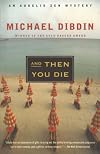
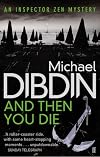
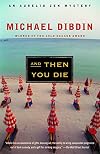
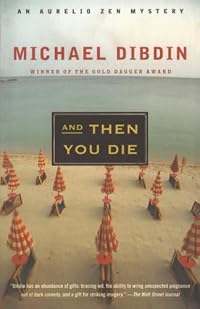
HTML:Having survived an explosive assassination attempt, Italian police detective Aurelio Zen finds himself convalescing at a Tuscan seaside resort town, where he is under orders to lie low until he is to testify at a much-anticipated Mafia trial. The quiet—and the boredom are relieved by the pleasant distraction of the beautiful Gemma, but just when he feels he is getting somewhere with her, a the discovery of corpse in his usual lounge chair brings his holiday to an abrupt end. Convinced show more that the Mafia has finally located him, the police put Zen on the move again, in startling directions.And Then You Die, Michael Dibdin's latest installment in the Aurelio Zen series, is a wicked, twisting tale that pits Zen against invisible assassins and the possibility of forced retirement. As the plot unfolds, and Zen ponders his uncertain future, bodies are stacking up around him. And Then You Die is another exceptionally surprising, consistently funny triumph from a master of the genre. Fiction. Mystery. show less
Tags
Recommendations











Member Reviews
The most entertaining element of Dibdin's book is that it is from an Italian's point of view. Zen, being contemptuously unable to speak English, missed a clue as he wasn't able to translate an English slogan on a T-shirt. In fact, he is scathing of the popular use of English on clothing. His horror of non-Italian food was funny and easily imagined. Subtle humour mixed with the suggestion that the reader knew more than the detective - a winning combination.
Aurelio Zen is back after barely surviving a mafia hit (in Blood Rain) when the car he was riding in was bombed on a Sicilian highway, killing one of his fellow Italian policemen, and forcing Zen into an extended period of physical rehabilitation for the injuries he suffered. And Then You Die, Michael Dibdin's eighth Aurelio Zen novel, picks up where Blood Rain left off and finds Zen trying to cope with the boredom of a life in hiding as he continues to recuperate.
Zen, having been given a new identity by the Italian police, has been parked at a Tuscan coast beach resort to hide out and wait for the call to fly to America as a key witness in a mafia trial pending there. He is bored with sitting in the sun with wealthy Italians who have show more nothing better to do but tells himself that the four or five hours a day that he puts in at the beach are simply "office hours," part of his new job of blending in with the locals. But when men who seem to have been mistaken for him start to die, Zen comes to realize just how determined the mafia is to see him dead before the American trial and that the plan to keep him safe until then is a flawed one.
No matter where he is moved, it seems that the mafia is only one short step behind him. To make matters worse, although he misses his life in Rome terribly, Zen is depressed by what he finds there when called to police headquarters for a meeting with his superiors. Nothing is the same. He returns to his mother's empty apartment and is hit hard by how much he misses her. He is told that after the mafia trial he will be placed in a new job that will barely require his presence, a job that seems to have been created just to push him outside the department. His best friend is going through a domestic crisis and Zen finds that he really doesn't have much sympathy. He finds himself suffering a mid-life crisis just when he can least afford one.
And Then You Die is filled with characters who do not quite ring true and who inadvertently give the book a tongue-in-cheek tone that lessens the suspense of how Zen is going to cope with the succession of attempts on his life. It reads more like black comedy than as serious detective fiction. I suspect that fans of the Zen series will welcome the book as a worthy follow-up to the more serious one in which Zen almost lost his life, but that those new to the series will be somewhat disappointed in it. The book does not work particularly well as a standalone novel and readers would do well to read Blood Rain before they read And Then You Die.
Rated at: 3.0 show less
Zen, having been given a new identity by the Italian police, has been parked at a Tuscan coast beach resort to hide out and wait for the call to fly to America as a key witness in a mafia trial pending there. He is bored with sitting in the sun with wealthy Italians who have show more nothing better to do but tells himself that the four or five hours a day that he puts in at the beach are simply "office hours," part of his new job of blending in with the locals. But when men who seem to have been mistaken for him start to die, Zen comes to realize just how determined the mafia is to see him dead before the American trial and that the plan to keep him safe until then is a flawed one.
No matter where he is moved, it seems that the mafia is only one short step behind him. To make matters worse, although he misses his life in Rome terribly, Zen is depressed by what he finds there when called to police headquarters for a meeting with his superiors. Nothing is the same. He returns to his mother's empty apartment and is hit hard by how much he misses her. He is told that after the mafia trial he will be placed in a new job that will barely require his presence, a job that seems to have been created just to push him outside the department. His best friend is going through a domestic crisis and Zen finds that he really doesn't have much sympathy. He finds himself suffering a mid-life crisis just when he can least afford one.
And Then You Die is filled with characters who do not quite ring true and who inadvertently give the book a tongue-in-cheek tone that lessens the suspense of how Zen is going to cope with the succession of attempts on his life. It reads more like black comedy than as serious detective fiction. I suspect that fans of the Zen series will welcome the book as a worthy follow-up to the more serious one in which Zen almost lost his life, but that those new to the series will be somewhat disappointed in it. The book does not work particularly well as a standalone novel and readers would do well to read Blood Rain before they read And Then You Die.
Rated at: 3.0 show less
Zen, in the aftermath of the events in the previous book "Blood Rain", has changed - in some good ways and some I'm not so sure about. I did find reading this book a pleasure, particularly the part when he is in Iceland (!), but found some of his decisions towards the end troubling. I'll have to read the next one to see if my qualms are deserved!
A wonderful book. The first one I read from this series & I quite like the main character, Aurelio Zen.
The book/story itself is also good. Nothing really fancy, but not too common as well. Different places of action, black humour from time to time, definitely a book to my liking.
I think I'll read more from this writer/this series.
The book/story itself is also good. Nothing really fancy, but not too common as well. Different places of action, black humour from time to time, definitely a book to my liking.
I think I'll read more from this writer/this series.
Good characters and interesting setting we’ve come to expect from Inspector Zen novels. A pleasant way to spend a couple of hours. It seems like Dibdin changed his mind about the entire plot structure midway through the book but cobbled together an ending so there would be something to feed the publisher. The cinematic, black comedy denoument works better as a movie script pitch than as a novel.
And Then You Die continues Michael Dibdin's Aurelio Zen series, taking place soon after the events in Blood Rain. I had to pick this up very quickly after finishing Blood Rain because at the end of that book (SPOILER ALERT!) it appears that Zen has been killed, blown up by the Mafia. I knew the series continued beyond that book, though, so I knew he couldn't *really* be dead, but still, one's curiousity must be assuaged when something like that happens in a series. And Then You Die concerns the places to which Zen is sent during his convalescence from "the incident" as he thinks of it. His superiors want him to be hidden away until such time as he is sent to America to testify against two Mafia brothers who are on trial for various show more activities, as he is an important witness because he saw those individuals in the course of his Mafia dealings in the previous book. However, the Mafia is aware of his importance to that trial, and they are desperate to stop him and will do anything, up to and including murdering innocent bystanders whom they happen to mistake for Zen.... In a certain way, nothing much happens in this book because Zen is constantly moved from one place to another and has very little control over his own life; but in another way, he is slowly coming back to life after the several catastrophic events in his recent past. It is not possible to read this book without having read at least Blood Rain, if no other books in the series; but if one *has* read Blood Rain, then probably the reader would, like me, find it imperative to read this sequel in order to find out what happens next - and it's always the highest accolade in a series for the reader to need desperately to know what happens next! show less
Dibdin does not mess around this time and writes a solid straight mystery. No pushing the envelope, no playing with readers. People die, Aurelio Zen is his cynical self, and the bad cop gets done in (not common in Italy). With some female (not quite love) interest. That´s it.
Members
- Recently Added By
Published Reviews
Aurelio Zen's allure is due to the fact that the novels effortlessly paint a sharper portrait of Italy than any guide-book, cookbook or academic history.
Zen is a pensive private eye, and since he's not the sort of man you could imagine ever breaking into a sprint, the pace of the books is fairly leisurely. There's a lot of time for Dibdin to drop in his - or Zen's - reflections on the state of show more the peninsula. He's a rather lonely figure who can't quite cut the umbilical cord that pulls like an elastic band to his ageing mother. Women find him attractive, but he's too modest, or working too hard, to notice. For much of the time his private and professional lives appear to be on the brink of ruin, until he snaps into gear and cynically starts solving both the crime and his impending personal crisis.
And Then You Die is the eighth Zen book. It's a complete inversion of the standard detective genre, because Zen himself is the intended murder victim. He has survived a botched mafia hit in Sicily, and is now lying low on a Tuscan beach (hence the title: life's a beach, and then you die). He's supposed to be going to America to testify in a mafia trial, but is terrorised by the thought of that clear-cut, Anglo-Saxon world. At least, he muses ironically, "you knew where you were in a Catholic culture: up to your neck in lies, evasions, impenetrable mysteries, double-dealing, back-stabbing and underhand intrigues of every kind". While awaiting the trial, Zen - never the pushy type - happily gives up his deckchair or plane reservation to others, who are then suddenly bumped off. His new mission, then, is less a hunt for the murderer than an attempt to avoid becoming the stiff himself. Finding the criminals implies saving his own life, and he is duly shunted from Tuscany to Iceland, back to Rome and finally to Tuscany again.
It isn't a traditional whodunnit, but something more subtle: we think we know whodunnit, but wonder if he'll be caught before the evidence disappears and the legal system is stitched up.
In the most recent chapter of this real-life thriller, the suspect has become the country's prime minister; each time he seems on the brink of arrest, his government passes legislation which lets him off the hook. Silvio Berlusconi has frequently inveighed against his collusion with the "powers that be" in Sicily (in the general election, Berlusconi won 61 out of the available 61 constituencies on the island). As ever in Italy, the only real clues to the suspect's guilt are the coincidences: that electoral result in Sicily, his recent refusal to sign a European Union accord against financial fraud, the fact that his first legislative act was to decriminalise false accounting and his second to put a bureaucratic spanner in the works of detectives investigating international financial fraud. show less
Zen is a pensive private eye, and since he's not the sort of man you could imagine ever breaking into a sprint, the pace of the books is fairly leisurely. There's a lot of time for Dibdin to drop in his - or Zen's - reflections on the state of show more the peninsula. He's a rather lonely figure who can't quite cut the umbilical cord that pulls like an elastic band to his ageing mother. Women find him attractive, but he's too modest, or working too hard, to notice. For much of the time his private and professional lives appear to be on the brink of ruin, until he snaps into gear and cynically starts solving both the crime and his impending personal crisis.
And Then You Die is the eighth Zen book. It's a complete inversion of the standard detective genre, because Zen himself is the intended murder victim. He has survived a botched mafia hit in Sicily, and is now lying low on a Tuscan beach (hence the title: life's a beach, and then you die). He's supposed to be going to America to testify in a mafia trial, but is terrorised by the thought of that clear-cut, Anglo-Saxon world. At least, he muses ironically, "you knew where you were in a Catholic culture: up to your neck in lies, evasions, impenetrable mysteries, double-dealing, back-stabbing and underhand intrigues of every kind". While awaiting the trial, Zen - never the pushy type - happily gives up his deckchair or plane reservation to others, who are then suddenly bumped off. His new mission, then, is less a hunt for the murderer than an attempt to avoid becoming the stiff himself. Finding the criminals implies saving his own life, and he is duly shunted from Tuscany to Iceland, back to Rome and finally to Tuscany again.
It isn't a traditional whodunnit, but something more subtle: we think we know whodunnit, but wonder if he'll be caught before the evidence disappears and the legal system is stitched up.
In the most recent chapter of this real-life thriller, the suspect has become the country's prime minister; each time he seems on the brink of arrest, his government passes legislation which lets him off the hook. Silvio Berlusconi has frequently inveighed against his collusion with the "powers that be" in Sicily (in the general election, Berlusconi won 61 out of the available 61 constituencies on the island). As ever in Italy, the only real clues to the suspect's guilt are the coincidences: that electoral result in Sicily, his recent refusal to sign a European Union accord against financial fraud, the fact that his first legislative act was to decriminalise false accounting and his second to put a bureaucratic spanner in the works of detectives investigating international financial fraud. show less
added by VivienneR
Lists

Books With Complete Sentence Titles
374 works; 15 members
Author Information

30+ Works 9,645 Members
Michael Dibdin is the author of thirteen previous novels. A native of England, he now lives in Seattle, Washington, with his wife, the mystery writer Katherine Beck. (Bowker Author Biography)
Series

Common Knowledge
- Canonical title
- And Then You Die
- Original title
- And Then You Die
- Original publication date
- 2002
- People/Characters
- Aurelio Zen
- Important places
- Rome, Italy; Iceland; Lucca, Tuscany, Italy
- Dedication
- To Lucia Merlini
- First words
- Aurelio Zen was Dead to the world. Under the next umbrella, a few desirable metres closer to the sea, Massimo Rutelli was just dead.
- Last words
- (Click to show. Warning: May contain spoilers.)He tossed his cigarette into the clear blue water and followed Gemma inside.
Classifications
Statistics
- Members
- 506
- Popularity
- 59,156
- Reviews
- 12
- Rating
- (3.51)
- Languages
- 5 — Dutch, English, Finnish, French, German
- Media
- Paper, Audiobook, Ebook
- ISBNs
- 23
- UPCs
- 1
- ASINs
- 7