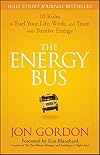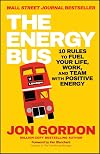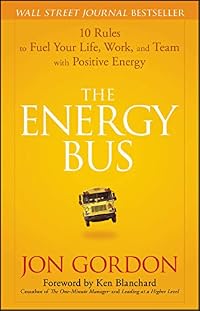
The Energy Bus: 10 Rules to Fuel Your Life, Work, and Team with Positive Energy
by Jon Gordon
On This Page
Description
Business. Self-Improvement. Nonfiction. It's Monday morning and George walks out of the front door to his car and a flat tire. This is the least of his problems. His home life is in shambles and his team at work is in disarray. With a big product launch coming in two weeks, he has to find a way to get it together or risk losing his marriage and job. Forced to take the bus to work, George meets a unique bus driver and an interesting cast of characters who, over the course of two weeks, share show more the ten rules for the ride of his life. In the process, they help him turn around his work and life, saving his job and marriage from destruction. The Energy Bus, an international bestseller, takes listeners on an enlightening and inspiring ride that reveals ten secrets for approaching life and work with the kind of positive, forward thinking that leads to true accomplishment-at work and at home. Learn how to: build positive energy with vision, trust, optimism, enthusiasm, purpose, and spirit; turn negative energy into positive achievement; and overcome obstacles and bring out the best in yourself and your team. For managers and team leaders or anyone looking to turn negative situations into positive outcomes, The Energy Bus provides a powerful plan for overcoming common life and work obstacles and bringing out the best in yourself and your team. show lessTags
Recommendations



Member Reviews
I work for a public school system. We are out for the summer. As we staff members joyfully fled the building, we were handed this book for summer reading. Evidently, next school year, we can anticipate fun activities based on the book's theme and message. Here is the email I sent my principal.
Dear ______,
You've been a great boss this year. I appreciate your sense of purpose, your pragmatic way of getting things done, and the support you give your staff.
But, oh my. I just finished reading THE ENERGY BUS.
Not only do I travel on a different bus, but it runs in a parallel universe. Certainly not the jolly universe of this book. In fact, my vehicle is not a bus at all. I would never burn fossil fuels in a combustion engine. Mine is sort of a show more hybrid time-travel & transporter machine.
I do not believe “Everything happens for a reason.” (7) I do not believe in a personal, benevolent god who responds when we follow "signs." (113) I do not agree that the goal of life is “to live young, have fun, and arrive at your final destination as late as possible, with a smile on your face.” (142) And, yes, it is physically possible "to be stressed and thankful at the same moment." (52)
It occurs to me that a lot of refugees in Syria right now would love to learn the magic of creating luck “by projecting lucky energy.” (44)
Please don't ask me to turn in a bus ticket, and please don't ask me to "trust in God." (128) Is it even legal for you to require staff to read a book that advocates a religious belief system? Or to use school funds to purchase multiple copies of said book? For the record, I am an existentialist with a keen interest in Buddhist philosophy. On spiritual matters, I prefer Shantideva's THE WAY OF THE BODHISATTVA from the 8th century. Or perhaps the 12th century Islamic Sufi fable by Farid ud-Din Attar, THE CONFERENCE OF THE BIRDS.
Have an excellent summer, and enjoy some good reading. I just finished Thomas Piketty's CAPITAL IN THE TWENTY-FIRST CENTURY and Anthony Trollope's THE WARDEN. I highly recommend both.
Your sincere if truculent employee,
Mary show less
Dear ______,
You've been a great boss this year. I appreciate your sense of purpose, your pragmatic way of getting things done, and the support you give your staff.
But, oh my. I just finished reading THE ENERGY BUS.
Not only do I travel on a different bus, but it runs in a parallel universe. Certainly not the jolly universe of this book. In fact, my vehicle is not a bus at all. I would never burn fossil fuels in a combustion engine. Mine is sort of a show more hybrid time-travel & transporter machine.
I do not believe “Everything happens for a reason.” (7) I do not believe in a personal, benevolent god who responds when we follow "signs." (113) I do not agree that the goal of life is “to live young, have fun, and arrive at your final destination as late as possible, with a smile on your face.” (142) And, yes, it is physically possible "to be stressed and thankful at the same moment." (52)
It occurs to me that a lot of refugees in Syria right now would love to learn the magic of creating luck “by projecting lucky energy.” (44)
Please don't ask me to turn in a bus ticket, and please don't ask me to "trust in God." (128) Is it even legal for you to require staff to read a book that advocates a religious belief system? Or to use school funds to purchase multiple copies of said book? For the record, I am an existentialist with a keen interest in Buddhist philosophy. On spiritual matters, I prefer Shantideva's THE WAY OF THE BODHISATTVA from the 8th century. Or perhaps the 12th century Islamic Sufi fable by Farid ud-Din Attar, THE CONFERENCE OF THE BIRDS.
Have an excellent summer, and enjoy some good reading. I just finished Thomas Piketty's CAPITAL IN THE TWENTY-FIRST CENTURY and Anthony Trollope's THE WARDEN. I highly recommend both.
Your sincere if truculent employee,
Mary show less
I'm sorry, but while this book has some helpful advice about remaining upbeat and setting boundaries between our feelings and others' attitudes (no energy vampires!), it is pretty trite and simplistic. All too often, the places that rave about this book need to examine how their own policies and procedures affect morale versus books like this. (I suggest you read John G. Miller, and his QBQ books, instead.)
Good Review of Essentials
You learn so much better from stories than facts. And that's what I like about this book. You engage with the story. There may not be a lot of new things in the book, but it re-emphasizes the essentials. Do the basics well and consistently to succeed.
You learn so much better from stories than facts. And that's what I like about this book. You engage with the story. There may not be a lot of new things in the book, but it re-emphasizes the essentials. Do the basics well and consistently to succeed.
I was asked to review this by the Nursing Times and what an inspirational book this is.
What was it like?
This was exactly what it said on the tin. This follows George from the moment he wakes on the dreaded Monday morning and typically he has a flat tyre. Life for George is disorganised and so are his team. So when a new product is launched he needs to get a grip on work and home life. He needs to take a bus to work. Thus begins the reconstruction of his life and work.
What were the highlights?
This was a great positive book and so enjoyable at the same time, some books of this type can be hard going and not only does the reader have problems, but the book becomes an irritant too. Not so in this case. This is such an easy book to read show more and I have to confess to reading it in one sitting.
This book is believable and the reader can take some or all of the ten rules in George’s ride of his life.
The characters on the bus were real and believable and all played their part to help George in his working and personal life.
Strengths & weaknesses:
The strengths were that the reader gains inspiration from this. The weaknesses are with the reader – if they do not realise life is too short then the reader had failed to gain anything- I doubt any reader not to gain creative inspiration. This is written in a really easy format to read. show less
What was it like?
This was exactly what it said on the tin. This follows George from the moment he wakes on the dreaded Monday morning and typically he has a flat tyre. Life for George is disorganised and so are his team. So when a new product is launched he needs to get a grip on work and home life. He needs to take a bus to work. Thus begins the reconstruction of his life and work.
What were the highlights?
This was a great positive book and so enjoyable at the same time, some books of this type can be hard going and not only does the reader have problems, but the book becomes an irritant too. Not so in this case. This is such an easy book to read show more and I have to confess to reading it in one sitting.
This book is believable and the reader can take some or all of the ten rules in George’s ride of his life.
The characters on the bus were real and believable and all played their part to help George in his working and personal life.
Strengths & weaknesses:
The strengths were that the reader gains inspiration from this. The weaknesses are with the reader – if they do not realise life is too short then the reader had failed to gain anything- I doubt any reader not to gain creative inspiration. This is written in a really easy format to read. show less
The title of the book (The Energy Bus: 10 Rules to Fuel Your Life, Work, and Team With Positive Energy) sums it up fairly well. George’s relationships with his co-workers, wife, and children have hit rock bottom and he’s about to lose his job and his marriage when his car breaks down and he’s forced to take the bus. The bus driver, Joy, and her regular passengers have decided that they’re only going to allow positive energy on the bus, and they use their 10 rules to teach George how to turn his life around.
Self-help books really aren’t my thing, but I read this for my company’s book club. I tried to go into it with an open mind; I really did, but ergh. The biggest problem is that the author (who happens to be a motivational show more speaker if you couldn’t guess) isn’t a good writer, and he doesn’t seem to have had an editor or proofreader look at the book before publishing it. I lost count of the number of cringe-worthy grammar and usage errors I found, and the sentence structure and phrasing were awkward more often than not. There were a handful of times when I couldn’t actually figure out what he was trying to say and one time when he actually said the opposite of what he meant to say.
The next problem was that his allegory was too simplistic and full of holes. This probably works in the children’s version of this book, but the average adult is going to need a bit more depth. I also wasn’t thrilled with the amount of time he spent pimping his website. I read instead of watching TV to get away from commercials.
Then, about halfway through the book, he brought the Christian God in. I don’t have a problem the fact that he based his method partly on religion, but I do have a problem with the fact that he blindsided us with it. When you’re writing a book telling people how to fix their lives and the second half of your process revolves around the idea of, “trust in God; He’ll get you where you need to be,” you’re going to alienate any readers who don’t share your religious beliefs because they won’t be able to follow your advice. If you’re going to base your self-help method on religious beliefs, you need to let people know that on the cover or at least at the beginning of the book so that people who don’t share those beliefs can decide whether they still want to read it.
By the time I got to the end of the book my patience was wearing thin, so I was properly ticked off when I came across the page where the author felt the need to tell us how to operate a book. Yup, he actually wrote in parenthesis at the end of a paragraph “Turn the page.” Seriously? He thinks people who have made it nearly to the end of his book don’t know that when you finish reading one page, you turn to the next one to continue the text? I was left to conclude that the author is not only a Composition 101 drop-out, he’s also a condescending jerk.
Now, in spite of all this, there are some pluses to this book. The first half of the book wasn’t too bad. I enjoyed giggling at the author’s ineptness, and he had a handful useful points to make. If he had written a short essay instead of a book, he would have done alright. And he did give my mind a push in the right direction when it comes to thinking positively instead of negatively. This is something I try to focus on anyway and it’s difficult to remember all the time, so it’s nice to have a reminder, even if it isn’t a particularly well-written one. Overall, however, this book comes across as though the author banged it out as quickly as possible without regard to quality in order to have a way to finagle money out of audiences at his speaking events. For someone who’s against energy vampires on his bus, he doesn’t seem to mind doing a little financial blood sucking himself. show less
Self-help books really aren’t my thing, but I read this for my company’s book club. I tried to go into it with an open mind; I really did, but ergh. The biggest problem is that the author (who happens to be a motivational show more speaker if you couldn’t guess) isn’t a good writer, and he doesn’t seem to have had an editor or proofreader look at the book before publishing it. I lost count of the number of cringe-worthy grammar and usage errors I found, and the sentence structure and phrasing were awkward more often than not. There were a handful of times when I couldn’t actually figure out what he was trying to say and one time when he actually said the opposite of what he meant to say.
The next problem was that his allegory was too simplistic and full of holes. This probably works in the children’s version of this book, but the average adult is going to need a bit more depth. I also wasn’t thrilled with the amount of time he spent pimping his website. I read instead of watching TV to get away from commercials.
Then, about halfway through the book, he brought the Christian God in. I don’t have a problem the fact that he based his method partly on religion, but I do have a problem with the fact that he blindsided us with it. When you’re writing a book telling people how to fix their lives and the second half of your process revolves around the idea of, “trust in God; He’ll get you where you need to be,” you’re going to alienate any readers who don’t share your religious beliefs because they won’t be able to follow your advice. If you’re going to base your self-help method on religious beliefs, you need to let people know that on the cover or at least at the beginning of the book so that people who don’t share those beliefs can decide whether they still want to read it.
By the time I got to the end of the book my patience was wearing thin, so I was properly ticked off when I came across the page where the author felt the need to tell us how to operate a book. Yup, he actually wrote in parenthesis at the end of a paragraph “Turn the page.” Seriously? He thinks people who have made it nearly to the end of his book don’t know that when you finish reading one page, you turn to the next one to continue the text? I was left to conclude that the author is not only a Composition 101 drop-out, he’s also a condescending jerk.
Now, in spite of all this, there are some pluses to this book. The first half of the book wasn’t too bad. I enjoyed giggling at the author’s ineptness, and he had a handful useful points to make. If he had written a short essay instead of a book, he would have done alright. And he did give my mind a push in the right direction when it comes to thinking positively instead of negatively. This is something I try to focus on anyway and it’s difficult to remember all the time, so it’s nice to have a reminder, even if it isn’t a particularly well-written one. Overall, however, this book comes across as though the author banged it out as quickly as possible without regard to quality in order to have a way to finagle money out of audiences at his speaking events. For someone who’s against energy vampires on his bus, he doesn’t seem to mind doing a little financial blood sucking himself. show less
I have a problem with the vast majority of self help books because their valuation as to what is success and failure is measured in cash: blurbs promising millions of pounds, dollars or yuan for the diligent student of this, or that technique.
The Energy Bus, whilst allowing the belief that greater remuneration will come to the student, does at least acknowledge the need for a genuinely positive attitude, rather than the fake, "Have a nice day" said with a plastic smile approach of so many of the genre.
I have now given up all pretense of ever becoming rich and feared that this would be an insurmountable barrier to taking any value from this book. I am happy to report that I was wrong: as is inevitable in this type of book, there is much show more common sense which one should really know by pubity but, I found sufficient nuggets to make this both an enjoyable and valuable read: whether it improves my life, time will tell... show less
The Energy Bus, whilst allowing the belief that greater remuneration will come to the student, does at least acknowledge the need for a genuinely positive attitude, rather than the fake, "Have a nice day" said with a plastic smile approach of so many of the genre.
I have now given up all pretense of ever becoming rich and feared that this would be an insurmountable barrier to taking any value from this book. I am happy to report that I was wrong: as is inevitable in this type of book, there is much show more common sense which one should really know by pubity but, I found sufficient nuggets to make this both an enjoyable and valuable read: whether it improves my life, time will tell... show less
Of workplace parables, this is of the more enjoyable books. Quick prose, challenging goals, and a conceivable plan to implement them. Recommended for workplace book club discussions.
Members
- Recently Added By
Author Information

26 Works 3,152 Members
Jon Gordon is an American business consultant and author on the topics of leadership, culture, sales, and teamwork. His books have been used by the Universuty of Georgia's Bulldogs and the Atlanta Falcons. His work has been featured in The Washington Post and U.S. News and World Report. He has earned degrees from Cornell University and Emory show more University. Gordon is the author of several books including: The No Complaining Rule, The Positive Dog, The Shark and The Goldfish: Positive Ways to Thrive During Waves of Change, One Word that Will Change Your Life, and The Power of Positive Team : Proven Principles and Practices That Make Great Teams Great. His title The Carpenter: A story about the Greatest Success Strategies of All made The New York Times Best Seller List in 2014. (Bowker Author Biography) show less
Classifications
Statistics
- Members
- 921
- Popularity
- 28,910
- Reviews
- 26
- Rating
- (3.51)
- Languages
- English, French, German, Spanish
- Media
- Paper, Audiobook, Ebook
- ISBNs
- 23
- ASINs
- 5