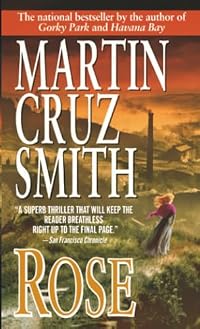
Rose
by Martin Cruz Smith
On This Page
Description
Fiction. Mystery. Suspense. Thriller. HTML:Rose is a wonderfully rich and intricate novel set in nineteenth-century Wigan, a town located in the coal country of Lancashire. Its protagonist, Jonathan Blair, is a mining engineer who has been chased out of Africa for "stealing" from the missionaries' Bible Fund in order to pay off the porter of his expedition into the interior of the Gold Coast; he is now down and out in London.Blair's employer, Bishop Hannay, promises to send him back to show more Africa if he can find John Maypole, the curate who was engaged to his daughter, Charlotte Hannay, when he disappeared three months previously without explanation. Charlotte herself is an ill-tempered young woman who takes an instant dislike to Blair when he tries to investigate her fiancé's disappearance. Other characters include assorted townspeople, miners at the Hannay family mine, and Rose Molyneux, a "pit girl" with whom Blair falls in love.
Exceeding even the high... show less
Tags
Recommendations
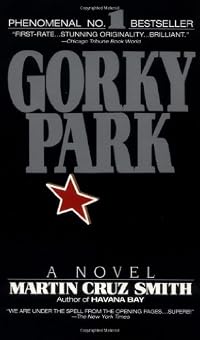
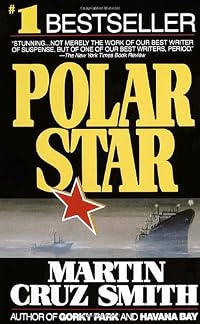



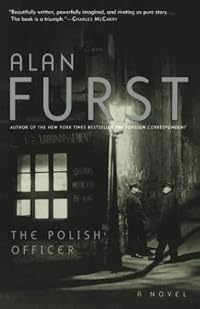
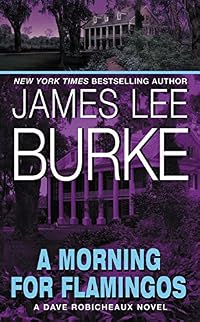
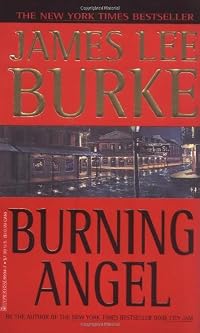
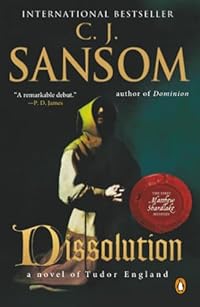
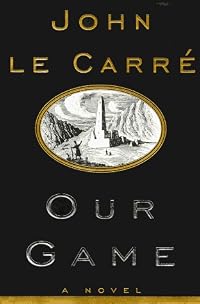

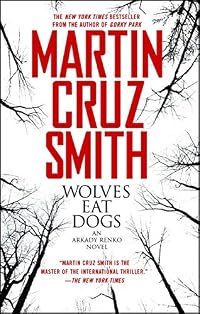
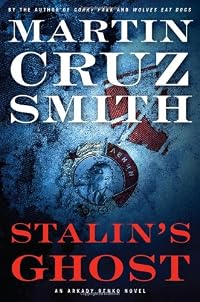
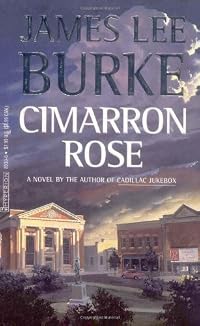
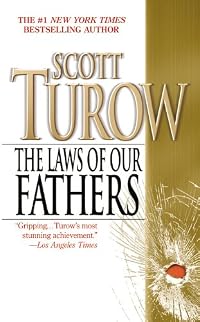
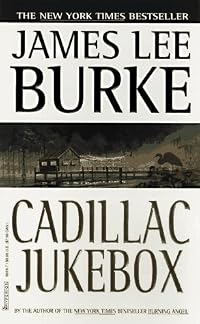
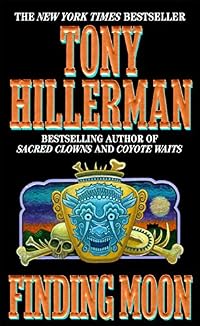
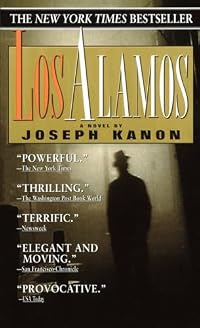

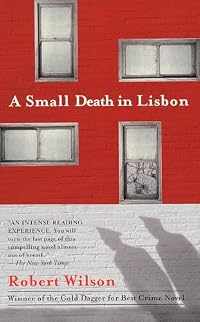
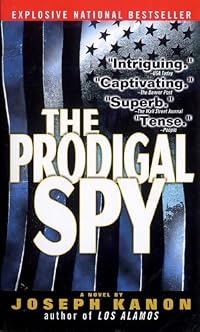

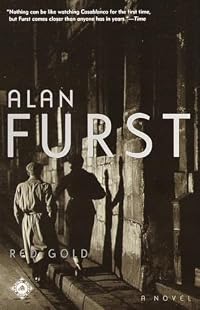
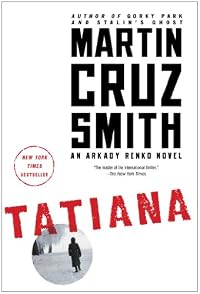

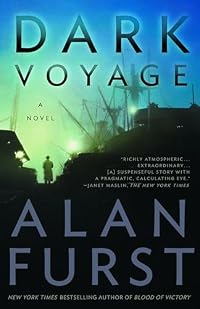
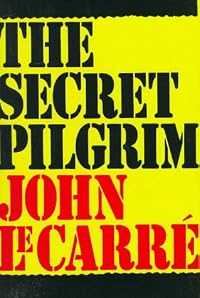
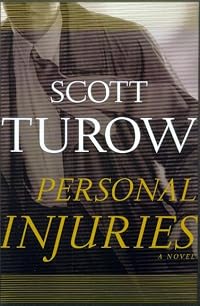
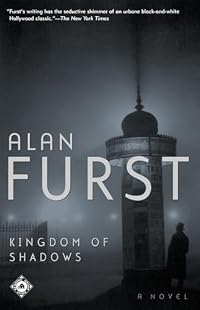
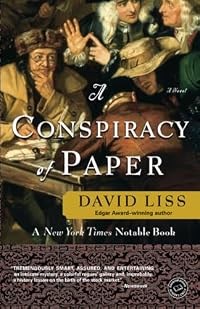
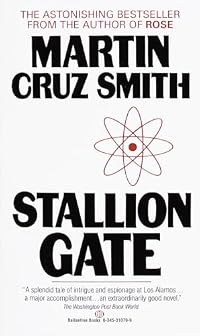

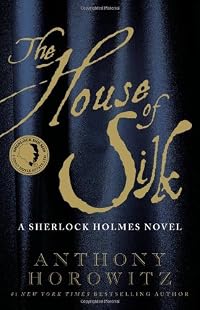

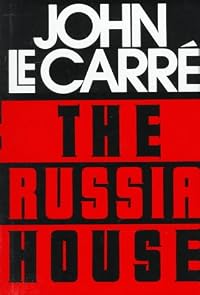

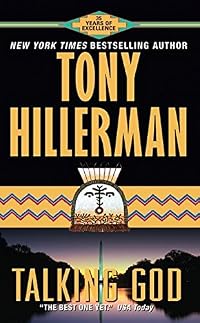
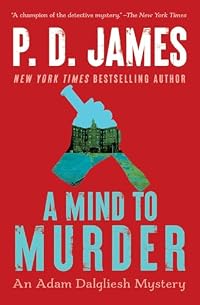

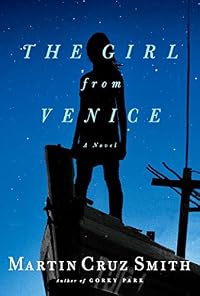
Member Recommendations
Member Reviews
I second every favorable review here. What a joy it is to sink into an absorbing tale skillfully told! Blair, the reluctant hero of this tale, is a breath of fresh air: he is both simple and complex, brave and cowardly, base and good - in short, deeply and believably human. You care about what happens to him and that alone would be enough to keep most folks reading - but then the author throws in a host of similarly flawed but fascinating characters, an absorbing mystery that evolves throughout the tale, a little geology, a peek into the exotic and perilous experience that was African exploration in the late 1800s, and the most fascinating character of all: the English coal town of Wigan and the strange, subterranean lives of the people show more who live there. It's hard to imagine how Smith recreates the sights, smells, sounds, textures & experiences of Wigan with such uncanny clarity in the absence of time travel. Long after finishing this novel you may find yourself coughing to clear your lungs of coal dust, or straining to hear the sound of clogs ringing on cobblestone streets early in the morning. Does anyone else get tired of reading mysteries with transparent plots, stereotypical characters, and improbable coincidences? Pick up Martin Cruz Smith's Rose and let your guard down ... you are safe in the hands of a skilled writer and a gifted storyteller! ( show less
Martin Cruz Smith has written something especially fine with Rose. Those familiar with Smith know that the quality of his writing extends far beyond those bestselling-blockbuster-plot-driven spy novels that share the bestseller lists with him. Martin Cruz Smith believes in characters, those fleshed-out figures that make readers care about the who and the what of a finely tuned novel. Rose takes place in a small coal mining town in 19th century England, amongst the rugged miner's community and the refined high manor home of Bishop Hannay. The story has an African explorer being reluctantly convinced, "drafted", into the role of an investigator. His case involves the disappearance of the poor local minister, who was to have married the show more wealthy bishop's daughter. Our "draftee" gets deeply involved, in the mines, with the rough miners and scandalous pit girls, the Lord's household, and with Rose herself. My recommendation is strong for this book because it does so much to richly reward the reader. Lastly, it shows well that the heights and depths of true civilization often have nothing to do with whether one is rich or poor, refined or coarse. show less
Martin Cruz Smith does "outsider" incomparably. Besides the Renko novels, one has [Stallion Gate], set in the Los Alamos of 1945; [December 6], set just prior to WW2, and this book set in Victorian England. Each features a loner protagonist, battered by social forces around him and yet remaining uncompromised. Even better, his characters show brilliance in seeing what others cannot. The task set them is often the solution of a mystery, and the protagonists often take on some of the nature of the Furies - unstoppable and merciless - as they proceed to the solution. Often, too, this is in spite of the growing opposition of the authority that set the task to start with.
Another of MCS's talents is the ability to give you the feeling what it show more was like in a different time and place. I come away from a MCS book thinking, "If it wasn't like that, it should have been." Things fit together into a cohernt reality, different than the one I live in.
MCS's protagonists share a capacity for really lacerating black humor that crops out unexpectedly and unforgettably. Often, these one-liners show starkly the contrast between what is just and what is being done. Len Deighton could do this too, as could Edward Gibbon. MCS is a true master.
MCS by no means writes one-person stories. In Rose, there are a number of interesting characters, some at a distance from the main course of the narrative. He can't put up a character quite as fast as Dickens, but then very few authors can, and he's not so very far behind. His people live and breathe on their own - in this book, look over Smallwood, and Battie. Even the druggist who sells Blair both quinine and arsenic in a brief scene brings a picture of an individual person to mind.
This book, as most of Martin Cruz Smith's books is one that can be re-read with great pleasure. I'm very happy to have it in my collection. show less
Another of MCS's talents is the ability to give you the feeling what it show more was like in a different time and place. I come away from a MCS book thinking, "If it wasn't like that, it should have been." Things fit together into a cohernt reality, different than the one I live in.
MCS's protagonists share a capacity for really lacerating black humor that crops out unexpectedly and unforgettably. Often, these one-liners show starkly the contrast between what is just and what is being done. Len Deighton could do this too, as could Edward Gibbon. MCS is a true master.
MCS by no means writes one-person stories. In Rose, there are a number of interesting characters, some at a distance from the main course of the narrative. He can't put up a character quite as fast as Dickens, but then very few authors can, and he's not so very far behind. His people live and breathe on their own - in this book, look over Smallwood, and Battie. Even the druggist who sells Blair both quinine and arsenic in a brief scene brings a picture of an individual person to mind.
This book, as most of Martin Cruz Smith's books is one that can be re-read with great pleasure. I'm very happy to have it in my collection. show less
The protagonist in most of Martin Cruz Smith’s books is Arkady Renko, a Russian detective living in the Soviet Union in the early books, and living in post-Soviet era Russia in later books. In this book, the protagonist is Jonathan Blair, a mining engineer residing in a bleak British mining town in the late 19th century. Although not a detective, in order to receive funding necessary to make his desired exit from Britain back to Africa, he is asked to undertake a detective-like task. In his thinking patterns, speech and behavior, Blair very closely resembles Renko. Both are reserved but highly observant. Both tend to be loners who are both relied upon and distrusted by their bosses or employers. Although Blair’s mining engineering show more training is relevant to the book’s plot, as the story proceeds, it is his detective skills, which are a lot like Renko’s, that are most important. This is not really objectionable, just interesting. It is also somewhat interesting, although probably coincidental, that the setting is a point in the so-called Industrial Revolution in Britain when Karl Marx was moved to write his Communist Manifesto, eventually leading to the 1917 Russian Revolution and the formation of Soviet Union, and then to Stalin, and then to the suffocating socialist bureaucracy so well described in the Arkay Renko novels.
Blair’s task is to investigate the disappearance of a minister engaged to the daughter of Blair’s benefactor, a wealthy member of the British landed class. While doing this, the reader gets a history lesson on the disturbing and depressing conditions of 19th century British mining towns. The dialog is excellent throughout the book, although sometimes more crisp and fluent than the conversations I’m accustomed to.
It is a good, well-written book. I thought some of the plot devices were somewhat unconvincing, but for a fast-paced detective story, this is not a serious complaint. show less
Blair’s task is to investigate the disappearance of a minister engaged to the daughter of Blair’s benefactor, a wealthy member of the British landed class. While doing this, the reader gets a history lesson on the disturbing and depressing conditions of 19th century British mining towns. The dialog is excellent throughout the book, although sometimes more crisp and fluent than the conversations I’m accustomed to.
It is a good, well-written book. I thought some of the plot devices were somewhat unconvincing, but for a fast-paced detective story, this is not a serious complaint. show less
Perhaps my favorite mystery of all time, which is saying a lot. My son pointed out to me that George Orwell, author of "Road to Wigan Pier," was born Eric Blair, also the last name of the hero of this book set largely in Wigan. A wonderful story of trust and love that grows almost in spite of itself, with a terrifying villain. In retrospect the mystery part of it seems like I should have been able to figure it out, but perhaps I was so taken with the story that I didn't even try. The last sentence of the book is one of my all-time favorite ending sentences in fiction. I can't recommend this book highly enough.
This is a good period-piece mystery set in Wigan, England in 1872. It describes the adventures of Jonathan Blair, an African explorer of questionable reputation (because he flouts the conventional wisdom about the virtues of colonialism) who is forced to investigate the disappearance of a minister of the church in the town of Wigan; forced in the sense that he is broke, and the promise held out to him is: solve the mystery and receive passage back to Africa to continue what he loves: geological exploration. He is an outsider, and worse a meddler, in a closed, tough town and as such he is a target for beatings and even death.
The mystery deepens, involving the highest classes of the town including the clergy and in particular the show more headstrong, distant, cold daughter of the bishop who controls the town and, he thinks, Blair too, as well as a firey, sensual, sexual pitgirl named Rose. The description of social conditions and in particular the awful conditions for the workers strikes me as accurate (I recall George Orwell's book, The Road to Wigan Pier, which also detailed the harshness of life for so many in a mining town). It is hard to see how any thinking person (from today's perspective) could be anything other than a socialist given the conditions of work and life, the callousness, the almost complete disregard for safety and health of the workers.
A good story, a good pace, well written and with a good ending. An enjoyable read. show less
The mystery deepens, involving the highest classes of the town including the clergy and in particular the show more headstrong, distant, cold daughter of the bishop who controls the town and, he thinks, Blair too, as well as a firey, sensual, sexual pitgirl named Rose. The description of social conditions and in particular the awful conditions for the workers strikes me as accurate (I recall George Orwell's book, The Road to Wigan Pier, which also detailed the harshness of life for so many in a mining town). It is hard to see how any thinking person (from today's perspective) could be anything other than a socialist given the conditions of work and life, the callousness, the almost complete disregard for safety and health of the workers.
A good story, a good pace, well written and with a good ending. An enjoyable read. show less
The year is 1872. The place is Wigan, England - a nineteenth-century town in the coal-mining district of Lancashire. Into this dark, complicated world where wealthy mine owners live like royalty alongside miners who are treated no better than slaves, comes Jonathan Blair, a mining engineer who has accepted a commission to find a missing man. Recently returned from Africa's Gold Coast, Jonathan finds his native England utterly depressing and soon falls into melancholy and alcoholism.
Desperate to return to Africa, Jonathan agrees to investigate the disappearance of a local curate who was engaged to marry the daughter of Jonathan's patron. As he begins his search, every road leads back to one woman - a haughty, vixenish pit girl named show more Rose. With her fiery hair and skirts pinned up over trousers, she cares nothing for a society that call her unnatural, scandalous and a 'loose' woman.
As Rose and Jonathan circle one another, first warily, then with the heat of mutual desire, Blair loses his balance. And the lull induced by Rose's sensual touch leaves Jonathan totally unprepared for the bizarre, soul-scorching truth.
I found that this book was very interesting, although the ending was extremely convoluted. I had to find out what happened in the book, even though I couldn't really understand the mining practices of 19th-century England that were written about in such detail. I give this book an A! show less
Desperate to return to Africa, Jonathan agrees to investigate the disappearance of a local curate who was engaged to marry the daughter of Jonathan's patron. As he begins his search, every road leads back to one woman - a haughty, vixenish pit girl named show more Rose. With her fiery hair and skirts pinned up over trousers, she cares nothing for a society that call her unnatural, scandalous and a 'loose' woman.
As Rose and Jonathan circle one another, first warily, then with the heat of mutual desire, Blair loses his balance. And the lull induced by Rose's sensual touch leaves Jonathan totally unprepared for the bizarre, soul-scorching truth.
I found that this book was very interesting, although the ending was extremely convoluted. I had to find out what happened in the book, even though I couldn't really understand the mining practices of 19th-century England that were written about in such detail. I give this book an A! show less
Members
- Recently Added By
Published Reviews
Smith (Red Square, 1992, etc.) not only sets his exuberant, sly new novel in Victorian England but goes Victorian novelists one better, conjuring up a plot device at the heart of this mystery that Dickens would envy...Blair, Rose, and Smith's other characters are wonderful creations, robust and distinctive. The crimes here are unremarkable, but the world evoked is memorable, glowing with life.
added by mysterymax
Author Information

37+ Works 18,925 Members
Martin Cruz Smith is a writer of suspense novels. He was born in Reading, Pennsylvania, on November 3, 1942 but grew up in New Mexico and the Philadelphia area. Smith earned a B.A. from the University of Pennsylvania. Smith worked for local television stations, newspapers, and the Associated Press. His early work was published under the names show more Simon Quinn, Jake Logan, and Martin Smith. Smith is best known for a series of suspense/thrillers featuring Investigator Arkady Renko. The first of these books, Gorky Park, was published in 1981 and adapted as a film starring William Hurt and Lee Marvin two years later. An earlier film of his work, Nightwing, directed by Arthur Hiller, was released in 1979. Smith is a member of the Authors League of America and the Authors Guild. In 2013 his title Tatiana made The New York Times Best Seller List. The Girl from Venice also became a bestseller. (Bowker Author Biography) show less
Awards and Honors
Awards
Work Relationships
Common Knowledge
- Original title
- Rose
- Original publication date
- 1996
- People/Characters
- Jonathan Blair; Bishop Hannay; Charlotte Hannay; Rose Molyneux; Bill Jaxon; Oliver Leveret
- Important places
- Wigan, Lancashire, England, UK; Lancashire, England, UK
- Dedication
- For Em
- First words
- The most beautiful women in the world were African.
- Last words
- (Click to show. Warning: May contain spoilers.)And last on deck, bound for the Gold Coast, a mining engineer named Blair and his wife, whom he called Charlotte, except when he called her Rose.
Classifications
Statistics
- Members
- 1,102
- Popularity
- 22,921
- Reviews
- 20
- Rating
- (3.72)
- Languages
- 10 — Danish, Dutch, English, French, German, Italian, Norwegian (Bokmål), Portuguese, Spanish, Swedish
- Media
- Paper, Audiobook, Ebook
- ISBNs
- 31
- UPCs
- 2
- ASINs
- 12