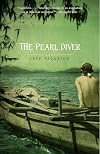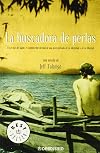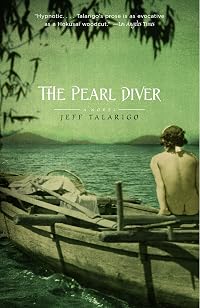
The Pearl Diver
by Jeff Talarigo
On This Page
Description
In 1948, a nineteen-year-old pearl diver's dreams of spending her life combing the waters of Japan’s Inland Sea are shattered when she discovers she has leprosy. By law, she is exiled to an island leprosarium, where she is stripped of her dignity and instructed to forget her past. Her name is erased from her family records, and she is forced to select a new one. To the two thousand patients on the island of Nagashima, she becomes Miss Fuji. Although drugs arrest the course of Miss Fuji's show more disease, she cannot leave the colony. Instead, she becomes a caretaker to the other patients, and through the example of their courage, she gains insight into the deep wellspring of strength she will need to reclaim her freedom. Written with precision and eloquence, The Pearl Diver is a dazzling meditation on isolation and community, cruelty and compassion. show lessTags
Recommendations














































Member Reviews
People like to blame misfortune on its victims. When a sore on a young pearl diver’s arm is diagnosed as leprosy, she is chased down, declared dead, and confined to a small island populated by thousands of other patients. She stays there the rest of her life.
Miss Fuji, the pearl diver, meets her life’s trials –estrangement from her family, conflict with island administrators, personal doubt- with resignation. The treatment for the physical symptoms of her disease is available from the first months of her stay at the Nagashima leprosarium, but her society’s stigma against lepers cannot be treated by pill or injection and even being cured opens no doors back to mainland society for her. Although parts of her body remain dead to show more sensation, Miss Fuji feels stigma keenly, and the reader is kept hoping that time will find a cure for that, too.
In this gentle book, Talarigo describes prejudice, disappointment, and human frailty honestly, but his depiction is softened by the acceptance that changes in social attitude do not arrive quickly. There is little dialogue, but the reader won’t miss it: it’s almost unnecessary because Talarigo writes silence so well. This is a thoughtful literary exploration of the treatment of lepers in Japanese society. show less
Miss Fuji, the pearl diver, meets her life’s trials –estrangement from her family, conflict with island administrators, personal doubt- with resignation. The treatment for the physical symptoms of her disease is available from the first months of her stay at the Nagashima leprosarium, but her society’s stigma against lepers cannot be treated by pill or injection and even being cured opens no doors back to mainland society for her. Although parts of her body remain dead to show more sensation, Miss Fuji feels stigma keenly, and the reader is kept hoping that time will find a cure for that, too.
In this gentle book, Talarigo describes prejudice, disappointment, and human frailty honestly, but his depiction is softened by the acceptance that changes in social attitude do not arrive quickly. There is little dialogue, but the reader won’t miss it: it’s almost unnecessary because Talarigo writes silence so well. This is a thoughtful literary exploration of the treatment of lepers in Japanese society. show less
While the prose of this novel are excellent and the structure original, the story is one of overwhelming sadness, and I was glad when I was finished. The story is set in post-war Japan and spans 40 + decades of the life of a 19-year old pearl diver who is diagnosed with leprosy and is exiled to a leper colony on a small island not far from where she grew up (she can see her hometown island from her new home, Nagashima). She must change her name and takes on “Miss Fuji” for the island she climbed when she was 9 with her Uncle.
Her leprosy is a mild case and she is able to remain relatively healthy compared to the other patients on the island. She struggles to accept her new life and especially the loss of her diving which she loves show more most in life. While she makes friends and becomes quite useful on the island; eventually becoming a nurse there, her longing for her beloved diving never ends.
Talarigo does a wonderful job of letting the reader feel Miss Fuji’s full range emotions from anger to sorrow, to longing, and even that of joy and hope. She is a complicated character with contradictory feelings about things and people (like real people do) and I found that added much to being able to relate to her and feeling empathy for her.
Although this is a relatively short book, only 237 pages, it is not a light read. There are many themes to explore and consider, it would make a very good selection for a book club. show less
Her leprosy is a mild case and she is able to remain relatively healthy compared to the other patients on the island. She struggles to accept her new life and especially the loss of her diving which she loves show more most in life. While she makes friends and becomes quite useful on the island; eventually becoming a nurse there, her longing for her beloved diving never ends.
Talarigo does a wonderful job of letting the reader feel Miss Fuji’s full range emotions from anger to sorrow, to longing, and even that of joy and hope. She is a complicated character with contradictory feelings about things and people (like real people do) and I found that added much to being able to relate to her and feeling empathy for her.
Although this is a relatively short book, only 237 pages, it is not a light read. There are many themes to explore and consider, it would make a very good selection for a book club. show less
How do we tell a story of human isolation? Jeff Talarigo’s The Pearl Diver provides a precise and balanced and beautiful example. Mr. Talarigo collapses long decades of a woman’s life spent in a Japanese leprosarium into a spare, moving tale. Its light, almost delicate, touch with major human issues provides a gratifying payoff.
At the outset of the novel, our nineteen-year-old unnamed heroine belongs to an exclusive group: she is one of a handful of pearl divers, women of all ages who plumb the depths of Japan’s Seto Inland Sea and bring up lobster, clams, other mussels, and on lucky days, pearls. She is still young and naïve when she’s forced to leave her beloved vocation. She’s found to have the dreaded curse-like plague of show more leprosy. In an instant she falls from her exalted, insular position to the level of the lowest outcast of Japanese society. She’s shunned, sent away to an island prison of the leprosarium, and even forced to change her name.
It turns out she has a non-infectious form of the disease, and treatments are developed during her early years in care keep her own case from progressing very far. She becomes a helper to the staff, giving massages, transporting those worse-off in wheelchairs, pulling nurse duty. She retains a certain independence in the patient community, earning its affection and respect, while making the facility’s officials suspicious.
Events unfold with an understated force: our heroine adopts the name Miss Fuji, and we learn of the climb of the famous mountain with her uncle when a little girl. She sneaks off the isolation of the island to her hometown, but is caught and sent to solitary confinement, and then forced to help with the grisly eugenic work done at the clinic. She visits Kyoto and sees various sights there to honor a man who has passed away. When at length, after struggles against the superstitious authorities, and more than forty years in the isolation of quarantine, Miss Fuji takes a flat in normal society. Maybe she’s planning her own death. She finds, however, an alien world, where pearl diving is turned into a tourist attraction, featuring nubile, bikini-clad girls who have never been more than ankle-deep.
In the end, though, she makes a surprising decision about the end of her days. Her life has been one of service to those even less fortunate than herself. At various times during her life, she knows others value and love her, and in their limited ways, return the charity she herself has shown. This is a tale of quiet heartbreak, but also of fulfilling forays into relations with other human beings, united in their isolation. Mr. Talarigo has written a restrained, graceful examination of how afflicted souls support each other, and how the superstitious so easily and brutally shun them. A beautiful, balanced book, and recommended very highly.
http://bassoprofundo1.blogspot.com/2012/04/pearl-diver-by-jeff-talarigo.html show less
At the outset of the novel, our nineteen-year-old unnamed heroine belongs to an exclusive group: she is one of a handful of pearl divers, women of all ages who plumb the depths of Japan’s Seto Inland Sea and bring up lobster, clams, other mussels, and on lucky days, pearls. She is still young and naïve when she’s forced to leave her beloved vocation. She’s found to have the dreaded curse-like plague of show more leprosy. In an instant she falls from her exalted, insular position to the level of the lowest outcast of Japanese society. She’s shunned, sent away to an island prison of the leprosarium, and even forced to change her name.
It turns out she has a non-infectious form of the disease, and treatments are developed during her early years in care keep her own case from progressing very far. She becomes a helper to the staff, giving massages, transporting those worse-off in wheelchairs, pulling nurse duty. She retains a certain independence in the patient community, earning its affection and respect, while making the facility’s officials suspicious.
Events unfold with an understated force: our heroine adopts the name Miss Fuji, and we learn of the climb of the famous mountain with her uncle when a little girl. She sneaks off the isolation of the island to her hometown, but is caught and sent to solitary confinement, and then forced to help with the grisly eugenic work done at the clinic. She visits Kyoto and sees various sights there to honor a man who has passed away. When at length, after struggles against the superstitious authorities, and more than forty years in the isolation of quarantine, Miss Fuji takes a flat in normal society. Maybe she’s planning her own death. She finds, however, an alien world, where pearl diving is turned into a tourist attraction, featuring nubile, bikini-clad girls who have never been more than ankle-deep.
In the end, though, she makes a surprising decision about the end of her days. Her life has been one of service to those even less fortunate than herself. At various times during her life, she knows others value and love her, and in their limited ways, return the charity she herself has shown. This is a tale of quiet heartbreak, but also of fulfilling forays into relations with other human beings, united in their isolation. Mr. Talarigo has written a restrained, graceful examination of how afflicted souls support each other, and how the superstitious so easily and brutally shun them. A beautiful, balanced book, and recommended very highly.
http://bassoprofundo1.blogspot.com/2012/04/pearl-diver-by-jeff-talarigo.html show less
During a wintery camping trip, this book has finally come off of the pile to be read. Having so many books and so little time, I have seriously been considering skimming off the ones I didn't think I would get round to reading, and had I not been in the middle of a field in a blizzard this is likely to have been one of them. I am sooo pleased it wasn't.
This is definitely one of those books where the cover belies the beauty within. Jeff Talarigo - who I had not heard of previously - has such a way with words, I was reminded of Ha Jin and Pearl S Buck. Maybe his time spent living in Asian cultures has given him an understanding of the way of thinking, rhythm and life that I think is so special and quite unique in describing things so show more simply yet so evocatively. It really is pure poetry.
I had no idea what the book was about, never mind the historical reality. It has certainly spurred me on to finding out how much of it is true: even as I was reading it, I knew that some of the horrors described could only be based on fact, which is the case.
I loved journeying with 'Miss Fuji' through the ocean and then through the passage of her life, seeing her experiences through equally naive eyes. I loved the interaction between the patients, and also the staff. I really loved seeing the progression of time, and the parallel between going from a more draconian to a more enlightened time, seeing also that things which should be a given - respect for nature and the environment - suffer in the face of enlightenment. Which naturally begs the question: is it truly any better than it was before, or have we lost the beauty of a simple life?
I saw in another review someone had described it as the saddest book they had ever read. In spite of everything, I don't see it as sad: I see it as a triumph of human nature, spirit, of tenacity and compassion. I see it as a celebration of nature and nurture, a story which must be told not only to remember the past but also to preserve and respect the future.
It turns out this book was a prize winner (2005 American Academy of Arts and Letters Rosenthal Foundation Award; also named a 2005 Kiriyama Prize Notable Book), and deservedly so. Chances are it should have had more attention, however I must say that some of the phrasing/grammar was a little clumsy at times (although I was reading a proof copy, so this may well have been ironed out before print). A great read none-the-less.
If you like this, others I would recommend are The Good Earth by Pearl S Buck (one of my all time favourite books) and Waiting by Ha Jin. show less
This is definitely one of those books where the cover belies the beauty within. Jeff Talarigo - who I had not heard of previously - has such a way with words, I was reminded of Ha Jin and Pearl S Buck. Maybe his time spent living in Asian cultures has given him an understanding of the way of thinking, rhythm and life that I think is so special and quite unique in describing things so show more simply yet so evocatively. It really is pure poetry.
I had no idea what the book was about, never mind the historical reality. It has certainly spurred me on to finding out how much of it is true: even as I was reading it, I knew that some of the horrors described could only be based on fact, which is the case.
I loved journeying with 'Miss Fuji' through the ocean and then through the passage of her life, seeing her experiences through equally naive eyes. I loved the interaction between the patients, and also the staff. I really loved seeing the progression of time, and the parallel between going from a more draconian to a more enlightened time, seeing also that things which should be a given - respect for nature and the environment - suffer in the face of enlightenment. Which naturally begs the question: is it truly any better than it was before, or have we lost the beauty of a simple life?
I saw in another review someone had described it as the saddest book they had ever read. In spite of everything, I don't see it as sad: I see it as a triumph of human nature, spirit, of tenacity and compassion. I see it as a celebration of nature and nurture, a story which must be told not only to remember the past but also to preserve and respect the future.
It turns out this book was a prize winner (2005 American Academy of Arts and Letters Rosenthal Foundation Award; also named a 2005 Kiriyama Prize Notable Book), and deservedly so. Chances are it should have had more attention, however I must say that some of the phrasing/grammar was a little clumsy at times (although I was reading a proof copy, so this may well have been ironed out before print). A great read none-the-less.
If you like this, others I would recommend are The Good Earth by Pearl S Buck (one of my all time favourite books) and Waiting by Ha Jin. show less
The story is of a young woman, nineteen years of age, who is a pearl diver. Even this aspect of the story I found fascinating; the author describes very well the lifestyle of a pearl diver in the days when it was still done without special equipement. Even in the 40's, which is when this book begins, pearls were harvested in much the same way they must have been for centuries. The girl learns that she has leprosy, and the rest of the book is set in a leprosorium on an island, which has no conctact with the world outside.
I enjoyed the author's writing style, and the way the book is set into sections by artifacts. The story line is laid out by each of these items, and even when years and years of time are skipped, the life of the colony show more is highlighted well. The horrors of the disease are illuminated with out being dwelt on; as are the deprivation, and inhumane treatments of the patients.
This book is set in Japan, but I assume the life of the leper would be the same pretty much wherever you were. The shunning, the misunderstanding of the disease, the fear. Even when scientific studies, and new medication, would have made it possible for many of the leper's to be reintroduced into society, society was not ready, and according to this book, many of the patients were not able to readjust to life in 'the world' again.
Would reccomend this book without hesitation; though because of the subject matter, and some of the gruesome details - including: abortions, and late stage abortions preformed on the unwilling; suicide; sexual references; death and disease - give it a mature rating.
Quote from the book:
Spoken by the character, Mr. Shikagawa, page 150: "Words are the most important thing we have. A few words, one word, can change history. Imagine the correct words had been spoken by those people who are in charge of our lives. A few well-thought-out words and things might have been different. Unfortunatly they have chosen all the wrong words." show less
I enjoyed the author's writing style, and the way the book is set into sections by artifacts. The story line is laid out by each of these items, and even when years and years of time are skipped, the life of the colony show more is highlighted well. The horrors of the disease are illuminated with out being dwelt on; as are the deprivation, and inhumane treatments of the patients.
This book is set in Japan, but I assume the life of the leper would be the same pretty much wherever you were. The shunning, the misunderstanding of the disease, the fear. Even when scientific studies, and new medication, would have made it possible for many of the leper's to be reintroduced into society, society was not ready, and according to this book, many of the patients were not able to readjust to life in 'the world' again.
Would reccomend this book without hesitation; though because of the subject matter, and some of the gruesome details - including: abortions, and late stage abortions preformed on the unwilling; suicide; sexual references; death and disease - give it a mature rating.
Quote from the book:
Spoken by the character, Mr. Shikagawa, page 150: "Words are the most important thing we have. A few words, one word, can change history. Imagine the correct words had been spoken by those people who are in charge of our lives. A few well-thought-out words and things might have been different. Unfortunatly they have chosen all the wrong words." show less
A book where specificity of details help to ground readers in the world of a Japanese pearl diver. The details about leprosy and its effects on the body as well as the social, mental, and emotional state of the people who contract it are exceptionally moving and intricately entwined with the life of the main character. Talarigo’s use of artifacts to recount the story touches upon the notion that our histories can be discerned through the objects that we leave behind. In other words, objects/artifacts are the physical embodiments of memories, the tangible objects that transport us to another time and place—something Talarigo does so wonderfully with his prose.
A hauntingly beautiful book. She is a pearl diver. She goes into the sea, draws in a large breath and dives deeply for as long as the breath lasts. She loves the feel of the sea and hates the winters that take her from it. The spot on her arm is small. The cut across it is not painful. But her life is turned upside down when the policemen take her away. She is number 2645. She becomes known as Miss "Fuji". Her life in the sea is no more.
Members
- Recently Added By
Author Information

4 Works 521 Members
Awards and Honors
Series
Belongs to Publisher Series
btb (73664)
Common Knowledge
- Original title
- The Pearl Diver
- Original publication date
- 2004
- Important places
- Nagashima, Japan; Mount Fuji, Japan
- First words
- Her wors are the only remaining artifact of those days before she arrived.
Classifications
Statistics
- Members
- 321
- Popularity
- 99,477
- Reviews
- 19
- Rating
- (3.77)
- Languages
- English, German, Spanish
- Media
- Paper, Audiobook, Ebook
- ISBNs
- 14
- ASINs
- 1