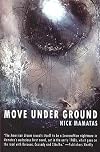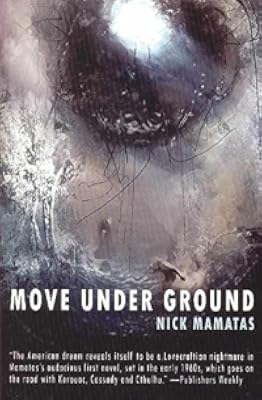
Move Under Ground
by Nick Mamatas
On This Page
Description
When Jack Kerouac witnesses signs of the return of Cthulhu, he recruits fellow beats Neal Cassady and William S. Burroughs for a road trip that climaxes in a confrontation with a Lovecraftian cult.Tags
Recommendations







Member Reviews
"What if [a:H.P. Lovecraft|9494|H.P. Lovecraft|http://photo.goodreads.com/authors/1196193667p2/9494.jpg]'s cosmic demons showed up in a [a:Jack Kerouac|1742|Jack Kerouac|http://photo.goodreads.com/authors/1185997896p2/1742.jpg] novel": this could be a gimmicky lark like the Sherlock-Holmes-versus-Dracula kind of thing various people have done, or it could be the kind of dense historical fantasy that [a:Tim Powers|947|William Shakespeare|http://photo.goodreads.com/authors/1179017891p2/947.jpg] is good at, but Mamatas is on to something different. For one thing, he writes the whole thing as Kerouac, not just mimicking his style but with a real feeling for his character and for the things he cared about. But he's also got a good reason for show more this particular mash-up, a very ambitious reason - and he lets you know this right off by breaking the first promise such stories normally make, which is to leave something unscathed. It's not just our heroes in a secret skirmish with monsters in the sewer; no, Cthulhu has pretty much taken over the world, America is now a dreamlike hell and we are all screwed. Raise your hand if you sometimes feel like that.
Lovecraft wrote a lot about ultimate evil waiting to destroy our bodies and souls - and he wrote like someone who knew nothing about life except what he'd read in Victorian pulp or in Poe, but he still managed to express, in his verbose and nerdy way, the postwar feeling that the established order had cracked and revealed something rotten at the core. What exactly it would mean for it to crack all the way wasn't something he cared to go into, but, thirty years and another world war later, the Beat writers were part of a shift in attention toward those fractures and what might come out of them. What's destruction, what's insanity, is it good or bad; what's humanity, what's freedom, what's worth keeping?
So, following Kerouac's own tendency to assign mythic roles to his friends, Mamatas uses the Beats for different responses to the question: "What do you do when the status quo seems very very wrong?" [a:William Burroughs|5025|William S. Burroughs|http://photo.goodreads.com/authors/1222708167p2/5025.jpg] is the best equipped to deal with Cthulhian America: slimy appendages, half-human authority figures and gratuitous cruelty were how he already saw the world, and now he gets to shoot monsters. [a:Allen Ginsberg|4261|Allen Ginsberg|http://photo.goodreads.com/authors/1206649831p2/4261.jpg] laughs and retreats into private playtime. Jack can't go either way - he's too interested in people, and he's trying to practice Buddhist compassionate detachment, a point of view that doesn't grant any special status to the apocalypse. Mamatas writes very convincingly from that point of view, and it's a startling effect, undercutting the nihilistic horror of Lovecraft and Burroughs with humane bemusement at the ways people fall into illusion and violence. The Cthulhu cultists aren't the slavering savages Lovecraft was afraid of; they're conformist citizens in a late-stage fascist delirium, dancing to entertain children that they forgot they killed. (The oddly warm-hearted tone, within the carnival of atrocities, also lets Mamatas be very funny. In one of several little travelogue scenes that would've fit perfectly in [b:On the Road|6288|The Road|Cormac McCarthy|http://ecx.images-amazon.com/images/I/21E8H3D1JSL._SL75_.jpg|3355573], a small-town waitress snickers at the pretensions of local demon-worshippers, who've "never seen a tentacle" because they're landlocked in the Midwest.)
The plot, if it's a plot, is provided by Jack's unstable friend Neal Cassady, whose descent into even worse behavior gives Jack something to focus on. Neal thinks the breakdown of reality is long overdue, and he's advanced from con-man to sorcerer without getting any smarter. Pursuing him into the ruins of New York allows Mamatas to bring the epic horror story back in touch with the personal one. It's no surprise that Jack's final effort to connect with this damaged guy is directly related to the last hope of the world, but the last scene is still a surprise. The ending, though it seems just right and is written with love, is hard to take for the same reasons that real life is hard to take. show less
Lovecraft wrote a lot about ultimate evil waiting to destroy our bodies and souls - and he wrote like someone who knew nothing about life except what he'd read in Victorian pulp or in Poe, but he still managed to express, in his verbose and nerdy way, the postwar feeling that the established order had cracked and revealed something rotten at the core. What exactly it would mean for it to crack all the way wasn't something he cared to go into, but, thirty years and another world war later, the Beat writers were part of a shift in attention toward those fractures and what might come out of them. What's destruction, what's insanity, is it good or bad; what's humanity, what's freedom, what's worth keeping?
So, following Kerouac's own tendency to assign mythic roles to his friends, Mamatas uses the Beats for different responses to the question: "What do you do when the status quo seems very very wrong?" [a:William Burroughs|5025|William S. Burroughs|http://photo.goodreads.com/authors/1222708167p2/5025.jpg] is the best equipped to deal with Cthulhian America: slimy appendages, half-human authority figures and gratuitous cruelty were how he already saw the world, and now he gets to shoot monsters. [a:Allen Ginsberg|4261|Allen Ginsberg|http://photo.goodreads.com/authors/1206649831p2/4261.jpg] laughs and retreats into private playtime. Jack can't go either way - he's too interested in people, and he's trying to practice Buddhist compassionate detachment, a point of view that doesn't grant any special status to the apocalypse. Mamatas writes very convincingly from that point of view, and it's a startling effect, undercutting the nihilistic horror of Lovecraft and Burroughs with humane bemusement at the ways people fall into illusion and violence. The Cthulhu cultists aren't the slavering savages Lovecraft was afraid of; they're conformist citizens in a late-stage fascist delirium, dancing to entertain children that they forgot they killed. (The oddly warm-hearted tone, within the carnival of atrocities, also lets Mamatas be very funny. In one of several little travelogue scenes that would've fit perfectly in [b:On the Road|6288|The Road|Cormac McCarthy|http://ecx.images-amazon.com/images/I/21E8H3D1JSL._SL75_.jpg|3355573], a small-town waitress snickers at the pretensions of local demon-worshippers, who've "never seen a tentacle" because they're landlocked in the Midwest.)
The plot, if it's a plot, is provided by Jack's unstable friend Neal Cassady, whose descent into even worse behavior gives Jack something to focus on. Neal thinks the breakdown of reality is long overdue, and he's advanced from con-man to sorcerer without getting any smarter. Pursuing him into the ruins of New York allows Mamatas to bring the epic horror story back in touch with the personal one. It's no surprise that Jack's final effort to connect with this damaged guy is directly related to the last hope of the world, but the last scene is still a surprise. The ending, though it seems just right and is written with love, is hard to take for the same reasons that real life is hard to take. show less
Kerouac vs Cthulhu. A beatnik pastiche with lots of lovecraft thrown in. Its really well done, of course the gap between the beatniks and lovecraft isn't as wide as you might think. Anyone who's read Kerouacs 'Dr.Sax' or Ginsbergs poem 'Howl' will see distinct touches of eldritch horror.
Surprisingly for a pastiche this isn't played for laughs, its a proper beat novel with all the humour, sleaze and darkness that one would expect. Because it stars Kerouac as opposed to Sal Paradyse there is a biographical element to it and i wonder how true to Kerouacs personality and opinions this portrayal is.
Some might find it a little vague in places especially towards the end but overall this is a great impression of the beats but with a little show more better focus and story than Kerouac usually managed. show less
Surprisingly for a pastiche this isn't played for laughs, its a proper beat novel with all the humour, sleaze and darkness that one would expect. Because it stars Kerouac as opposed to Sal Paradyse there is a biographical element to it and i wonder how true to Kerouacs personality and opinions this portrayal is.
Some might find it a little vague in places especially towards the end but overall this is a great impression of the beats but with a little show more better focus and story than Kerouac usually managed. show less
Jack Kerouac is in Big Sur when R´lyeh rises from the deep. The Great Old Ones are coming back, so Kerouac thinking the planet may need whatever dharmic firepower he can spare, sets out to stop them. This quest will take him to San Francisco, Denver, New York, and many points in between, during which he'll join forces with Allen Ginsberg, William Burroughs and Neal Cassady. He's going to need the help, as the path to salvation is filled with those who have heard the call, beetlemen and mugwumps. (In an interesting inversion of Lovecraft, it's the average Joe's and workday stiffs who are most susceptible to Cthulhu's influence.)
The Beats vs. The Great Old Ones seems like the kind of literary mashup that shouldn't work or would at least show more lose its charm in anything longer than a short story, so it's a pleasant surprise to see how well it works. The crazy energy of Kerouac's writing feels right at home with the end of the world, while capturing both Kerouac's spiritual hunger and his growing world-weariness. Nick Mamatas pulls off a fun, pulpy story with quite a bit of soul. show less
The Beats vs. The Great Old Ones seems like the kind of literary mashup that shouldn't work or would at least show more lose its charm in anything longer than a short story, so it's a pleasant surprise to see how well it works. The crazy energy of Kerouac's writing feels right at home with the end of the world, while capturing both Kerouac's spiritual hunger and his growing world-weariness. Nick Mamatas pulls off a fun, pulpy story with quite a bit of soul. show less
When I first finished this book I felt obligated to not like it. Almost as if I wanted to avoid admitting to the talent and dedication to researched that went in to the amazing combination of Lovecraft and Kerouac. At first glance the prose and story seems a bit forced, yes. But after getting through the whole thing and realizing exactly what the author has done, it's very impressive. It's half parody and half tribute. Mamatas set out to write a book of the eldritch with a beatnik rhythm and he was very successful. Recommended, but not for everyone.
When I first finished this book I felt obligated to not like it. Almost as if I wanted to avoid admitting to the talent and dedication to researched that went in to the amazing combination of Lovecraft and Kerouac. At first glance the prose and story seems a bit forced, yes. But after getting through the whole thing and realizing exactly what the author has done, it's very impressive. It's half parody and half tribute. Mamatas set out to write a book of the eldritch with a beatnik rhythm and he was very successful. Recommended, but not for everyone.
What happens when you mix the Beat Movement with a Lovecraftian setting? Everybody wins! Well, everybody except those few million squares out there who were altered by the Great Old Ones, either physically, mentally, or spiritually.
Move Under Ground by Nick Mamatas tells the story of Jack Keroac and his struggle against Cthulhu, Azathoth, and enough Shoggoths to make you want to make like the title and move under ground.
Aided by William S. Burroughs, Neal Cassidy, and on occasion the deity Kilaya, Keroac flees the rising R’lyeh off the coast of California, through a fundamentally altered world with an unfamiliar sky, and a sun and moon replaced by the ever-watching eye of a long-dead god, slowly being herded past hordes of mugwumps show more into the gaping jaws of New York City, where he faces one of the largest decisions of his life.
This book is truly creepy, and it belongs alongside other notable Lovecraftian works. As well, it belongs alongside the writings of the Beat generation. If you have both books, use this one to bridge the gap. Move Under Ground works surprisingly well read as either type of book.
If you are going to read this book, though, you will get more enjoyment from it if you familiarize yourself with the topics it combines, otherwise, you may find yourself greatly confused at what’s going on. But, if you are familar with Keroac and Lovecraft, and you enjoy the two, then this is definitely one of the next books you should read. show less
Move Under Ground by Nick Mamatas tells the story of Jack Keroac and his struggle against Cthulhu, Azathoth, and enough Shoggoths to make you want to make like the title and move under ground.
Aided by William S. Burroughs, Neal Cassidy, and on occasion the deity Kilaya, Keroac flees the rising R’lyeh off the coast of California, through a fundamentally altered world with an unfamiliar sky, and a sun and moon replaced by the ever-watching eye of a long-dead god, slowly being herded past hordes of mugwumps show more into the gaping jaws of New York City, where he faces one of the largest decisions of his life.
This book is truly creepy, and it belongs alongside other notable Lovecraftian works. As well, it belongs alongside the writings of the Beat generation. If you have both books, use this one to bridge the gap. Move Under Ground works surprisingly well read as either type of book.
If you are going to read this book, though, you will get more enjoyment from it if you familiarize yourself with the topics it combines, otherwise, you may find yourself greatly confused at what’s going on. But, if you are familar with Keroac and Lovecraft, and you enjoy the two, then this is definitely one of the next books you should read. show less
Move Under Ground is a short horror novel written in the style of Lovecraft. Though it's been a while since I read Lovecraft, the author surely seemed to have nailed the murky, uncomfortable, stark feel of Lovecraft's writing which fits the subject so well.
The book has sort of a gimmick - the protagonist is Jack Kerouac, a historical person, a poet and one of the first beatniks.
I thought the book was pretty good. Its strongest point is its mood, but there are many moments of humor at what the author does to put Lovecraft into the modern world. Its weakest point is the plot, which doesn't really carry one along very well and ultimately doesn't make a lot of sense. But then, the same thing can be said of some of Lovecraft's stories. The show more book is only 158 pages, and I thought that given its short length is was well worth the time spent reading it. I enjoyed it. show less
The book has sort of a gimmick - the protagonist is Jack Kerouac, a historical person, a poet and one of the first beatniks.
I thought the book was pretty good. Its strongest point is its mood, but there are many moments of humor at what the author does to put Lovecraft into the modern world. Its weakest point is the plot, which doesn't really carry one along very well and ultimately doesn't make a lot of sense. But then, the same thing can be said of some of Lovecraft's stories. The show more book is only 158 pages, and I thought that given its short length is was well worth the time spent reading it. I enjoyed it. show less
Members
- Recently Added By
Published Reviews
ThingScore 75
At 160 pages it’s not exactly War and Peace, but still, for a book that initially seemed like little more than a 60,000-word gimmick, it was unexpectedly gripping.
added by Shortride
It seems unlikely that anyone would attempt to create a pastiche of the styles of Jack Kerouac and H. P. Lovecraft, even less likely that it could be done successfully, and much less likely still that it should be anything beyond a really clever genre exercise. Yet this is exactly what Nick Mamatas accomplishes in his first novel, Move Under Ground.
added by paradoxosalpha
Lists

Weird and Weirder Fiction
270 works; 35 members

Fiction Featuring Real People
81 works; 17 members
Author Information

87+ Works 2,449 Members
Awards and Honors
Awards
Distinctions
Common Knowledge
- Canonical title
- Move Under Ground
- Original publication date
- 2004-05-15
- People/Characters
- Jack Kerouac; Neal Cassady; Allen Ginsberg; William S. Burroughs
- Important places
- Big Sur, California, USA; San Francisco, California, USA; Denver, Colorado, USA; Kansas, USA; St. Louis, Missouri, USA; Chicago, Illinois, USA (show all 7); New York, New York, USA
- Dedication
- For Eli
- First words
- I was in Big Sur hiding from my public when I fi-nally heard from Neal again.
- Blurbers
- O'Nan, Stewart; Mieville, China
Classifications
Statistics
- Members
- 235
- Popularity
- 138,403
- Reviews
- 9
- Rating
- (3.79)
- Languages
- English, German
- Media
- Paper, Ebook
- ISBNs
- 7
- UPCs
- 1
- ASINs
- 2