On This Page
Description
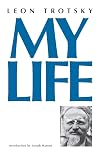
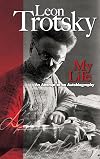
The only Bolshevik leader to write his memoirs, Leon Trotsky published this remarkable book in 1930, the first year of a perilous, decade-long exile that ended with his assassination in Mexico. Expelled from the Communist party and deported from the Soviet Union, the former People's Commissar for Foreign Affairs recalled his lifelong struggle in the world of revolutionary politics. In addition to his firsthand accounts of the early intrigues within the Communist government, Trotsky also show more delivered chilling glimpses into the rise of the new Soviet bureaucracy and prescient warnings of the Stalinist regime's horrors. My Life recounts the rise of the revolutionary wave in Russia in 1905 and 1917, the devastating effects of World War I, and the degeneration of the Russian Revolution from Lenin's internationalist course to Stalin's increasingly counterrevolutionary policies. Trotsky's exile placed him beyond the pale of both the official Communist party and the rest of the political world; yet in this fascinating historical document, he remains true to a philosophy of permanent world revolution, offering a highly informed perspective on the struggle toward a socialist future. show lessTags
Recommendations














Member Recommendations
Member Reviews
Trotsky's autobiography is a fascinating account of his life from his childhood up to 1930, when he wrote the book, ten years before he was murdered by an agent of Stalin in 1940.
Trotsky made contributions to Marxist thought, for example in his theory of permanent revolution and the theory of combined and uneven development. But he is best known for his political activities: firstly as a key leader, alongside Lenin, of the 1917 Russian Revolution, and then later as the leading opponent of the bureaucratic tyranny of Stalin's regime, which destroyed the fledgling workers' democracy in the 1920s and forced Trotsky into exile.
Trotsky clung to the view that Russia under Stalin was a "degenerated workers' state". I think he was mistaken on show more this: much more convincing is Tony Cliff's theory that Russia (and, later, the other so-called "communist" regimes) was a state capitalist society. But despite this weakness, Trotsky did keep alive the fundamental Marxist idea that socialism must be based on internationalism and democracy. (The "dictatorship of the proletariat" was meant to mean the DEMOCRATIC control of society by the working class.)
One early episode gives a flavour of the book. At school Trotsky took part in a minor bit of rebellious behaviour in class against an unpleasant teacher. When the school cracked down, Trotsky learned his first political lesson. Some boys bravely stayed loyal to each other, some became tell-tales, and the majority wavered in the middle.
Trotsky writes: "These three groups never quite disappeared even during the years that followed. I met them again and again in my life in the most varied circumstances."
We can obviously see this in 1917. The revolution happened when the "middle" one of these groups (the mass of workers and peasants) was won over to the side of those who had for years been consistently opposing the injustices of capitalism: the Bolsheviks.
I'll end with two more quotations which give an indication of Trotsky's personality and politics. Both are from the Foreword to the book.
"A well-written book in which one can find new ideas, and a good pen with which to communicate one's own ideas to others, for me have always been and are today the most valuable and intimate products of culture."
"To understand the causal sequence of events and to find somewhere in the sequence one's own place - that is the first duty of a revolutionary."
As this book shows, Trotsky certainly found his place in a historic sequence of events. show less
Trotsky made contributions to Marxist thought, for example in his theory of permanent revolution and the theory of combined and uneven development. But he is best known for his political activities: firstly as a key leader, alongside Lenin, of the 1917 Russian Revolution, and then later as the leading opponent of the bureaucratic tyranny of Stalin's regime, which destroyed the fledgling workers' democracy in the 1920s and forced Trotsky into exile.
Trotsky clung to the view that Russia under Stalin was a "degenerated workers' state". I think he was mistaken on show more this: much more convincing is Tony Cliff's theory that Russia (and, later, the other so-called "communist" regimes) was a state capitalist society. But despite this weakness, Trotsky did keep alive the fundamental Marxist idea that socialism must be based on internationalism and democracy. (The "dictatorship of the proletariat" was meant to mean the DEMOCRATIC control of society by the working class.)
One early episode gives a flavour of the book. At school Trotsky took part in a minor bit of rebellious behaviour in class against an unpleasant teacher. When the school cracked down, Trotsky learned his first political lesson. Some boys bravely stayed loyal to each other, some became tell-tales, and the majority wavered in the middle.
Trotsky writes: "These three groups never quite disappeared even during the years that followed. I met them again and again in my life in the most varied circumstances."
We can obviously see this in 1917. The revolution happened when the "middle" one of these groups (the mass of workers and peasants) was won over to the side of those who had for years been consistently opposing the injustices of capitalism: the Bolsheviks.
I'll end with two more quotations which give an indication of Trotsky's personality and politics. Both are from the Foreword to the book.
"A well-written book in which one can find new ideas, and a good pen with which to communicate one's own ideas to others, for me have always been and are today the most valuable and intimate products of culture."
"To understand the causal sequence of events and to find somewhere in the sequence one's own place - that is the first duty of a revolutionary."
As this book shows, Trotsky certainly found his place in a historic sequence of events. show less
Trotsky is so smart and such a good writer. His autobio. is a great read even if you're a crusty reactionary.
If you only read one book by LDT then read this one, the ultimate answer to those who portray lenin and trostsky as inhumane this is the most humane and inspiring autobiograpy you will ever read.
Read the first paragraph on marxists.org and tell me if any other autobiography or biography starts off so penetratingly.
Reviewed in the August 1930 issue of the Socialist Standard:
http://socialiststandardmyspace.blogspot.com/2017/10/lessons-from-trotskys-life-...
http://socialiststandardmyspace.blogspot.com/2017/10/lessons-from-trotskys-life-...
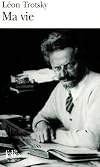
L'essai autobiographique qui porte le titre "MA VIE" fut le premier livre que Trotsky écrivit pendant son exil. L'autobiographie lui apparaissait comme un moyen de poursuivre la bataille qu'il n'avait jamais cessé de livrer pendant les trente années de sa vie politique. K Si la rédaction des premiers chapitres consacrés à l'enfance, au milieu familial, lui donna du souci, écrit Alfred Rosmer, à qui l'on doit la présente édition de cet ouvrage, il se sentit parfaitement à l'aise dès qu'il eut à décrire sa rencontre avec les cercles socialistes et ouvriers de Nikolaiev - il avait alors dix-huit ans - et la longue suite d'événements décisifs, personnels et historiques qui la suivirent. L'autobiographie devenait sous sa show more plume une esquisse du mouvement ouvrier et de la révolution russe durant le "demi-siècle". Moutons que ce livre est un monument précieux à divers titres : c'est le témoignage et l'histoire d'un homme qui a puissamment contribué à façonner le monde moderne; c'est un étonnant roman politique; c'est enfin la vie exemplaire d'un révolutionnaire dont on peut ne pas partager les idées mais dont on ne peut nier l'envergure. show less
Jun 7, 2011French
Autobiografía de uno de los campeones del humanismo de todos los tiempos. Imprescindible como introducción para todos aquellos que se interesen por la historia real del movimiento obrero. No es solo una brillante exposición de la vida del más importante revolucionario, junto a Lenin, de la historia, sino que literariamente es una delicia. Si vas a leer a Trotsky, es la mejor manera de comenzar.
Aug 27, 2014Spanish
Members
- Recently Added By
Author Information

800+ Works 7,858 Members
Leon Trotsky was born Lev Davidovich Bronshteyn on November 7, 1879 in Yanovka, Ukraine. As a teenager, he became involved in underground activities and was soon arrested, jailed and exiled to Siberia where he joined the Social Democratic Party. He escaped from exile in Siberia by using the name of a jailer called Trotsky on a false passport. show more During World War I, he lived in Switzerland, France, England, and New York City, where he edited the newspaper Novy Mir (New World). In 1917, after the overthrow of Tsar Nicholas II, he went back to Russia and joined Vladimir Lenin in the first, abortive, July Revolution of the Bolsheviks. A key organizer of the successful October Revolution, he was People's Commissar for Foreign Affairs in the Lenin regime. He was then made war commissar and in this capacity, built up the Red Army which prevailed against the White Russian forces in the civil war. Antagonism developed between him and Joseph Stalin during the Civil War of 1918-1920. When Lenin fell ill and died, Stalin became the new leader and Trotsky was thrown out of the party in 1927. Trotsky fled across Siberia to Norway, France, and finally settled in Mexico in 1936. He began working on the biography of Stalin. He was able to complete 7 of the 12 chapters before an assassin, acting on Stalin's orders, stabbed Trotsky with an ice pick. He died on August 21, 1940. The construction of the remaining five chapters was accomplished by the translator Charles Malamuth, from notes, worksheets, and fragments. (Bowker Author Biography) show less
Some Editions
Awards and Honors
Notable Lists
Series

Belongs to Publisher Series
Work Relationships
Is abridged in
Common Knowledge
- Canonical title
- My Life
- Original title
- Моя Жизнь
- Alternate titles*
- Mein Leben - Versuch einer Autobiographie
- Original publication date
- 1930
- People/Characters
- Leon Trotsky; Vladimir Lenin
- Original language
- Russian
*Some information comes from Common Knowledge in other languages. Click "Edit" for more information.
Classifications
- Genres
- Biography & Memoir, Nonfiction, History, General Nonfiction, Politics and Government
- DDC/MDS
- 947.084092 — History & geography History of Europe Eastern European Counties and Russia Russian & Slavic History by Period 1855- 1917-1953 ; Communist period Biography
- LCC
- DK254 .T6 .A48 — History of Europe, Asia, Africa and Oceania Russia. Soviet Union. Former Soviet Republics – Poland History of Russia. Soviet Union. Former Soviet Republics History House of Romanov, 1613-1917
- BISAC
Statistics
- Members
- 466
- Popularity
- 65,760
- Reviews
- 10
- Rating
- (4.01)
- Languages
- 12 — Dutch, English, French, German, Hungarian, Italian, Norwegian (Bokmål), Polish, Portuguese (Portugal), Russian, Spanish, Swedish
- Media
- Paper, Ebook
- ISBNs
- 33
- ASINs
- 16