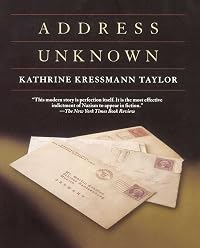
Address Unknown
by Kathrine Kressmann Taylor
On This Page
Description
A rediscovered classic and international bestseller that recounts the gripping tale of a friendship destroyed at the hands of Nazi Germany In this searing novel, Kathrine Kressmann Taylor brings vividly to life the insidious spread of Nazism through a series of letters between Max, a Jewish art dealer in San Francisco, and Martin, his friend and former business partner who has returned to Germany in 1932, just as Hitler is coming to power. Originally published in Story magazine in 1938, show more Address Unknown became an international sensation. Credited with exposing the dangers of Nazism to American readers early on, it is also a scathing indictment of fascist movements around the world and a harrowing exposé of the power of the pen as a weapon. A powerful and eloquent tale about the consequences of a friendship-and society-poisoned by extremism, Address Unknown remains hauntingly and painfully relevant today. show lessTags
Recommendations



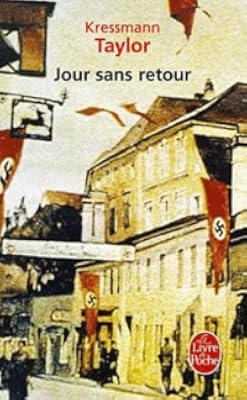
























Member Recommendations
Member Reviews
A Short (Sweet?) Story of Nazism
Address Unknown, an easy hour or two read, is told through letters, each just a page or so long, between two men, friends. Both are German; one is also Jewish. They are business partners who have worked side by side to build a successful art Gallery in California after fleeing the devastated German economy following the end of the First World War.
The letters begin when one man, Martin, has returned to Munich to re-establish himself in the fatherland with his wife and small sons, and the other man, Max, a bachelor stays in San Francisco to run their business. Max and Martin's first letters are all about the noble and undying quality of friendship. The exchange is from late 1932 to early 1934, a time in show more history when the world was watching with great uncertainty the early but distinct rise of the Nationalist Socialist Party, the Nazis.
Their letters, once joyful and full of the fondest memories between the friends, begin to reflect the grave concerns and the quick impact the Nazis are having on both men. The letters, like Nazi history itself, progress in a terrible way. The final letters made me uneasy. It's darn hard to feel sorry for a Nazi, especially when Nazism is used cleverly against itself by a Jew.
Sweet revenge. Or was is the coldest kind of retribution? I know it made me uneasy by the pleasure I took in it.
How Does Such Horror Begin Anyway?
The remarkably prescient Address Unknown (written in 1938 before the full horrors were known) shows that it takes a charismatic, power-hungry leader just two building blocks to begin a quick mass transformation.
The first building block is to rally the desire for one's country to be great again. This works easiest if that is an undefined nebulous thing so long as it is replete with desired status symbols (tanks, planes, rockets, snazzy uniforms, or even gold covered penthouses maybe.)
The second building block is to identify who is to blame and who is to be hated for holding back that greatness. This works easiest if the offensive ones are instantly identifiable, not matching the physical ideal. Then they must be purged for the good of the whole country (well, the whole country minus the offensive ones, of course).
Once the tipping point of psychosis has been reached, once the power-hungry have become the power-full and have a convinced base of blinded believers doing their bidding, any remaining thinking hold outs against this goose step to greatness will begin to wisely self-silence lest they also be blamed and be purged, like their missing neighbors and friends.
America March 1, 2024
Nazi Germany wasn't mysterious. It was formulaic. And once again the required building blocks of horror are in place: a charismatic leader with an odd grooming technique, worshipping chanters wearing their distinct red logo, and masses of non-white enemies identified, lurking everywhere to take a patriot's God-ordained superiority away.
And that scares the shit of out me.
Beginning long before reading Address Unknown, I have been fearfully calculating how likely another totalitarian takeover is in America. These are a few differences that I tell myself, differences that I hope make all the difference.
-> We are not suffering a recent crushing military humiliation and domestic hyperinflation that Germany was experiencing. Inflation rate of 3.1% may make you grumble but not cancel your Netflix subscription.
-> We have unwieldy news and information sources, especially the decentralized Internet that gives citizens instant communication that is sure to put a nimble kink in anyone's Master Plan.
-> Our citizenry has weapons. Lots and lots of weapons. On both sides of the divide. Meantime, the U.S. military has technology that can be operated by a single soldier from miles away, and turn assault rifles and hundreds of sweating militia into a sickening black pile of what was once beloved kinfolk.
-> Like Germany, we have a democratically elected leader who is old, really stinking old. But unlike Germany, the vying "first day only dictator" is also really stinking old.
-> We won our system of government through winning a bitter a war for the right to have that government, two wars in actual fact. Germany's republic fell into their laps by losing a war, and the abdication of a losing emperor.
-> We have been a democratic republic for 250 years. Germany had the Weimar Republic only for a tumultuous 15 years.
->With the exception of Indigenous Americans, America is a land of immigrants.. Germany, on the other hand, has an associated ethnicity. "Blood and soil" might be chanted here, but refers instead to an idea (not to ethnic blood and soil) that America is a Christian Nation, vastly peopled by Christians. That's in spite of the clear statistical steady decline in Christian church memberships and statistics of the even larger decline of confidence in organized religion.
But all these might just be differences without distinction, still heading toward a hellish outcome.
Be the real difference. VOTE BLUE, my friend, vote blue. show less
Address Unknown, an easy hour or two read, is told through letters, each just a page or so long, between two men, friends. Both are German; one is also Jewish. They are business partners who have worked side by side to build a successful art Gallery in California after fleeing the devastated German economy following the end of the First World War.
The letters begin when one man, Martin, has returned to Munich to re-establish himself in the fatherland with his wife and small sons, and the other man, Max, a bachelor stays in San Francisco to run their business. Max and Martin's first letters are all about the noble and undying quality of friendship. The exchange is from late 1932 to early 1934, a time in show more history when the world was watching with great uncertainty the early but distinct rise of the Nationalist Socialist Party, the Nazis.
Their letters, once joyful and full of the fondest memories between the friends, begin to reflect the grave concerns and the quick impact the Nazis are having on both men. The letters, like Nazi history itself, progress in a terrible way. The final letters made me uneasy. It's darn hard to feel sorry for a Nazi, especially when Nazism is used cleverly against itself by a Jew.
Sweet revenge. Or was is the coldest kind of retribution? I know it made me uneasy by the pleasure I took in it.
How Does Such Horror Begin Anyway?
The remarkably prescient Address Unknown (written in 1938 before the full horrors were known) shows that it takes a charismatic, power-hungry leader just two building blocks to begin a quick mass transformation.
The first building block is to rally the desire for one's country to be great again. This works easiest if that is an undefined nebulous thing so long as it is replete with desired status symbols (tanks, planes, rockets, snazzy uniforms, or even gold covered penthouses maybe.)
The second building block is to identify who is to blame and who is to be hated for holding back that greatness. This works easiest if the offensive ones are instantly identifiable, not matching the physical ideal. Then they must be purged for the good of the whole country (well, the whole country minus the offensive ones, of course).
Once the tipping point of psychosis has been reached, once the power-hungry have become the power-full and have a convinced base of blinded believers doing their bidding, any remaining thinking hold outs against this goose step to greatness will begin to wisely self-silence lest they also be blamed and be purged, like their missing neighbors and friends.
America March 1, 2024
Nazi Germany wasn't mysterious. It was formulaic. And once again the required building blocks of horror are in place: a charismatic leader with an odd grooming technique, worshipping chanters wearing their distinct red logo, and masses of non-white enemies identified, lurking everywhere to take a patriot's God-ordained superiority away.
And that scares the shit of out me.
Beginning long before reading Address Unknown, I have been fearfully calculating how likely another totalitarian takeover is in America. These are a few differences that I tell myself, differences that I hope make all the difference.
-> We are not suffering a recent crushing military humiliation and domestic hyperinflation that Germany was experiencing. Inflation rate of 3.1% may make you grumble but not cancel your Netflix subscription.
-> We have unwieldy news and information sources, especially the decentralized Internet that gives citizens instant communication that is sure to put a nimble kink in anyone's Master Plan.
-> Our citizenry has weapons. Lots and lots of weapons. On both sides of the divide. Meantime, the U.S. military has technology that can be operated by a single soldier from miles away, and turn assault rifles and hundreds of sweating militia into a sickening black pile of what was once beloved kinfolk.
-> Like Germany, we have a democratically elected leader who is old, really stinking old. But unlike Germany, the vying "first day only dictator" is also really stinking old.
-> We won our system of government through winning a bitter a war for the right to have that government, two wars in actual fact. Germany's republic fell into their laps by losing a war, and the abdication of a losing emperor.
-> We have been a democratic republic for 250 years. Germany had the Weimar Republic only for a tumultuous 15 years.
->With the exception of Indigenous Americans, America is a land of immigrants.. Germany, on the other hand, has an associated ethnicity. "Blood and soil" might be chanted here, but refers instead to an idea (not to ethnic blood and soil) that America is a Christian Nation, vastly peopled by Christians. That's in spite of the clear statistical steady decline in Christian church memberships and statistics of the even larger decline of confidence in organized religion.
But all these might just be differences without distinction, still heading toward a hellish outcome.
Be the real difference. VOTE BLUE, my friend, vote blue. show less
A short, sharp work that—for something written before the outbreak of the Second World War and by someone an ocean away from Germany—is highly insightful and prescient. Kathrine Kressmann Taylor's novella is written in the form of letters between two business partners: one a German Jew living in America, the other a Gentile who has moved back to Germany just as the Nazis come to power and who becomes an ardent follower of Hitler. Their relationship swiftly deteriorates. Kressmann Taylor's writing isn't subtle, but her point is clear and irrefutable: in a fascist society, words kill.
I know this short but impactful epistolary novel will stay with me for a long time. In the early 1930s, two friends of German heritage, one in San Francisco and one in Munich, exchange a series of letters about their shared art business and life in general. The San Francisco friend is Jewish and develops concerns about the rise of antisemitism in Germany. He is troubled as his once dearest friend falls under Hitler's influence, as is shown in his letters. I had to read this twice in one afternoon, just to appreciate its message more deeply. How easily poison ideologies can spread. Originally published in 1938, ADDRESS UNKNOWN is clearly still very relevant today.
This was a short, sharp, and powerfully brief story. It’s fascinating to think about a world where people don’t associate Nazis with evil quite yet. The 1930s were time of denial when it came to Germany and this book captured that perfectly. This epistolary novel gave us a glimpse into the life of an American Jewish man and his German friend and business partner. Their correspondence was brief, but world-shattering. I know I’ll be thinking about this one for awhile.
Wow. How do I react to this? Cheer? Cry? Feel horrified? Drop my jaw in disbelief and shock? Honestly I am feeling all the feels. What a massive thought bomb this very short book is! While this story is set as WWII is gaining ground, I think it so relevant to today and everyday really. It will make you reflect deeply on your own values and morals. Friendship. Family. Patriotism. Humanity. What would you stand up for? Who would you stand up for? How far would you go to support your friends and family? The more I think about the implications of these character's actions and situations, the more I am thinking this feels like a horror novel - and even more horrifying, it's actually our historical reality. It's definitely 90 pages that will show more leave you reeling. Many thanks to NetGalley and the publisher for providing me a copy of this book. show less
I'd never heard of this little novella before. Published in 1938, it's an example of why I dislike the idea that you have to consider the politics of the time before judging what an author writes. In 1938 we in the USA were doing our best, successfully, to ignore the horror Hitler was inflicting on his own people, but Kathrine Kressmann Taylor wasn't. We always hope authors have open eyes and can see maybe parts of the world that our blinkered eyes ignore. Taylor saw it all and told the world about it in, I have to say, a very entertaining way.
One of the most surprising facts about "Address Unknown" is that it was written by an American author, Kathrine Kressman Taylor, in 1938. Taylor foresaw that conditions in Europe for Jews and other "undesirables" would deteriorate drastically in the coming years. This slender book consists of letters and a cablegram between Max Eisenstein, a Jew, and his German friend and business partner, Martin Schulse, who operated an art gallery in San Francisco. In 1932, Martin moves to Munich with his wife and children, while Eisenstein remains in America.
The two exchange chatty letters until 1933, when Hitler comes to power. Although he is wary of Hitler at first, Schulse comes to admire the dictator. Martin says that "the man is like an show more electric shock, strong as only a great orator and zealot can be." Although Schulse acknowledges that Hitler's persecution of Jews is on the rise, he believes that the charismatic new chancellor will help to revitalize Germany. Martin joins the Nazi party, and eagerly anticipates a prosperous and fulfilling future under the Führer's leadership.
How does Eisenstein react to this radical change in his dear friend, especially since Max's sister, Griselle, a Jewish actress in Vienna, could become a target? The previously amiable correspondence between Max and Martin becomes increasingly biting and ominous. "Address Unknown" movingly personalizes a tragic era in European history. It stands out as an insightful warning of what could happen when a powerful madman mobilizes his fanatical followers to annihilate his perceived enemies. It turns out that Ms. Taylor was all too prescient. show less
The two exchange chatty letters until 1933, when Hitler comes to power. Although he is wary of Hitler at first, Schulse comes to admire the dictator. Martin says that "the man is like an show more electric shock, strong as only a great orator and zealot can be." Although Schulse acknowledges that Hitler's persecution of Jews is on the rise, he believes that the charismatic new chancellor will help to revitalize Germany. Martin joins the Nazi party, and eagerly anticipates a prosperous and fulfilling future under the Führer's leadership.
How does Eisenstein react to this radical change in his dear friend, especially since Max's sister, Griselle, a Jewish actress in Vienna, could become a target? The previously amiable correspondence between Max and Martin becomes increasingly biting and ominous. "Address Unknown" movingly personalizes a tragic era in European history. It stands out as an insightful warning of what could happen when a powerful madman mobilizes his fanatical followers to annihilate his perceived enemies. It turns out that Ms. Taylor was all too prescient. show less
Members
- Recently Added By
Published Reviews
That this short, fleeting story has lasted so long is not only because of its artistic achievement, and not only because, written in 1938, it astonishingly anticipated the horror that was yet to come. It is because its prescience is not confined to its time. It saw into our own future too.
added by lilithcat
Lists

2022 Christmas Gifts
60 works; 13 members

Books Read in 2020
4,379 works; 124 members

Llibres que he llegit el 2006
17 works; 1 member

Authors from the United States
245 works; 3 members

Epistolary Non-Fiction (Letters and Correspondence)
99 works; 5 members

Books Read in 2021
5,361 works; 113 members

Favorite Epistolary Fiction
143 works; 144 members

History: Holocaust
106 works; 1 member

Books We Discovered On LibraryThing
530 works; 130 members
Author Information

10+ Works 1,714 Members
Some Editions
Awards and Honors
Distinctions
Series
Belongs to Publisher Series
Work Relationships
Is contained in
Common Knowledge
- Canonical title*
- Destinatario sconosciuto
- Original title
- Address unknown
- Original publication date
- 1938
- People/Characters
- Martin Schulse; Max Eisenstein; Griselle Eisenstein; Elsa Shulse
- Important places
- Munich, Bavaria, Germany; San Francisco, California, USA; Germany
- Important events
- World War II; Holocaust
- First words
- When I was growing up in Scotland, World War II still cast a long shadow. Sugar rationing did not end until 1953, meat rationing until 1954. The comic I read every week carried a story about Biggles, the intrepid pilot, flyin... (show all)g lone missions, while Remembrance Day, when we had two minutes of silence at school and everyone wore poppies, was a deeply solemn occasion. -Introduction, Margot Livesey
NOVEMBER 12, 1932
Herrn Martin Schulse
Schloss Rantzenburg Munich, Germany
My Dear Martin,
Back in Germany! How I envy you! Although I have not seen it since my school days, the spell of Unter den Linden... (show all) is still strong upon me – the breadth of intellectual freedom, the discussions, the music, the light-hearted comradeship. And now the old Junker spirit, the Prussian arrogance and militarism are gone. You go to a democratic Germany, a land with a deep culture and the beginnings of a fine political freedom. It will be a good life. - Last words
- (Click to show. Warning: May contain spoilers.)The God of Moses be at your right hand.
- Original language*
- Inglese
- Canonical DDC/MDS
- 813.54
- Canonical LCC
- PS3539.A944 A33
*Some information comes from Common Knowledge in other languages. Click "Edit" for more information.
Classifications
- Genres
- Fiction and Literature, General Fiction, Historical Fiction
- DDC/MDS
- 813.54 — Literature & rhetoric American literature in English American fiction in English 1900-1999 1945-1999
- LCC
- PS3539 .A944 .A33 — Language and Literature American literature American literature Individual authors 1900-1960
- BISAC
Statistics
- Members
- 1,563
- Popularity
- 14,692
- Reviews
- 87
- Rating
- (4.24)
- Languages
- 14 — Catalan, Chinese, Czech, Danish, Dutch, English, French, German, Galician, Hungarian, Italian, Portuguese, Spanish, Swedish
- Media
- Paper, Audiobook, Ebook
- ISBNs
- 87
- ASINs
- 28