
The General in His Labyrinth
by Gabriel Garcia Marquez
On This Page
Description
Recounts the turbulent life of the great Simon Bolivar.Tags
Recommendations


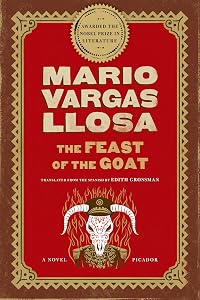




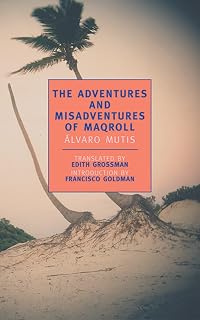




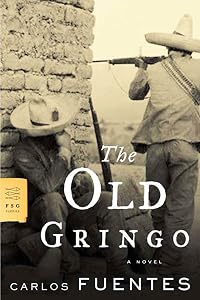

















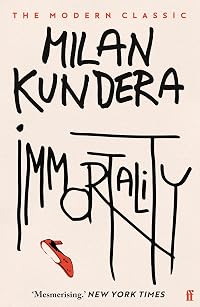
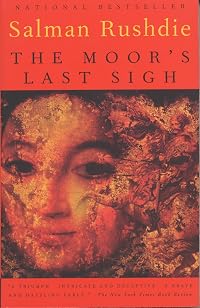




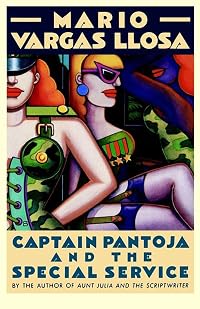




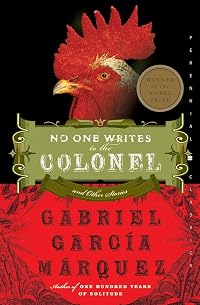
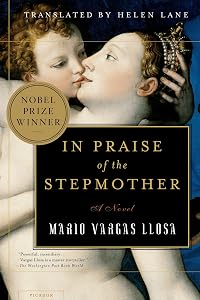






Member Recommendations

Member Reviews
The Pulitzer Prize winner Marquez gives us the last days of Simon Bolivar as his health deteriorates and his legendary liberation of South America from Spanish rule is left trampled and his dream of a unified country turns to ash. Yes, there is history here, but what is striking is the sculpture of a dying man putting the layers of his life into place as he tolerates a journey to exile amidst derision and humiliation, yet with a faithful entourage. We travel with Bolivar on a trip down the Magdalena River as life slips slowly through his hands yet continues rushing around him. He always participates! Even as his body is ravaged, fevers and hallucinations deny him sleep, and food is odious, he still schemes and plans for a unified show more country despite all the obstacles. Emaciated and weak he still carries on with the voyage of life, not always with grace, often with temper but always with passion. No, I can't really call this a historical novel, not a novel in the typical sense either, what comes to mind more than anything is that this is a portrait. It is a picture of a prematurely old man in all of his magnificence and humanity as he slides away from us. It is not often pretty, bodies in decline seldom are, but it is life and this story is told with a beauty of which Marquez' is master. A worthwhile read! show less
This book is about the last days in the life of Simón Bolívar, the general who was instrumental in the freeing of Latin American from colonization by Spain. During his life, he fought for a united Latin America, but as he watched the hemisphere split apart, he became resigned and melancholic, which this novel does an excellent job of reflecting. Not only do we get a glimpse of this little-studied period of history during this famous figure's life, but the narrative woven by García-Márquez is humorous and thought-provoking. "The General in His Labyrinth" is an excellent, although quick, read.
Esta novela constituye un acercamiento mítico, histórico y humano a la figura de Simón Bolívar. El pulso magistral de García Márquez refiere hasta en sus detalles mínimos la inmensa aventura independentista que, impulsada por Bolívar, cambió el destino de América. Aclamado por el pueblo como Libertador, blanco de conjuras políticas y militares, héroe romántico y hasta libertino, idealista íntegro y abandonado que contempla las ruinas de su sueño de unidad de los pueblos americanos, Bolívar emprende el que será su viaje foral... Al reconstruir una época crucial de la historia de América, el genial autor colombiano consigue una novela donde la tragedia de lo real y la magia de lo maravilloso alcanzan sus cotas más altas.
Garcia Marquez’s depiction of the last few months in the life of Simón Bolívar, liberator of South America, is an absorbing and interesting read. There’s no magic realism in this one, but there are many ironies and absurdities, possible ghosts and portents, and occasional delusions. The overwhelming image of the book is one of ruin and decay – the General’s failing health is described at length. In addition, as they travel from Santa Fe de Bogota to Cartagena via the Magdalena River, the General recalls earlier days in the same places where he was young and energetic, greeted by adoring crowds, feted as a hero, and sleeping with many, many women. Now the officials have to keep away violent protesters and quickly paint over the show more graffiti denouncing him. The townspeople respond tepidly, if at all, to his arrival and any attempts to recreate the past – playing the waltz that he previously ordered to be done continuously – fall flat. It also appears that his dream of a united South America will never happen, as the political infighting grows worse, and regions split off.
There’s no overt magical events, but there is a quixotic feel to the book, even though it was based on true events and it is obvious that Garcia Marquez did extensive research (describing the writings and works of some of Bolívar’s companions after his death, for example). Besides the night and day reactions to the General, his journeys have the sad, inevitable feeling of never happening and never going anywhere. At the beginning, he is constantly talking about leaving with his retinue, but many believe he will never leave. There’s always a reason – someone wants him to stay, he needs a passport. When they finally start out, it is with the plan of reaching Cartagena and taking a ship to London. No one believes this plan, and the General’s attempts to make it believable almost sabotage it even more. With all his appointments, terms as president, taking and retaking various places, his life seems to have a circular or repetitive quality – certainly making the title appropriate. There are a couple instances of disappearing women or ghosts that the general believes he sees, although who can know the truth about that? His legal wrangling over the Aroa mines also has a Kafka-esque or Jarndyce vs. Jarndyce feel.
Bolívar’s character is not always sympathetic, but always interesting. His friends and supporters, like his money, are dwindling and he really is only close to his oldest servant, Jose Palacios. Even Manuela Saez, his lover of years, keeps him at a distance – she made a firm resolution not to be dragged down with him. He’s irascible, stubborn, foolish, and his extreme need to be admired and not criticized moves into slightly unhealthy territory. There are several examples of Bolivar’s cruel or violent actions, but I almost felt there should be more of that. The main contrast is between his former glory and present misery. But this was a good read, and reminded me that I should read more Garcia Marquez. show less
There’s no overt magical events, but there is a quixotic feel to the book, even though it was based on true events and it is obvious that Garcia Marquez did extensive research (describing the writings and works of some of Bolívar’s companions after his death, for example). Besides the night and day reactions to the General, his journeys have the sad, inevitable feeling of never happening and never going anywhere. At the beginning, he is constantly talking about leaving with his retinue, but many believe he will never leave. There’s always a reason – someone wants him to stay, he needs a passport. When they finally start out, it is with the plan of reaching Cartagena and taking a ship to London. No one believes this plan, and the General’s attempts to make it believable almost sabotage it even more. With all his appointments, terms as president, taking and retaking various places, his life seems to have a circular or repetitive quality – certainly making the title appropriate. There are a couple instances of disappearing women or ghosts that the general believes he sees, although who can know the truth about that? His legal wrangling over the Aroa mines also has a Kafka-esque or Jarndyce vs. Jarndyce feel.
Bolívar’s character is not always sympathetic, but always interesting. His friends and supporters, like his money, are dwindling and he really is only close to his oldest servant, Jose Palacios. Even Manuela Saez, his lover of years, keeps him at a distance – she made a firm resolution not to be dragged down with him. He’s irascible, stubborn, foolish, and his extreme need to be admired and not criticized moves into slightly unhealthy territory. There are several examples of Bolivar’s cruel or violent actions, but I almost felt there should be more of that. The main contrast is between his former glory and present misery. But this was a good read, and reminded me that I should read more Garcia Marquez. show less
Esta novela constituye un acercamiento mítico, histórico y humano a la figura de Simón Bolívar. El pulso magistral de García Márquez refiere hasta en sus detalles mínimos la inmensa aventura independentista que, impulsada por Bolívar, cambió el destino de América. Aclamado por el pueblo como Libertador, blanco de conjuras políticas y militares, héroe romántico y hasta libertino, idealista íntegro y abandonado que contempla las ruinas de su sueño de unidad de los pueblos americanos, Bolívar emprende el que será su viaje final... Al reconstruir una época crucial de la historia de América, el genial autor colombiano consigue una novela donde la tragedia de lo real y la magia de lo maravilloso alcanzan sus cotas más altas
The General in His Labyrinth is a different offering than what I expect from Marquez, one of my favorite writers. Not so much in style as in content; whereas he generally pens straight fiction, this is a fictionalized account of Simon Bolivar's final days, and reads more like a biography with (great) liberties than a novel. Bolivar, the Liberator, is fleeing Santa Fe de Bogota, where the people revile him in the streets, burning effigies, scrawling obscene insults on walls, and papering the streets with inciting pamphlets. The General was the hero of the continent during the war for liberation, but now that Spanish rule has been thrown off, his dream of seeing one completely united country is crumbling, and his glory has been sucked show more away through the efforts and schemes of politics. Bolivar sails up the Magdalena River, intending to leave South America entirely, thoroughly disillusioned and disgusted. The book starts with the complicated task of his departure from Santa Fe de Bogota, follows his journey along the Magdalena, and doubles back with him as he decides to make one more attempt to unite the country, starting fresh, only to be stopped by death.
When I say that Marquez writes straight fiction, I might be misleading. He is a master of the magical realism style, where the supernatural and fantastic is mingled with the natural in such a fashion as to be accepted as a commonplace. This novel tones down that quality quite a bit, because Marquez is true to the factual information on which his story is based. Still, where he is able, small flourishes of that style emerge, such as his description of Manuela Saenz's entourage, or the rumors of men who walk on birds legs in a remote section along the Magdalena. In all other aspects, his charming writing style remains unchanged. He juxtaposes poignant with vulgar, a wondrous love story can enclose atrocities, and the sentences flow with a rhythm perfect for oral reading. As in other stories, Marquez plays with the flow of time. In this book, he has a convenient justification for the nonlinear chronology: the main part of the book occurs in Bolivar's mind as he reflects on his life, and our minds are notorious for skipping about from one thread of thought to another, irrespective of the time when something occurred. The story cuts about in Bolivar's history at will, spanning entirely different periods of time in a few pages, triggered by the memories passing through Bolivar's mind.
Clearly, much of this interior monologue is fictional, but Marquez took effort to present as realistic a fiction as possible. He used letters and journals, research articles and novels, to compile accurate information about the man Bolivar, a hero in South America. Not only did his background reading contribute to the details such as where he traveled and when, and what he did, but he also used it to guide the conversations and mental reflections in the book. He tried to make his characters speak the way the historical figures did in their own letters. Having read the note at the end of the book and the timeline, I feel that Marquez lived in the man's skin as much as he possibly could, to produce a highly personal story that, while fiction, represents a very real possibility of what might have been.
Like much of his work, this was a fast read for me. The dialogue is believable, and his descriptive passages are always so enjoyable. I do prefer when he writes his fiction rather than fictionalized history, because I love the magical realism touches, and this book was very understated in that department. Nevertheless, it was a good book, interesting and well written, and it taught me about a subject in which I have very little knowledge. I feel that I should do more research on Bolivar and the history of South America, because the topic seems fascinating from the taste this novel provides. I don't know how much is Marquez's characterization, and how much is historical fact, but Bolivar is a compelling person, full of contradictions - eloquent and crude, romantic and reserved, triumphant and despondent. Whether you are a fan of Marquez's skills, or are interested in this time period, consider this book as a good addition to your reading list. show less
When I say that Marquez writes straight fiction, I might be misleading. He is a master of the magical realism style, where the supernatural and fantastic is mingled with the natural in such a fashion as to be accepted as a commonplace. This novel tones down that quality quite a bit, because Marquez is true to the factual information on which his story is based. Still, where he is able, small flourishes of that style emerge, such as his description of Manuela Saenz's entourage, or the rumors of men who walk on birds legs in a remote section along the Magdalena. In all other aspects, his charming writing style remains unchanged. He juxtaposes poignant with vulgar, a wondrous love story can enclose atrocities, and the sentences flow with a rhythm perfect for oral reading. As in other stories, Marquez plays with the flow of time. In this book, he has a convenient justification for the nonlinear chronology: the main part of the book occurs in Bolivar's mind as he reflects on his life, and our minds are notorious for skipping about from one thread of thought to another, irrespective of the time when something occurred. The story cuts about in Bolivar's history at will, spanning entirely different periods of time in a few pages, triggered by the memories passing through Bolivar's mind.
Clearly, much of this interior monologue is fictional, but Marquez took effort to present as realistic a fiction as possible. He used letters and journals, research articles and novels, to compile accurate information about the man Bolivar, a hero in South America. Not only did his background reading contribute to the details such as where he traveled and when, and what he did, but he also used it to guide the conversations and mental reflections in the book. He tried to make his characters speak the way the historical figures did in their own letters. Having read the note at the end of the book and the timeline, I feel that Marquez lived in the man's skin as much as he possibly could, to produce a highly personal story that, while fiction, represents a very real possibility of what might have been.
Like much of his work, this was a fast read for me. The dialogue is believable, and his descriptive passages are always so enjoyable. I do prefer when he writes his fiction rather than fictionalized history, because I love the magical realism touches, and this book was very understated in that department. Nevertheless, it was a good book, interesting and well written, and it taught me about a subject in which I have very little knowledge. I feel that I should do more research on Bolivar and the history of South America, because the topic seems fascinating from the taste this novel provides. I don't know how much is Marquez's characterization, and how much is historical fact, but Bolivar is a compelling person, full of contradictions - eloquent and crude, romantic and reserved, triumphant and despondent. Whether you are a fan of Marquez's skills, or are interested in this time period, consider this book as a good addition to your reading list. show less
The book centres on the final seven months of the life of Simon Bolivar who, having been forced from power, travelled from Bogota to the sea where he will, supposedly, depart for Europe to spend his final days. The voyage is a painful one, full of extended stays, malignant climates, and a population divided between those who pay honour to what Bolivar was and what he has achieved, and those for whom he is a fallen idol, responsible for current woes. The great Liberator is ill, and increasingly so, and greatly disillusioned to see the failure of his great dream of a united Americas. That drive for unity was a powerful force in face of the challenge of ridding themselves of the Spanish, but once the initial goal was obtained, the old show more rivalries and the power of the landed and wealthy classes came forward to play upon the instinctive nationalisms of the various countries.
Marquez weaves a tapestry of Bolivar's life as he struggles against his increasing incapacity and weaknesses, showing him in his prime as political and military master, as a lover and a libertine, as a fighter of outstanding courage, mercy and ruthlessness, and as a man who enjoyed all the material advantages one could imagine, but who was already ready to leave them behind or to give them to friends. The journey of increasing loss and disillusionment becomes a parody of greater and glorious times as Bolivar recalls visiting the same places triumphant and welcomed by all as the great Liberator. At the same time the story illustrates the great human cost of warfare and civil war, not only in the loss of life, but in the destruction of ways of life and whole communities.
(Dec/99) show less
Marquez weaves a tapestry of Bolivar's life as he struggles against his increasing incapacity and weaknesses, showing him in his prime as political and military master, as a lover and a libertine, as a fighter of outstanding courage, mercy and ruthlessness, and as a man who enjoyed all the material advantages one could imagine, but who was already ready to leave them behind or to give them to friends. The journey of increasing loss and disillusionment becomes a parody of greater and glorious times as Bolivar recalls visiting the same places triumphant and welcomed by all as the great Liberator. At the same time the story illustrates the great human cost of warfare and civil war, not only in the loss of life, but in the destruction of ways of life and whole communities.
(Dec/99) show less
Members
- Recently Added By
Published Reviews
ThingScore 100
Had Bolivar not existed, Mr. Garcia Marquez would have had to invent him. Seldom has there been a more fitting match between author and subject. Mr. Garcia Marquez wades into his flamboyant, often improbable and ultimately tragic material with enormous gusto, heaping detail upon sensuous detail, alternating grace with horror, perfume with the stench of corruption, the elegant language of show more public ceremony with the vulgarity of private moments, the rationalistic clarity of Bolivar's thought with the malarial intensity of his emotions, but tracing always the main compulsion that drives his protagonist: the longing for an independent and unified South America. show less
added by Nickelini
Lists

20th Century Literature
1,161 works; 55 members

Books Read in 2014
2,343 works; 89 members

SHOULD Read Books!
354 works; 9 members

Vlogbrothers Book Recommendations
307 works; 4 members

Unread books
1,063 works; 83 members
Author Information

387+ Works 147,360 Members
Gabriel García Márquez was born in Aracataca, Colombia on March 6, 1927. After studying law and journalism at the National University of Colombia in Bogota, he became a journalist. In 1965, he left journalism, to devote himself to writing. His works included Leaf Storm, No One Writes to the Colonel, The Evil Hour, One Hundred Years of Solitude, show more Love in the Time of Cholera, The Autumn of the Patriarch, Chronicle of a Death Foretold, The General in His Labyrinth, Clandestine in Chile, and the memoir Living to Tell the Tale. He won the Nobel Prize for Literature in 1982. He died on April 17, 2014 at the age of 87. (Bowker Author Biography) show less
Some Editions
Awards and Honors
Distinctions
Series
Belongs to Publisher Series
Work Relationships
Is contained in
Has as a student's study guide
Common Knowledge
- Canonical title
- The General in His Labyrinth
- Original title
- El general en su laberinto
- Alternate titles*
- Mirosok ŭi changgun
- Original publication date
- 1989
- People/Characters
- Simón Bolívar; Antonio José de Sucre; Rafael Urdaneta; Daniel Florence O'Leary; Manuela Saenz
- Important places
- South America; Bolivia; Colombia; Venezuela; Peru; New Kingdom of Granada (historic | corresponds mainly to modern-day Colombia, Panama and Venezuela) (show all 7); Ecuador
- Epigraph
- It seems that the devil controls the business of my life.
(Letter to Santander, August 4, 1823 - Dedication
- For Alvaro Mutis, who gave me the idea for writing this book
- First words
- Jose Palacios, his oldest servant, found him floating naked with his eyes open in the purifying waters of his bath and thought he had drowned.
- Quotations
- Lo que mi señor piensa, sólo mi señor lo sabe
The bookcases in the various houses he lived in were always crammed full, and the bedrooms and hallways were turned into narrow passes between steep cliffs of books and mountains of errant documents that proliferated as he pa... (show all)ssed and pursued him without mercy in their quest for archival peace. He never was able to read all the books he owned. - Last words
- (Click to show. Warning: May contain spoilers.)Then he crossed his arms over his chest and began to listen to the radiant voices of the slaves singing the six o'clock Salve in the mills, and through the window he saw the diamond of Venus in the sky that was dying forever, the eternal snows, the new vine whose yellow bellflowers he would not see bloom on the following Saturday in the house closed in the mourning, the final brilliance of life that would never, through all eternity, be repeated again.
- Blurbers
- Atwood, Margaret; Eder, Richard
- Original language
- Spanish
- Canonical LCC
- PQ8180.A73
*Some information comes from Common Knowledge in other languages. Click "Edit" for more information.
Classifications
- Genres
- Fiction and Literature, General Fiction, Historical Fiction
- DDC/MDS
- 863 — Literature & rhetoric Spanish Literature Spanish fiction
- LCC
- PQ8180 .A73 — Language and Literature French, Italian, Spanish and Portuguese literatures Spanish literature Provincial, local, colonial, etc. Spanish America
- BISAC
Statistics
- Members
- 5,191
- Popularity
- 2,633
- Reviews
- 53
- Rating
- (3.57)
- Languages
- 52 — Afrikaans, Albanian, Arabic, Armenian, Basque, Belarusian, Bulgarian, Czech, Danish, Dutch, English, Esperanto, Estonian, Finnish, French, Georgian, German, Irish, Greek, Hebrew, Hindi, Hungarian, Icelandic, Indonesian, Italian, Japanese, Korean, Latvian, Lithuanian, Macedonian, Maori, Norwegian (Bokmål), Norwegian, Farsi/Persian, Polish, Romanian, Russian, Serbian, Croatian, Slovak, Slovenian, Spanish, Swedish, Tagalog, Turkish, Urdu, Welsh, Yiddish, Portuguese (Portugal), Portuguese (Brazil), Chinese, traditional, Chinese, simplified
- Media
- Paper, Audiobook, Ebook
- ISBNs
- 127
- UPCs
- 1
- ASINs
- 40