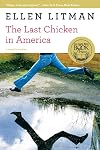
The Last Chicken in America: A Novel in Stories
by Ellen Litman
On This Page
Description
Twelve linked, wryly humorous stories about an unforgettablecast of Russian-Jewish immigrants trying to assimilate in a newworld. Masha is just out of high school when her family arrives inSquirrel Hill, Pittsburgh. With touching lightheartedness andtremendous humor, these stories trace her struggles and those ofother Russians in the community to find their own place in the newsociety?seniors alienated from their children, spouses tryingto hold their families together while grappling with show more unemploymentand depression, young adults searching for love. In?Dancers? the home of a married couple is invaded by apair of hedonistic and financially unstable performers. The hero of?The Trajectory of Frying Pans? falls for a coworkerwho may or may not be trapped in a green-card marriage. In?About Kamyshinskiy? a man, living under the scrutinyof his daughters and neighbors, is trying to start over after thedeath of his wife. This is an impressive debut about the sometimespainful, sometimes hilarious collision of cultures, religions, andgenerations in contemporary America. show lessTags
Recommendations

















Member Recommendations
Member Reviews
Reviewed for the Los Angeles Times
http://www.latimes.com/features/books/la-bk-kellogg16sep16,0,266900.story?coll=l...
Masha has been thrown out of the social order, by nothing more sinister than the goodwill of the affluent Jewish community of Pittsburgh. At 18, she emigrated from Moscow with her parents; they settled in Squirrel Hill, a neighborhood much like the Fairfax district. But her tightknit family is slow to adjust; it finds no comfort in the charity of the local synagogue. What's more, Masha has outgrown tightknit -- well, mostly. Nothing fits where it should. Masha's stories, as she strives to find her place, tie together "The Last Chicken in America," the debut collection by Ellen Litman.
Five of the 13 stories, including the show more first and last, are told from Masha's point of view. She begins, enrolled in advanced ESL, doing her best to be a good daughter:
"My parents are irrational, impossible to be around. There seems to be an angry electric current running through their blood. I understand. I try to be understanding. It's because of the jobs, there are no jobs in Pittsburgh. They've been to the résumé-writing workshops and to the interview-going workshops. . . . But nobody wants a former teacher and an engineer with minimal English skills.
"They take it out on me and on each other. We don't look much like a family anymore. But we have to stick together -- there are still appointments, phone calls, and Giant Eagle."
It's at Giant Eagle -- the local grocery store -- that Masha's mother meets Alick, a Russian exchange student. At first he's a friend to her parents; Masha considers him ugly and dull. But then she finds herself drawn to him. Together, they create a not-quite-Muscovite, not-quite-American safe zone for two.
Interspersed within Masha's tale are stories of other Russian immigrants in her neighborhood. With the breadth of characters -- an elderly widower, an Americanized divorcée, a trio of grown men, a young man restless for romantic liaisons -- Litman creates a portrait of an intimate community. The characters recur in fleeting cameos, popping in -- as a sharp-tongued aunt does, envying the popular twins from Donetsk. Few are satisfied in their hermetic world -- teenage Annie, for example, derisively calls her slacker cohorts "the Russians" -- but it's a world they seem more comfortable in than Masha does.
As central as Russian-ness is to the book, it is hardly a linguistic presence. There are many Russian names, but no Cyrillic text or transliterations. Instead, when Masha's parents argue -- exchanges that would clearly be in Russian -- they do so, for us, in English. It's a choice that places the reader inside the immigrants' world, granting an intimacy, a kind of bilingualness.
Yet the language of the book catches the ear, with quirky turns of phrase that imply idioms from Russia, or that morphed after immigration. "Two boots make a pair" explains why a son is like a father; back in Moscow, Masha calls a geek a "botanist." Young Masha imagines herself a "sheltered houseplant," a gothic building has "lancet windows," and when things get bad, "the lights are low and yellow and grainy, like in a fever or a cheap movie."
This last is from "Among the Lilacs and the Girls," which is told from Masha's father's point of view while his wife slides into a dangerous depression. This particular story could probably stand alone, but here, providing a rare outsider's perspective on Masha, it has additional power. That may well be the challenge of tying a story collection together with one character's narrative: That character can't help but become the central, unifying force, so how can the stand-alone stories have equal weight?
In "The Last Chicken in America," some of them do. "What Do You Dream of, Cruiser 'Aurora'?" features the widower Liberman, who is cranky, difficult and affecting. "Dancers" -- in which an obedient young wife is stirred by a louche visitor -- was published in Tin House. And teenage Annie's tale, "When the Neighbors Love You," grabs hold of the reader with its odd second-person voice ("You pick up your backpack, but he catches your hand").
Nevertheless, it's Masha's "delirious noble dream" of finding her way in her new world that gives the book its structure. In the first story, she's convinced that "[i]mmigration distorts people"; subsequently, she pushes against those distortions even as she is molded by them. As much as this is a book about an immigrant experience, though, it is also a book about this specific community. Masha's neighbors, fleshed out in their own stories, become a landscape of individuals. The marginal Donetsk twins are a landmark, more of a reference point than the Giant Eagle. Everyone knows Liberman and that it takes him forever to get across the street.
The small community of Squirrel Hill comes alive through its immigrants, and eventually it is a place that Masha's heart fully inhabits. The final story is called "Home." show less
http://www.latimes.com/features/books/la-bk-kellogg16sep16,0,266900.story?coll=l...
Masha has been thrown out of the social order, by nothing more sinister than the goodwill of the affluent Jewish community of Pittsburgh. At 18, she emigrated from Moscow with her parents; they settled in Squirrel Hill, a neighborhood much like the Fairfax district. But her tightknit family is slow to adjust; it finds no comfort in the charity of the local synagogue. What's more, Masha has outgrown tightknit -- well, mostly. Nothing fits where it should. Masha's stories, as she strives to find her place, tie together "The Last Chicken in America," the debut collection by Ellen Litman.
Five of the 13 stories, including the show more first and last, are told from Masha's point of view. She begins, enrolled in advanced ESL, doing her best to be a good daughter:
"My parents are irrational, impossible to be around. There seems to be an angry electric current running through their blood. I understand. I try to be understanding. It's because of the jobs, there are no jobs in Pittsburgh. They've been to the résumé-writing workshops and to the interview-going workshops. . . . But nobody wants a former teacher and an engineer with minimal English skills.
"They take it out on me and on each other. We don't look much like a family anymore. But we have to stick together -- there are still appointments, phone calls, and Giant Eagle."
It's at Giant Eagle -- the local grocery store -- that Masha's mother meets Alick, a Russian exchange student. At first he's a friend to her parents; Masha considers him ugly and dull. But then she finds herself drawn to him. Together, they create a not-quite-Muscovite, not-quite-American safe zone for two.
Interspersed within Masha's tale are stories of other Russian immigrants in her neighborhood. With the breadth of characters -- an elderly widower, an Americanized divorcée, a trio of grown men, a young man restless for romantic liaisons -- Litman creates a portrait of an intimate community. The characters recur in fleeting cameos, popping in -- as a sharp-tongued aunt does, envying the popular twins from Donetsk. Few are satisfied in their hermetic world -- teenage Annie, for example, derisively calls her slacker cohorts "the Russians" -- but it's a world they seem more comfortable in than Masha does.
As central as Russian-ness is to the book, it is hardly a linguistic presence. There are many Russian names, but no Cyrillic text or transliterations. Instead, when Masha's parents argue -- exchanges that would clearly be in Russian -- they do so, for us, in English. It's a choice that places the reader inside the immigrants' world, granting an intimacy, a kind of bilingualness.
Yet the language of the book catches the ear, with quirky turns of phrase that imply idioms from Russia, or that morphed after immigration. "Two boots make a pair" explains why a son is like a father; back in Moscow, Masha calls a geek a "botanist." Young Masha imagines herself a "sheltered houseplant," a gothic building has "lancet windows," and when things get bad, "the lights are low and yellow and grainy, like in a fever or a cheap movie."
This last is from "Among the Lilacs and the Girls," which is told from Masha's father's point of view while his wife slides into a dangerous depression. This particular story could probably stand alone, but here, providing a rare outsider's perspective on Masha, it has additional power. That may well be the challenge of tying a story collection together with one character's narrative: That character can't help but become the central, unifying force, so how can the stand-alone stories have equal weight?
In "The Last Chicken in America," some of them do. "What Do You Dream of, Cruiser 'Aurora'?" features the widower Liberman, who is cranky, difficult and affecting. "Dancers" -- in which an obedient young wife is stirred by a louche visitor -- was published in Tin House. And teenage Annie's tale, "When the Neighbors Love You," grabs hold of the reader with its odd second-person voice ("You pick up your backpack, but he catches your hand").
Nevertheless, it's Masha's "delirious noble dream" of finding her way in her new world that gives the book its structure. In the first story, she's convinced that "[i]mmigration distorts people"; subsequently, she pushes against those distortions even as she is molded by them. As much as this is a book about an immigrant experience, though, it is also a book about this specific community. Masha's neighbors, fleshed out in their own stories, become a landscape of individuals. The marginal Donetsk twins are a landmark, more of a reference point than the Giant Eagle. Everyone knows Liberman and that it takes him forever to get across the street.
The small community of Squirrel Hill comes alive through its immigrants, and eventually it is a place that Masha's heart fully inhabits. The final story is called "Home." show less
OK but kind of depressing set of related short stories about Russian Jewish immigrants in Pittsburg, with a focus on family dynamics and looking for love. We really don't know why they left Russia or chose America, but each carries their relationship problems here with them. The blurb calls this book hilarious and lighthearted. I don't agree.
This sounds like it is told from Litman's personal experiences and about her acquaintances. We have very few clues (and those only later in the book) about what decade this book is set in. I wonder why the immigrants, who were engineers or other educated professionals, are unable to find work other than cleaning in America. I wonder how they qualify for welfare and Medicare.
This sounds like it is told from Litman's personal experiences and about her acquaintances. We have very few clues (and those only later in the book) about what decade this book is set in. I wonder why the immigrants, who were engineers or other educated professionals, are unable to find work other than cleaning in America. I wonder how they qualify for welfare and Medicare.
I liked this book of linked-stories-as-novel although there was a whiff of creative writing MA in the writing that I hope she grows out of.
Some of the stories are very good indeed.
Some of the stories are very good indeed.
Wacky tales by new immigrant Masha in her insular life with her over-educated and under-employed parents in the Squirrel Hill section of Pittsburgh.
Terrible...
.....I really didn't like the book even though I am from Pittsburgh.
It seemed too disconnected and jumped around too much....the characters weren't that memorable to me and it was difficult to follow who was who.
.....I really didn't like the book even though I am from Pittsburgh.
It seemed too disconnected and jumped around too much....the characters weren't that memorable to me and it was difficult to follow who was who.
Reviewed by Marie at The Boston Bibliophile:
http://www.bostonbibliophile.com/2008/12/review-last-chicken-in-america-by-ellen...
http://www.bostonbibliophile.com/2008/12/review-last-chicken-in-america-by-ellen...
Members
- Recently Added By
Lists

Literary Pittsburgh
45 works; 1 member

Books Read in 2021
5,361 works; 113 members
Author Information
2 Works 131 Members
Awards and Honors
Common Knowledge
- Important places
- Pittsburgh, Pennsylvania, USA
- Dedication
- For my parents, Josef and Mariya Litman
- First words*
- I think a supermarket is a poor place for a romance to begin.
- Last words
- (Click to show. Warning: May contain spoilers.)Mismatched like the rest of us. More beautiful than anything. And I had no words to describe them.
- Blurbers
- Gaitskill, Mary; Almond, Steve; Saunders, George
*Some information comes from Common Knowledge in other languages. Click "Edit" for more information.
Classifications
Statistics
- Members
- 97
- Popularity
- 331,982
- Reviews
- 9
- Rating
- (3.42)
- Languages
- English
- Media
- Paper, Ebook
- ISBNs
- 3
- ASINs
- 1