
Emily Barton
Author of Brookland
About the Author
Emily Barton graduated from Harvard & the Iowa Writers' Workshop. She's a yoga instructor & book reviewer for "The New York Times". She lives in Brooklyn. (Bowker Author Biography)
Image credit: http://www.dentontaylor.com
Works by Emily Barton
Erin Parish 1 copy
Associated Works
Hebbes 2 — Contributor — 4 copies
Tagged
Common Knowledge
- Canonical name
- Barton, Emily
- Birthdate
- 1969
- Gender
- female
- Education
- Harvard University
Iowa Writers' Workshop - Occupations
- novelist
literary critic
academic - Organizations
- Oberlin College
Yale University
New York University
Columbia University
Smith College
Bard College (show all 7)
Eugene Lang College - Agent
- James Meader (Picador)
Simonoff, Eric (William Morris Endeavor) - Relationships
- Hopkins, Thomas Israel (husband)
- Nationality
- USA
- Places of residence
- Brooklyn, New York, USA
- Associated Place (for map)
- New York, USA
Members
Reviews
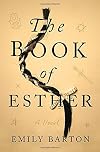
As I was reading Emily Barton's THE BOOK OF ESTHER, I found myself thinking of Michael Chabon's terrific essay, "Trickster in a Suit of Lights." Chabon bemoans the "genre slums" of chain bookstores and proposes a broad definition of literary entertainment: "Everything pleasurable that arises from the encounter of an attentive mind with a page of literature." In other words, genre be damned: there should be no guilty pleasures when it comes to reading, merely pleasures. He's writing about show more short stories, but his points are equally applicable to novels.
I've always appreciated that sentiment. But perhaps Chabon didn't have in mind a novel like Barton's that is genre-bending in the extreme. It is equal parts fantasy, science fiction, steampunk, military fiction, alternate history, Jewish mysticism, epic quest . . . and more! That's not to say a mash-up like this couldn't work. It's not about the genre(s), it's about the plot and the characters, right? But ultimately this story is just a big mess.
I wanted to like this book. But it simply didn't work for me -- on any level.
Yes, it's a boldly imaginative world she's created: an alternate world where the medieval Jewish Khazar kaganate (kingdom) in Eastern Europe has been fast-forwarded to World War II, and Nazi Germany is knocking on the doorstep, threatening the kingdom and its people. Intriguing premise, right? But then we realize the plot is for 16-year-old Esther, the daughter of one of Khazaria's leaders, to run away from home (with her adopted 9-year-old brother in tow, no less) on an epic mission to save the kingdom. Along the way, there are golems, werewolves, and every other darn thing. Good grief.
Barton's novel briefly hinted at the pleasures to be found in Chabon's serialized swashbuckling tale GENTLEMEN OF THE ROAD (also set in Khazaria as it turns out). That book is far from Chabon at his best, but is has a certain sense of charm and adventure, if you're willing to suspend disbelief and hop on for the ride. It's a sort of "Princess Bride" experience. I thought Barton's novel might rise to at least that level: something like "Esther Saves Khazaria!"
Alas, there is scant enjoyment to be had in Barton's novel. It's ponderous and joyless, and weighted down by its own seriousness. Granted, this is heavy stuff: the fate of a nation and a people in the face of a genocidal enemy. Still -- to get back to where I started (with Chabon's definition of literature) -- Is this entertaining? A good book? For me, the answer is no.
As much as I tried to go along with things, there was no way I could buy into her tale. Consider the early scene where Esther (convinced she has a better idea of how to respond to the threat of German invasion) barges into a meeting of her father and other senior political/military advisors to debate strategy and tactics with them . . . and to discuss her own personal involvement in the fight! Try as I might, I have a hard time imagining this happening in Prague in 1938 or Warsaw in 1939. But in Khazaria in 1942? Sure! It all starts to feel downright daffy. This is the type of thing I expect in young adult novels like THE HUNGER GAMES, not in serious fiction.
Add to that the odd steampunk-ish technology mix. Khazaria is a kingdom with planes and tanks but also strange mechanical horses that guzzle fuel out of feedbags. There is the telegraph but carrier pigeons are a safer bet! It's not just that all of this failed to convince, it's that it was distracting. So much time is spent with these darn horses and pigeons (etc.) that it slowed down the story -- and diminished it.
But the problems with this book go far beyond a plot that strains credulity. I could get past a lot of that if we were given real characters, elegant prose, convincing dialogue, some humor and wit, or genuine emotion. But I found very little in this book that felt true. Good fiction ultimately requires multi-dimensional characters we can believe in and an honest story, even if that story is fantastical. Barton's characters fail to convince on every level, the dialogue is wooden, and the prose is stilted. This novel should have been full of heart and soul, but I definitely didn't feel it.
In the end, Barton's book wasn't a success for me. Despite its promise and the author's prodigious imagination, the story fell very flat indeed.
(Thanks to Crown for an advance e-galley. Receiving a free copy did not affect the content of my review.) show less
I've always appreciated that sentiment. But perhaps Chabon didn't have in mind a novel like Barton's that is genre-bending in the extreme. It is equal parts fantasy, science fiction, steampunk, military fiction, alternate history, Jewish mysticism, epic quest . . . and more! That's not to say a mash-up like this couldn't work. It's not about the genre(s), it's about the plot and the characters, right? But ultimately this story is just a big mess.
I wanted to like this book. But it simply didn't work for me -- on any level.
Yes, it's a boldly imaginative world she's created: an alternate world where the medieval Jewish Khazar kaganate (kingdom) in Eastern Europe has been fast-forwarded to World War II, and Nazi Germany is knocking on the doorstep, threatening the kingdom and its people. Intriguing premise, right? But then we realize the plot is for 16-year-old Esther, the daughter of one of Khazaria's leaders, to run away from home (with her adopted 9-year-old brother in tow, no less) on an epic mission to save the kingdom. Along the way, there are golems, werewolves, and every other darn thing. Good grief.
Barton's novel briefly hinted at the pleasures to be found in Chabon's serialized swashbuckling tale GENTLEMEN OF THE ROAD (also set in Khazaria as it turns out). That book is far from Chabon at his best, but is has a certain sense of charm and adventure, if you're willing to suspend disbelief and hop on for the ride. It's a sort of "Princess Bride" experience. I thought Barton's novel might rise to at least that level: something like "Esther Saves Khazaria!"
Alas, there is scant enjoyment to be had in Barton's novel. It's ponderous and joyless, and weighted down by its own seriousness. Granted, this is heavy stuff: the fate of a nation and a people in the face of a genocidal enemy. Still -- to get back to where I started (with Chabon's definition of literature) -- Is this entertaining? A good book? For me, the answer is no.
As much as I tried to go along with things, there was no way I could buy into her tale. Consider the early scene where Esther (convinced she has a better idea of how to respond to the threat of German invasion) barges into a meeting of her father and other senior political/military advisors to debate strategy and tactics with them . . . and to discuss her own personal involvement in the fight! Try as I might, I have a hard time imagining this happening in Prague in 1938 or Warsaw in 1939. But in Khazaria in 1942? Sure! It all starts to feel downright daffy. This is the type of thing I expect in young adult novels like THE HUNGER GAMES, not in serious fiction.
Add to that the odd steampunk-ish technology mix. Khazaria is a kingdom with planes and tanks but also strange mechanical horses that guzzle fuel out of feedbags. There is the telegraph but carrier pigeons are a safer bet! It's not just that all of this failed to convince, it's that it was distracting. So much time is spent with these darn horses and pigeons (etc.) that it slowed down the story -- and diminished it.
But the problems with this book go far beyond a plot that strains credulity. I could get past a lot of that if we were given real characters, elegant prose, convincing dialogue, some humor and wit, or genuine emotion. But I found very little in this book that felt true. Good fiction ultimately requires multi-dimensional characters we can believe in and an honest story, even if that story is fantastical. Barton's characters fail to convince on every level, the dialogue is wooden, and the prose is stilted. This novel should have been full of heart and soul, but I definitely didn't feel it.
In the end, Barton's book wasn't a success for me. Despite its promise and the author's prodigious imagination, the story fell very flat indeed.
(Thanks to Crown for an advance e-galley. Receiving a free copy did not affect the content of my review.) show less
Emily Barton constructs an alternate history for her adventure story The Book of Esther. A nation of Jewish warriors on the West Asian steppes faces an invasion from a formidable foe in 1942, the “Germanii.” The Kaganate of Khazaria, a principality located mainly between the Black Sea and the Caspian Sea fights the aggressor with a combination of mechanical horses, pedal-propelled gliders, a thuggish group of oil drillers and dealers, and golems fabricated by an isolated group of show more Kabbalists.
These features of her fiction allow Ms. Barton to maintain a universe separate enough to take up her main themes of Jewish religious observance, Talmudic scholarship, the place of women in Jewish society, and in particular, the zeal and aspiration of Esther bat Josephus, a 16 year-old Joan of Ark-type figure who leads motley troops into battle against overwhelming odds.
This feels fresh and intriguing at the outset as we learn of this fictional empire with its ancient traditions, its armed forces (which for the era are a little outdated) and its encompassing Jewish culture. Young Esther has always been interested in politics and current events, and the imminent threat of invasion drives her to action. Such action will infuriate her father, a high advisor to the monarch, endanger numerous people who might not otherwise enter into combat, and fly in the face of all accepted norms of behavior for high-born teenage girls. None of this stops her or even slows her down.
Esther takes her adoptive brother, steals a mechanical horse, and goes in search of the country’s kabbalists, a group of mystic clerics who can animate clay to make golems, the automatons who cannot be killed in combat. The story proceeds with good pace and leads up to the climactic battle in which the country’s ancient capital tries to repel the Wehrmacht. The author captures the desperation in the young girl’s quest, and bestows on her a lion’s fortitude and a believable share of success.
Ms. Barton tells all this quite vividly, and you get caught up in the inexorable forces of history. What this book does, it does very well, sustaining a fictional nation in an alternative 20th Century, steeping us in a unique and devout Jewish culture, and painting a portrait of a courageous and determined girl whose voyage of self-discovery takes her places none have been before.
http://bassoprofundo1.blogspot.com/2016/10/the-book-of-esther-by-emily-barton.ht... show less
These features of her fiction allow Ms. Barton to maintain a universe separate enough to take up her main themes of Jewish religious observance, Talmudic scholarship, the place of women in Jewish society, and in particular, the zeal and aspiration of Esther bat Josephus, a 16 year-old Joan of Ark-type figure who leads motley troops into battle against overwhelming odds.
This feels fresh and intriguing at the outset as we learn of this fictional empire with its ancient traditions, its armed forces (which for the era are a little outdated) and its encompassing Jewish culture. Young Esther has always been interested in politics and current events, and the imminent threat of invasion drives her to action. Such action will infuriate her father, a high advisor to the monarch, endanger numerous people who might not otherwise enter into combat, and fly in the face of all accepted norms of behavior for high-born teenage girls. None of this stops her or even slows her down.
Esther takes her adoptive brother, steals a mechanical horse, and goes in search of the country’s kabbalists, a group of mystic clerics who can animate clay to make golems, the automatons who cannot be killed in combat. The story proceeds with good pace and leads up to the climactic battle in which the country’s ancient capital tries to repel the Wehrmacht. The author captures the desperation in the young girl’s quest, and bestows on her a lion’s fortitude and a believable share of success.
Ms. Barton tells all this quite vividly, and you get caught up in the inexorable forces of history. What this book does, it does very well, sustaining a fictional nation in an alternative 20th Century, steeping us in a unique and devout Jewish culture, and painting a portrait of a courageous and determined girl whose voyage of self-discovery takes her places none have been before.
http://bassoprofundo1.blogspot.com/2016/10/the-book-of-esther-by-emily-barton.ht... show less
 This review was written for LibraryThing Early Reviewers.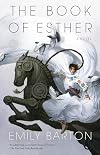
Summary: An alternative historical fiction in which a Jewish daughter of the Kagan of Khazaria breaks with her father and convention to lead her people in battle against the invading German army in 1942.
This is not the biblical story of Esther. But, like the biblical story, a young woman of influence breaks with convention to save her people from a threat that could destroy the Jewish people of her land. It is 1942. The Germanii are sweeping across Eastern Europe and Khazaria. Esther's show more homeland stands in the way of oil fields, and Russia beyond. The people have known of this threat as Jewish refugee camps have sprung around Atil, filled with those fleeing the pogroms. Esther secretly has been visiting the camps to bring food, and has heard the reports and knows that if the Germanii succeed, it will spell the end of the Kaganate of Khazaria and her people.
Khazaria? Where is that? You won't find that country on any modern map, and this is the "alternate history" aspect of this novel. Khazaria did at one time exist where it is located in the novel, between 600 and 950 AD. The people were a semi-nomadic Turkic people with a significant Jewish population. Located astride the Silk Road northeast of Turkey, southeast of Ukraine and between the Black and Caspian seas and separating Europe and western Asia, it was a strategic location, and hence its people warrior-like in its defense. Today Azerbaijan, Armenia, Georgia, and part of Russia make up the territory once encompassing Khazaria.
No one has a fiercer warrior heart in this story than Esther, though she is not yet sixteen, the daughter of the Kagan, and betrothed to a rabbi's son. Fearing the German threat and knowing the inadequacy of her country's forces, she becomes convinced that Adonai is calling her to act to save her people. With her slave brother Itakh, she steals her father's mechanical horse, Seleme, and sets off to a distant village of kabbalists. Why? As a girl, she believes the only way she can lead her people is as a male, and hopes the kabbalists have the power to change her into one. Along the way, she both stares down the war lords controlling the oil to secure fuel for mechanical horse, and kills a werewolf. She is what we might call one "badass" woman, while yet trying to be a devout Jew!
The kabbalists welcome her, recognizing something of the destiny upon her. They do not have it in their power, or perhaps will, to change her gender, believing it to be set by God. Yet one of them, Amit tells a different tale. He once was a girl, but through a prayer while cleansing in the mikvah, was transformed. Esther tries this, but remains unchanged. It seems her desire is more to be able to lead her people into battle than to be a man and that is what she is granted. But the kabbalists, who are served by golemim, creatures of the clay of the earth supposedly without souls who have a human form, do help her by giving Esther all their golemim and by making more.
She returns to Atil, after recruiting troops and supplies from the oil lords, and more people from the villages, along with more mechanical and golem horses and aerocycles. (Many reviewers note this work has a steampunk flavor to it). How will her father treat her when she returns? Will she be allowed, as a Jewish Joan of Arc, to lead this rag tag force? And will it make a difference? All I will say is that Barton leaves room for a sequel.
The book explores Esther's awakening sexuality and gender identity. There is her quest to be changed into a man, though this seems less shaped by her sense of gender identity than by cultural necessity. Yet there is Amit, with whom she develops an attraction, only to subsequently humiliate him for being a kind of trans male. Why is she drawn to him, is it to the man, or to the woman he once was, or some combination?
More significant to the plot is the question of gender roles. How can Esther join in the fight for her people when war was what men did, and women suffered? What if this violates what seems to be a sacred ordering of the world and one is devout, as is Esther? What if it truly seems that Adonai is calling her to this, even though it seems to violate her religious teaching?
Most of all is the more fundamental question of the promises of Adonai and the struggle for existence, and yet survival of the Jews that has been their history. This story brings us face to face with that perilous history.
If you don't mind alternate history, and a mix of fable and mechanical wizardry, you might like this work. All in all, the questions this books explored made for a work at once thought-provoking and riveting as Esther confronts challenge after challenge in her mission to save her people. If there is a sequel, I'll be very tempted to read it!
____________________________
Disclosure of Material Connection: I received a complimentary copy of this book from the publisher via Blogging for Books. I was not required to write a positive review. The opinions I have expressed are my own. show less
This is not the biblical story of Esther. But, like the biblical story, a young woman of influence breaks with convention to save her people from a threat that could destroy the Jewish people of her land. It is 1942. The Germanii are sweeping across Eastern Europe and Khazaria. Esther's show more homeland stands in the way of oil fields, and Russia beyond. The people have known of this threat as Jewish refugee camps have sprung around Atil, filled with those fleeing the pogroms. Esther secretly has been visiting the camps to bring food, and has heard the reports and knows that if the Germanii succeed, it will spell the end of the Kaganate of Khazaria and her people.
Khazaria? Where is that? You won't find that country on any modern map, and this is the "alternate history" aspect of this novel. Khazaria did at one time exist where it is located in the novel, between 600 and 950 AD. The people were a semi-nomadic Turkic people with a significant Jewish population. Located astride the Silk Road northeast of Turkey, southeast of Ukraine and between the Black and Caspian seas and separating Europe and western Asia, it was a strategic location, and hence its people warrior-like in its defense. Today Azerbaijan, Armenia, Georgia, and part of Russia make up the territory once encompassing Khazaria.
No one has a fiercer warrior heart in this story than Esther, though she is not yet sixteen, the daughter of the Kagan, and betrothed to a rabbi's son. Fearing the German threat and knowing the inadequacy of her country's forces, she becomes convinced that Adonai is calling her to act to save her people. With her slave brother Itakh, she steals her father's mechanical horse, Seleme, and sets off to a distant village of kabbalists. Why? As a girl, she believes the only way she can lead her people is as a male, and hopes the kabbalists have the power to change her into one. Along the way, she both stares down the war lords controlling the oil to secure fuel for mechanical horse, and kills a werewolf. She is what we might call one "badass" woman, while yet trying to be a devout Jew!
The kabbalists welcome her, recognizing something of the destiny upon her. They do not have it in their power, or perhaps will, to change her gender, believing it to be set by God. Yet one of them, Amit tells a different tale. He once was a girl, but through a prayer while cleansing in the mikvah, was transformed. Esther tries this, but remains unchanged. It seems her desire is more to be able to lead her people into battle than to be a man and that is what she is granted. But the kabbalists, who are served by golemim, creatures of the clay of the earth supposedly without souls who have a human form, do help her by giving Esther all their golemim and by making more.
She returns to Atil, after recruiting troops and supplies from the oil lords, and more people from the villages, along with more mechanical and golem horses and aerocycles. (Many reviewers note this work has a steampunk flavor to it). How will her father treat her when she returns? Will she be allowed, as a Jewish Joan of Arc, to lead this rag tag force? And will it make a difference? All I will say is that Barton leaves room for a sequel.
The book explores Esther's awakening sexuality and gender identity. There is her quest to be changed into a man, though this seems less shaped by her sense of gender identity than by cultural necessity. Yet there is Amit, with whom she develops an attraction, only to subsequently humiliate him for being a kind of trans male. Why is she drawn to him, is it to the man, or to the woman he once was, or some combination?
More significant to the plot is the question of gender roles. How can Esther join in the fight for her people when war was what men did, and women suffered? What if this violates what seems to be a sacred ordering of the world and one is devout, as is Esther? What if it truly seems that Adonai is calling her to this, even though it seems to violate her religious teaching?
Most of all is the more fundamental question of the promises of Adonai and the struggle for existence, and yet survival of the Jews that has been their history. This story brings us face to face with that perilous history.
If you don't mind alternate history, and a mix of fable and mechanical wizardry, you might like this work. All in all, the questions this books explored made for a work at once thought-provoking and riveting as Esther confronts challenge after challenge in her mission to save her people. If there is a sequel, I'll be very tempted to read it!
____________________________
Disclosure of Material Connection: I received a complimentary copy of this book from the publisher via Blogging for Books. I was not required to write a positive review. The opinions I have expressed are my own. show less
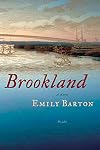
Brookland is one of the best books I’ve read in a long, long time. It brings a new meaning to the term “historical fiction,” not just presenting us with a fictional account of historic events, but also giving us an original fictional event in a historic setting.
In the years around and after the American Revolution and in the first few decades of the new United States, a remarkable family lives in early Brooklyn, across the water from the island of Manhattan. The title’s use of a show more variant of the latter tips off the reader to the variation between history and pure story. Prue Winship, the eldest daughter, learns to take over the family gin distillery in the absence of a son while also dreaming of bigger things—much bigger things.
The Winship family and sisters are large as life and realistic. It’s easy for modern writers to fall into the trap of writing those women fortunate enough to find a place in a man’s world as being so modern they’re almost our contemporaries, but Barton casts the Winship sisters, their family, and their neighbors well: there are spheres of acceptability, subworlds in which women can be as openly opinionated as men only given the right circumstances. Two of the Winship daughters, Prue (Prudence) and Tem (Temperance) (which may be the funniest name I’ve ever heard for the daughter of a distiller) fit the criteria. Pearl, the mute middle daughter, does not. Literally silenced in the way that many women of the day were figuratively silenced, she has far less control of her destiny than most other women, never mind her unusually independent sisters.
Prue dreams of building a bridge between Brooklyn and Manhattan—and, with the help of her sisters and lifelong friends/fiancé and distillery foreman, begins to make it happen. The details of late eighteenth- and early nineteenth-century Brooklyn and New York State are fine and rich, and you learn not only tidbits about life in early nineteenth century Brooklyn but bits and pieces of how the early New York State legislature worked, what modern architecture was like, how the ideals of the enlightenment influenced wealthy (if tradesman) society in the young country.
Admittedly, it’s now been almost two months since I read this book in early April, which is why I’m giving more details of what happened than how I felt. I’ll have to leave this with saying that I felt happier reading this book than I had in a long time: it’s one of those rare books that’s long enough that I didn’t feel as though it was over too quickly without being so long that I got impatient for the end. The characters were well drawn with few, if any caricatures: even the people seldom mentioned are multifaceted, like the boatman who opposes the bridge because it will ruin his business but still wishes the best for the daughters of his old friend.
Before I close off and head to the quotes, I have to spare a moment to mention the gorgeous cover design: an old print done in gold over a photo of a wooded river. The gold shines in contrast to the deep blue of the water
Quote Roundup
12) If heaven was as free from want as the domine described it, then the New-Yorkers’ insatiable need of gin & fruit meant they were living in hell.
Even before the United States has formed, here’s this idea of New York as a place of gluttony and misery. Perhaps an example of the modern informing the past? Whatever the case, it tickled me to see this idea expressed when New York is in its relative infancy.
28) Prue, Pearl, and Tem are bungled up “like Esquimaux” to explore the ice bridge be between Manhattan and Brooklyn. I had to make a note to look this up, since I was curious about when Europeans would have been in contact with Inuits for the first time. Esquimaux is apparently the French plural form of the word for Inuits, and since the term “Eskimo” is a general word applying to indigenous people all around the northern polar areas, it is quite possible that this word and knowledge of these people existed in the early/mid nineteenth century.
98) “‘For if ye love them that love you,’” he read, “‘what reward have ye?’ Why that is commerce, exchange, shilling for shilling. Anybody can do that. ‘And salute your brethren only,’—that is, if you greet only those that belong to your church or think as you think, or act as you act—‘do not even the publicans so?’“
A common enough sermon, especially in fiction, but I did like the way that this one was delivered. It’s refreshing, for Prue (and for me), to hear humor in a sermon (in a book) about such an important topic, one of the most quoted and least followed rules of Christianity.
For some reason there were no quotes for a long stretch in the middle even though I definitely remember enjoying stories of the Winship girls’ childhoods.
224) On perhaps Mr. Fischer’s fourth night in Brooklyn, Tem had banged in[to the Twin Tankards] at the close of the workday, thirsty for her pint, and poor Mr. Fischer had fallen in love with her in an instant. … “I’ve never seen such lovely gams,” Ezra Fischer said in a tone of reverence.
“Actually,” Tem said loudly, “I’ll wager you’ve never seen any gams at all, as women don’t damn well display them. Unless, of course, you are referring to your taste for whores, quite a pretty few of whom you’ll find upstairs.”
Go Tem! Also, for those of you curious, “gams” are apparently women’s legs. Tem and Prue wear trousers out of practicality from their work in the distillery.
231) Prue discovers that Pearl knows a good bit about her reasons for wanting to build a bridge, including her original thought as a child that New York was the land of the dead.
“It isn’t only that. I learned I’d been mistaken, of course, a hundred years ago.”
[Pearl]It’s for Mother & Father?
“And for myself also. To have done something that wasn’t handed down to me.” She hadn’t known she thought this until she said it.
I feel a fair bit of kinship for Prue. Though life is far different these days and parents’ work is rarely passed down to their children, I still felt, growing up, a bit like I took the place of the oldest/only son in the family. I inherited my dad’s coin collection and interests in the outdoors and working with my hands. I spent more time with him than did either of my sisters, and as much as I feel (and enjoy, to a certain extent, feeling) a responsibility for carrying on the family legacy, I still look for the thing I can do that belongs to myself, the mark I can make that is both part of and separate from my family legacy. Doubt it will be anything as monumental as a bridge, but I’m still trying to figure it out.
272) An idiot gentleman whose behavior defines the word meets Pearl for the first time. “Is she for sale, then? I’ve long fancied a wife who wouldn’t talk back to me.”
Ben said, “Oh, bless you, but she does talk back,” while Pearl wrote, Devill take you, Sir, held it up to her companion in her left hand, and continued on with her breakfast.
Go Pearl! I’d have loved to have her hit him across the face with her book, but there’s only so much fiction you can hope for, isn’t there?
285) How Prue envied [Ben] his man’s figure—his squared shoulders and even his pointy, clean-shaven chin—for how it enabled him to stand up thus before them. She loved him dearly, and at the same time felt what seemed love’s opposite: a sickening jealousy.
This is a delicate balance to strike: as I mentioned before, it’s easy to fall into the trap of making women seem so modern that they chafe against their roles in the same way that a contemporary woman, transplanted back in time, might feel. I think Barton managed the balance, though. For all her jealousy of Ben, Prue nevertheless feels constrained by the societal norms that dictate that Ben needs to speak while she remains silent: it’s not just frustration, it’s a genuine feeling that even though she knows the bridge, she can’t do this as well as he could—partly because it’s not “in a woman’s nature” and partly because that “nature” won’t permit other men to take her seriously. For all her frustration, she has more trouble crossing the divide than, I think, most women today would have.
338) The spring thaw arrived early in 1799, though it brought with it the state legislature’s Act for the Gradual Abolition of Slavery. … The Act, Prue realized, struck a fine balance between pleasing those who relied upon slave labor to make their living and assuaging those who opposed it on moral grounds: All adult slaves were to remain in bondage for the rest of their lives, though they would henceforward be called “indentured servants,” and all children born after the coming Fourth of July would be freed in the 1820s, after having given their best years of service to their masters.
I spent plenty of time in APUS History discussing the Constitutional note that slavery would be banned in the early 1800s, but I really didn’t learn much about legislative bans to slavery at the state level. This discussion was new and interesting to me (I learned a lot of history this book, mostly in the forms of characters whose names now appear on street signs and subway stops), but I also appreciated the reality of Prue’s concerns: regardless of her moral feeling about slavery, she has a business to run, one that currently depends on slave labor. Again, it’s easy for modern writers to make their historical fictional women characters abolitionist, feminist saints. I admire Barton’s successful efforts to complicate her characters in a realistic way.
354) Another difficult but wonderful moment for the women in this story. Though Prue has never gotten along with her sister-in-law, Patience, the two come to an understanding as the latter comforts the former after a difficult miscarriage. Women don’t always have to hate each other forever, just because they have different values and wildly different lives.
402) Prue had hoped for the best and half expected the worst, and could not quote force this information to fit either category.
Ah, a familiar feeling to us all, I’m sure! Though not always on the scale of what’s in this scene.
437) Prue finally comes to realize the truth of the curse she placed on her sister.
I saw the curse lay not on the words I had uttered, which had scudded away across to Mannahata never to be recalled; but in the manner in which I’d allowed them to color my behavior toward her, ever since. For 23 years I had showered my guilt upon her, thought of protecting her, bought her gifts, worry’d on her behalf; but I had never once simply looked to see in whose interest I had done all this. Had I done so, I might have seen the depth of that streak running through her, or how she felt confined or unhappy. But you see, I did not.
I found this reveal all the more powerful for how simple it is. It’s betrayal on the small scale, devastating in its pervasiveness in a way that her inability to think in Pearl’s best interests the one time Pearl has thought in her own doesn’t quite capture. It’s not just the hypocrisy of her behavior toward Pearl, it’s the definition of killing with kindness (albeit unintentionally).
465) I challenge any man who claims haunting by the dead to feel the chill of haunting by uncertainty, & I will shew you a changed man.
477) Even at that sorrowful time, perhaps the oddest thing about the whole affair seemed to me how people on both sides of the river had well nigh forgotten I’d had aught to do with the disastrous bridge. I was still Prue Winship, Distiller of Gin; but your father, wherever he went, was the Architect of the Folly. Few but Ben, Isaiah, & my own two sisters had ever known that the idea, at its origin, had been mine alone; but it struck me as passing strange how even Simon Dufresne & Theunis van Vechten lamented Ben’s misjudgment of the foundations, without once mentioning how I had drawn up the articles of our misfortune.
Prue unexpectedly benefits from the sexism of the time; even the people who saw her participation in the construction of the bridge forget her involvement in it because her actions automatically belong to her husband—both because no one would think that a woman was capable of creating something like the bridge and because her husband would be responsible for anything she did. show less
In the years around and after the American Revolution and in the first few decades of the new United States, a remarkable family lives in early Brooklyn, across the water from the island of Manhattan. The title’s use of a show more variant of the latter tips off the reader to the variation between history and pure story. Prue Winship, the eldest daughter, learns to take over the family gin distillery in the absence of a son while also dreaming of bigger things—much bigger things.
The Winship family and sisters are large as life and realistic. It’s easy for modern writers to fall into the trap of writing those women fortunate enough to find a place in a man’s world as being so modern they’re almost our contemporaries, but Barton casts the Winship sisters, their family, and their neighbors well: there are spheres of acceptability, subworlds in which women can be as openly opinionated as men only given the right circumstances. Two of the Winship daughters, Prue (Prudence) and Tem (Temperance) (which may be the funniest name I’ve ever heard for the daughter of a distiller) fit the criteria. Pearl, the mute middle daughter, does not. Literally silenced in the way that many women of the day were figuratively silenced, she has far less control of her destiny than most other women, never mind her unusually independent sisters.
Prue dreams of building a bridge between Brooklyn and Manhattan—and, with the help of her sisters and lifelong friends/fiancé and distillery foreman, begins to make it happen. The details of late eighteenth- and early nineteenth-century Brooklyn and New York State are fine and rich, and you learn not only tidbits about life in early nineteenth century Brooklyn but bits and pieces of how the early New York State legislature worked, what modern architecture was like, how the ideals of the enlightenment influenced wealthy (if tradesman) society in the young country.
Admittedly, it’s now been almost two months since I read this book in early April, which is why I’m giving more details of what happened than how I felt. I’ll have to leave this with saying that I felt happier reading this book than I had in a long time: it’s one of those rare books that’s long enough that I didn’t feel as though it was over too quickly without being so long that I got impatient for the end. The characters were well drawn with few, if any caricatures: even the people seldom mentioned are multifaceted, like the boatman who opposes the bridge because it will ruin his business but still wishes the best for the daughters of his old friend.
Before I close off and head to the quotes, I have to spare a moment to mention the gorgeous cover design: an old print done in gold over a photo of a wooded river. The gold shines in contrast to the deep blue of the water
Quote Roundup
12) If heaven was as free from want as the domine described it, then the New-Yorkers’ insatiable need of gin & fruit meant they were living in hell.
Even before the United States has formed, here’s this idea of New York as a place of gluttony and misery. Perhaps an example of the modern informing the past? Whatever the case, it tickled me to see this idea expressed when New York is in its relative infancy.
28) Prue, Pearl, and Tem are bungled up “like Esquimaux” to explore the ice bridge be between Manhattan and Brooklyn. I had to make a note to look this up, since I was curious about when Europeans would have been in contact with Inuits for the first time. Esquimaux is apparently the French plural form of the word for Inuits, and since the term “Eskimo” is a general word applying to indigenous people all around the northern polar areas, it is quite possible that this word and knowledge of these people existed in the early/mid nineteenth century.
98) “‘For if ye love them that love you,’” he read, “‘what reward have ye?’ Why that is commerce, exchange, shilling for shilling. Anybody can do that. ‘And salute your brethren only,’—that is, if you greet only those that belong to your church or think as you think, or act as you act—‘do not even the publicans so?’“
A common enough sermon, especially in fiction, but I did like the way that this one was delivered. It’s refreshing, for Prue (and for me), to hear humor in a sermon (in a book) about such an important topic, one of the most quoted and least followed rules of Christianity.
For some reason there were no quotes for a long stretch in the middle even though I definitely remember enjoying stories of the Winship girls’ childhoods.
224) On perhaps Mr. Fischer’s fourth night in Brooklyn, Tem had banged in[to the Twin Tankards] at the close of the workday, thirsty for her pint, and poor Mr. Fischer had fallen in love with her in an instant. … “I’ve never seen such lovely gams,” Ezra Fischer said in a tone of reverence.
“Actually,” Tem said loudly, “I’ll wager you’ve never seen any gams at all, as women don’t damn well display them. Unless, of course, you are referring to your taste for whores, quite a pretty few of whom you’ll find upstairs.”
Go Tem! Also, for those of you curious, “gams” are apparently women’s legs. Tem and Prue wear trousers out of practicality from their work in the distillery.
231) Prue discovers that Pearl knows a good bit about her reasons for wanting to build a bridge, including her original thought as a child that New York was the land of the dead.
“It isn’t only that. I learned I’d been mistaken, of course, a hundred years ago.”
[Pearl]It’s for Mother & Father?
“And for myself also. To have done something that wasn’t handed down to me.” She hadn’t known she thought this until she said it.
I feel a fair bit of kinship for Prue. Though life is far different these days and parents’ work is rarely passed down to their children, I still felt, growing up, a bit like I took the place of the oldest/only son in the family. I inherited my dad’s coin collection and interests in the outdoors and working with my hands. I spent more time with him than did either of my sisters, and as much as I feel (and enjoy, to a certain extent, feeling) a responsibility for carrying on the family legacy, I still look for the thing I can do that belongs to myself, the mark I can make that is both part of and separate from my family legacy. Doubt it will be anything as monumental as a bridge, but I’m still trying to figure it out.
272) An idiot gentleman whose behavior defines the word meets Pearl for the first time. “Is she for sale, then? I’ve long fancied a wife who wouldn’t talk back to me.”
Ben said, “Oh, bless you, but she does talk back,” while Pearl wrote, Devill take you, Sir, held it up to her companion in her left hand, and continued on with her breakfast.
Go Pearl! I’d have loved to have her hit him across the face with her book, but there’s only so much fiction you can hope for, isn’t there?
285) How Prue envied [Ben] his man’s figure—his squared shoulders and even his pointy, clean-shaven chin—for how it enabled him to stand up thus before them. She loved him dearly, and at the same time felt what seemed love’s opposite: a sickening jealousy.
This is a delicate balance to strike: as I mentioned before, it’s easy to fall into the trap of making women seem so modern that they chafe against their roles in the same way that a contemporary woman, transplanted back in time, might feel. I think Barton managed the balance, though. For all her jealousy of Ben, Prue nevertheless feels constrained by the societal norms that dictate that Ben needs to speak while she remains silent: it’s not just frustration, it’s a genuine feeling that even though she knows the bridge, she can’t do this as well as he could—partly because it’s not “in a woman’s nature” and partly because that “nature” won’t permit other men to take her seriously. For all her frustration, she has more trouble crossing the divide than, I think, most women today would have.
338) The spring thaw arrived early in 1799, though it brought with it the state legislature’s Act for the Gradual Abolition of Slavery. … The Act, Prue realized, struck a fine balance between pleasing those who relied upon slave labor to make their living and assuaging those who opposed it on moral grounds: All adult slaves were to remain in bondage for the rest of their lives, though they would henceforward be called “indentured servants,” and all children born after the coming Fourth of July would be freed in the 1820s, after having given their best years of service to their masters.
I spent plenty of time in APUS History discussing the Constitutional note that slavery would be banned in the early 1800s, but I really didn’t learn much about legislative bans to slavery at the state level. This discussion was new and interesting to me (I learned a lot of history this book, mostly in the forms of characters whose names now appear on street signs and subway stops), but I also appreciated the reality of Prue’s concerns: regardless of her moral feeling about slavery, she has a business to run, one that currently depends on slave labor. Again, it’s easy for modern writers to make their historical fictional women characters abolitionist, feminist saints. I admire Barton’s successful efforts to complicate her characters in a realistic way.
354) Another difficult but wonderful moment for the women in this story. Though Prue has never gotten along with her sister-in-law, Patience, the two come to an understanding as the latter comforts the former after a difficult miscarriage. Women don’t always have to hate each other forever, just because they have different values and wildly different lives.
402) Prue had hoped for the best and half expected the worst, and could not quote force this information to fit either category.
Ah, a familiar feeling to us all, I’m sure! Though not always on the scale of what’s in this scene.
437) Prue finally comes to realize the truth of the curse she placed on her sister.
I saw the curse lay not on the words I had uttered, which had scudded away across to Mannahata never to be recalled; but in the manner in which I’d allowed them to color my behavior toward her, ever since. For 23 years I had showered my guilt upon her, thought of protecting her, bought her gifts, worry’d on her behalf; but I had never once simply looked to see in whose interest I had done all this. Had I done so, I might have seen the depth of that streak running through her, or how she felt confined or unhappy. But you see, I did not.
I found this reveal all the more powerful for how simple it is. It’s betrayal on the small scale, devastating in its pervasiveness in a way that her inability to think in Pearl’s best interests the one time Pearl has thought in her own doesn’t quite capture. It’s not just the hypocrisy of her behavior toward Pearl, it’s the definition of killing with kindness (albeit unintentionally).
465) I challenge any man who claims haunting by the dead to feel the chill of haunting by uncertainty, & I will shew you a changed man.
477) Even at that sorrowful time, perhaps the oddest thing about the whole affair seemed to me how people on both sides of the river had well nigh forgotten I’d had aught to do with the disastrous bridge. I was still Prue Winship, Distiller of Gin; but your father, wherever he went, was the Architect of the Folly. Few but Ben, Isaiah, & my own two sisters had ever known that the idea, at its origin, had been mine alone; but it struck me as passing strange how even Simon Dufresne & Theunis van Vechten lamented Ben’s misjudgment of the foundations, without once mentioning how I had drawn up the articles of our misfortune.
Prue unexpectedly benefits from the sexism of the time; even the people who saw her participation in the construction of the bridge forget her involvement in it because her actions automatically belong to her husband—both because no one would think that a woman was capable of creating something like the bridge and because her husband would be responsible for anything she did. show less
Awards


You May Also Like


Associated Authors
Statistics
- Works
- 7
- Also by
- 1
- Members
- 552
- Popularity
- #45,211
- Rating
- 3.5
- Reviews
- 40
- ISBNs
- 23
- Languages
- 2
