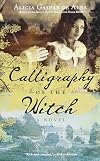
Calligraphy of the Witch
by Alicia Gaspar de Alba
On This Page
Description
Born of a Spaniard and a mixed-race woman, young Concepcio n Benavidez was apprenticed as a scribe to a convent. At nineteen, she escapes and is captured in the siege of Vera Cruz in 1683. She unexpectedly becomes the property of the Dutch pirate Laurens-Cornille de Graffe, who rapes her repeatedly on the long, deadly journey to the Massachusetts Bay Colony where he will sell his cargo. Realizing the young mestiza has fine penmanship, the pirate promptly sells her when they reach the cold show more New England coast. Concepcio n is thrust into a strange world where she doesn't understand the language or the customs. Bought by a prominent Puritan, Merchant Greenwood, to tend to his old father-in-law and his chicken farm, the girl from New Spain is regarded with suspicion. She is considered a papist half-breed who speaks the language of the devil and practices an ungodly religion. Greenwood immediately forbids her to speak her native tongue, and he changes her name to Thankful Seagraves. The merchant's barren wife discovers that the girl is pregnant with the pirate's child. And she covets the baby. In the following years, the two women spar for the child's love and affection. But when several women in Salem Village, including Concepcio n's friend Tituba Indian, are imprisoned for witchcraft, it's not long before people-and even her own daughter-start whispering about Concepcio n. After all, doesn't she keep a cat for a familiar and burn letters for the dead in the woods? Doesn't she appear lasciviously in men's dreams? How else could she have coerced the old man to marry and free her? This riveting historical novel combines the horror of the Salem witch trials with the philosophy and poetry of the nun and writer known as the first feminist of the Americas, Sor Juana Ine s de la Cruz. Meticulously researched and elegantly written, this novel takes a mesmerizing look at women in the New World in the 17th century and the stubborn men who accuse them for no reason. show lessTags
Recommendations














Member Reviews
3.5 stars
Conception is brought from Mexico to Massachusetts as a slave in the late 1600s. But on the ship on the way there, she is raped over and over. Once in New England, she has a baby, but the couple who bought her want a second child and haven’t been able to. So, while Conception tries to teach her daughter Spanish and some of her own culture, Rachel takes it upon herself to turn the child against her mother, and eventually takes Hanna (or Jeronima, depending if you ask Rachel or Conception). In a town not too far away, people are being accused of being witches, including Conception’s friend, Tituba.
This was good. There were parts that were a bit slower to read (literally), when Conception was writing letters, as the font was show more changed to look like handwriting. It does make me wonder if younger people will be able to read those parts of the book at all (if kids are no longer being taught cursive). It’s a tough book to read, though. I saw someone use the word “gritty”. Good way to describe it. Hanna/Jeronima drove me nuts sometimes! But I guess it’s hard for me to understand how easy it is for a child to be “brainwashed”, and that’s really what it amounted to. show less
Conception is brought from Mexico to Massachusetts as a slave in the late 1600s. But on the ship on the way there, she is raped over and over. Once in New England, she has a baby, but the couple who bought her want a second child and haven’t been able to. So, while Conception tries to teach her daughter Spanish and some of her own culture, Rachel takes it upon herself to turn the child against her mother, and eventually takes Hanna (or Jeronima, depending if you ask Rachel or Conception). In a town not too far away, people are being accused of being witches, including Conception’s friend, Tituba.
This was good. There were parts that were a bit slower to read (literally), when Conception was writing letters, as the font was show more changed to look like handwriting. It does make me wonder if younger people will be able to read those parts of the book at all (if kids are no longer being taught cursive). It’s a tough book to read, though. I saw someone use the word “gritty”. Good way to describe it. Hanna/Jeronima drove me nuts sometimes! But I guess it’s hard for me to understand how easy it is for a child to be “brainwashed”, and that’s really what it amounted to. show less
Ratings
Members
- Recently Added By
Author Information

15+ Works 426 Members
Alicia Gaspar De Alba is Professor of Chicana and Chicano Studies, English, and Women's Studies at UCLA. Her nine previous books encompass historical novels, poetry, short stories, and a cultural study of Chicano art. Alma Lpez is an artist, activist, and visual storyteller originally from Los Mochis, Sinaloa, Mexico. They live in Los Angeles.
Common Knowledge
- Canonical title
- Calligraphy of the Witch
- Original publication date
- 2007
- People/Characters
- Concepción Benavidez "Thankful Seagraves"; Aléndula; Laurens-Cornille de Graaf; Nathaniel Greenwood; Rebecca Greenwood; Hanna
- Important places
- Mexico City, Mexico; San Jeronimo Convent; Salem, Massachusetts, USA
- Important events
- Salem witch trials (1692)
Classifications
Statistics
- Members
- 52
- Popularity
- 583,351
- Reviews
- 1
- Rating
- (3.57)
- Languages
- English
- Media
- Paper, Ebook
- ISBNs
- 5
- ASINs
- 1