On This Page
Description
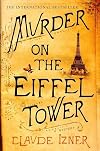
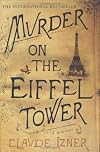
The brand-new, shiny Eiffel Tower is the pride and glory of the 1889 World Exposition. But, one sunny afternoon, as visitors are crowding the viewing platforms, a woman collapses and dies on this great Paris landmark. Can a bee sting really be the cause of death? Or, is there a more sinister explanation? Enter young bookseller Victor Legris. Present on the tower at the time of the incident, and appalled by the media coverage of the occurrence, he is determined to find out what actually show more happened. In this dazzling evocation of late nineteenth-century Paris, we follow Victor as his investigation takes him all over the city and he suspects an ever-changing list of possible perpetrators. Could mysterious Kenji Mori, his surrogate father and business partner at the bookstore Legris operates, be involved in the crime? Why are beautiful Russian illustrator Tasha and her colleagues at the newly launched sensationalist newspaper Passepartout always up-to-date in their reporting? And, what will Legris do when the deaths begin to multiply and he is caught in a race against time? Murder on the Eiffel Tower is painstakingly researched, an effortless evocation of the glorious City of Light, and an exciting opening to a promising series of eight books featuring Victor Legris. show lessTags
Recommendations













































Member Recommendations

davidt8 Set in Milan, Lombardy, in 1483, this historical murder mystery is entertaining and filled with interesting details.
Member Reviews
This book is a splendid evocation of Paris during the Belle Époque, and Legris' frequent walks in various neighborhoods made me very happy indeed. The two women booksellers who write as Claude Izner bring their setting to life.
The mystery is also a good one. By the time I pieced all the clues together, it was almost time for the reveal. The list of suspects is a long one and represents almost all the various social strata in the city, which gives the authors more opportunity to depict their beloved Paris.
The one aspect of the book that I felt was lacking was the cast of characters. The only character in the entire book whom I felt had a real spark of life to him was Joseph, the assistant in Victor's bookshop. (While I'm on the subject show more of that bookshop, librarians and booksellers reading Murder on the Eiffel Tower will see that customers really haven't changed much from one century to another.) The main character, Victor Legris, is what I've always thought of as a boulevardier-- a man-about-town. He dresses well, he dines well, he has a mistress. Victor has many things and does many things (even deigning to work in his shop from time to time), but he still felt a bit two-dimensional, a bit reserved, as did everyone else.
As much as I loved mentally walking the streets of Paris in the late nineteenth century while solving an enjoyable mystery, it's the stiffness of the characters that will make me hesitate to continue with this series. show less
The mystery is also a good one. By the time I pieced all the clues together, it was almost time for the reveal. The list of suspects is a long one and represents almost all the various social strata in the city, which gives the authors more opportunity to depict their beloved Paris.
The one aspect of the book that I felt was lacking was the cast of characters. The only character in the entire book whom I felt had a real spark of life to him was Joseph, the assistant in Victor's bookshop. (While I'm on the subject show more of that bookshop, librarians and booksellers reading Murder on the Eiffel Tower will see that customers really haven't changed much from one century to another.) The main character, Victor Legris, is what I've always thought of as a boulevardier-- a man-about-town. He dresses well, he dines well, he has a mistress. Victor has many things and does many things (even deigning to work in his shop from time to time), but he still felt a bit two-dimensional, a bit reserved, as did everyone else.
As much as I loved mentally walking the streets of Paris in the late nineteenth century while solving an enjoyable mystery, it's the stiffness of the characters that will make me hesitate to continue with this series. show less
About two thirds of the way through this book, I stopped to write this review. Another body had been found; another minor, uninteresting character had been killed. Our protagonist is worried that it might be his best friend or the hot chick--he's in a relationship, but his girlfriend is fat and racist, and he's only using her for sex anyway, so it's all okay--but can't actually ask his friend anything, as that might advance the plot. There's no tension in this book, as none of the deceased really matter to anyone in the story, and neither internal nor external forces push Legris to find the murderer. Skipping to the end of the book, I found that it was pointless to expect anything to make sense at this point in the book; the main plot show more point leaves it all obscure until near the end of the book. It reminds me of the ending of a certain Agatha Christie novel, but Agatha Christie's deft hand and added structure made that ending audacious instead of merely unfair. I shouldn't be this bereft of clues 200 pages into a mystery, especially one that can't depend on brilliant characterization.
The characters aren't likable and are poorly drawn. The plot is ungrabbing and the mystery needlessly obscure. Whereas some literature makes the location itself a character--the home of Ed McBain's 87th Precinct comes to mind for mystery literature--and presumably Paris would have been a rich source for this, location is more of an obstacle than a source of enjoyment. I can't really see any reason to recommend this novel. show less
The characters aren't likable and are poorly drawn. The plot is ungrabbing and the mystery needlessly obscure. Whereas some literature makes the location itself a character--the home of Ed McBain's 87th Precinct comes to mind for mystery literature--and presumably Paris would have been a rich source for this, location is more of an obstacle than a source of enjoyment. I can't really see any reason to recommend this novel. show less
 This review was written for LibraryThing Early Reviewers.
I enjoyed visiting turn-of-the-century Paris in Murder on the Eiffel Tower. I felt the motivation of the amateur sleuth was weak; I didn't understand why Victor Legris was so convinced that one of his friends had to be the killer. In the end I did feel the solution was logical, however. The setting and characters were interesting enough to make me want to check out the next book in the series, which I also enjoyed and I look forward to reading more.
This review was written for LibraryThing Early Reviewers.*Parisian Puzzle*
What a delightful romp through 19th century Paris! Murder on the Eiffel Tower is the first in a series that shows much promise for many enjoyable future reads. Although this is a debut in the USA, two other installments have already been published in France, waiting for translation. The setting is late 1800s Paris at the time of the Worlds' Exhibition which dazzles the local Parisians with it's many marvels and wonders from around the world. At the same time we have the unveiling of the famous Eiffel Tower, both events showcasing a variety of mysterious murders thought to be caused by bee stings. To unravel these cryptic and unusual deaths comes young Victor Legris, a local Antiquarian bookseller caught up in the melee show more and who soon suspects his own business partner may be the murderer. The novel offers great character development, good plots with twists and turns, great historical backdrop and plenty of action and intrique to keep the reader turning the pages. Not being able to put this wonderful book down, I found it a breath of fresh air and a pure delight to read. I eagerly await book two and three which I have already ordered UK copies of. I simply cant' wait another year or more for US translations to get here. Dont' miss this sparkling debut. It's fun, it's different and darn good simple old fashioned murder mystery. show less
What a delightful romp through 19th century Paris! Murder on the Eiffel Tower is the first in a series that shows much promise for many enjoyable future reads. Although this is a debut in the USA, two other installments have already been published in France, waiting for translation. The setting is late 1800s Paris at the time of the Worlds' Exhibition which dazzles the local Parisians with it's many marvels and wonders from around the world. At the same time we have the unveiling of the famous Eiffel Tower, both events showcasing a variety of mysterious murders thought to be caused by bee stings. To unravel these cryptic and unusual deaths comes young Victor Legris, a local Antiquarian bookseller caught up in the melee show more and who soon suspects his own business partner may be the murderer. The novel offers great character development, good plots with twists and turns, great historical backdrop and plenty of action and intrique to keep the reader turning the pages. Not being able to put this wonderful book down, I found it a breath of fresh air and a pure delight to read. I eagerly await book two and three which I have already ordered UK copies of. I simply cant' wait another year or more for US translations to get here. Dont' miss this sparkling debut. It's fun, it's different and darn good simple old fashioned murder mystery. show less
Warning: This review contains spoilers.
If I were to go strictly by the written descriptions of my ratings, this book would likely rate a 1.5, "There may have been promise in pockets, but overall I can't say this was a particularly good book." However, because this was the first novel in a mystery series and so I came into it expecting it to be a bit hinky in places, I decided to upgrade to a 2-star rating (which is about where I was expecting it to fall anyway).
The premise does indeed have promise: it's the Paris Exposition (where the Eiffel Tower first came into being) and a middle-aged woman dies of what appears to be a bee sting. But when other visitors to the Exposition start turning up dead in the same manner, bookseller Victor show more Legris has to wonder whether there is some other explanation. Could it be murder? He therefore decides to investigate on his own, in the process discovering more about his own past and testing his friendship with his business partner, Kenji Mori, who is almost a surrogate father to him.
I do quite enjoy history-based mysteries, and Paris in the late 19th century is a new destination for me, so that was interesting. The scenes in the bookshop, alas rather fleeting as Victor's investigations picked up steam, were probably the best part, but that's no surprise for me. His assistant, Joseph, provided quite a bit of humour with his commentary on the literature of the day, including early crime novels, which may prompt a couple of additions to the TBR.
However, there are parts that could have stood for some improvement. I thought the ending was a bit of a cop-out, with the killer publishing an extended confession in the newspaper that covered the murders. Or rather I thought it was a cop-out that the article was reproduced in its entirety, because it ran to about three pages or so, and that became tiresome. I mean, Victor had figured out most of it anyway, so perhaps it could have been written so that he reads the article to himself and then quotes relevant bits aloud, like "Oh, so THAT was the motive! I see! But yes I was right about the method." Also I found it a bit strange that, for someone who has lived in Paris long enough to open a bookshop which has evidently been running for a while, Victor kept having to ask for directions to various places. Of course there is probably a perfectly logical explanation, but I did find myself rolling my eyes starting at the third instance. "Asking for directions AGAIN? Can't you get a street map or something?"
And because this was translated from French to English, my "work radar" was on for most of the book, trying to imagine what the French looked like, and wondering whether some of the word choice/style was down to the source text or if it was an issue with the translator. Sometimes your translation is only as good as the source text, especially if you're concerned with preserving the style and "feel" of the original as opposed to making the translation sound like native English. I may try a later book in the series, in French, to see how much my mental back-translation was a factor in my reaction to the book.
In sum, I would say if you are mildly interested in this and can read it in French, do so. If not, you are probably safe in giving it a miss unless you have a special interest in the time and place where the book is set. show less
If I were to go strictly by the written descriptions of my ratings, this book would likely rate a 1.5, "There may have been promise in pockets, but overall I can't say this was a particularly good book." However, because this was the first novel in a mystery series and so I came into it expecting it to be a bit hinky in places, I decided to upgrade to a 2-star rating (which is about where I was expecting it to fall anyway).
The premise does indeed have promise: it's the Paris Exposition (where the Eiffel Tower first came into being) and a middle-aged woman dies of what appears to be a bee sting. But when other visitors to the Exposition start turning up dead in the same manner, bookseller Victor show more Legris has to wonder whether there is some other explanation. Could it be murder? He therefore decides to investigate on his own, in the process discovering more about his own past and testing his friendship with his business partner, Kenji Mori, who is almost a surrogate father to him.
I do quite enjoy history-based mysteries, and Paris in the late 19th century is a new destination for me, so that was interesting. The scenes in the bookshop, alas rather fleeting as Victor's investigations picked up steam, were probably the best part, but that's no surprise for me. His assistant, Joseph, provided quite a bit of humour with his commentary on the literature of the day, including early crime novels, which may prompt a couple of additions to the TBR.
However, there are parts that could have stood for some improvement. I thought the ending was a bit of a cop-out, with the killer publishing an extended confession in the newspaper that covered the murders. Or rather I thought it was a cop-out that the article was reproduced in its entirety, because it ran to about three pages or so, and that became tiresome. I mean, Victor had figured out most of it anyway, so perhaps it could have been written so that he reads the article to himself and then quotes relevant bits aloud, like "Oh, so THAT was the motive! I see! But yes I was right about the method." Also I found it a bit strange that, for someone who has lived in Paris long enough to open a bookshop which has evidently been running for a while, Victor kept having to ask for directions to various places. Of course there is probably a perfectly logical explanation, but I did find myself rolling my eyes starting at the third instance. "Asking for directions AGAIN? Can't you get a street map or something?"
And because this was translated from French to English, my "work radar" was on for most of the book, trying to imagine what the French looked like, and wondering whether some of the word choice/style was down to the source text or if it was an issue with the translator. Sometimes your translation is only as good as the source text, especially if you're concerned with preserving the style and "feel" of the original as opposed to making the translation sound like native English. I may try a later book in the series, in French, to see how much my mental back-translation was a factor in my reaction to the book.
In sum, I would say if you are mildly interested in this and can read it in French, do so. If not, you are probably safe in giving it a miss unless you have a special interest in the time and place where the book is set. show less
-- It's the summer of 1889 & people are visiting the World Exposition in Paris with brand new tower designed by Claude Eiffel. When a few deaths are attributed to bee stings bookseller Victor Legris dons his amateur sleuth cap. Clues suggest his Japanese business partner or a beautiful Russian illustrator might be the killer. Readers meet Victor's lover Odette, his business partner Kenji, & illustrator Tasha's neighbor Danilo Ducovitch "Jack of all trades and master of none" & others. MURDER ON THE EIFFEL TOWER mentions Thomas Edison, Buffalo Bill, & Paul Gaugin, all late 19th century contemporaries. There are cafes & "amour." Like the City of Light this classy French whodunit will charm readers for years to come. --
Murder on the Eiffel Tower is the first in a series of crime novels about a 19th Century Parisian bookseller, Victor Legris. Claude Izner is actually a pen name for two authors who are both Parisian booksellers, so I guess their choice of hero is unsurprising.
The book is set during the Paris Exposition, at the time when the Eiffel Tower was first opened. Victor is asked to write a literary column for a new magazine, just as a series of strange deaths starts occurring. The victims seem to have been stung by a bee and died very quickly. As Victor learns more about this story, he has some disturbing doubts and decides to investigate. The only thing linking these deaths seems to be that the victims all visited the Tower.
The strongest aspect show more of this book is the way the authors capture Paris during the Expo. They are very effective at describing the impact that this strange new structure, and the Expo overall, has on Parisians and visitors alike.
Unfortunately, Victor is too bland and hapless a character to build a series around; he’s certainly no Rebus, Wallander or Erlendur in terms of character depth. Overall the book is lightweight. For lovers of this genre, where detective and historical fiction meet, I’d recommend Boris Akunin’s Fandorin series instead. show less
The book is set during the Paris Exposition, at the time when the Eiffel Tower was first opened. Victor is asked to write a literary column for a new magazine, just as a series of strange deaths starts occurring. The victims seem to have been stung by a bee and died very quickly. As Victor learns more about this story, he has some disturbing doubts and decides to investigate. The only thing linking these deaths seems to be that the victims all visited the Tower.
The strongest aspect show more of this book is the way the authors capture Paris during the Expo. They are very effective at describing the impact that this strange new structure, and the Expo overall, has on Parisians and visitors alike.
Unfortunately, Victor is too bland and hapless a character to build a series around; he’s certainly no Rebus, Wallander or Erlendur in terms of character depth. Overall the book is lightweight. For lovers of this genre, where detective and historical fiction meet, I’d recommend Boris Akunin’s Fandorin series instead. show less
Members
- Recently Added By
Lists

french letters
18 works; 1 member
Author Information

21 Works 1,501 Members
Claude Izner is the pen-name of two sisters, Liliane Korb and Laurence Lefèvre. They are both booksellers and experts on nineteenth-century Paris.
Some Editions
Awards and Honors
Series

Work Relationships
Common Knowledge
- Canonical title
- Murder on the Eiffel Tower
- Original title
- Mystère rue des Saints-Pères
- Original publication date
- 2003
- People/Characters
- Victor Legris; Kenji Mori; Marius Bonnet; Antonin Clusel; Tasha Kherson; Joseph Pignot
- Important places
- Paris, France; Eiffel Tower, Paris, France
- Important events
- 1889 World Exposition
- Epigraph
- Paris raises its tower
like a big, anxious giraffe
its tower
which, come night-time,
is frightened of ghosts.
Pierre Mac Orlan - Dedication
- For Etia and Maurice
Jaime and Bernard
Jonathan and David
Rachel - First words
- Storm clouds raced over the barren plain between the fortifications and the goods station at Les Batignolles, where the scrubby grass smelled unpleasantly of sewers.
- Last words
- (Click to show. Warning: May contain spoilers.)Before they left she looked around happily at the untidy room: she had uncovered the dormer and sunshine was now flooding in.
- Blurbers
- Akunin, Boris; Finch, Charles; Tallis, Frank
- Original language
- French
- Disambiguation notice
- First published in France as Mystère rue des Saintes-Père.
Classifications
Statistics
- Members
- 609
- Popularity
- 48,156
- Reviews
- 80
- Rating
- (2.75)
- Languages
- 7 — English, French, German, Italian, Portuguese, Spanish, Swedish
- Media
- Paper, Ebook
- ISBNs
- 19
- ASINs
- 7