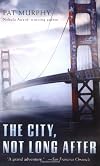
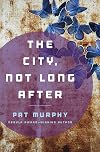
The City, Not Long After
by Pat Murphy 
On This Page
Description
The city is San Francisco. "Not long after" refers to a devastating worldwide plague that has wiped out most of the planet's population. The people who survive in San Francisco are mostly artists, hippies, and misfits who pull together a viable community and transform the city. But when a military general determines to reunite the remnants of the once great United States and sets his sights on San Francisco, the people resist, believing they have already discovered a better way of life. The show more new and artistically creative guerrilla warfare they stage will make for one of the oddest battles ever fought. show lessTags
Recommendations



















Member Recommendations

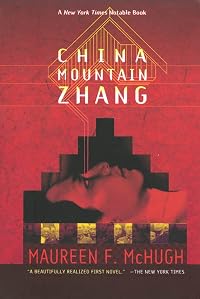
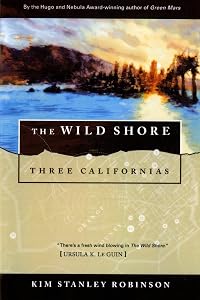
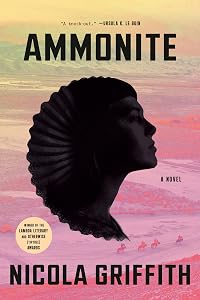
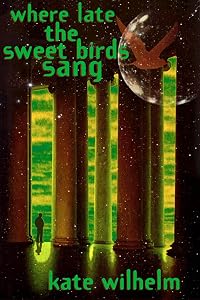
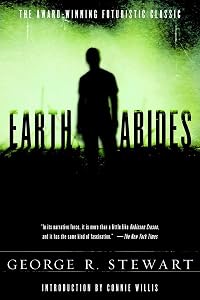
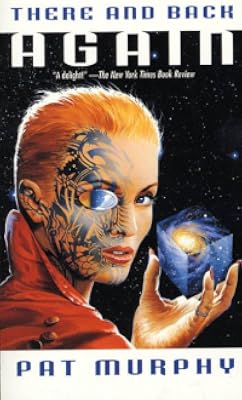
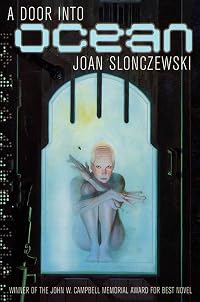
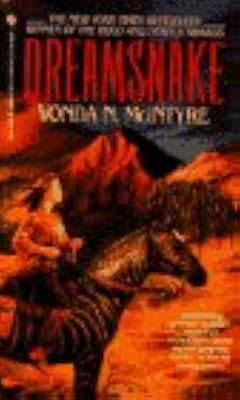
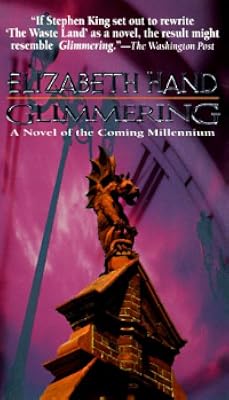
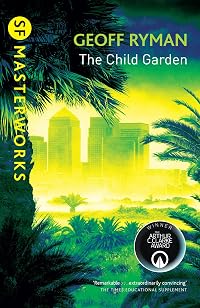
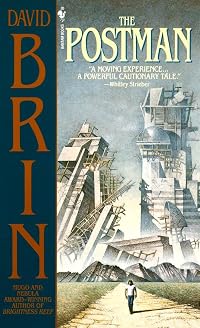
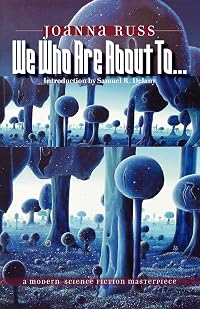
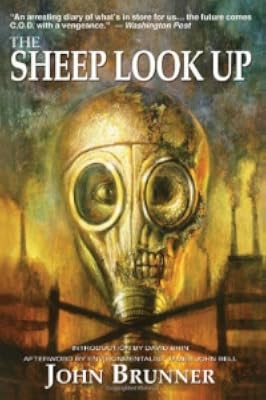
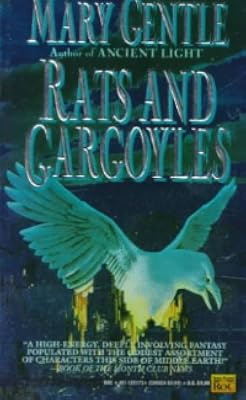
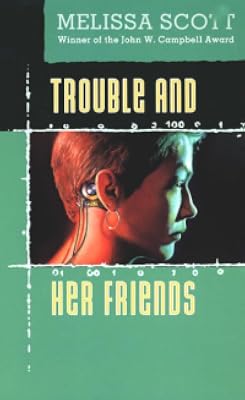
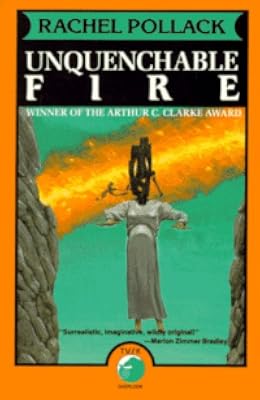
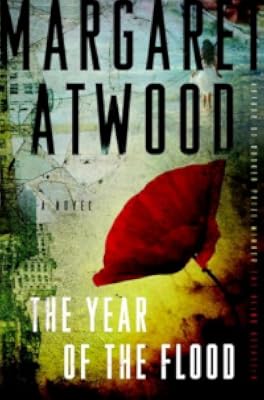
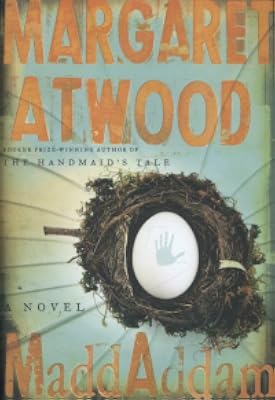
lquilter Murphy's The City, Not Long After is another post-apocalyptic story in a Bay Area setting; both explore Bay Area culture and peculiarities, and treat the setting almost as another character.
20
Member Reviews
Pat Murphy is so brilliant. Seriously, everything she's ever written is a joy to read.
This one takes place in and around San Francisco after a global plague has wiped out the majority of the population. The cast of characters who remain in the city consist of "Books" who keeps up the library; "The Machine" who makes crazy robot sculptures; Danny-boy, who wants to paint the whole Golden Gate blue; and others who are mostly focused on using the remnants of what's been left behind to create art or advance knowledge. Unfortunately, there are also survivors who want to amass power and 'save society'. An unbelievably repugnant man who calls himself General Fourstar has built himself a little army, mostly leads by fear, and has decided he's show more going to bring the City under his dominion. The citizens get really creative in an effort to fight back. show less
This one takes place in and around San Francisco after a global plague has wiped out the majority of the population. The cast of characters who remain in the city consist of "Books" who keeps up the library; "The Machine" who makes crazy robot sculptures; Danny-boy, who wants to paint the whole Golden Gate blue; and others who are mostly focused on using the remnants of what's been left behind to create art or advance knowledge. Unfortunately, there are also survivors who want to amass power and 'save society'. An unbelievably repugnant man who calls himself General Fourstar has built himself a little army, mostly leads by fear, and has decided he's show more going to bring the City under his dominion. The citizens get really creative in an effort to fight back. show less
Several years after a plague has decimated the human population, a group of artists inhabit a mostly empty San Francisco, using the entire city as their blank canvas; then a woman without a name arrives to warn them of a planned invasion, and the artists must come up with a new way to wage war.
I thought this was a very interesting entry in the post-apocalyptic genre. Unlike other post-apocalyptic fiction, it rejects the notion that humans will regress to violence and savagery if civilization blinks out. In fact, this San Francisco is an anarchic utopia, marred only by elements from the outside. This is a different take on the well-worn themes of war and peace (although concluding that some violence and probably a lot of death is show more inevitable to avoid one and achieve the other). I appreciated the city as a major character in the book, actually intervening at certain points; these incidents of magical realism seemed appropriate for the tone and setting, and contributed some lovely images, such as blue butterflies painting the Golden Gate Bridge and golden flowers raining from the sky. A good read for post-apocalypse fans looking for something different. show less
I thought this was a very interesting entry in the post-apocalyptic genre. Unlike other post-apocalyptic fiction, it rejects the notion that humans will regress to violence and savagery if civilization blinks out. In fact, this San Francisco is an anarchic utopia, marred only by elements from the outside. This is a different take on the well-worn themes of war and peace (although concluding that some violence and probably a lot of death is show more inevitable to avoid one and achieve the other). I appreciated the city as a major character in the book, actually intervening at certain points; these incidents of magical realism seemed appropriate for the tone and setting, and contributed some lovely images, such as blue butterflies painting the Golden Gate Bridge and golden flowers raining from the sky. A good read for post-apocalypse fans looking for something different. show less
Reading this for our book group. Wow, my heart is broken by this book - and the reality of the city of San Francisco being no longer a mecca for artists but a hugely overpriced center for tech bros bro'ing out. I have read a lot of post-apocalyptic fiction; this has similarities to (and is definitely in some sort of conversation across the years with) Earth Abides. Because the plague in the book was clearly started by monkeys, and because 1989 was nearing the peak of the AIDS epidemic in the U.S. (and because HIV very, very roughly "comes from monkeys"), I think it's clear this is a response to the idea that most people would have died out, and reactions would have been varied. The book is also a response to theories of peace and war, show more how artists would fight, what books can do for people, etc. It's lovely and hard and intense. I loved Jax's character, and I enjoyed Ms. Migdol very much, but I felt that only Jax was truly given much depth despite several other close third-person POV chapters.
That said, I also felt that the book sets up weird differences, oppositions, between artists and farmers, between Buddhists and Christians, between San Francisco and Los Angeles (that's only hinted at, but it's there). I wonder how post-apocalyptic SF writers in SF and LA would write about those cities now. I also think @karlthefog on Twitter might have a few thoughts about his vital role in the resistance. show less
That said, I also felt that the book sets up weird differences, oppositions, between artists and farmers, between Buddhists and Christians, between San Francisco and Los Angeles (that's only hinted at, but it's there). I wonder how post-apocalyptic SF writers in SF and LA would write about those cities now. I also think @karlthefog on Twitter might have a few thoughts about his vital role in the resistance. show less
I really enjoyed this. It was kind of weird and quirky in a most delightful way. My only disappointment was that the ending didn't seem to match the rest of the book. More accurate, the very end did, but the few pages before as the "current time" action ended, just sort of ran out of steam without the delicacy of the rest of the book.
The characters were all delightful - and the descriptions of their art and their weapons, both variations on the same thing, were beautifully done.
Each person was well described, not only in who they were at the time of the story, but in how they came to be that way.
A lovely story, if not exactly straightforward, kind of like the title, which I love.
The characters were all delightful - and the descriptions of their art and their weapons, both variations on the same thing, were beautifully done.
Each person was well described, not only in who they were at the time of the story, but in how they came to be that way.
A lovely story, if not exactly straightforward, kind of like the title, which I love.
I have a thing for sentient in unexpected places, so I loved this book with its sentient city. I liked the way it protects its inhabitants and how the artist living there make a life for themselves. It was very interesting to see how they defend themselves when the city is under attack. I also liked that the defensive (and offensive) roles are played by men and women alike. I think I would have preferred a different ending, but I was ok with it.
Nope. It had its moments... but you've got to stomach that post-Plague San Francisco is the gentle city (or rather a village now) of artists and mystics, watched over by a guardian angel, and Oakland, that BAD place, is ruled by violent motorcycle gangs... and you realize just like Callenbach with his laughable description of Oakland as "Soul City" in Ecotopia, you're dealing with more silly elitist futurism. Sociologist Mike Davis called it on the post-apocalyptic genre, he said it was often used as a way to imaginatively cleanse a feared underclass population from a fictional landscape, and he is, unfortunately, quite right here.
I really enjoyed reading this book - the tone and concepts were just beautiful. It's a post-apocalyptic scenario infused with magical realism. After a plague spread (accidentally?) by peace-activist Buddhists, only a few survivors live amongst ruins. San Francisco has become a haven of artists, but a military cult based in Sacramento is set on forcefully establishing a new American empire. Pacifism faces down a philosophy of violent force... but primarily, this is the story of the orphaned Danny-boy and the wild girl Jax... and of the city itself, suffused with dreams and nightmares.
My only criticism is that while it's beautiful and poetic, the book paints both sides of the conflict with a broad brush, and avoids engaging some of the show more obvious questions (is there absolutely no crime or major conflict amongst the happy artists of San Francisco?).
Still, even though it may have limitations, it's still a lovely book. show less
My only criticism is that while it's beautiful and poetic, the book paints both sides of the conflict with a broad brush, and avoids engaging some of the show more obvious questions (is there absolutely no crime or major conflict amongst the happy artists of San Francisco?).
Still, even though it may have limitations, it's still a lovely book. show less
Members
- Recently Added By
Lists

Favorite Science Fiction by Women Authors
741 works; 203 members

Survey of Classic Science Fiction
171 works; 48 members

Best Post-Apocalyptic Stories
143 works; 88 members

Best Feminist Science Fiction
188 works; 35 members

Dystopian and Apocalyptic Literature
350 works; 74 members

Books Set in California
112 works; 15 members

Strange Cities
30 works; 7 members
Arthur C. Clarke Award Winners and Shortlisted Books
219 works; 14 members

Female Author
1,234 works; 65 members

SFFCat 2015
35 works; 1 member

BingoDOG 2015 Challenge
49 works; 3 members

Best Urban Fantasy
634 works; 79 members

Books Read in 2015
3,299 works; 126 members

Fiction Set During a Revolution
55 works; 24 members

Urban Fiction
74 works; 7 members

Literature About Women and Girls
426 works; 40 members

Books Set in San Francisco
31 works; 8 members

Fiction With Familiar Settings
280 works; 94 members
Author Information

85+ Works 4,135 Members
Pat Murphy is a LibraryThing Author, an author who lists their personal library on LibraryThing.
Some Editions
Awards and Honors
Awards
Distinctions
Series
Belongs to Publisher Series
Common Knowledge
- Canonical title*
- La Ciudad, Poco Después
- Original title
- The City, Not Long After
- Original publication date
- 1989
- People/Characters
- Jax; Danny-boy; Fourstar; The Machine; Tommy; Gambit (show all 7); Snake
- Important places
- San Francisco, California, USA
- Dedication
- For Ned
Who understands Danny-boy better than I ever will
AND
For Richard
You might as well get used to it - sooner or later, they're all for you. - First words
- The early morning breeze blew through the vegetable garden in Union Square, shaking the leaves of the bean plants and the lacy carrot tops.
- Quotations
- "You do it for yourself, not for anyone else. When you make something beautiful, you change. You put something of yourself into the thing you make. You're a different person when you're done."
"I don't really like this business of wanting to restore order," he said. "I think disorder works just fine. There's a lot to be said for chaos. It's a much more creative environment." - Last words
- (Click to show. Warning: May contain spoilers.)And sometimes, though rarely these days, it rains flowers.
- Original language*
- Inglés
- Canonical DDC/MDS
- 813.54
- Canonical LCC
- PS3563.U748
*Some information comes from Common Knowledge in other languages. Click "Edit" for more information.
Classifications
Statistics
- Members
- 540
- Popularity
- 55,392
- Reviews
- 22
- Rating
- (3.88)
- Languages
- English, German, Italian, Spanish
- Media
- Paper, Audiobook, Ebook
- ISBNs
- 20
- ASINs
- 6