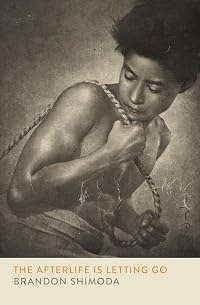
The Afterlife is Letting Go
by Brandon Shimoda
On This Page
Description
"A memoiristic travelogue that illuminates the enduring legacy of the mass incarceration of Japanese immigrants and Japanese Americans during World War II"--Tags
Recommendations


































Member Reviews
3.75 stars. beautiful. this addresses the generational trauma of the internment camps in a way that the other books i've read on this haven't touched on. this author is a poet and it shows. the way he incorporates interview answers from so many people, they way he makes those answers into their own story, the way he revisits places and wounds and philosophies; it brings so much together in such a poignant way. i thought this was such an important addition to the history and the way this is written feels especially important right now, showing the lasting effects of what happened then and what might happen again.
this struck hard, as i try to see art in the face of oppression as resiliency and explanation for outsiders, but i also know show more there is some unconscious connotation that must feel this way: "As Jane Dusselier writes, in Artifacts of Loss: Crafting Survival in Japanese American Concentration Camps, 'a forced leisure interpretation of camp-made art is problematic because it suggests that internal artwork is evidence of humane treatment.'"
and this, from christina sharpe in ordinary notes: "The machinery of whiteness constantly deploys violence."
something to do more research on: "Ellis Island held over six hundred Japanese immigrants on the east coast between December 1941 and June 1944. The facility where they were detained opened six days before Pearl Harbor." show less
this struck hard, as i try to see art in the face of oppression as resiliency and explanation for outsiders, but i also know show more there is some unconscious connotation that must feel this way: "As Jane Dusselier writes, in Artifacts of Loss: Crafting Survival in Japanese American Concentration Camps, 'a forced leisure interpretation of camp-made art is problematic because it suggests that internal artwork is evidence of humane treatment.'"
and this, from christina sharpe in ordinary notes: "The machinery of whiteness constantly deploys violence."
something to do more research on: "Ellis Island held over six hundred Japanese immigrants on the east coast between December 1941 and June 1944. The facility where they were detained opened six days before Pearl Harbor." show less
Members
- Recently Added By
Lists

History: Asia
103 works; 1 member

Check Library
179 works; 1 member
Author Information
11+ Works 158 Members
Awards and Honors
Awards
Classifications
Statistics
- Members
- 21
- Popularity
- 1,237,331
- Reviews
- 1
- Rating
- (4.00)
- Languages
- English
- Media
- Paper, Ebook
- ISBNs
- 2
- ASINs
- 1