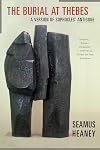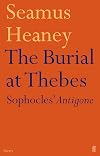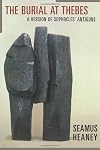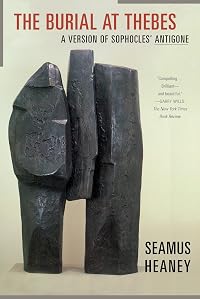
The Burial at Thebes: A Version of Sophocles' Antigone
by Seamus Heaney
On This Page
Description
Sophocles' play stands as a timely exploration of the conflict between those who affirm the individual's human rights and those who must protect the state's security. During the War of the Seven Against Thebes, Antigone learns that her brothers have killed each other, having been forced onto opposing sides. When Creon, king of Thebes, grants burial of one but not the "treacherous" other, Antigone defies his order, believing it her duty to bury all of her close kin. Enraged, Creon condemns show more her to death, and his soldiers wall her up in a tomb. In this new translation, Seamus Heaney exposes the darkness and the humanity in Sophocles' masterpiece, and inks it with his own modern and masterly touch. show lessTags
Recommendations











Member Reviews
Seamus Heaney's [b:Antigone|130405|The Burial at Thebes A Version of Sophocles' Antigone|Sophocles|http://photo.goodreads.com/books/1316635366s/130405.jpg|1052210] is excellent. In part he means to draw a connection between Creon and GW Bush - bear with me - or don't - and while that's vaguely interesting, it also consigns it to be debated in terms of modern politics, which is a shitty little rabbit hole. Sophocles is better than GW Bush.
It's common to call pride Odysseus's tragic flaw, but that's never struck me as true; it's curiosity that does that motherfucker in. But pride is certainly Creon's flaw. He pays, as surely as Antigone does, and it would be fair to call him the co-lead of Antigone. She owns the first half of the play; he show more owns the second.
But tragic flaws are for heroes, and Creon's no hero. Does he work from understandable feelings? Well, sure. Can you understand his anguish at the result? Totally. Are he and Antigone both punished for the same thing - headstrongness? Absolutely. (Do I like answering my own questions?) But it's crystal clear in this play that Antigone is the protagonist and Creon is the antagonist. She's headstrong, but she acts - and goes out - nobly. Creon's headstrong, but he also makes the wrong decision, and he loses his people and his family as a result. By the end of the play, there is no one - no character in the play, including Creon himself, and including the reader - who thinks he's done the right thing.
The difference between rulers and tyrants was of particular concern to the Greeks, and Antigone is an exploration of that difference - and a clear warning to those who might become tyrants. It is not an ambiguous play.
Translation Review: Weird. Heaney gets wicked colloquial at times; he also puts the poetic power he has into it at times. I feel like he was trying to make Antigone accessible. Compare this with his Beowulf, in which he put little or no effort into accessibility; while that's our best translation of Beowulf, it's not because he made it easy. I'm not sure this is our best translation of Antigone, although it is fun to read. show less
It's common to call pride Odysseus's tragic flaw, but that's never struck me as true; it's curiosity that does that motherfucker in. But pride is certainly Creon's flaw. He pays, as surely as Antigone does, and it would be fair to call him the co-lead of Antigone. She owns the first half of the play; he show more owns the second.
But tragic flaws are for heroes, and Creon's no hero. Does he work from understandable feelings? Well, sure. Can you understand his anguish at the result? Totally. Are he and Antigone both punished for the same thing - headstrongness? Absolutely. (Do I like answering my own questions?) But it's crystal clear in this play that Antigone is the protagonist and Creon is the antagonist. She's headstrong, but she acts - and goes out - nobly. Creon's headstrong, but he also makes the wrong decision, and he loses his people and his family as a result. By the end of the play, there is no one - no character in the play, including Creon himself, and including the reader - who thinks he's done the right thing.
The difference between rulers and tyrants was of particular concern to the Greeks, and Antigone is an exploration of that difference - and a clear warning to those who might become tyrants. It is not an ambiguous play.
Translation Review: Weird. Heaney gets wicked colloquial at times; he also puts the poetic power he has into it at times. I feel like he was trying to make Antigone accessible. Compare this with his Beowulf, in which he put little or no effort into accessibility; while that's our best translation of Beowulf, it's not because he made it easy. I'm not sure this is our best translation of Antigone, although it is fun to read. show less
Aargh.
Seamus Heaney is a great poet and a great translator - I love his Beowulf - and this is a well done and moving translation of the Sophocles original. Except for one thing; Heaney goes overboard in making sure his readers understand that Creon is supposed to be George W. Bush, and Antigone a war protester. Just in case you don't get it from the play's text, he explains it in his introduction.
In one of those interesting examples of connectivity among various books with seemingly unrelated topics, The Blank Slank mentions Antigone as the one work of literature that discusses every possible area of human conflict - young versus old, men versus women, lovers versus kin, humans versus the divine, state versus family, and living versus dead.
Seamus Heaney is a great poet and a great translator - I love his Beowulf - and this is a well done and moving translation of the Sophocles original. Except for one thing; Heaney goes overboard in making sure his readers understand that Creon is supposed to be George W. Bush, and Antigone a war protester. Just in case you don't get it from the play's text, he explains it in his introduction.
In one of those interesting examples of connectivity among various books with seemingly unrelated topics, The Blank Slank mentions Antigone as the one work of literature that discusses every possible area of human conflict - young versus old, men versus women, lovers versus kin, humans versus the divine, state versus family, and living versus dead.
This is an enjoyable translation of the Greek tragedy, *Antigone*. King Creon learns of the deaths of two brothers, Eteocles and Polyneices, the sons of Oedipus. Both died in the battle that ended with the salvation of Thebes, but Polyneices is deemed a traitor and, unlike the hero Eteocles, he is denied a proper burial. Further, Creon decrees that any who undertake to bury Polyneices shall be in violation of his law and subject to grave punishment. Antigone cannot fathom allowing one of her brothers to lie exposed to the elements and wild animals; she determines to bury Polyneices despite King Creon's dictate. This she does and is locked in a cave in the hills to suffer a slow death. This being Greek tragedy, Creon's own son, who show more happens to be Antigone's fiancé, rushes to her rescue. Too late, for Antigone has taken her own life. Overwhelmed with grief, Haemon follows suit, leaving Creon desolate and depraved. There is more but suffice it to say that this is modernized Greek tragedy at its best. Heaney retains the tone, the rhythm, and the structure of the original while rendering the story accessible for the 21st century reader. show less
I recently read the Fagles' translation of Sophocles' Antigone and had thought that this would make a nice companion piece. I had thought based on the title that this was an adaptation of the play but it turned out to be a fairly straight-forward translation. Heaney brings his own poetic gifts to the translation and I would recommend this 'version' to anyone interested in reading this play.
Here is an example of Heaney's translation, in a passage at the beginning of the play (Antigone is talking to her sister Ismene):
This is law and order
In the land of good King Creon.
This is his edict for you
And for me, Ismene, for me!
And he's coming to announce it.
"I'll flush 'em out," he says.
"Whoever isn't for us
Is against us in this case.
Whoever show more breaks this law,
I'll have them stoned to death."
In the afterword, Heaney discusses his doubts about creating a new translation and how, in 2003, he saw the Bush administration reenacting much of the play's situation in its tactics & arguments for the war on Iraq. In these days of Donald Trump's unexpectedly (at least to me) successful candidacy, rereading this play might be a good idea for many Americans! show less
Here is an example of Heaney's translation, in a passage at the beginning of the play (Antigone is talking to her sister Ismene):
This is law and order
In the land of good King Creon.
This is his edict for you
And for me, Ismene, for me!
And he's coming to announce it.
"I'll flush 'em out," he says.
"Whoever isn't for us
Is against us in this case.
Whoever show more breaks this law,
I'll have them stoned to death."
In the afterword, Heaney discusses his doubts about creating a new translation and how, in 2003, he saw the Bush administration reenacting much of the play's situation in its tactics & arguments for the war on Iraq. In these days of Donald Trump's unexpectedly (at least to me) successful candidacy, rereading this play might be a good idea for many Americans! show less
Studied for a course, but surprisingly enjoyable. Thought-provoking and an easy version to read. It makes me want to re-read Kamila Shamsie's "Home Fire" now I am more familiar with the story.
In 2003, Heaney was asked by the famous Abbey Theater to do a version of Antigone and this is the result. Heaney keeps the poetic form and the sharp, sparse feel of the play. What is most striking about this version is the timeliness of it: the actions of Creon and his refusal to hear reason seems to echo the current administration in the US, a similarity Heaney admits inspired him. I'm not much of a classicist so I can't compare how true this version is to Sophocles but I enjoyed this version more than I remember enjoying the original in high school.
The Burial at Thebes is Seamus Heaney’s version of Sophocles’ play Antigone.Heaney’s translation is easy to read. He phrases the lines with a touch of poetry, so that they flow like especially articulate sentences. His version of Antigone did not feel stilted in the least. If you’d like to read or revisit Antigone, I’d highly recommend checking out The Burial at Thebes.
My full thoughts are posted on Erin Reads.
My full thoughts are posted on Erin Reads.
Members
- Recently Added By
Lists

Tonikat reading completed on Librarything journals
329 works; 2 members

EU Fiction: 1950-2022
223 works; 68 members

el
1,139 works; 1 member
Author Information

210+ Works 15,862 Members
Seamus Heaney was born in Mossbawn, Ireland on April 13, 1939. He received a degree in English from Queen's College in Belfast in 1961. After earning his teacher's certificate in English from St. Joseph's College in Belfast the following year, he took a position at the school as an English teacher. During his time as a teacher at St. Joseph's, he show more wrote and published work in the university magazine under the pen name Incertus. In 1966, he became an English literature lecturer at Queen's College in Belfast. His first volume of poems, Death of a Naturalist, went on to receive the E.C. Gregory Award, the Cholmondeley Award, the Somerset Maugham Award, and the Geoffrey Faber Memorial Prize. After the death of his parents, Heaney published the poetry volumes The Haw Lantern, which includes a sonnet sequence memorializing his mother, and Seeing Things, a collection containing numerous poems for his father. His other works included Field Work, Opened Ground: Poems 1966-1996, and Human Chain. Heaney was a professor at Harvard from 1981 to 1997 and its Poet in Residence from 1988 to 2006. From 1989 to 1994 he was also the Professor of Poetry at Oxford and in 1996 was made a Commandeur de l'Ordre des Arts et Lettres. Other awards that he received include the Geoffrey Faber Memorial Prize (1968), the E. M. Forster Award (1975), the PEN Translation Prize (1985), the Golden Wreath of Poetry (2001), T. S. Eliot Prize (2006) and two Whitbread Prizes (1996 and 1999). In 2012, he was awarded the Lifetime Recognition Award from the Griffin Trust For Excellence In Poetry. His literary papers are held by the National Library of Ireland. He died following a short illness on August 30, 2013 at the age of 74. Heaney's last words were in a text to his wife Marie, "Noli timere", which means "Do not be afraid." (Bowker Author Biography) Seamus Heaney lives in Dublin and teaches at Harvard University. He was awarded the Nobel Prize in literature in 1995. (Publisher Provided) Seamus Heaney was born in 1939 in Northern Ireland. He was awarded the Nobel Prize in Literature in 1995. A resident of Dublin, he has taught poetry at Oxford University and Harvard University. (Publisher Provided) show less
Work Relationships
Common Knowledge
- Canonical title
- The Burial at Thebes: A Version of Sophocles' Antigone
- Original publication date
- 442-441 BCE (original Greek) (original Greek); 2004 (English translation by Seamus Heaney) (English translation by Seamus Heaney)
Classifications
Statistics
- Members
- 575
- Popularity
- 51,520
- Reviews
- 9
- Rating
- (4.11)
- Languages
- English
- Media
- Paper, Ebook
- ISBNs
- 9
- UPCs
- 1
- ASINs
- 9